
8th Jan 2026
CTCSS vs DCS: What Do Walkie Talkie Privacy Codes Actually Do?
This guide was written and reviewed by the Baofeng UK technical team — UK-based radio communications specialists with over 10 years of hands-on experience helping users configure CTCSS, DCS and other radio settings on Baofeng handsets. All licensing references reflect current Ofcom guidance. CTCSS and DCS explanations are based on standard radio engineering practice.
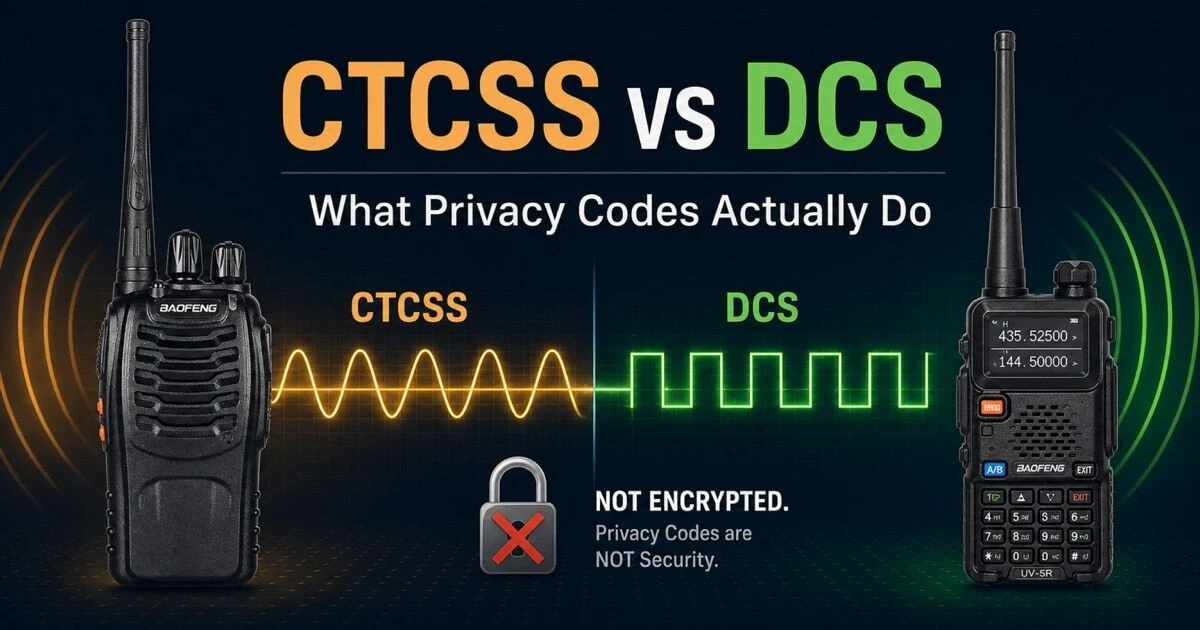
CTCSS and DCS are squelch codes that control which transmissions your walkie talkie plays through its speaker.
CTCSS uses a continuous analogue tone, while DCS uses a digital code. Both are useful for reducing unwanted chatter on a shared radio channel, but neither provides encryption or makes your conversation genuinely private.
That distinction is important. Someone listening on the same frequency with tone filtering switched off may still hear what you say.
If you are new to the relationship between frequencies, channels and privacy codes, start with our walkie talkie channels explained guide.
CTCSS — Continuous Tone-Coded Squelch System. Sends a low-frequency analogue tone. Simple, widely compatible, widely used on PMR446 and amateur radio.
DCS — Digital-Coded Squelch. Sends a continuous digital code. More code choices, requires compatible radios on both sides.
The critical point: Neither CTCSS nor DCS encrypts your speech, increases radio range or creates a genuinely private channel. They control when your speaker opens — not who can receive your transmission.
⚡ CTCSS and DCS — key points
- 🔇 What they do: Control when a receiver opens its squelch (speaker) — not who can receive your RF signal
- 🔒 What they don't do: Encrypt speech, increase range, create extra channels or prevent others from hearing you
- 📻 CTCSS: Analogue tone (e.g. 100.0 Hz) — simple, widely supported on most radios
- 📟 DCS: Digital code (e.g. D023N) — more code choices, requires compatible DCS-capable radios
- ⚠️ Mismatch problem: If T-CTCS/R-CTCS settings don't match, radios may only communicate one way
- ⚖️ UK licensing: Using CTCSS or DCS does not make a radio licence-free — licensing depends on equipment and frequency
- 🔧 Programming: Set in Baofeng menus 10–13 on UV-5R, or via CHIRP software for multiple radios
📋 Table of Contents
- CTCSS vs DCS at a glance
- What is CTCSS on a walkie talkie?
- What does DCS mean on a walkie talkie?
- CTCSS vs DCS: which is better?
- Are CTCSS and DCS really privacy codes?
- What do R-CTCS, T-CTCS, R-DCS and T-DCS mean?
- Do both radios need the same code?
- Why communication works in only one direction
- How to set CTCSS or DCS on a Baofeng UV-5R
- How to program CTCSS and DCS with CHIRP
- Recommended radios for CTCSS/DCS use
- What happens when codes do not match?
- CTCSS/DCS troubleshooting checklist
- Do CTCSS or DCS increase walkie talkie range?
- Do privacy codes stop interference?
- UK legal note: CTCSS/DCS and radio licensing
- CTCSS vs DCS for different users
- Frequently asked questions
CTCSS vs DCS at a glance
| Feature | CTCSS | DCS |
|---|---|---|
| Full name | Continuous Tone-Coded Squelch System | Digital-Coded Squelch |
| Signal | Low-frequency analogue tone | Continuous digital code |
| Example | 88.5 Hz / 100.0 Hz | D023N |
| Main job | Controls when the receiver speaker opens | Controls when the receiver speaker opens |
| Code choices | Dozens of tones | Usually more choices |
| Encryption | No | No |
| Improves range | No | No |
| Creates extra channels | No | No |
| Best for | Simple, widely compatible filtering | More code options on compatible radios |
🔵 The key point: CTCSS and DCS help control what you hear. They do not control who can receive your RF transmission.
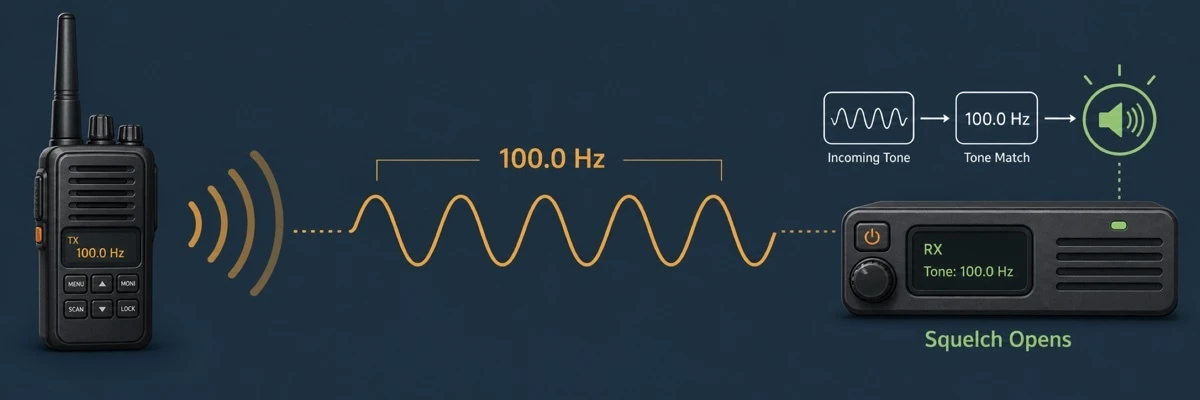 CTCSS works by adding a low-frequency tone (such as 100.0 Hz) to the transmitted signal. A receiving radio can be configured to only open its speaker when it detects the expected tone — leaving transmissions from other users muted, even on the same frequency.
 What is CTCSS on a walkie talkie?
CTCSS stands for Continuous Tone-Coded Squelch System. When a radio transmits with CTCSS enabled, it sends a low-frequency tone together with the voice transmission. A receiving radio can be configured so its speaker only opens when it detects the expected tone.
Imagine two teams are using the same radio frequency. Your team uses a CTCSS tone of 100.0 Hz. Another group is using the same frequency but a different tone. Your receivers can remain silent when the other group talks and open when a transmission carrying your 100.0 Hz tone arrives. The frequency itself has not changed — CTCSS is simply being used as a condition for opening the receiver's squelch.
Does CTCSS create another channel?
No. This is why terms such as "sub-channel" or "privacy channel" can be misleading. If two groups are using the same RF channel but different CTCSS tones, they are still transmitting on the same radio channel and can still interfere with each other. For a more detailed explanation of the difference between channels, frequencies and privacy codes, see our UK walkie talkie channels guide.
What does DCS mean on a walkie talkie?
DCS stands for Digital-Coded Squelch. Its purpose is broadly similar to CTCSS, but instead of sending an analogue tone, the radio sends a continuous digital code. A typical DCS setting might appear as D023N. Some radios also distinguish between normal and inverted DCS codes.
DCS normally provides more code choices than CTCSS, which can be useful when several groups are operating in the same area. However, DCS is not the same as digital voice, and it does not provide encryption.
CTCSS vs DCS: which is better?
Neither is automatically better. CTCSS is usually a good choice when simplicity and compatibility are the priority. It is widely supported and straightforward to configure. DCS can be useful when you need more squelch-code choices and all radios in the group support compatible DCS settings.
⚠️ Do not choose DCS because you expect: longer range · more transmitter power · secure communications · a genuinely private channel. Neither CTCSS nor DCS provides those benefits.
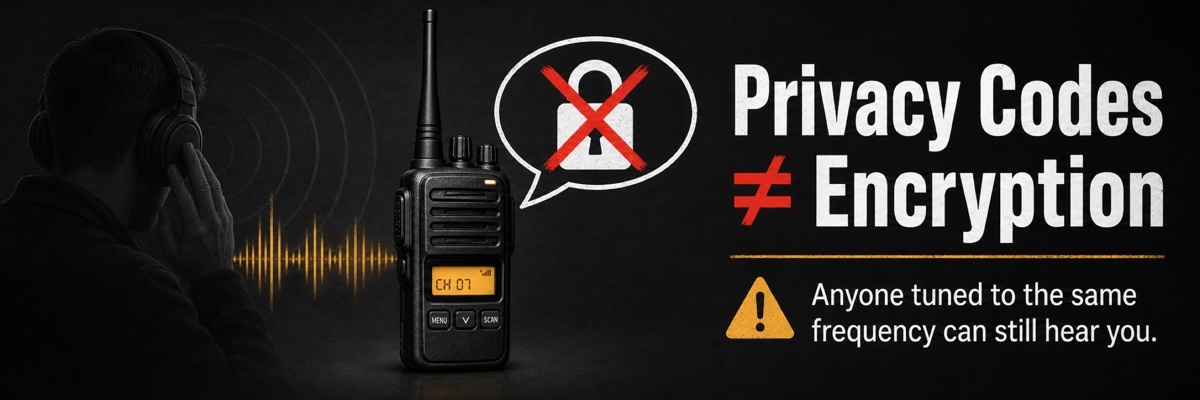 CTCSS and DCS are not encryption. A person monitoring the same frequency with receive tone filtering switched off can still hear your transmission — regardless of which privacy code your team has selected.
 Are CTCSS and DCS really "privacy codes"?
Only in the consumer-radio sense of the term. CTCSS and DCS do not scramble or encrypt your speech. Suppose your team transmits on one frequency with CTCSS set to 100.0 Hz. Radios configured to require that tone can open normally when your team transmits — a radio expecting another tone may remain silent. But a person listening to that frequency with receive tone filtering switched off may still hear the transmission.
A better way to think about privacy codes is: they filter unwanted audio; they do not make the conversation confidential.
⚠️ Practical implication: This matters particularly for schools, event teams, businesses and security staff. Sensitive personal, financial or operational information should not be treated as secure simply because a CTCSS or DCS code is enabled. Teams using radios operationally may also find our UK security walkie talkie guide useful.
What do R-CTCS, T-CTCS, R-DCS and T-DCS mean?
Many Baofeng radios separate receive and transmit tone settings.
| Setting | Meaning | Function |
|---|---|---|
| T-CTCS | Transmit CTCSS | Sends a CTCSS tone when you transmit |
| R-CTCS | Receive CTCSS | Requires the selected tone before the speaker opens |
| T-DCS | Transmit DCS | Sends the selected DCS code |
| R-DCS | Receive DCS | Requires the selected DCS code before the speaker opens |
🎯 Note: The exact menu layout varies by model and firmware, so always check the instructions for your particular radio.
Do both radios need the same CTCSS or DCS code?
For a simple group setup, using the same channel and matching transmit/receive tone settings on every radio is normally the easiest configuration. Technically, communication depends on what the receiving radio is configured to require. A radio with no receive tone enabled may hear transmissions whether or not the sender is using CTCSS. A radio configured to require 100.0 Hz CTCSS, however, will normally remain muted unless the incoming transmission contains that tone.
That can produce the classic problem: "I can hear them, but they can't hear me."
Why communication works in only one direction
🔵 Example:
Radio A — Transmit CTCSS: 100.0 Hz · Receive CTCSS: 100.0 Hz
Radio B — Transmit CTCSS: Off · Receive CTCSS: Off
When Radio A transmits, Radio B can hear it because Radio B is not filtering incoming signals by tone.
When Radio B transmits, Radio A may remain silent because Radio A is waiting for a 100.0 Hz tone that Radio B is not transmitting.
The frequency is correct — the tone configuration is not.
How to set CTCSS or DCS on a Baofeng UV-5R
On common UV-5R versions, the relevant menu items are typically:
| Menu | Setting |
|---|---|
| Menu 10 | R-DCS |
| Menu 11 | R-CTCS |
| Menu 12 | T-DCS |
| Menu 13 | T-CTCS |
For a straightforward CTCSS configuration: put every radio on the correct authorised frequency or memory channel, select the same transmit CTCSS tone, select the same receive CTCSS tone, save the settings and test every radio in both directions. For DCS, follow the same principle using T-DCS and R-DCS. Where your radio offers normal or inverted DCS polarity, those settings should also be compatible.
⚠️ Important: Menu numbers can differ on other Baofeng models, so do not assume the UV-5R menu structure applies universally.
How to program CTCSS and DCS with CHIRP
For several radios or a more complicated channel plan, programming software is usually easier than entering every setting through the keypad. Our step-by-step Baofeng CHIRP programming guide explains the complete process.
CHIRP allows you to view memory channels in a table and configure items such as frequencies, channel names, repeater offsets, CTCSS tones, DCS codes and transmit/receive tone modes. A useful habit is to download from the radio and save a backup before changing anything. If you need the correct CPS package, drivers or other files for your model, use the Baofeng programming software and driver centre.
🔵 CHIRP tone modes: Tone generally means the radio transmits a CTCSS tone while the receiving side does not require one. TSQL normally applies CTCSS tone squelch to both transmit and receive. DTCS applies digital coded squelch. For straightforward radio-to-radio communication, keep the setup simple unless you specifically need a more complex arrangement.
Some Baofeng models offer alternatives to traditional USB-cable programming. For example, the UV-5R Mini can be configured from a compatible smartphone setup, including channel and CTCSS/DCS settings. See our UV-5R Mini Bluetooth programming guide for the complete procedure.
Recommended radios for CTCSS/DCS use
The four models below are suited to users at different stages — from the programmable UV-5R discussed throughout this guide to the licence-free BF-888S for teams that simply want straightforward CTCSS filtering on a shared channel.
📻 Baofeng Radios & Programming Equipment
Choose the right radio or programming tool for your CTCSS/DCS setup.
📻 Programmable Radios — CTCSS/DCS configurable via menu or CHIRP
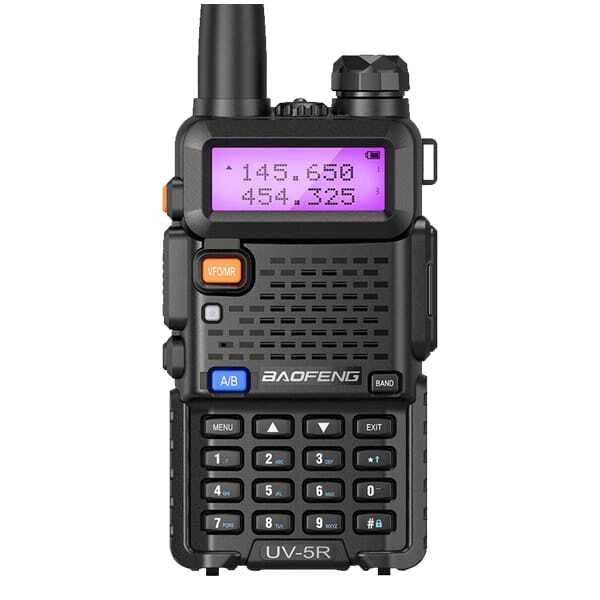
Baofeng UV-5R
Dual-band VHF/UHF · Full CTCSS/DCS support · Menu 10–13 for R-DCS/R-CTCS/T-DCS/T-CTCS · CHIRP compatible — the radio referenced throughout this guide for CTCSS/DCS configuration. Licensed radio — appropriate Ofcom licence required to transmit.
View UV-5R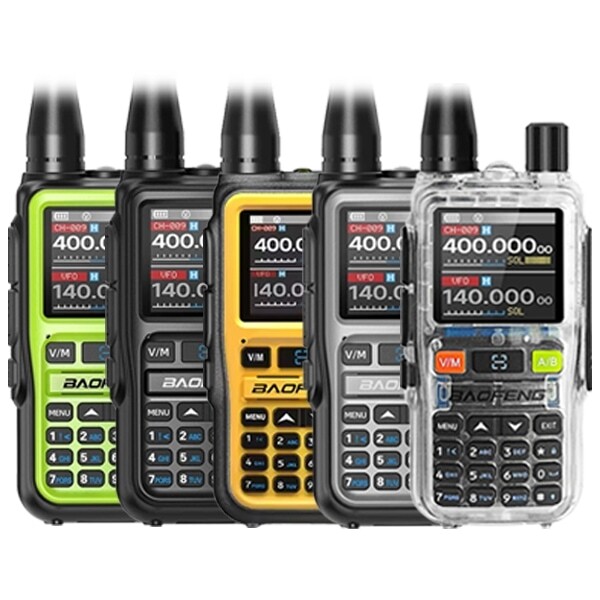
Baofeng UV-5R Mini
Bluetooth app programming · CTCSS/DCS configurable · USB-C · Compact dual-band — program channels and tone settings wirelessly from your smartphone. See the UV-5R Mini Bluetooth programming guide. Licensed radio — appropriate Ofcom licence required.
View UV-5R Mini✅ Licence-Free & Programming Tools — For Simple Setups & Multi-Radio Programming
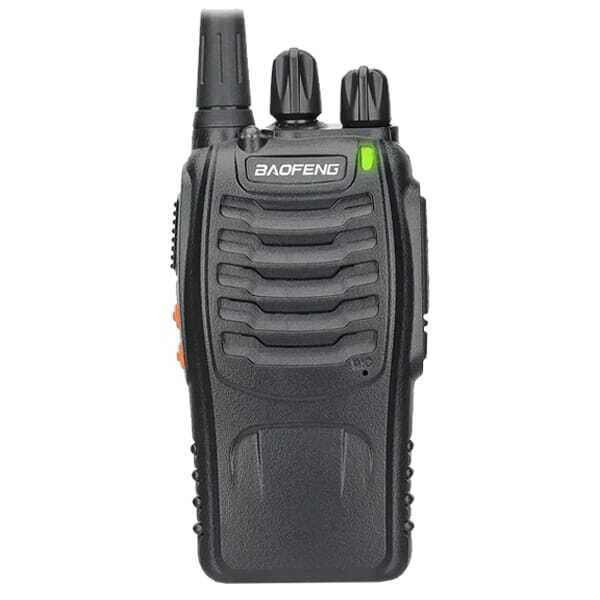
Baofeng BF-888S PMR446
PMR446 compliant · 16 channels · CTCSS filtering · Earpieces included · No licence needed — for families, hospitality, schools and small teams. CTCSS provides all the filtering most simple group setups need. Pre-programmed, no CHIRP required.
View BF-888S PMR446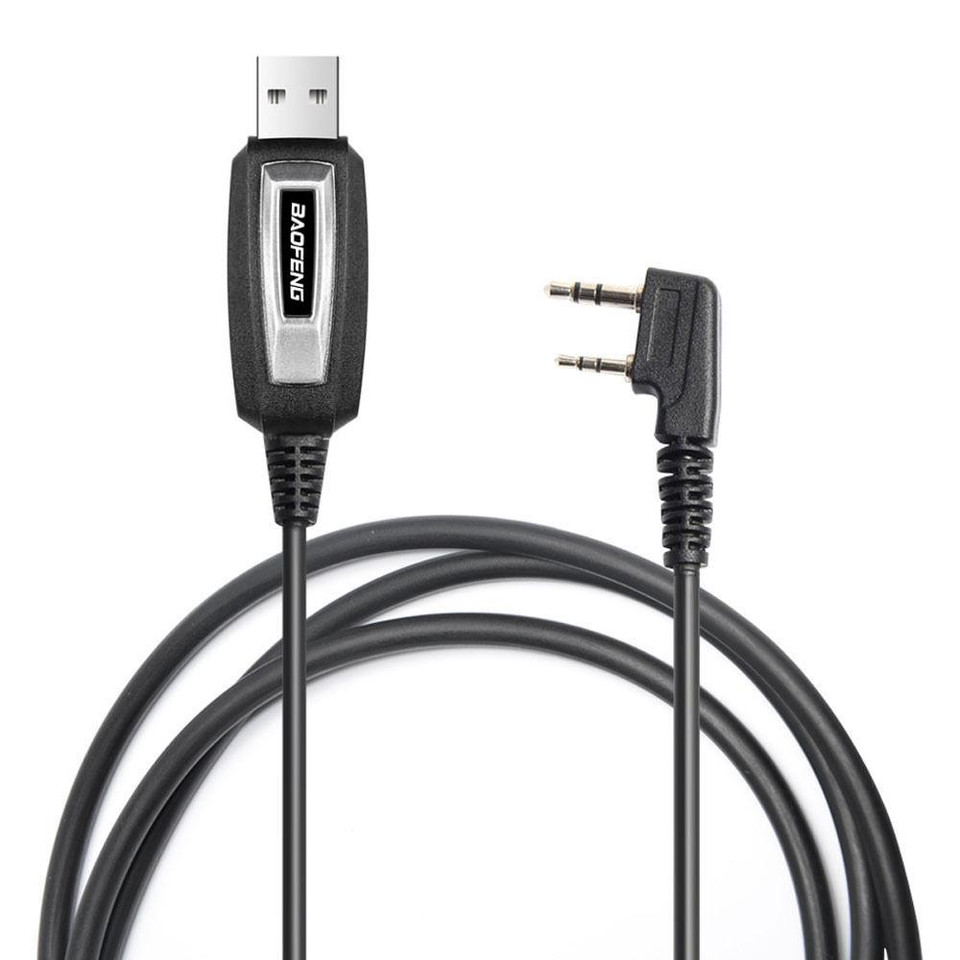
Baofeng USB Programming Cable
CHIRP compatible · For UV-5R, BF-888S and more · Configure CTCSS tones, DCS codes, memory channels and tone modes via CHIRP on PC — essential for consistent multi-radio fleet setup and avoiding manual keypad programming errors.
View Programming Cable⚠️ BF-888S PMR446 is licence-free when fully compliant. UV-5R and UV-5R Mini require an appropriate Ofcom licence to transmit legally in the UK.
What happens when CTCSS/DCS codes do not match?
| Receive setting | Incoming signal | Typical result |
|---|---|---|
| CTCSS 100.0 Hz | CTCSS 100.0 Hz | Speaker opens |
| CTCSS 100.0 Hz | Different CTCSS tone | Speaker stays muted |
| CTCSS 100.0 Hz | No CTCSS tone | Speaker stays muted |
| Receive tone off | CTCSS present | Audio can be heard |
| Receive tone off | No tone | Audio can be heard |
| DCS D023N | Matching D023N | Speaker opens |
| DCS D023N | Different DCS code | Speaker stays muted |
🟢 Useful troubleshooting tip: Switching receive tone filtering off temporarily is a useful diagnostic test. If audio suddenly becomes audible, the main channel/frequency may already be correct and the problem is probably related to tone configuration.
CTCSS/DCS troubleshooting checklist
If two radios should communicate but do not, check the basic settings first.
Troubleshooting checklist
- Confirm that both radios are on the same intended frequency or compatible channel
- Temporarily disable receive CTCSS/DCS and test again
- If communication begins working, compare T-CTCS settings on both radios
- Compare R-CTCS settings on both radios
- Compare T-DCS settings on both radios
- Compare R-DCS settings on both radios
- Check DCS polarity where applicable (normal vs inverted)
- Verify the actual programmed memory-channel settings match what is expected
- Make sure one radio has not accidentally been configured for CTCSS while the other is expecting DCS
- If using CHIRP, read the existing configuration from the radio first to identify mismatches
Do CTCSS or DCS increase walkie talkie range?
No. Neither CTCSS nor DCS increases transmitter power or changes how radio waves travel. At the extreme edge of coverage, a weak transmission may sometimes be audible but not clean enough for reliable tone/code decoding. This can make a tone-squelch connection appear to drop out before an open-squelch signal does.
The main factors affecting communication range are terrain, buildings, antenna position, frequency, radio position, interference and permitted transmitter power. For more detail, see our guide explaining what really affects walkie talkie range.
Do privacy codes stop interference?
Not in the RF sense. They can stop your speaker from playing some unwanted transmissions, but another user on the same frequency can still transmit at the same time as your group. This is especially relevant on shared services such as PMR446. Ofcom states that UK PMR446 operation is low-power, mobile, short-range and operates on a non-interference and non-protected basis. In other words, CTCSS may make a busy channel sound quieter, but it does not give your team exclusive access to it.
 Selecting a CTCSS or DCS code has no effect on the licensing status of a radio. Whether a handset can be transmitted with legally in the UK depends on the equipment, frequency and intended use — not on the tone settings selected.
 UK legal note: CTCSS/DCS does not make a radio licence-free
This is one of the most important points for UK Baofeng users. Whether a radio can be transmitted with legally without an individual radio licence depends on the equipment, frequency, technical requirements and intended use — not on whether a CTCSS or DCS code has been selected.
Ofcom states that compliant PMR446 equipment can operate licence-exempt subject to specified technical conditions, including a maximum of 500 mW ERP, mobile-only operation and use on a non-protected basis. Programming a radio to a frequency within the PMR446 range does not by itself make that handset PMR446-compliant or licence-free.
⚠️ If this distinction is unclear, read: our current guide answering do you need a licence for a walkie talkie in the UK? and our detailed comparison of licensed vs licence-free radios. For users interested in amateur radio, our UK ham radio licence guide explains the Foundation, Intermediate and Full licence route.
CTCSS vs DCS for different users
For families, hospitality teams, schools and other users who want straightforward communication, CTCSS will often provide all the filtering they need. DCS can be useful when more code combinations are required and all radios support compatible settings. Amateur-radio users also regularly encounter CTCSS when working through repeaters.
🎯 Commercial reminder: Commercial teams should remember that CTCSS/DCS solves an audio-filtering problem, not a confidentiality problem. If you are choosing your first set of radios and these terms still feel unfamiliar, our beginner walkie talkie guide for UK users covers channels, range, privacy and licensing together.
 Whether you need a programmable radio for CTCSS/DCS configuration or software for multi-radio fleet setup, Baofeng UK provides the complete range — from handsets and programming cables to CHIRP-compatible driver downloads.
 Final answer: CTCSS and DCS make shared channels quieter, not private
CTCSS and DCS are useful tools for organising radio communication. CTCSS uses an analogue tone. DCS uses a digital code. Both control when a receiver opens its squelch. Neither encrypts your speech, improves RF range or creates a private radio channel.
For a simple group setup, use compatible radios on the correct channel and configure matching transmit and receive tone settings. If radios communicate only one way, temporarily turn receive tone filtering off and check T-CTCS, R-CTCS, T-DCS and R-DCS. For UK users, remember that tone configuration and licensing are separate issues. If you specifically require straightforward licence-free communications, choose equipment designed to comply with UK PMR446 requirements.
📋 Key takeaways
- CTCSS = analogue tone. DCS = digital code. Both control receiver squelch — neither encrypts speech
- Neither improves range, creates additional channels or provides genuine privacy
- Mismatched T-CTCS/R-CTCS settings are the most common cause of one-way-only communication
- Temporarily disabling receive tone filtering is the fastest troubleshooting step
- UK licensing depends on equipment, frequency and use — not on which tone code is selected
- Use CHIRP and a programming cable for consistent multi-radio CTCSS/DCS configuration
- Browse Baofeng walkie talkies and handheld two-way radios, or visit the Baofeng programming software centre for software, drivers and programming support
Frequently asked questions
What does CTCSS stand for?
CTCSS stands for Continuous Tone-Coded Squelch System. It uses a low-frequency analogue tone to help a receiving radio decide whether to open its speaker. When a radio transmits with CTCSS enabled, it sends the selected tone alongside the voice transmission — a receiving radio can be configured to only open its squelch when it detects the expected tone.
What does DCS mean on a walkie talkie?
DCS means Digital-Coded Squelch. It performs a similar filtering function to CTCSS but uses a continuous digital code rather than an analogue tone. DCS settings typically appear as a code such as D023N. DCS normally provides more code choices than CTCSS, which can be useful when several groups are operating in the same area.
Is DCS better than CTCSS?
Not necessarily. DCS offers more code choices, while CTCSS is simple and widely supported across most radio models. Neither gives additional RF range or true communications privacy. For most straightforward group setups, CTCSS is a practical starting point. DCS can be useful when more unique code combinations are needed and all radios in the group support compatible DCS settings.
Can somebody hear me when I use a privacy code?
Yes. Someone receiving the same frequency without tone filtering may still hear your transmission. CTCSS and DCS are not encryption — they control when a receiver's speaker opens, not who can receive the RF signal. A person monitoring the frequency with their receive tone filtering switched off can hear everything transmitted on that frequency.
Do CTCSS codes create extra channels?
No. They allow radios to filter transmissions on an existing channel. They do not create additional RF channels. Two groups using different CTCSS tones on the same frequency are still sharing the same radio channel and can still interfere with each other.
Why can I hear another radio but it cannot hear me?
Mismatched transmit and receive CTCSS/DCS settings are a common cause. The radio that cannot hear you may be configured to require a specific tone that your radio is not transmitting. Temporarily disable receive tone filtering on the non-responding radio and test again. If the radios then communicate, compare the T-CTCS, R-CTCS, T-DCS and R-DCS settings on both handsets.
What is R-DCS on a Baofeng radio?
R-DCS means receive DCS. When enabled, the radio normally requires the selected DCS code before it opens the speaker — transmissions that do not carry the matching DCS code will typically be muted. On many Baofeng UV-5R versions, R-DCS is found in Menu 10.
What is T-CTCS on a Baofeng radio?
T-CTCS means transmit CTCSS. When configured, the radio sends the selected CTCSS tone alongside your voice transmission. This allows receiving radios that are set to require that specific tone to open their squelch. On many Baofeng UV-5R versions, T-CTCS is found in Menu 13.
Does CTCSS reduce radio range?
It does not reduce transmitter power or RF propagation. However, at a very weak signal level near the edge of coverage, the receiver may fail to decode the tone reliably and keep the speaker muted — making the connection appear to drop out before an open-squelch signal would.
Can different brands of walkie talkies use CTCSS together?
Often yes, provided the radios operate on compatible authorised frequencies or channels and use compatible tone settings. CTCSS tones are standardised, so a 100.0 Hz tone on one brand should be recognisable by another brand configured for the same tone. Always test mixed-brand equipment before relying on it operationally.
Need the Right Radio or Help Programming It?
Browse Baofeng's full range of walkie talkies and handheld two-way radios, or visit the programming software centre for CHIRP-compatible software, drivers and programming support.