
16th Aug 2026
What Makes a Walkie Talkie Long Range? Understanding Radio Range
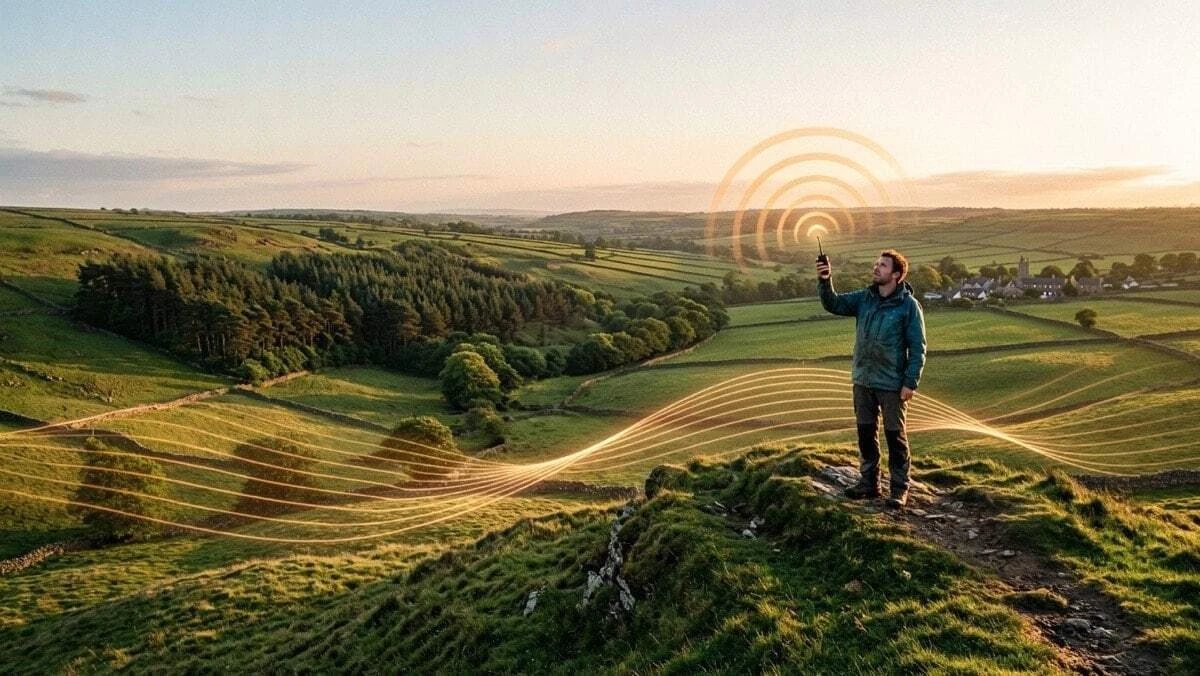
This guide was produced by the Baofeng UK technical team — UK-based radio communications specialists with over 10 years of hands-on experience helping buyers understand real-world radio performance. All licensing references reflect current Ofcom guidance. Product specifications should always be verified before purchase.
A long range walkie talkie is not defined by power alone.
Real-world radio range depends on several factors working together: transmission power, antenna quality, frequency, terrain, obstacles, weather conditions, battery performance, and whether the radio is being used in a suitable environment.
A radio advertised as "long range" may perform well in open countryside but struggle inside buildings, forests, or urban areas. For UK buyers, choosing the right radio means matching the radio type to the environment rather than focusing only on a maximum distance number.
At Baofengradio.co.uk, many buyers looking for better range are comparing outdoor radios, security communication systems, business radios, and licence-free PMR446 models. Understanding the difference between these categories helps avoid buying a radio that does not suit the intended use.
4 key factors: Transmission power · Antenna quality and position · Terrain and line of sight · Buildings and indoor obstacles
The honest answer: No radio guarantees a fixed distance. The same radio can achieve very different results in a field versus a warehouse. Match the radio to the environment — not the number on the box.
⚡ Key points at a glance
- ⚡ Power helps, but is not everything: Thick walls, poor antennas and unsuitable frequencies can limit even a high-powered radio
- 📡 Antenna matters: Position, quality and compatibility affect signal efficiency more than many buyers realise
- 🏔️ Terrain is decisive: Open fields give the best range; valleys, forests and buildings reduce it significantly
- 🏢 Indoor ≠ outdoor: A radio that performs well outside may struggle between floors in a concrete building
- ⚖️ UK licensing applies: Higher-power radios may require an Ofcom licence — always check before transmitting
- ✅ Best approach: Ask "where will I use this?" before asking "how far will it reach?"
📋 Table of Contents
- Why walkie talkie range is more complicated than advertised
- The main factors that affect walkie talkie range
- Long range walkie talkies vs licence-free PMR446 radios
- How far can a long range walkie talkie reach?
- Choosing the right walkie talkie range for your needs
- Recommended radios by use case
- Common mistakes when buying a long range walkie talkie
- Key takeaways
- Frequently asked questions
Why walkie talkie range is more complicated than advertised
Many people search for a "10 km walkie talkie" or "long range walkie talkie UK" expecting a fixed distance. In reality, radio manufacturers often describe ideal conditions, such as open areas with minimal interference.
A walkie talkie signal travels through the environment around it. Hills, walls, trees, buildings, and even the position of the user can affect communication.
- Two walkers on open farmland may achieve much greater range than two users separated by buildings.
- Security staff inside a shopping centre may need different features than hikers crossing open countryside.
- A construction team working across multiple floors may need radios designed around building penetration rather than maximum distance.
🎯 Expert note: The strongest radio on paper is not always the best radio for the job. A radio should be chosen for the environment it will actually operate in, not for the largest number printed on its packaging.
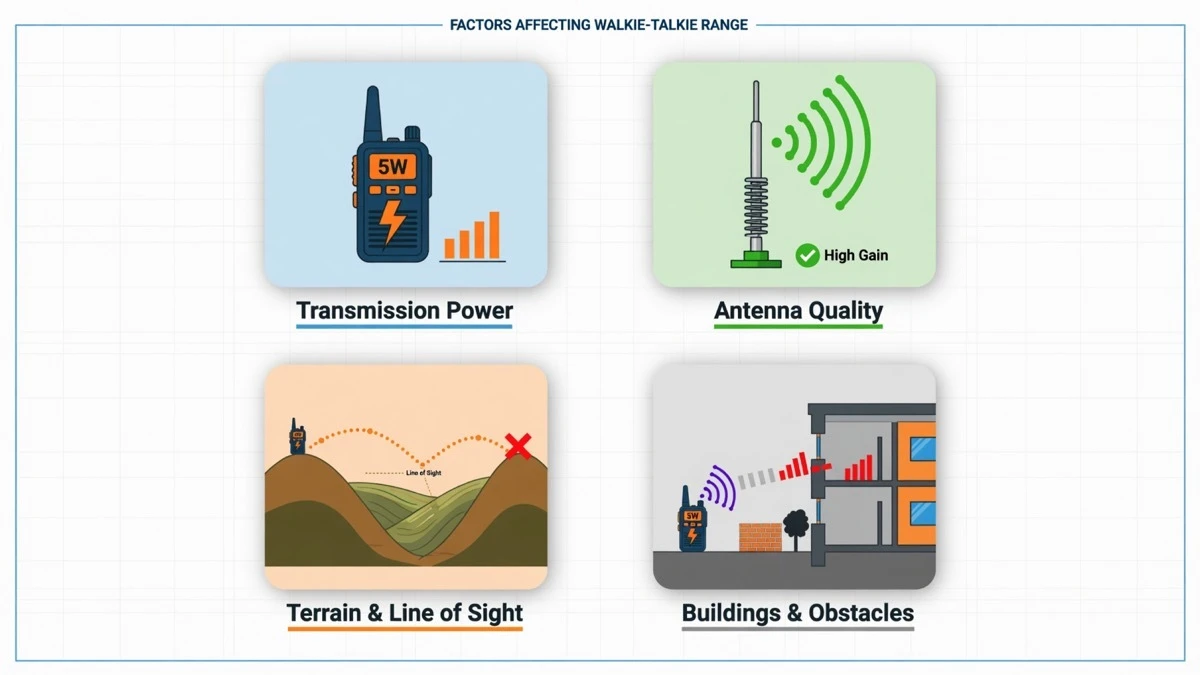 Four factors determine real-world walkie-talkie range — and only one of them is the power output printed on the box. Understanding all four helps buyers choose the right radio for their environment.
 The main factors that affect walkie talkie range
Higher-powered radios can generally send signals further under suitable conditions. However, more power does not automatically solve thick walls, poor antennas or unsuitable frequencies.
The antenna is one of the most important parts of the system. A better antenna improves signal efficiency. Holding the radio incorrectly or using a damaged antenna can sharply reduce performance.
Radio communication works best when there is a clear path between radios. Hills and coastal areas help. Dense woodland, valleys and underground areas reduce range significantly.
Walls, metal structures and concrete floors weaken radio signals. Indoor users in warehouses, restaurants or multi-storey buildings need radios selected for those specific conditions.
1. Transmission Power — in more detail
Radio power is one factor that influences range. Higher-powered radios can generally send signals further under suitable conditions.
However, more power does not automatically solve every range problem. A high-power radio can still struggle if:
- There are thick walls between users
- The antenna is poor quality
- The terrain blocks the signal
- The frequency is unsuitable for the environment
⚠️ UK licensing note: Higher-power radios may have different licensing requirements compared with licence-free PMR446 radios. The UK market's biggest challenge is often understanding which radio can legally be used for each situation. Always check Ofcom guidance before transmitting on a high-power radio.
2. Antenna Quality and Position — in more detail
The antenna is one of the most important parts of a radio system. A better antenna can improve signal efficiency, especially for users who need communication over larger outdoor areas.
Common antenna-related mistakes include:
- Holding the radio incorrectly
- Using damaged antennas
- Replacing antennas without checking compatibility
- Expecting a compact radio to perform like a larger system
For enthusiasts and advanced users, accessories such as antennas, programming cables, and audio equipment can help improve the overall radio experience. Baofengradio.co.uk lists accessories including antennas, programming cables, earpieces, chargers, and batteries as supporting products.
3. Terrain and Line of Sight — in more detail
Radio communication works best when there is a clear path between radios. This is why outdoor users often experience better range on:
- Hills
- Open fields
- Coastal areas
- Rural locations
Range can reduce significantly in dense woodland, valleys, urban streets and underground areas. For hikers and campers, a long range walkie talkie is often chosen because mobile phone coverage may be unreliable. However, the environment remains the deciding factor.
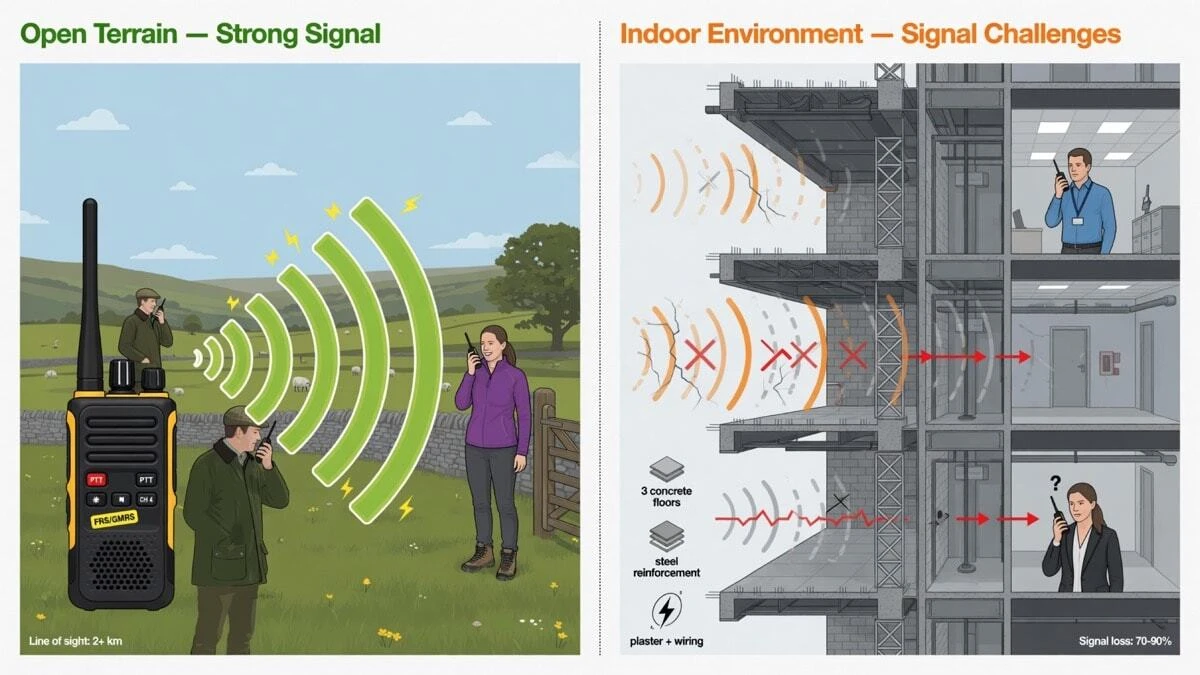 The same radio can perform very differently in two environments — excellent range across open countryside, yet reduced signal inside a concrete building. Choosing by environment, not wattage, is the practical approach.
 4. Buildings and Indoor Environments — in more detail
Indoor communication creates different challenges. Walls, metal structures, and concrete floors can weaken radio signals. A warehouse, hotel, restaurant, or construction site may require radios selected specifically for that environment.
| User | Main range challenge | Suitable consideration |
|---|---|---|
| Restaurant staff | Multiple rooms, kitchens, noise | Compact radios with clear audio |
| Security teams | Large venues and staff coordination | Durable radios and earpiece options |
| Construction workers | Floors, concrete, machinery | Reliable site communication |
| Farmers | Large outdoor areas | Rural coverage needs |
Long range walkie talkies vs licence-free PMR446 radios
One of the biggest buying mistakes in the UK is assuming every walkie talkie works the same way.
| Feature | PMR446 Licence-Free Radios | Higher Capability Radios |
|---|---|---|
| Ease of use | Simple for beginners | May require more knowledge |
| Licence requirement | Designed for licence-free use when compliant | Some models require appropriate licensing |
| Best for | Families, small teams, simple communication | Enthusiasts, advanced users, specific applications |
| Range expectations | Shorter practical range | Greater capability depending on setup and legal use |
| Setup | Usually straightforward | May require programming |
🔵 Key principle: For UK buyers, selecting the correct radio type is more important than simply choosing the highest advertised wattage. Browse licence-free PMR446 radios for straightforward communication, or explore long range walkie talkies for more advanced requirements.
How far can a long range walkie talkie reach?
There is no single guaranteed answer. A realistic range depends on the environment:
| Environment | Expected performance factors |
|---|---|
| Open countryside | Usually the best conditions |
| Urban areas | Buildings and interference reduce range |
| Forest areas | Trees absorb and block signals |
| Indoor sites | Walls and structures create challenges |
| Hilly terrain | Height advantage can improve communication |
🎯 Better question to ask: Instead of "How many miles will this radio reach?", ask: "Where will I use this radio, and what obstacles will the signal face?" That question leads to a more useful purchase decision.
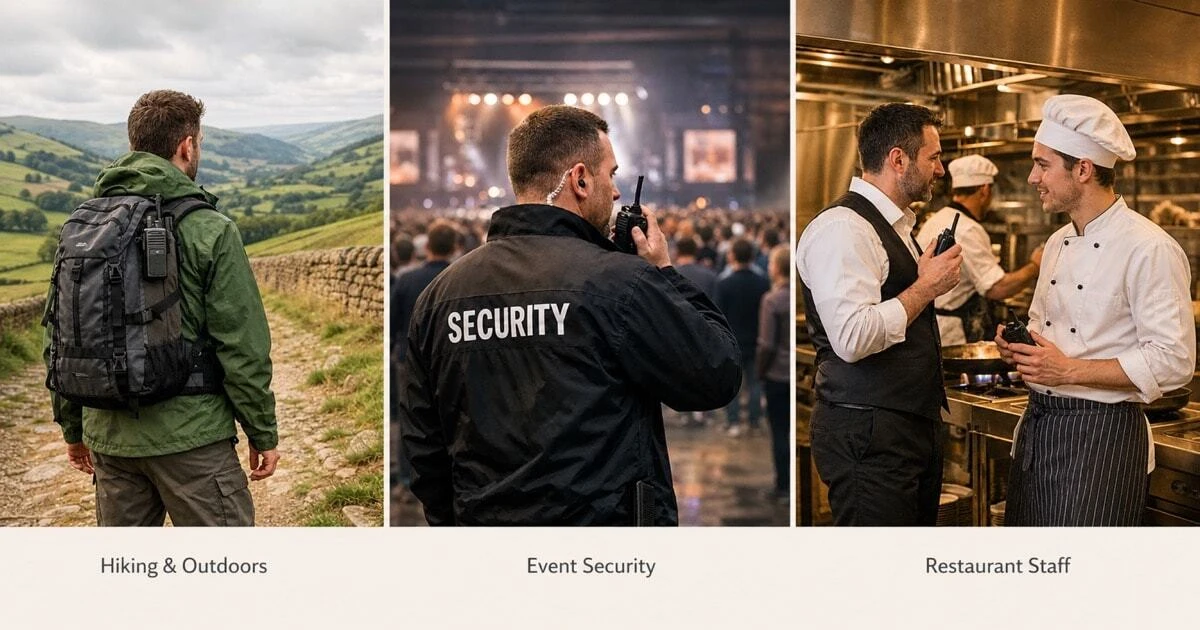 Three completely different environments — countryside hiking, venue security and restaurant service — each require a different approach to radio selection. The best radio for one situation is rarely the best radio for another.
 Choosing the right walkie talkie range for your needs
For hiking and outdoor adventures
Look for durable construction, good battery life, weather resistance, simple operation and suitable legal use in the UK. Outdoor users often value reliability more than maximum advertised range.
Explore two-way radios for outdoor use.
For security teams and events
Security teams usually need clear audio, reliable coverage around a venue, earpiece compatibility, spare batteries and easy team communication. A radio that works well for one person hiking may not be the right choice for a security operation.
Explore two-way radios for security.
For businesses
Restaurants, hotels, shops, and construction teams often need fast communication between staff. Important factors include number of users, working area size, indoor or outdoor use, required accessories and licence requirements.
Explore: walkie talkies for restaurants · walkie talkies for construction · business and commercial two-way radios.
Recommended radios by use case
The six models below are matched to the two most common range needs — outdoor and long-range performance for licensed operators, and reliable everyday communication for business teams and families.
📻 Baofeng Radios — Matched to Your Range Requirements
Choose by environment and use case — not just by the number on the box.
🥾 Outdoor & Long Range — For Licensed Operators, Hikers & Field Teams
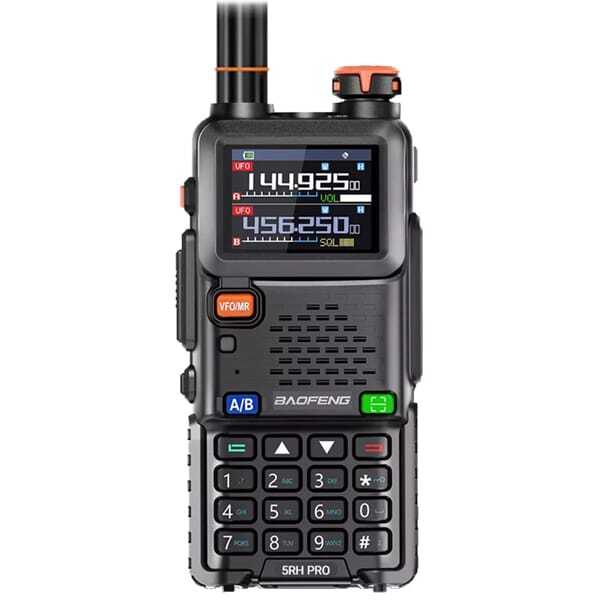
Baofeng UV-5RH Pro GPS
10W · GPS · USB-C · Colour screen · Airband receive — the top choice for licensed operators who need maximum capability in open outdoor environments.
View UV-5RH Pro GPS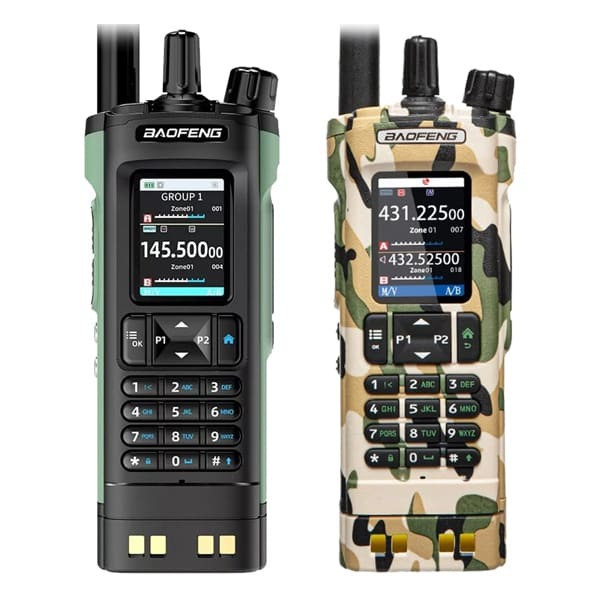
Baofeng UV-32 GPS
10W · Enhanced antenna · GPS · Bluetooth — designed for licensed users prioritising range across open countryside, hilly terrain and rural environments.
View UV-32 GPS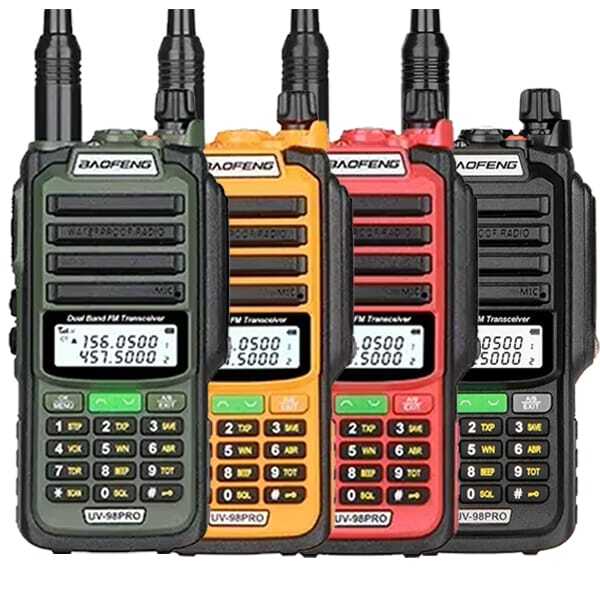
Baofeng UV-98 Pro IP68
IP68 · 8W · Dual-band — maximum weather protection for licensed operators working in rain, mud and challenging outdoor conditions where durability matters as much as range.
View UV-98 Pro🏢 Business & Everyday — For Teams, Hospitality & Short-Range Communication
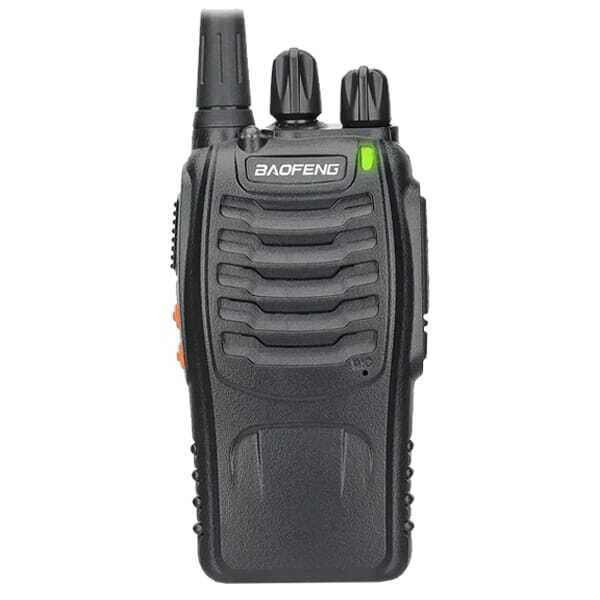
Baofeng BF-888S PMR446
0.5W · 16 PMR446 channels · Fixed antenna · No licence needed — the most popular short-range licence-free choice for restaurants, shops, schools and small event teams.
View BF-888S PMR446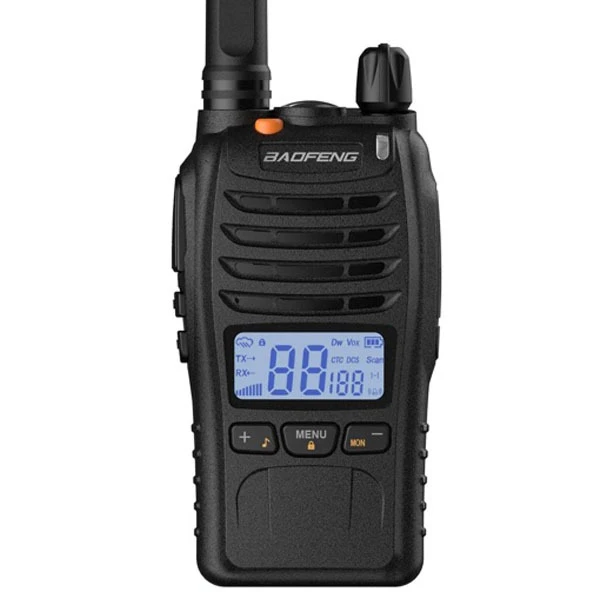
Baofeng BF-88ST Pro PMR446
PMR446 compliant · Pro upgrade · Fixed antenna · No licence needed — enhanced version of the BF-888S with improved features for business teams requiring reliable short-range communication.
View BF-88ST Pro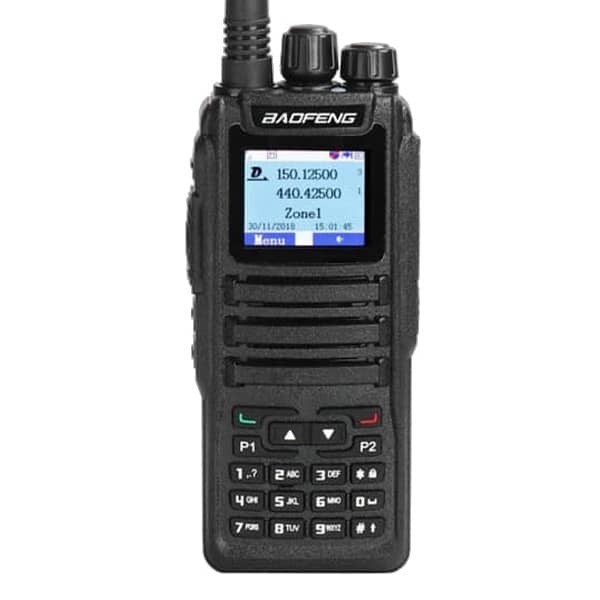
Baofeng DM-1701 DMR
Digital DMR · Dual time-slot · Clearer audio — for licensed business teams needing structured talk groups, digital voice quality and more reliable indoor building communication.
View DM-1701 DMR⚠️ Licensed radios require an appropriate Ofcom authorisation before transmitting. PMR446 models are licence-free when compliant. Always verify licence requirements before purchase.
Common mistakes when buying a long range walkie talkie
- ❌ Choosing based only on wattage More power can help, but it does not overcome every obstacle. Thick walls, poor antenna position and unsuitable frequencies can limit even the highest-powered radio. Always consider the specific environment first.
- ❌ Expecting maximum advertised range Manufacturer range claims are usually based on favourable open-air conditions with minimal interference. Real-world environments — forests, buildings, urban streets — typically produce much shorter practical ranges.
- ❌ Ignoring UK radio rules Some buyers purchase advanced radios without understanding legal transmission requirements. Higher-power programmable radios may require an Amateur Radio or Business Radio licence. Read the UK radio licence guide before transmitting.
- ❌ Buying without considering accessories For professional users, an earpiece, spare battery, charger, or programming cable may be just as important as the radio itself. A radio without the right accessories may underperform in a real working environment.
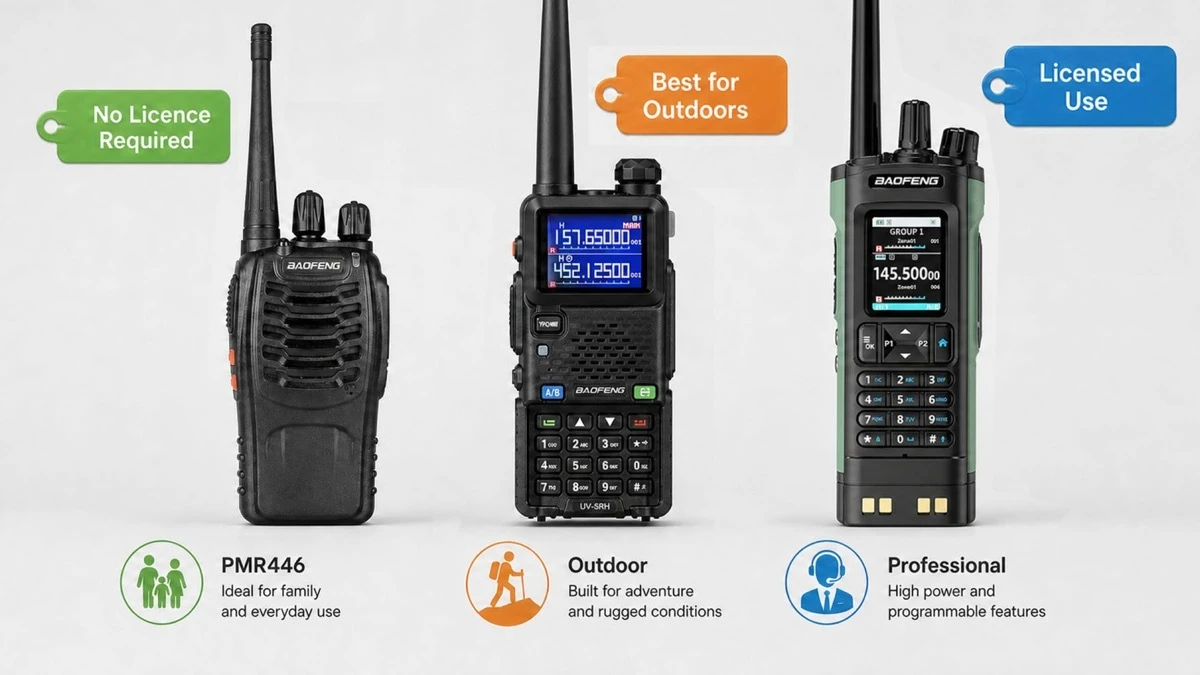 Three clear choices for UK radio buyers — a PMR446 licence-free radio for everyday short-range communication, an outdoor durable radio for hikers and field teams, and a licensed high-power model for advanced operators who need maximum capability.
 Key takeaways: finding the right long range walkie talkie
📋 Key takeaways
- Walkie talkie range depends on more than power alone
- Terrain, buildings, antenna quality and frequency all affect real-world performance
- The best radio is the one matched to your specific environment — not the one with the largest number on the box
- UK users should understand the difference between PMR446 licence-free radios and higher-capability licensed models
- Outdoor, business, security, and hobby users often need different features and different legal authorisations
- A long range walkie talkie delivers reliable communication where you actually need it — not simply a large distance figure on a product page
Frequently asked questions
What makes a walkie talkie long range?
Real-world range is determined by a combination of factors: transmission power, antenna quality and position, terrain and line of sight, and the presence of buildings or obstacles. No single factor guarantees a specific distance. A high-power radio in a forest may perform worse than a lower-power radio with a clear line of sight across an open field.
How far can a long range walkie talkie reach in the UK?
There is no guaranteed distance. In open countryside with a clear line of sight, a licensed high-power radio may communicate over a significant distance. In urban areas, dense forests or between floors of a building, the same radio may struggle to maintain clear communication over much shorter distances. Manufacturer maximum-range figures are typically based on ideal open-air conditions and should not be taken as a reliable guide for typical UK environments.
Does a more powerful walkie talkie always have better range?
Not necessarily. More power can help extend range under suitable open conditions, but it cannot overcome concrete walls, steel structures, hills that block line of sight, or poor antenna design. In many indoor or urban environments, other factors — particularly antenna position and frequency choice — have more impact on performance than output power alone.
What is the best walkie talkie for outdoor use in the UK?
For straightforward outdoor communication without a licence, a compliant PMR446 radio is the simplest option. For licensed operators who need greater capability in open terrain, a higher-power model such as the UV-5RH Pro GPS or UV-32 GPS offers more advanced features. Weather resistance, battery life and durability matter as much as output power for outdoor users.
Do I need a licence for a long range walkie talkie in the UK?
It depends on the radio. Compliant PMR446 radios can be used without an individual licence. Higher-power programmable radios — including most long-range models — generally require an appropriate Amateur Radio or Business Radio licence before transmitting legally in the UK. A radio's physical capability to transmit on a frequency does not automatically make that transmission legal.
What walkie talkie is best for restaurants and hospitality teams?
For most UK hospitality teams, a compliant PMR446 licence-free radio such as the BF-888S PMR446 or BF-88ST Pro PMR446 is the most practical choice. Range inside a single building is typically sufficient, no licence is required and setup is straightforward. The most important features for hospitality use are clear audio, an earpiece option, simple controls and a reliable charging routine.
Find the Right Radio for Your Range Requirements
From licence-free PMR446 handhelds for everyday short-range use to high-power GPS radios for licensed outdoor operators — Baofeng UK has the right radio for every environment and budget.
Shop Long Range Walkie Talkies