My Page
Digital Mobile Radios

Baofeng DMR Digital Radios (Digital Mobile Radio)

Welcome to the premier hub for high-performance Digital Mobile Radio (DMR) systems at Baofeng Walkie Talkies UK.

Engineered to the strict commercial ETSI DMR Tier II open standards, our professional digital two-way radios bring crystal-clear audio quality, high-tier signal security, and maximum spectrum efficiency straight to your operations. Whether you are expanding complex enterprise communication networks or setting up low-cost business comms for commercial deployments in the UK, Baofeng delivers premium-tier digital capabilities matching industry leaders like Motorola, Kenwood, and Icom—at a fraction of the cost.

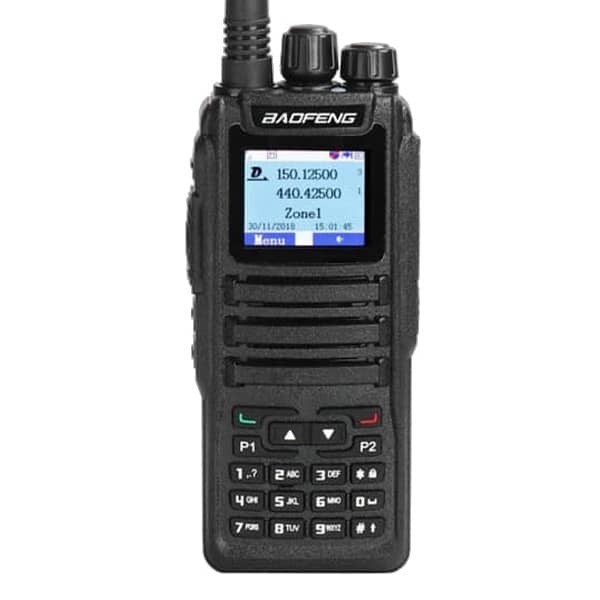
Tier II Dual Slot Classic Baofeng DM-1701 DMR Digital Two-Way Radio

Baofeng DM-1701 DMR Dual Band

  • True Tier II Dual Time Slot communication
  • Massive 3,000 Channels & 10,000 Contacts capacity
  • Compatible with OpenGD77 custom open-source firmware
  • SMS Text messaging & advanced digital group calling
View DM-1701 Details
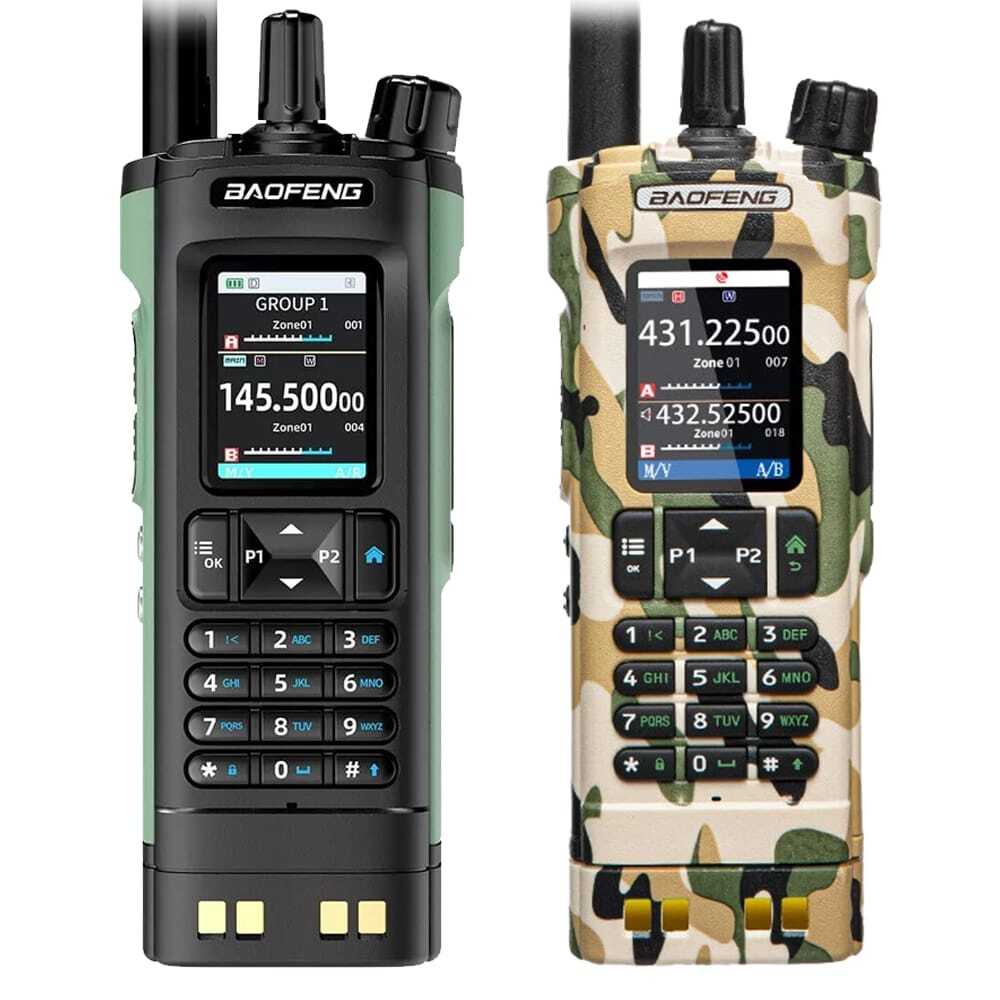
10W High Power + GPS Baofeng DM-32 Rugged Digital Walkie Talkie

Baofeng DM-32 Digital Walkie Talkie

  • Heavy-duty 10W output power for maximum UK range
  • Built-in GPS tracking & real-time location mapping
  • Wireless Bluetooth programming via mobile app
  • Multi-band receiver including AM Airband capabilities
View DM-32 Details

Why Upgrade to Baofeng Digital Mobile Radios (DMR)?

Transitioning from analogue to digital technology changes how teams coordinate and communicate. Built using high-efficiency TDMA (Time Division Multiple Access) technology, our radios split a single 12.5kHz frequency channel into two independent time slots. This allows your team to achieve unparalleled performance parameters:

Uncompromising Audio Clarity

Digital processing thoroughly filters out standard UK atmospheric white noise, static, and industrial feedback. Receive consistent, high-fidelity voice transmission up to the absolute edge of the radio's coverage profile on active worksites.

Doubled Channel Efficiency

With TDMA dual-slot deployment, a single frequency can host two distinct, simultaneous voice conversations without crossing lines. This actively reduces licence congestion and eliminates user conflict during peak traffic hours.

Advanced Signal Encryption

Keep sensitive business conversations or personal coordinates secure from external eavesdropping. Baofeng DMR models support native digital encryption to safely lock down private data transmissions.

Optimized Field Battery Lifespan

Because digital transmitters pulse dynamically rather than running continuously, models like the 10W high-power Baofeng DM-32 extract up to 40% longer operation periods out of a single charge cycle compared to old analogue equivalents.

Digital Mobile Radio (DMR) - Frequently Asked Questions

1. What is the main difference between DMR Tier I and Tier II radios?
DMR Tier I covers basic, low-power, licence-free applications. DMR Tier II (which models like the Baofeng DM-1701 utilize) covers professional, licensed conventional radio networks. Tier II grants access to higher transmit powers, dual time slots via TDMA, repeater operations, and far broader coverage across the UK.
2. Are Baofeng DMR radios compatible with Motorola or Kenwood systems?
Yes. Because DMR is an open global standard established by the European Telecommunications Standards Institute (ETSI), all Tier II compliant Baofeng digital radios will seamlessly communicate with Motorola MOTOTRBO, Hytera, Kenwood, or Icom digital systems, provided they are programmed to matching frequencies, time slots, and colour codes.
3. How do I program digital channels and set up "Codeplugs"?
Digital radios require a "codeplug" (a configuration file containing your frequencies, talkgroups, and contact lists) loaded via software. You must use an original Baofeng programming cable alongside the factory CPS software or custom open software like CHIRP / OpenGD77 to safely flash your configuration to the transceiver.
4. What are CTCSS/DCS privacy tones, and do they apply to DMR?
CTCSS and DCS codes are purely analogue squelch techniques used to filter out cross-talk. In digital radio, these are replaced by much tighter controls known as Colour Codes, Talkgroups, and Time Slots, which let you target distinct user groups on the exact same frequency. To learn more about standard squelch filters, read our comprehensive CTCSS/DCS Technical Guide.
5. Which industries benefit most from deploying Baofeng DMR solutions?
Because of their high structural durability and crystal-clear voice paths, they are actively deployed by commercial security operations, event staff, construction teams, and tactical airsoft team communications where missed messages are never an option. They are also exceptionally popular for long-range hiking and mountain rescue backup throughout remote UK areas.