
25th May 2026
Single Band vs Dual Band Walkie Talkies: The Ultimate Guide for UK Users

Frequency Analysis | UK Licensing & Compliance | 2026 Edition
When you’re gearing up for an outdoor expedition in the Peak District, coordinating security for a bustling London event, or setting up reliable emergency comms, choosing the right radio equipment is critical. The most common dilemma buyers face is deciding between a single band vs dual band walkie talkie. In short: single band radios operate on just one frequency band—either VHF (Very High Frequency) or UHF (Ultra High Frequency)—making them perfectly optimized for specific, consistent environments. Conversely, Dual band radios give you the flexibility of both VHF and UHF in one device, making them the ultimate choice for amateur radio operators, preppers, and users who frequently transition between dense urban settings and wide-open outdoors. Understanding this difference ensures you get the clearest signal, the best range, and the most value for your specific needs.
Whether you are a site manager looking for simple fleet communications or a newly licensed UK Ham radio enthusiast looking to upgrade your gear, this guide will break down exactly what these terms mean and which device belongs in your hand.
Table of Contents
The Foundation: Understanding VHF vs UHF
To understand the single vs dual band debate, you first need a basic understanding of the two primary frequency bands used in two-way radios:
- VHF vs UHF: Comparing these two bands is essential to identify how signal waves behave across varying British landscapes.
- VHF (Very High Frequency): Operating generally between 136-174 MHz, VHF waves are longer. They travel incredibly well across flat, open outdoor spaces with line-of-sight, such as lakes, fields, and marine environments. However, they struggle to penetrate solid objects like concrete and steel.
- UHF (Ultra High Frequency): Operating typically between 400-520 MHz, UHF waves are much shorter. These shorter waves excel at penetrating obstacles, making them the gold standard for indoor use, dense urban environments, warehouses, and heavily wooded areas.
What is a Single Band Walkie Talkie?
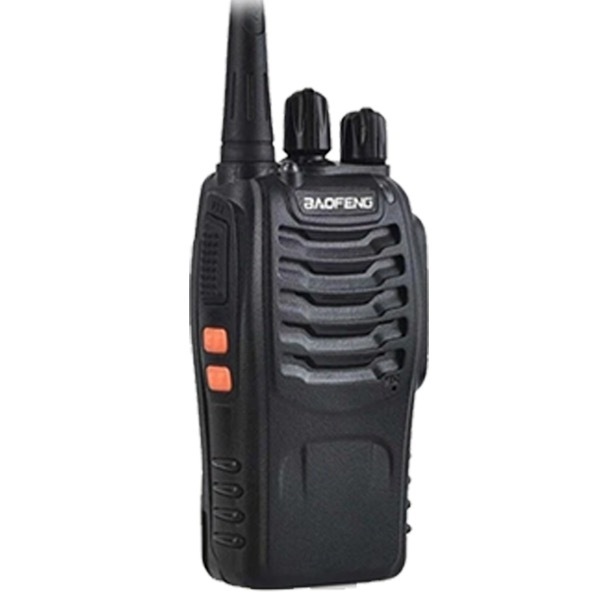
A single band walkie talkie is designed to transmit and receive on only one of the bands mentioned above—exclusively VHF or exclusively UHF.
The Pros of Single Band
- Simplicity: Single band radios are straightforward. They do exactly what they say on the tin without complex menus switching between bands.
- Optimized Antennas: Because the antenna only needs to be tuned to one specific frequency range, it is often perfectly optimized for maximum efficiency on that specific band.
- Cost-Effectiveness: Historically, simple single-band radios (especially license-free PMR446 UHF radios) are cheaper to manufacture, making them ideal for bulk purchases for businesses.
The Cons of Single Band
- Limited Versatility: If you buy a VHF radio for open-field hiking, it will suffer if you try to use it inside a concrete building. You are locked into one type of wave propagation.
What is a Dual Band Walkie Talkie?
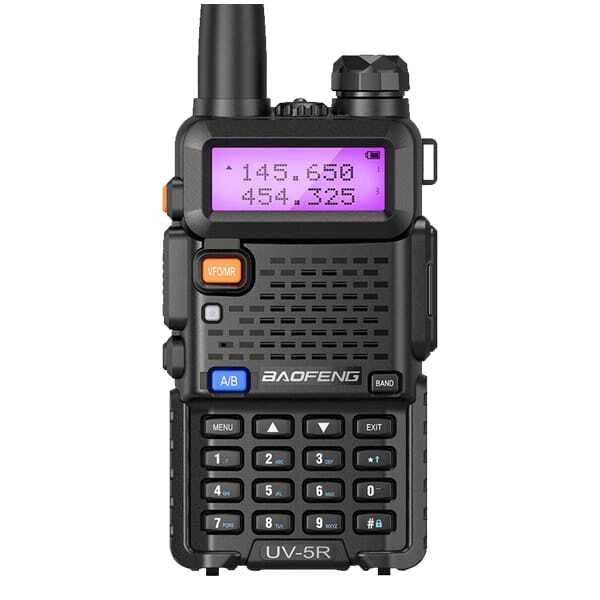
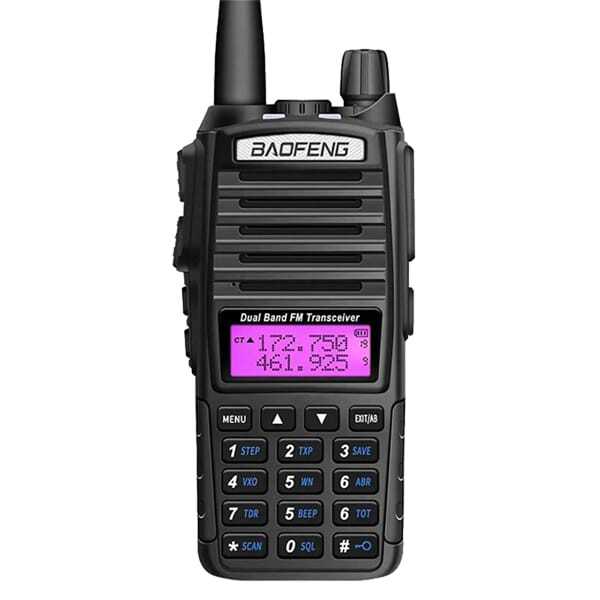
A dual band walkie talkie contains the internal hardware to transmit and receive on both VHF and UHF frequencies. Devices like the famous Baofeng UV-5R series are prime examples of dual band technology.
The Pros of Dual Band
- Unmatched Versatility: This is the primary reason people upgrade. You can use the UHF band when you are coordinating inside a building or working in a dense forest, and then switch to the VHF band when you are out on an open hillside needing maximum distance.
- Monitoring Multiple Channels: Most dual band radios allow for dual standby, meaning you can monitor a UHF channel and a VHF channel simultaneously.
- Future-Proofing: As your needs change or as you communicate with different groups of people who might use different bands, a dual band radio ensures you are never left incompatible.
The Cons of Dual Band
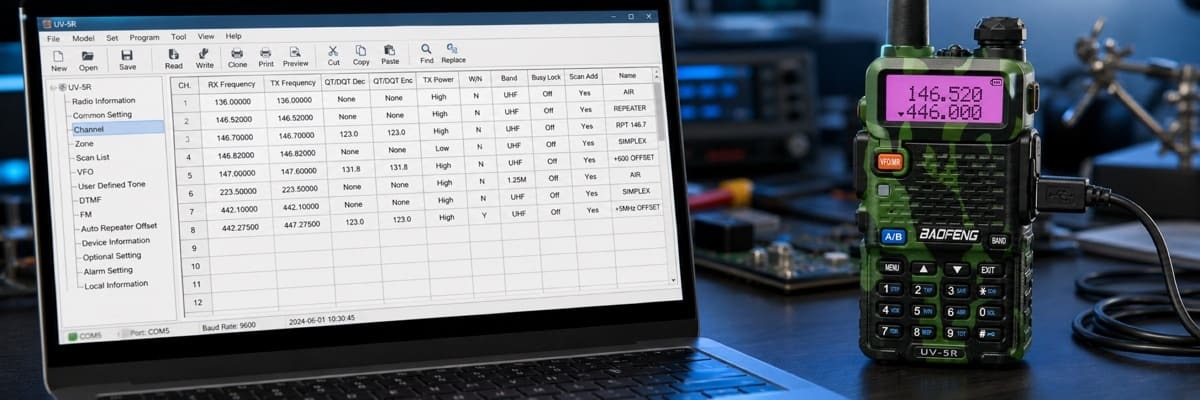
- Slightly More Complex: With more features comes a steeper learning curve. Programming software is highly recommended to properly manage your channels rather than adjusting complex internal hardware menus manually.
- Compromise Antennas: The stock antennas on dual band radios have to "compromise" to work adequately on both bands. However, you can easily swap them out for aftermarket antennas tuned to your preferred band.
Key Differences: Single-Band vs Dual-Band
To help you decide between a single-band setup and a multi-band powerhouse, here is a breakdown of their primary practical trade-offs:
| Feature | Single-Band Radio | Dual-Band Radio |
|---|---|---|
| Frequency Coverage | UHF OR VHF only | Both UHF AND VHF |
| Versatility | Limited to one specific environment | Adapts instantly to urban and open field changes |
| Operation | Simpler, fewer menu settings | Dual-watch standby monitoring and dual display |
Key Differences to Consider Before Buying
1. Environment and Obstacles
The golden rule of radio selection applies here: UHF for indoors/obstacles, VHF for outdoors/line-of-sight. If your use case is 100% outdoors on water or flat land, a single band VHF is great. If it’s 100% inside a school or warehouse, a single band UHF radio is perfect. If your use case changes day-by-day, a dual band radio is a necessity.
2. UK Licensing and Compliance (Ofcom)
In the UK, license-free radios (PMR446) operate strictly on the UHF band (446 MHz). Most standard single-band consumer walkie talkies you buy on the high street are PMR446. However, if you hold a UK Amateur Radio Licence (Foundation, Intermediate, or Full), you have access to specific VHF (2-meter) and UHF (70-centimeter) bands. For licensed hams, a dual band radio is practically mandatory to take full advantage of your privileges and access local Ofcom repeaters.
3. Interoperability
If you are buying a radio to join an existing fleet, you must know what band they are using. A single band VHF radio cannot talk to a single band UHF radio. A dual band radio, however, can be programmed to talk to either (provided you have the legal right and correct frequencies).
Which One Should You Choose? (Persona Match)
- The Outdoor Adventurer & Prepper: Recommendation: Dual Band. When exploring the UK wilderness, you never know what terrain you’ll face. Having the ability to switch to VHF for mountain-top reach, or UHF to communicate with license-free PMR446 users in your camping group, makes radios like the Baofeng UV-5RH an invaluable tool.
- The Event Organizer or Retail Worker: Recommendation: Single Band UHF. If your staff is working in a multi-story hotel, a retail store, or a dense festival ground, UHF is king. A dedicated single band UHF radio keeps things simple for employees while ensuring signals penetrate walls.
- The Amateur Radio Operator (Ham): Recommendation: Dual Band. Hams rely heavily on dual band radios to access different repeaters, participate in emergency nets, and experiment with radio propagation.
Conclusion
The debate between a single band vs dual band walkie talkie ultimately comes down to your environment and your willingness to learn the equipment. Single band radios offer specialized, reliable simplicity. Dual band radios offer the ultimate "Swiss Army Knife" flexibility for communication. For those who want the best of both worlds, investing in a high-quality dual band transceiver is the smartest move for long-term, reliable communication.
Frequently Asked Questions (FAQs)
1. Can a single band radio talk to a dual band radio?
Yes, as long as both radios are tuned to the exact same frequency and privacy code. For example, a dual band radio set to a UHF frequency can communicate perfectly with a single band UHF radio.
2. Are dual band radios harder to program?
They have a slightly steeper learning curve because there are more menu options and frequency ranges to navigate. However, using CHIRP makes programming dual band radios incredibly simple via a PC.
3. Do I need a licence for a dual band radio in the UK?
Yes. Because fully programmable dual band radios (like Baofengs) can transmit on amateur frequencies and at higher power outputs (usually 5W to 8W) than the legal PMR446 limit (0.5W), you need an amateur radio licence to transmit on them legally in the UK.
4. Does a dual band radio have better range than a single band?
Not inherently. Range is determined by the frequency band (VHF vs UHF), the power output (wattage), the antenna, and the terrain. A 5-watt single band VHF radio and a 5-watt dual band radio transmitting on VHF will have roughly the same range.
5. What is the most popular dual band Baofeng radio?
The Baofeng UV-5R is the most famous and widely used dual band radio in the world due to its affordability and reliability. Newer models like the UV-5RH offer upgraded features, multi-band reception, and modern USB-C charging.