
6th Jan 2026
VHF Vs UHF Which Is Better?
Choosing between VHF (Very High Frequency) and UHF (Ultra High Frequency) walkie talkies is one of the most important decisions you'll make when buying a two-way radio in the UK. The wrong choice could mean dead zones, poor signal, or wasted money.
This 2026 guide explains the difference between VHF and UHF, when to use each, and which Baofeng radio is best for your specific situation — whether you're a farmer in Yorkshire, a hotel manager in London, or a hiker in the Lake District.
⚡ Quick Answer: VHF vs UHF
- Choose VHF (136–174 MHz) for open outdoor use — farming, marine, long-distance rural communication. VHF travels almost twice as far in open areas.
- Choose UHF (400–520 MHz) for indoor use, urban areas, and buildings — hotels, warehouses, hospitals, schools. UHF penetrates walls and obstacles better.
- Best for most UK users: A Dual-Band Radio covering both VHF & UHF gives you maximum flexibility.
📋 In This Guide:
1. What Are VHF and UHF Frequencies?
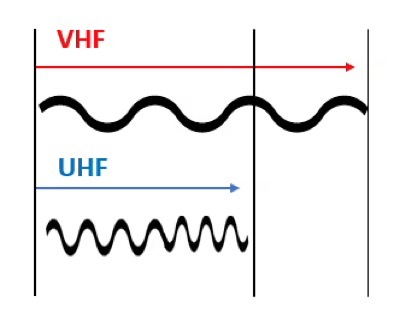
VHF and UHF are two of the most common radio frequency bands used in commercial and amateur two-way radios worldwide. They are regulated in the UK by Ofcom (the Office of Communications).
📡 VHF (Very High Frequency)
- Range: 30 MHz – 300 MHz
- Radio Use: Typically 136–174 MHz
- Wavelength: ~2 metres (long wave)
- Best For: Open outdoor areas, marine, aviation
📡 UHF (Ultra High Frequency)
- Range: 300 MHz – 3 GHz
- Radio Use: Typically 400–520 MHz
- Wavelength: ~70 cm (short wave)
- Best For: Indoor, urban, building-dense areas
2. VHF vs UHF: Key Differences Explained
🌄 Range and Distance
In an open area with no obstacles, a VHF signal travels almost twice as far as a UHF signal at the same power output. This is why VHF dominates in industries like marine, aviation, and agriculture.
For example, if a 5W UHF radio reaches 3 miles in open countryside, the same 5W VHF radio could reach close to 5–6 miles.
🏢 Penetration Through Obstacles
Here's where it gets interesting. UHF wins indoors. Why? Because of wavelength physics.
Imagine you're trying to communicate across a commercial building. There's a metal wall with a 1-metre wide doorway between you and your colleague.
- UHF wavelength (~70 cm): Smaller than the door — passes through easily.
- VHF wavelength (~2 m): Larger than the door — gets reflected and blocked.
This is why UHF radios are the gold standard in hotels, hospitals, warehouses, and schools across the UK.
📊 Side-by-Side Comparison Table
| Feature | VHF (Very High Frequency) | UHF (Ultra High Frequency) |
|---|---|---|
| Frequency Range | 136–174 MHz | 400–520 MHz |
| Outdoor Range | ✅ Excellent (Longer) | Good |
| Indoor / Building | Poor (Blocked by metal) | ✅ Excellent (Penetrates walls) |
| Antenna Size | Longer | Shorter / Compact |
| Battery Efficiency | More efficient | Slightly less efficient |
| Best Environment | Rural, open fields, sea | Urban, indoor, warehouses |
3. Which Frequency Is Best for Your UK Industry?
🌾 Choose VHF If You Work In:
- Farming & Agriculture (Wide open fields)
- Road & Bridge Construction
- Volunteer Public Safety (RAYNET)
- Paging Systems
- Long-Haul Trucking & Logistics
- Outdoor Recreation (Hiking, hunting)
- Marine & Coastal Use
🏨 Choose UHF If You Work In:
- Manufacturing, Factories & Warehouses
- Hotels, Hospitality & Retail Stores
- Building Construction Sites
- Schools, Universities & Education
- NHS Hospitals & Care Homes
- Security & Event Management
- Urban Delivery & Couriers
4. UK Licensing: What You Need to Know
In the UK, two-way radios are regulated by Ofcom. Here's a quick summary:
- PMR446 (Licence-Free): UHF radios operating on 446 MHz can be used without a licence. Perfect for casual or family use.
- Business Radio Licence: Required if you're using VHF or UHF on dedicated business frequencies. Costs around £75 for 5 years.
- Amateur (Ham) Radio Licence: Required if you want to operate on amateur radio bands. Free after passing the Foundation exam.
👉 Read our complete UK Ham Radio Licence Guide
5. Best Baofeng VHF & UHF Radios in the UK
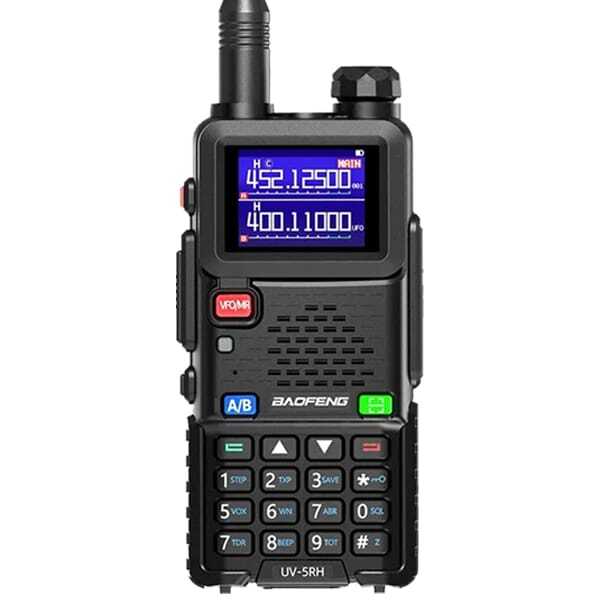
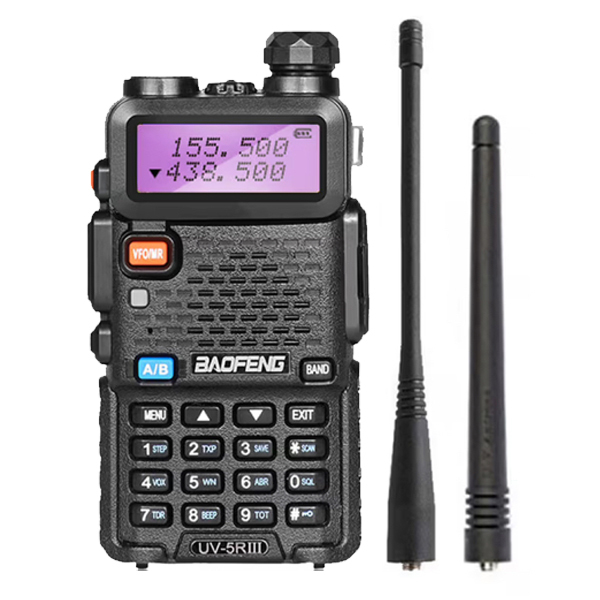
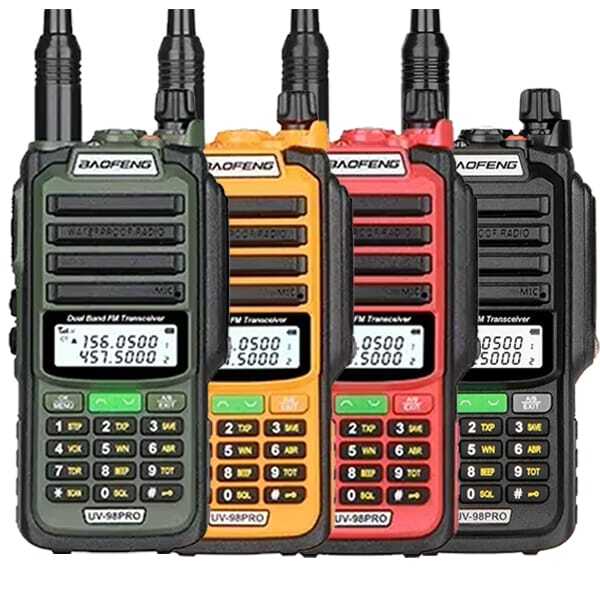
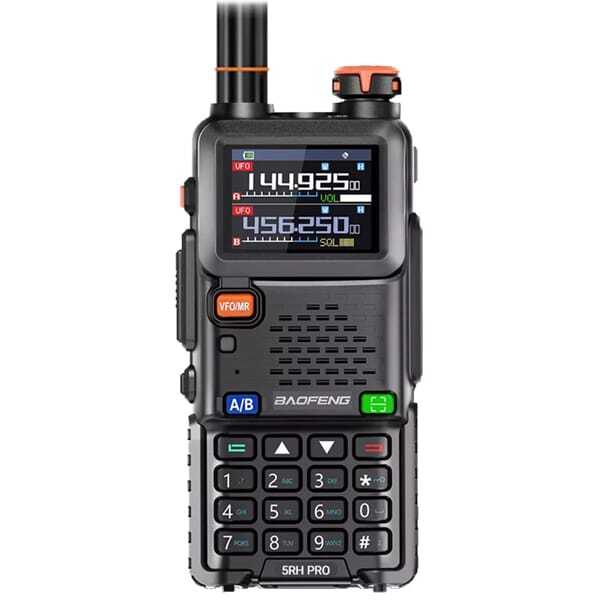
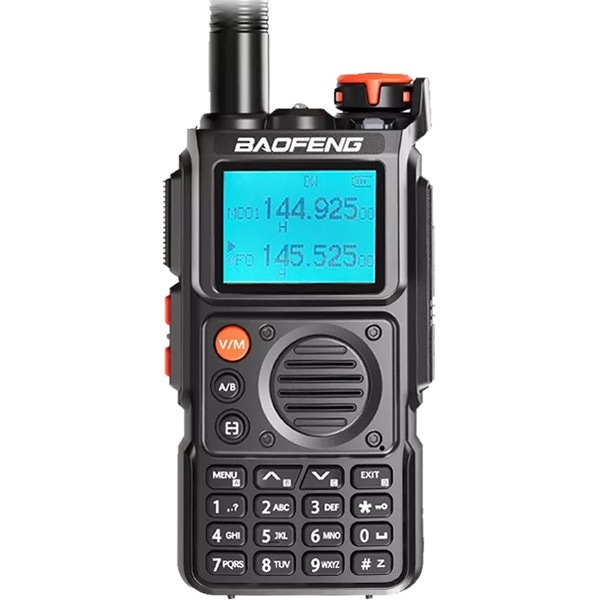
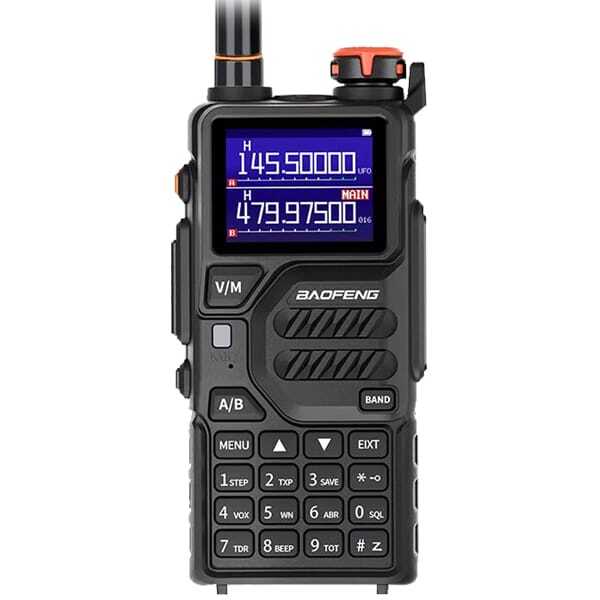
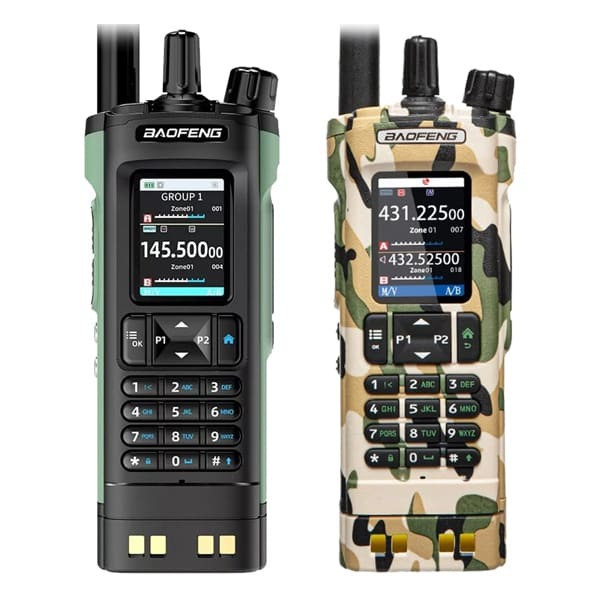
At Baofeng UK, all our two-way radios are dual-band, meaning they operate on both VHF and UHF — giving you the flexibility to switch depending on your environment. Here are our top picks for 2026:

6. Frequently Asked Questions
❓ Is VHF or UHF better for long distance?
For long distance in open areas (like fields, mountains, or sea), VHF is better — it can travel almost twice as far as UHF at the same power.
❓ Can VHF and UHF radios talk to each other?
No. VHF and UHF radios operate on completely different frequency bands and cannot communicate with each other — unless you use a dual-band radio like the Baofeng UV-5RH Pro that supports both.
❓ Which is better for indoor use, VHF or UHF?
UHF is better indoors. Its shorter wavelength (~70 cm) penetrates walls, doors, and metal obstacles more effectively than VHF (~2 m). That's why hotels, hospitals, and warehouses in the UK use UHF radios.
❓ Do I need a licence to use VHF or UHF radios in the UK?
It depends. PMR446 UHF radios are licence-free. For other VHF or UHF frequencies, you'll need an Ofcom Business Radio Licence or an Amateur (Ham) Radio Licence.
❓ What is a dual-band radio?
A dual-band radio can operate on both VHF and UHF frequencies, giving you the flexibility to switch depending on your environment. All Baofeng radios sold in the UK are dual-band.
Still Not Sure Which Radio Is Right for You?
Our UK-based team is here to help. Get expert advice on choosing the right VHF or UHF walkie talkie for your business or hobby.
Contact Baofeng UK Experts