
5th Nov 2026
Radio Repeater Guide: How Repeater Systems Extend Two-Way Radio Range
This guide was written and reviewed by the Baofeng UK technical team — UK-based radio communications specialists. Licensing information references current Ofcom guidance for amateur radio, Business Radio and PMR446. Product specifications are based on current Baofeng UK listings. This guide is an educational reference — always verify current licence conditions with Ofcom before operating or installing repeater equipment.
Want to understand how a radio repeater system works?
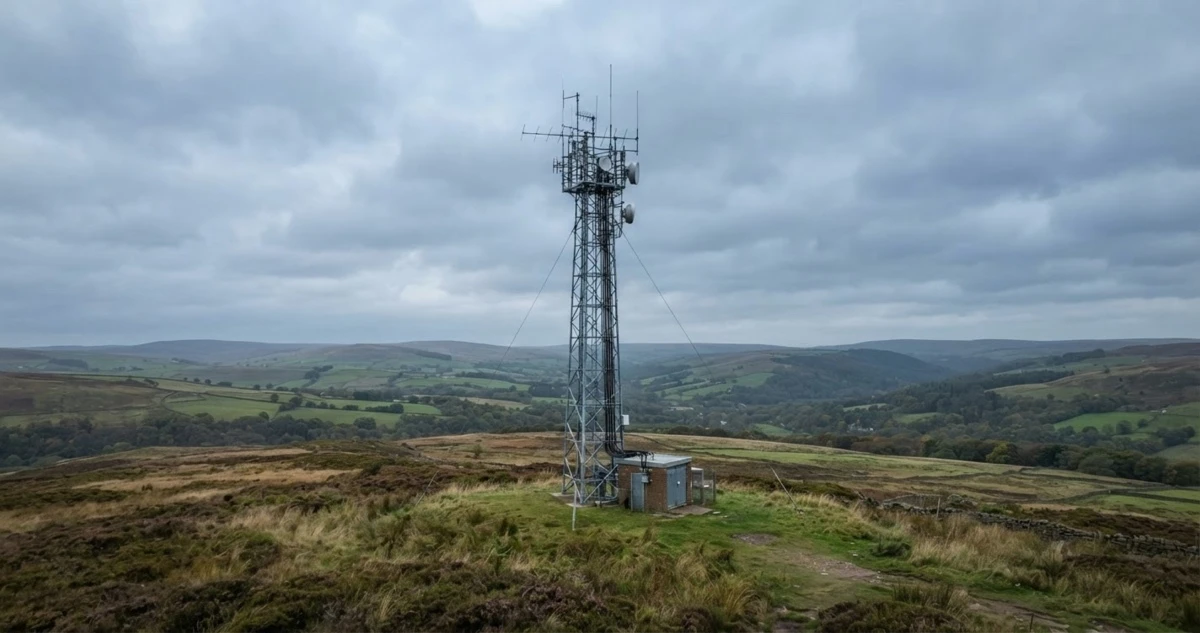
A radio repeater is a station that receives a radio signal and retransmits it, usually from an elevated or strategically located site chosen to provide better signal coverage. By placing the repeater antenna at an elevated or strategically selected site, radios that struggle to communicate directly can often connect across longer distances, around difficult terrain or through parts of a large area where direct communication is limited.
A conventional radio repeater system normally works with two frequencies. The repeater listens on one frequency and retransmits the received communication on a second frequency. Compatible two-way radios are programmed with the corresponding transmit and receive settings so users can communicate through the repeater.
Repeaters are widely associated with amateur radio, although repeater systems can also form part of professionally designed business radio infrastructure. Their effectiveness depends on frequency planning, antenna installation, terrain, site height, interference, radio configuration and the legal conditions governing the frequencies being used.
⚡ TL;DR — Key Takeaways
- A radio repeater receives a signal and retransmits it from an elevated or strategically placed site, extending coverage beyond the direct range of portable radios.
- Most repeater systems use two frequencies — one for the repeater input (users transmit) and one for the repeater output (users receive).
- Duplex operation allows the repeater to receive and transmit simultaneously; a duplexer makes shared antenna operation possible.
- Actual range depends on antenna height, terrain, frequency band, feedline losses, interference and radio configuration — not transmitter power alone.
- UK users must follow the correct licensing route: amateur radio, Business Radio and PMR446 each operate under different rules, and PMR446 does not permit repeaters.
- System design, antenna site selection and ongoing maintenance determine long-term reliability far more than any single component.
📋 Table of Contents
- What Is a Radio Repeater?
- How Does a Radio Repeater System Work?
- Why Do Repeaters Normally Use Two Frequencies?
- Duplex Operation and Simultaneous Transmission
- Can a Radio Repeater Use the Same Antenna?
- Why Can a Repeater Cover Longer Distances?
- Coverage Planning for Large Areas and Buildings
- Repeater Stations, Base Stations and Portable Radios
- Programming a Two-Way Radio for Repeater Use
- Frequency Bands and Repeater Performance
- UK Licensing and Radio Repeater Operation
- Designing for Reliable Performance
- Interference and Shared Radio Spectrum
- Maintenance and Long-Term Reliability
- The Real Cost of a Repeater System
- Radios for Repeater Use
- Conclusion
- Frequently Asked Questions
What Is a Radio Repeater?
A radio repeater is a receiving and transmitting station designed to extend the practical coverage of radio communications.
Imagine two portable radios operating from opposite sides of a large site. If a tall building, hill or other obstruction lies between them, a direct signal may be weak or completely lost. A repeater station located at a higher point may have a usable radio path to both users.
When the first user transmits, the repeater receives that transmission and retransmits it. The second user hears the retransmitted audio through the repeater rather than relying entirely on a direct radio-to-radio path.
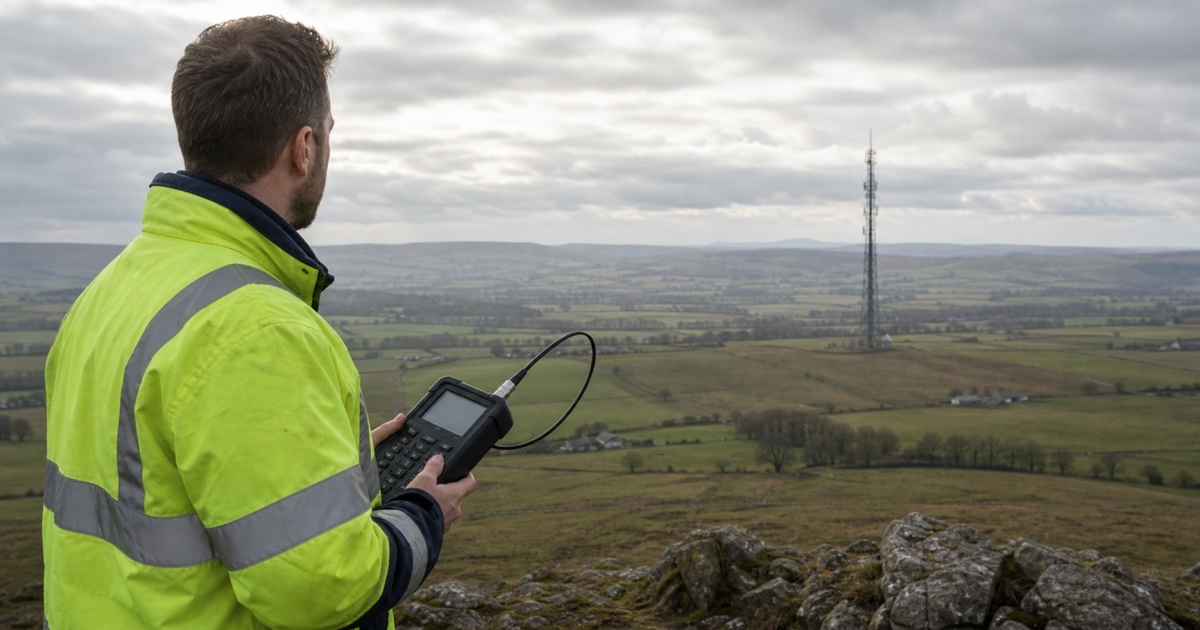
Location is therefore one of the most important advantages of repeaters. A handheld radio carried close to ground level has limited antenna height, while a repeater antenna can be installed on a mast, tower, rooftop or other elevated site. This can improve the radio horizon and reduce the impact of nearby buildings and terrain.
🔵 UK Licensing Note: Ofcom recognises repeater operation within the UK amateur radio licensing framework. Current amateur radio rules and guidance should always be checked before operating or installing repeater equipment.
How Does a Radio Repeater System Work?
The operating principle is straightforward, although a reliable installation involves several components working together.
When a user presses the push-to-talk button on a compatible radio, the radio transmits towards the repeater using the programmed input frequency. The repeater receiver detects that radio signal and processes the received audio or data. The repeater transmitter then retransmits the communication on its output frequency. Radios listening to that output can receive the repeated transmission.
The communication path can be represented as:
When another user replies, the same process occurs in the opposite direction.
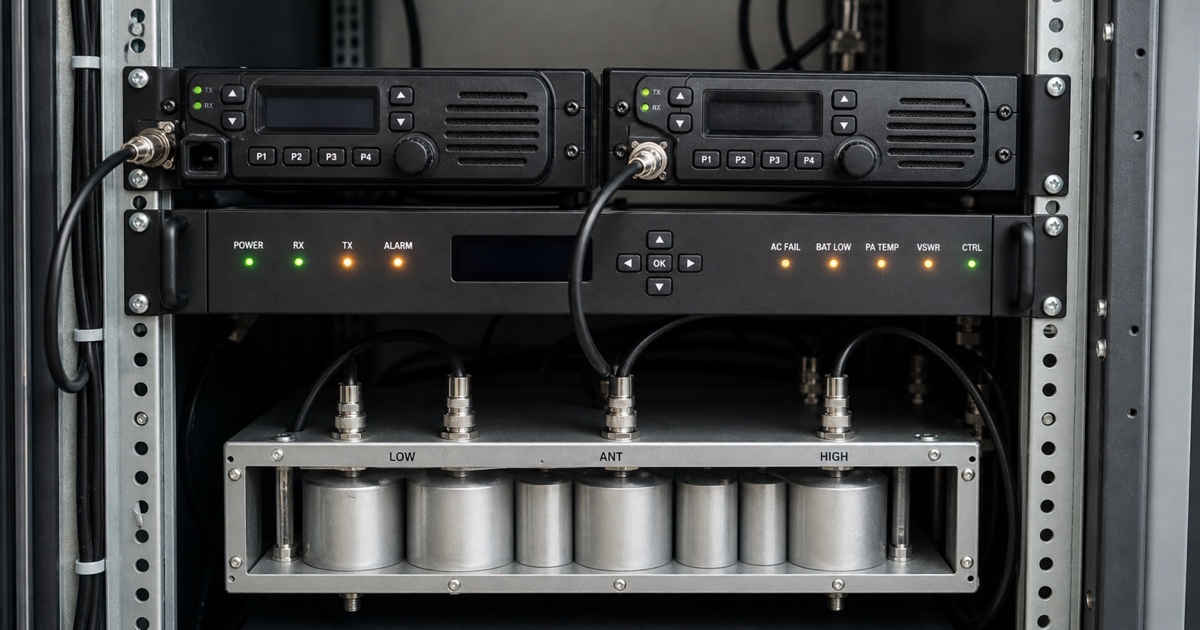
A complete repeater station can include:
Professional repeater systems may include additional monitoring, control, networking or linking technology depending on their purpose. The repeater itself usually operates continuously at the site, ready to receive authorised transmissions on its assigned input.
Why Do Radio Repeaters Normally Use Two Frequencies?
Frequency arrangement is one of the most important concepts in understanding repeater operation.
Simple direct radio communication commonly uses one frequency. One station transmits while the other stations listen. When the first user finishes talking, another user can transmit on the same channel. This is generally called simplex operation.
A conventional repeater system normally uses two frequencies instead.
| Frequency Role | Who Uses It | What Happens |
|---|---|---|
| Repeater Input | Users transmit on this frequency | The repeater receiver listens and processes incoming audio |
| Repeater Output | Users receive on this frequency | The repeater retransmits the received signal here |
| Repeater Offset | Defined by the repeater operator | The calculated difference between input and output frequencies |
A compatible portable radio can therefore listen to the repeater output while automatically transmitting on the corresponding input when its push-to-talk button is pressed. Depending on the radio, the channel may be programmed using a receive frequency together with an offset value and shift direction. Other equipment can store separate transmit and receive frequencies.
⚠️ Important: The correct configuration depends on the individual repeater. Users should obtain current frequency, offset and access information for the exact station they intend to use rather than relying on a generic example.
Duplex Operation and Simultaneous Transmission
A repeater needs to receive an incoming signal while retransmitting that communication to other users. This simultaneous receive and transmit capability is known as duplex operation.
The portable radios used by individual users generally operate differently. A handheld radio normally transmits when push-to-talk is pressed and returns to receiving when the button is released. That operating method is commonly described as half-duplex.
The repeater station, however, can receive on its input frequency while its transmitter operates on the output frequency.
Keeping the receive and transmit frequencies separate is essential because the repeater receiver may be trying to detect a comparatively weak signal from a portable radio at the same moment that the repeater transmitter is producing a much stronger nearby signal. Without adequate frequency separation and filtering, the repeater's own transmitter could interfere with its receiver and significantly reduce reliable performance.
Can a Radio Repeater Use the Same Antenna?
A radio repeater can use the same antenna for receiving and transmitting when the system includes appropriate RF filtering and isolation. This is normally achieved using a duplexer.
A duplexer is a set of carefully tuned filters that separates the receiver path from the transmitter path. It allows both sections of the repeater to connect to one antenna while reducing the amount of transmitter energy reaching the sensitive receiver input.
This isolation is important. A repeater transmitter may produce a strong signal only a short cable distance away from a receiver that is trying to hear a weak transmission from a portable radio several kilometres away.
Poor isolation can desensitise the receiver. The repeater may appear to transmit correctly while having difficulty hearing distant or weak users.
A properly designed antenna system therefore considers frequency separation, duplexer performance, cable losses, connectors, antenna tuning and physical installation.
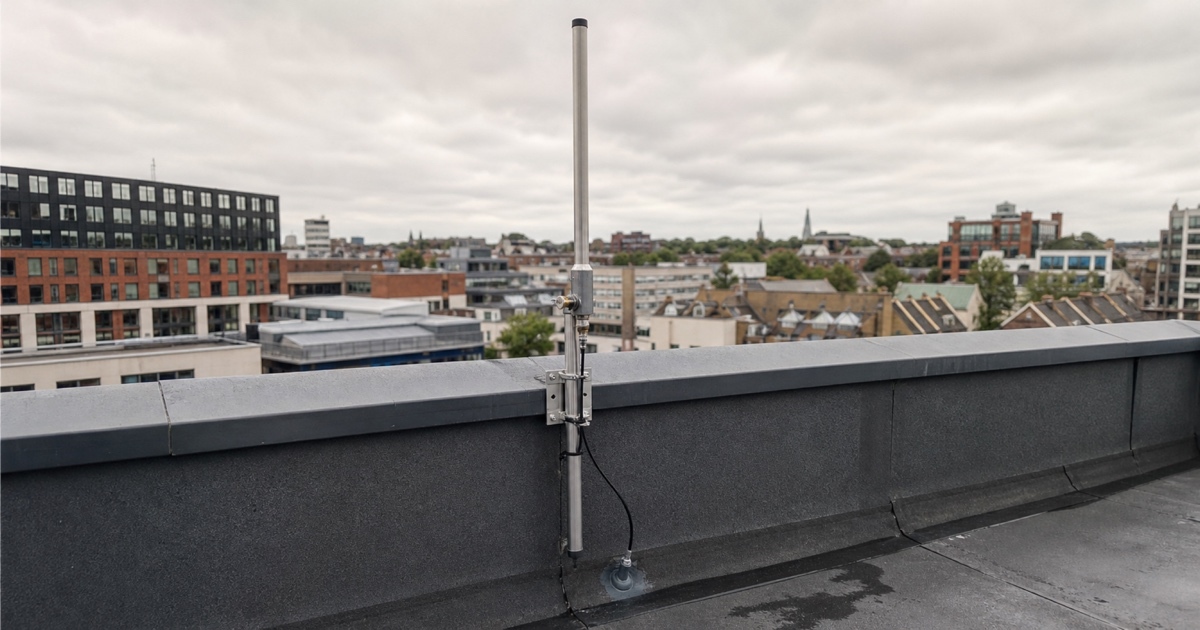
Some repeater stations use separate receive and transmit antennas instead of the same antenna. Physical separation between antennas can provide part of the required isolation. The best arrangement depends on the frequency band, site, available mounting positions, system power and engineering requirements.
For compatible handheld and station antenna options, users can browse the Baofeng antenna collection. Antenna suitability should always be checked against the operating frequencies and the exact radio model.
Why Can a Repeater Cover Longer Distances?
A radio repeater can help cover longer distances because it changes the location from which the signal is received and retransmitted.
VHF and UHF radio signals are strongly influenced by terrain, buildings, antenna height and surrounding obstructions. A user standing between large buildings or inside a valley may have a poor direct path to another radio even if the straight-line distance is relatively short. A repeater placed on high ground or a tall building may have a clearer radio path to both locations.
This does not mean that installing a repeater automatically guarantees a particular range. Actual signal coverage depends on several factors:
- Repeater antenna height
- Terrain between the repeater and users
- Buildings and construction materials
- Frequency band
- Transmitter power
- Receiver sensitivity
- Antenna gain and radiation pattern
- Feedline loss
- Local radio noise
- Interference from other users
- Portable radio antenna position
- Whether the user is indoors, outdoors or inside a vehicle
An open rural site with good line of sight may produce very different results from a dense city centre using the same radios and similar power. Trees, hills and buildings can absorb, reflect or obstruct radio signals. Reinforced concrete, metal structures and underground areas can be particularly difficult environments.
🎯 Practical advice: Range should be treated as a system design and coverage question rather than a fixed specification attached to any single radio or repeater unit. Test actual coverage in the environment where the system will be used.
Coverage Planning for Large Areas and Buildings
A repeater becomes especially useful when a communication requirement extends beyond the practical direct range of portable radios.
Consider a large building with users spread between several floors. Radios may communicate reliably within one part of the property while struggling between a basement, upper floor and outside area. Moving a repeater antenna to an appropriate elevated or central location may improve the paths between these areas.
A similar principle applies to outdoor environments. Farms, estates, industrial sites and geographically spread operations may contain hills, woodland, equipment and buildings that create weak signal areas.
Before installing a repeater system, it is useful to define what the system actually needs to cover. Useful questions for system design include:
- Which buildings or outdoor areas require coverage?
- Where will portable radios normally be used?
- Are users inside vehicles?
- What terrain lies between operating locations?
- How many users need access?
- How many channels are required?
- Which frequency band is appropriate?
- Is reliable indoor coverage important?
- Is backup power required?
- How critical is communication if part of the system fails?
A site survey can reveal areas where direct communication already works and places where signal coverage is limited. This prevents a system from being designed around theoretical distance alone.
Teams that only require simple direct communication across a relatively compact site may find that a repeater adds unnecessary infrastructure. Suitable handheld options for different communication requirements can be explored through the walkie talkies and handheld two-way radios collection.
Repeater Stations, Base Stations and Portable Radios
A repeater station should not be confused with an ordinary base station. A base station is generally a radio operating from a fixed location. It may have an external antenna, stable power supply and better antenna position than a portable device, but it does not automatically repeat transmissions. A repeater is specifically configured to receive a transmission and retransmit it.
A complete communication system can contain portable radios, vehicle-mounted radios, base stations and repeaters at the same time. For example, a team could use portable radios while moving around a site, a fixed radio in a control room and a repeater installed at a higher location to improve system coverage. How these devices connect depends on system design and licensing.
Repeaters can also serve an amateur radio community. A strategically located station may allow licensed operators using relatively modest handheld equipment to communicate with other users across a wider geographical area than would normally be possible through direct portable-to-portable transmissions.
Programming a Two-Way Radio for Repeater Use
A radio must support the repeater's frequency band, operating mode and required transmit and receive settings. An analogue FM handheld cannot access a digital-only repeater in digital mode. Digital systems may also require settings such as colour code, time slot and talkgroup, depending on the protocol.
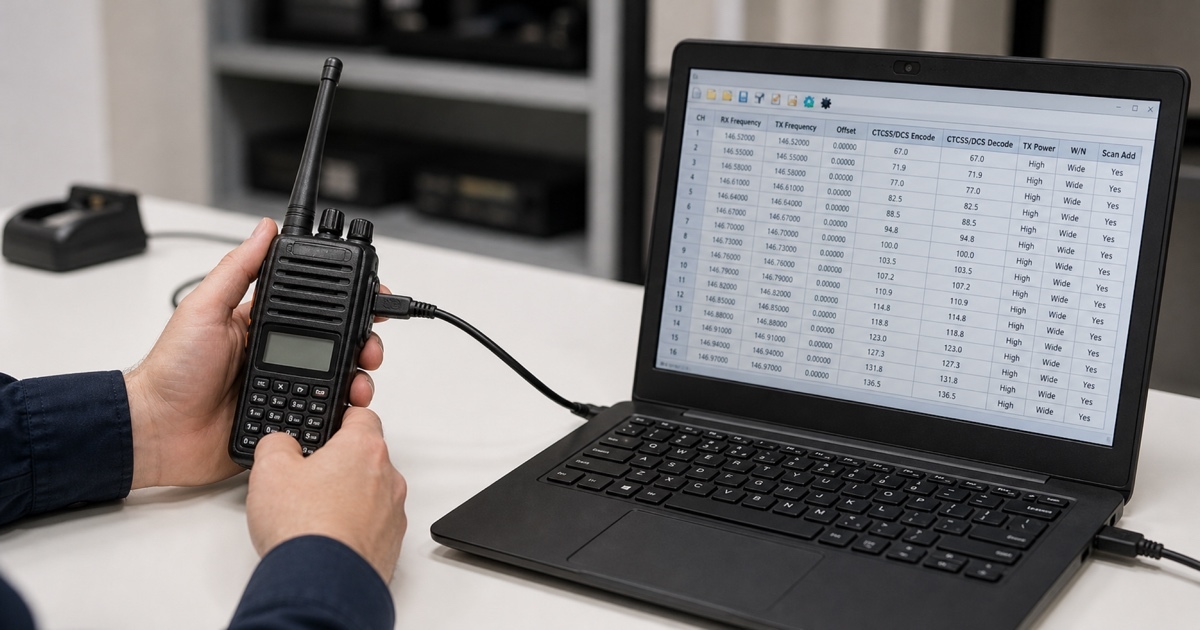
Common repeater-related settings include:
- Receive frequency
- Transmit frequency
- Frequency offset
- Positive or negative shift
- CTCSS or DCS access settings where applicable
- Channel bandwidth
- Transmit power
- Memory channel
- Channel name
The repeater output is normally the frequency that the user's radio receives. When push-to-talk is pressed, the radio changes to the repeater input frequency. Correct programming matters because a mistake in the offset, tone or frequency can prevent access even when the repeater signal is clearly audible.
Programmable radios designed for licensed amateur use can provide the flexibility required to store repeater channels. The Baofeng amateur radio collection includes programmable handheld models intended for licensed operators.
As a specific example, the Baofeng UV-5RH Pro GPS is a programmable multi-band handheld. Check the manual for the exact supplied version when configuring repeater channels; features listed for a related model do not establish compatibility.
⚠️ Important: Technical capability to programme a frequency does not itself provide permission to transmit. UK users must also ensure that the transmission is authorised under the relevant licence and operating conditions.
Frequency Bands and Repeater Performance
Repeaters operate within defined frequency bands and assignments. VHF and UHF are widely used for handheld and land-mobile communication, although their propagation characteristics differ.
VHF signals can perform well across open terrain and may interact differently with vegetation and obstacles. UHF is commonly used in built environments and many portable radio systems. Actual performance depends heavily on the individual location, antenna system and surrounding environment. Choosing a band therefore involves more than deciding which signal can theoretically travel furthest.
An engineered repeater installation considers the entire radio path. The antenna should be suitable for the operating frequency. Feedline losses should be considered, particularly where a long cable run connects equipment at ground level to an antenna on a tall structure. Connectors and weatherproofing must also be maintained because water ingress and damaged cable can introduce substantial losses.
A frequency plan must also account for other radio users. Increasing transmitter power cannot solve interference created by poor frequency coordination.
UK Licensing and Radio Repeater Operation
UK users should distinguish clearly between amateur radio repeater operation, licensed Business Radio systems and licence-free PMR446 equipment.
Ofcom maintains the UK amateur radio licensing framework and provides current licence terms and technical guidance for radio amateurs. Following updates to that framework, some forms of repeater operation can take place under standard licence conditions, while particular arrangements may be subject to further restrictions, coordination or authorisation. Operators planning a repeater should check the current Ofcom licence documentation that applies to their licence and proposed station.
For businesses and organisations, Ofcom states that Business Radio networks may include mobile terminals and one or more base stations and are used by closed user groups requiring reliable voice or data communication. Ofcom offers both Light and technically coordinated Business Radio licence categories, with the appropriate arrangement depending on matters such as frequencies, site and coverage requirements.
PMR446 operates differently. Current Ofcom guidance defines PMR446 as a licence-exempt handheld radio option between 446.0 and 446.2 MHz, with a maximum permitted effective radiated power of 0.5 watts. Ofcom's PMR446 interface requirements describe it as mobile-only, low-power, short-range, simplex, two-way peer-to-peer communication.
| Licence Type | Who It Covers | Repeater Permitted? | Notes |
|---|---|---|---|
| UK Amateur Radio Licence | Licensed amateur operators | Conditional | Some repeater operation permitted under standard conditions; check current licence documentation |
| Business Radio (Coordinated) | Businesses and organisations | Yes — with coordination | Technical coordination required; site and frequency specific |
| Simple UK / Site Light Licence | Small business or site use | No | Does not permit base stations; not suitable for repeater installation |
| PMR446 (licence-exempt) | General public, short-range use | No | Peer-to-peer only; integral antenna; no base stations or repeaters permitted |
⚠️ PMR446 Restriction: Licence-exempt PMR446 operation does not permit base stations or repeaters. PMR446 equipment must operate in short-range peer-to-peer mode using integral antennas. A Simple UK Light licence does not permit base stations and should not be treated as authorisation for a repeater installation.
Designing for Reliable Performance
A successful radio repeater system depends on more than the repeater device itself. The antenna site is often one of the most valuable parts of the system.
An expensive repeater installed at a poor location may provide disappointing coverage. A carefully selected antenna site with an appropriate radio path can produce significantly better results.
Height is useful when it improves line of sight, although simply choosing the tallest available building does not guarantee the best result. Nearby transmitters, structures and sources of electrical noise can affect receiver performance.
Feedline quality matters as well. Long cable runs can introduce signal loss between the repeater and antenna. At higher frequencies or over long distances, suitable low-loss cable may become increasingly important.
The duplexer must be correctly tuned for the specific frequency pair. Incorrect adjustment can reduce transmitter output reaching the antenna or weaken incoming signals reaching the receiver.
Power supply reliability is another consideration. Systems used for important operational communication may require battery backup or another power arrangement so that communication can continue during a mains failure.
Environmental protection should also match the installation. Equipment rooms, rooftop cabinets, antenna connectors and cable entry points need appropriate protection from moisture, temperature changes and physical damage.
Interference and Shared Radio Spectrum
Repeaters extend coverage, which means their transmissions may also be heard over a wider area. Responsible system design must take account of other users operating within the same or nearby parts of the spectrum.
Interference can come from co-channel transmissions, nearby frequencies, poorly installed equipment, receiver overload or other transmitters at the same site. This is another reason that frequency planning matters.
A repeater should operate on frequencies authorised for the system, with suitable filtering and within the applicable power limits. Ofcom's Business Radio process includes technical coordination for certain licence types, while amateur radio operation remains subject to the conditions of the relevant amateur licence.
Increasing power without addressing interference, antenna location or receiver performance can produce limited benefits and may create new problems for other users.
Maintenance and Long-Term Reliability
Repeater systems should be maintained after installation. Over time, connectors can corrode, water can enter cables, antennas can become damaged and power supplies can deteriorate. Changes around the site may also influence performance. A new building, altered antenna installation or additional transmitting equipment nearby can change the radio environment.
Routine checks can include:
- Receiver sensitivity
- Transmitter output
- Audio quality
- Antenna condition
- Feedline condition
- Duplexer performance
- Power supply
- Backup batteries
- Connectors and grounding
- Coverage from important operating locations
Users should also monitor whether previously reliable parts of the coverage area begin producing weak or inconsistent signals. Maintenance becomes particularly important where teams rely on the radio system for routine operational communication across a large area.
The Real Cost of a Repeater System
The repeater unit is only one part of the overall cost. A full installation can involve antennas, duplexers, coaxial cable, mounting hardware, power systems, site access, licensing, installation labour and ongoing maintenance. A site on a tall building or communications mast may also involve recurring access or rental costs.
For smaller systems, this makes planning especially important. A team should first establish whether direct portable communication can meet the requirement. Where direct radios already provide reliable coverage, additional repeater infrastructure may provide little practical advantage.
Where the operating environment contains significant coverage gaps, difficult terrain, multiple buildings or larger distances, a properly engineered repeater can become a valuable part of the communication system. The goal is to maximise usable and reliable coverage rather than simply maximise transmitter power.
Radios for Repeater Use
Whether you are accessing an existing repeater or setting one up yourself, the right radio makes the difference. The three models below cover the main use cases: licensed handheld access, vehicle-based terminal and cross-band repeating from a vehicle.
📻 Recommended Radios for Repeater Operation
Matched to use case — from handheld access to vehicle-mounted cross-band repeating. All require appropriate licensing for your intended frequencies.
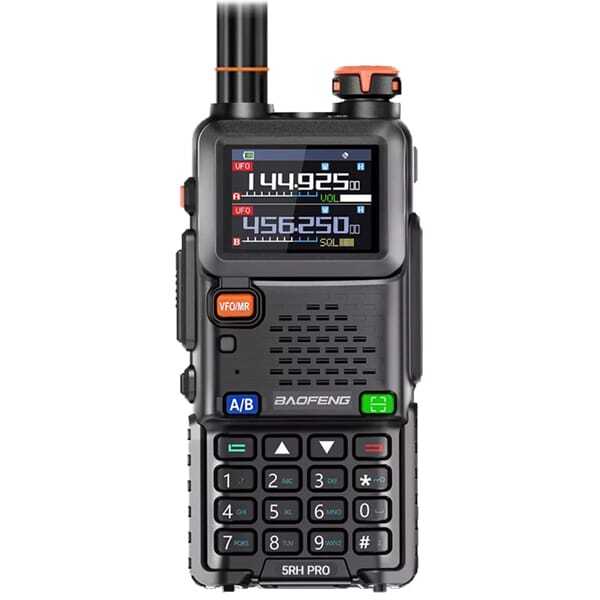
Baofeng UV-5RH Pro GPS
10W · Multi-band · 640ch · USB-C · GPS — programmable handheld for licensed amateur operators accessing existing repeater infrastructure.
View UV-5RH Pro GPS
QYT KT-8900D
25W · Dual-band · Quad standby · Compact — vehicle-mounted terminal for accessing an existing repeater network with stable power and improved antenna position.
View QYT KT-8900D
TYT TH-9800
50W · Quad-band · Cross-band repeat · Remote head — set up your own temporary vehicle-based repeater where no fixed infrastructure exists. For licensed operators.
View TYT TH-9800Browse our full range of programmable amateur radios and handheld two-way radios for more options across all use cases and budgets.
Conclusion
A radio repeater extends two-way radio coverage by receiving a signal at one location and retransmitting it from a strategically positioned station. Conventional repeater systems typically use two frequencies, allowing the repeater to receive on one frequency while transmitting on a second frequency.
Duplex operation, frequency separation and RF filtering allow a repeater to receive weak signals while simultaneously retransmitting communication. A duplexer can make it possible for the receiver and transmitter to use the same antenna, provided sufficient isolation is maintained.
The greatest coverage gains often come from antenna location and overall system design. Terrain, buildings, frequency band, antenna height, cable loss, interference, radio configuration and site conditions all influence practical range.
For UK users, licensing is equally important. Amateur radio repeaters, Business Radio systems and licence-free PMR446 equipment operate under different rules. Equipment capable of transmitting on a frequency should only be used where the operator and station are authorised to do so.
With suitable frequency planning, a well-selected site, correctly configured radios and ongoing maintenance, a radio repeater system can provide reliable communication across longer distances, large buildings and challenging environments where direct radio signals alone may provide limited coverage.
For licensed amateur operators looking for a programmable handheld to access or test repeater links, explore the Baofeng amateur radio collection. For antenna accessories, browse the Baofeng antenna range.
Frequently Asked Questions About Radio Repeater Systems
1. Does a radio repeater need an internet connection?
No, a conventional radio repeater can operate entirely over radio frequencies without an internet connection. Linked repeater systems may use internet connections, private networks or radio links depending on their design, but basic repeater operation is entirely RF-based.
2. Why can I hear a repeater but cannot transmit through it?
Your radio may have the wrong input frequency, offset or access tone programmed. It is also possible for the repeater's stronger transmitted signal to reach you while your portable radio does not have a reliable path back to the repeater receiver. Check the transmit frequency, offset direction and any CTCSS or DCS tone setting against the repeater's published access information.
3. Can several users talk through the same radio repeater at once?
Usually, only one conversation can use a conventional repeater channel at a time. Other users normally wait until the channel is clear before transmitting, which helps prevent overlapping radio signals and lost audio. Some repeater systems support talkgroups or sub-audible tone separation, but this varies by system design and configuration.
4. Can I use a PMR446 radio through a repeater in the UK?
No. Licence-exempt PMR446 operation is restricted to short-range, peer-to-peer, simplex communication using integral antennas. Repeaters are not permitted under the PMR446 licence-exempt framework. Using a repeater on PMR446 frequencies would not be compliant with Ofcom's requirements for licence-exempt operation.
5. What is the difference between a simplex channel and a repeater channel?
A simplex channel uses a single frequency for both transmitting and receiving. All users transmit and receive on the same frequency, and only one user can transmit at a time. A repeater channel uses two frequencies — one for the user's transmit and one for the repeater's output — allowing the repeater to receive and retransmit simultaneously on separate frequencies.
6. Do I need a licence to use a radio repeater in the UK?
Yes. Using a repeater in the UK requires appropriate authorisation. Amateur radio repeaters are accessed by licensed amateur operators operating within their licence conditions. Business Radio repeater systems require the appropriate Ofcom Business Radio licence. There is no licence-exempt route for repeater operation. Always verify the current licence conditions with Ofcom before transmitting.
Editorial methodology: This guide explains repeater operating principles and UK licensing context using published Ofcom guidance. It is an educational reference and does not constitute legal or regulatory advice. Licence conditions, frequency assignments and regulatory requirements should always be verified directly with Ofcom's current licence documentation before installing or operating any radio repeater system.