
13th Sep 2026
Business Two Way Radios: A Practical UK Guide for Reliable Team Communication

This guide was written and reviewed by the Baofeng UK technical team — UK-based radio communications specialists with over 10 years of experience helping businesses across construction, retail, security, hospitality and logistics choose the right two-way radio system. All licensing references reflect current Ofcom guidance. HSE lone worker references are consistent with current Health and Safety Executive guidance.
Business two way radios provide fast, direct communication for teams that need to coordinate people, tasks and safety across a workplace.
From construction sites and warehouses to retail stores, farms, venues and security operations, a well-chosen business radio system can keep teams connected without relying on mobile coverage or individual phone calls.
The best system depends on much more than advertised range. UK businesses need to consider whether licence-free or licensed radios are appropriate, how many users will share the system, whether digital radios offer useful operational features, how long batteries must last, and which accessories make radios easier to use during a working shift.
For many smaller businesses, simple PMR446 walkie talkies can provide an accessible and cost effective starting point. Larger sites or more demanding environments may benefit from licensed frequencies, more structured channels and a radio system designed around specific coverage requirements.
Most smaller UK businesses: Start with compliant PMR446 radios — no Ofcom licence required, immediate deployment, simple enough for all staff.
Larger or more demanding operations: Assess a licensed Business Radio system — greater frequency control, more structured channels, suitable for complex sites and coverage-critical environments.
Digital functionality needed? Review DMR digital radios — talk groups, larger contact lists and additional security functions when analogue communication is not sufficient.
⚡ Business two way radios — key points for UK buyers
- ✅ PMR446 licence-free: No individual Ofcom radio licence required for compliant equipment — ideal for smaller businesses, retail, hospitality, schools and local teams
- 📋 Licensed business radio: Required for larger sites, complex operations, higher power, base stations, repeaters or professionally managed frequency access
- 📲 Digital radios: Add talk groups, structured contacts and additional functions — useful when analogue communication reaches its limits
- 📏 Range must be tested on site: Buildings, terrain, steel and concrete affect performance — an advertised range figure is a best-case claim, not a site guarantee
- 🔋 Battery management is a system question: Plan chargers, spare batteries and shift handover routines — not just the mAh figure on the handset
- 🎧 Accessories improve everyday usability: Speaker microphones, earpieces and multi-unit chargers often matter as much as the handset specification
- 👷 Lone worker safety: HSE guidance identifies radios as one method for keeping in regular contact with isolated workers
📋 Table of Contents
- Why businesses continue to use two way radios
- Licence-free radios and licensed radios in the UK
- When digital radios make sense
- Business radios for construction sites
- Radios for security staff and monitoring
- Business radios and lone worker safety
- Retail, hospitality and smaller businesses
- Radios for farms and rural teams
- Why radio range should be tested on site
- Long battery life and shift management
- Accessories that improve everyday communication
- Managing channels and multiple users
- Recommended business two way radios
- Building a radio fleet around operational needs
- Choosing the right business two way radios
- Frequently asked questions
Why businesses continue to use two way radios
Unlike mobile phones, two way radios are built around instant communication. A user presses the push-to-talk button and speaks directly to another radio or an entire group on the selected channel. There is no need to dial a number, wait for someone to answer a call or open an app before passing a short operational message.
That makes radios particularly useful when communication needs to be brief and immediate. A warehouse manager can redirect staff to another loading bay. Security staff can report an issue to several colleagues at once. A construction supervisor can alert a team to a change in site activity. Retail managers can ask for assistance at a till or stock area within seconds.
Mobile phones remain useful devices for longer conversations, photographs, email, internet access and communication with people outside the operational team. Radios fulfil a different everyday function by creating a simple shared connection between workers.
They can also continue to operate where public mobile signal is weak or inconsistent, although radio coverage has its own limitations. Buildings, terrain, distance, interference and antenna position all affect performance.
🔵 Where to start: Businesses beginning their search can compare the available walkie talkies and two way radios before narrowing the selection according to licence type and operational requirements.
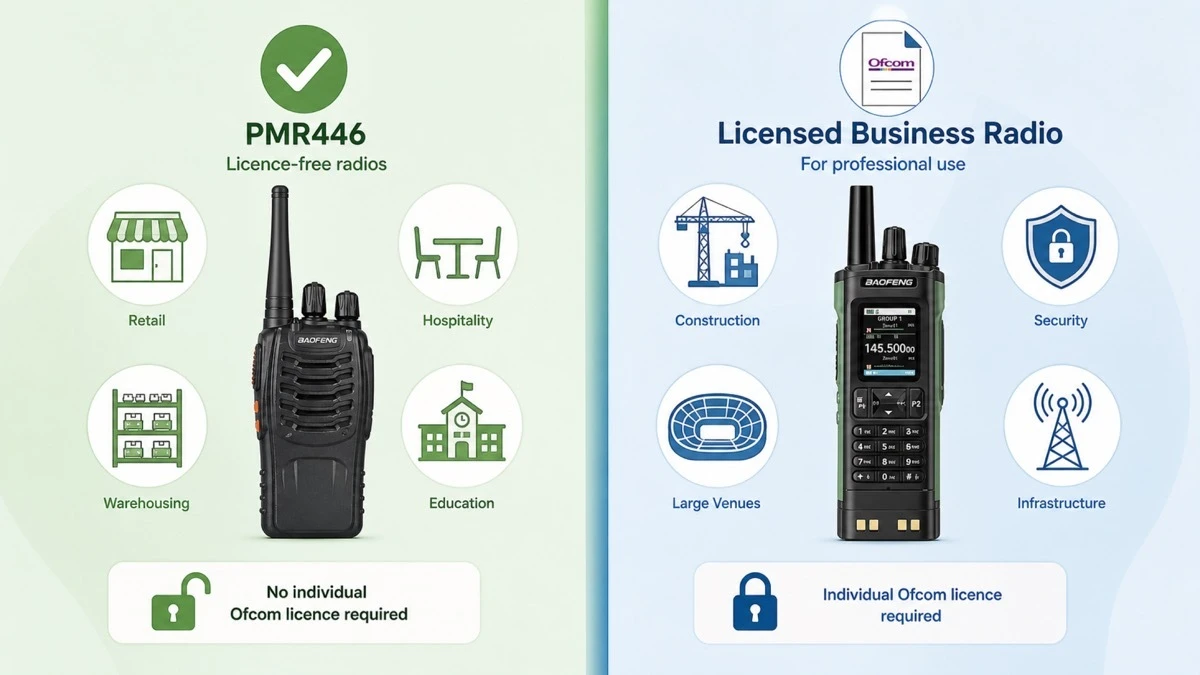 The first decision every UK business should make is not which radio has the best range — it is which licence category is legally appropriate and operationally suitable for the team and site.
 Licence-free radios and licensed radios in the UK
The first decision when buying business two way radios in the UK should be the type of radio your organisation is legally able and operationally prepared to use.
People sometimes search for "unlicensed radios", although licence-free PMR446 is a more accurate description of the common UK option. Ofcom states that PMR446 provides licence-exempt handheld radio operation between 446.0 and 446.2 MHz, subject to the relevant technical requirements. The maximum permitted effective radiated power is 0.5 watts.
The licence-free PMR446 radio collection is particularly relevant to smaller businesses that need straightforward local communication without a separate Business Radio licence. PMR446 can suit retail shops, restaurants and hospitality teams, smaller warehouses, schools and facilities teams, local event staff, small construction crews, short-range security operations and other businesses operating across a relatively compact area.
A model such as the BF-88ST Pro PMR446 is designed around this type of licence-free operation and is available in different quantities for team deployment.
Licensed radios become relevant when an organisation needs capabilities beyond what a licence-free PMR446 system can realistically provide. Ofcom offers several Business Radio licence categories, including Simple UK, Simple Site, Technically Assigned and Area Defined options.
⚠️ Licence fees and conditions: As of September 2026, Ofcom lists Simple UK, Simple Site and Suppliers Light licences at £75 for five years. Technically Assigned and Area Defined licence costs depend on factors such as location, frequency band and coverage. Always check the latest Ofcom information when planning a licensed system because licence conditions and fees are regulatory matters that can change.
A simple comparison for business buyers
| Requirement | Licence-free PMR446 | Licensed business radio |
|---|---|---|
| Ofcom radio licence | Not required for compliant equipment | Required |
| Typical use | Local team communication | More demanding business systems |
| Power | Restricted by PMR446 requirements | Depends on licence and equipment |
| Frequency access | Shared PMR446 spectrum | Authorised business frequencies |
| Setup | Relatively straightforward | More planning may be required |
| Interference control | Shared spectrum can become busy | Greater scope for planned frequency use |
| Best suited to | Smaller businesses and local teams | Larger, complex or coverage-critical operations |
⚠️ Legal reminder: Legal suitability should be confirmed before radios are programmed or issued to employees. Buying a programmable handset does not automatically make every available frequency lawful for business transmission.
When digital radios make sense
Digital radios can offer useful advantages when communication requirements become more complex. Depending on the radio and system, digital technology can support clearer audio towards the edge of usable coverage, larger contact lists, talk groups, text or data functions and more structured management of multiple users. Some digital systems also offer additional security functions.
Businesses exploring these features can review the Baofeng digital mobile radios collection. The collection includes DMR radios designed for organisations and users who need functionality beyond simple analogue voice communication.
🎯 Analogue vs digital: Analogue radios remain widely useful. A small team that simply needs to talk across a shop, restaurant, warehouse or local site may gain little operational benefit from adding complex digital functions. Consider digital radios when managers need more structured talk groups, a larger number of channels or contacts, specific digital functions, or a system that may need to scale over time. Analogue equipment can remain a practical choice where simplicity, fast staff training and predictable everyday operation are the main priorities.
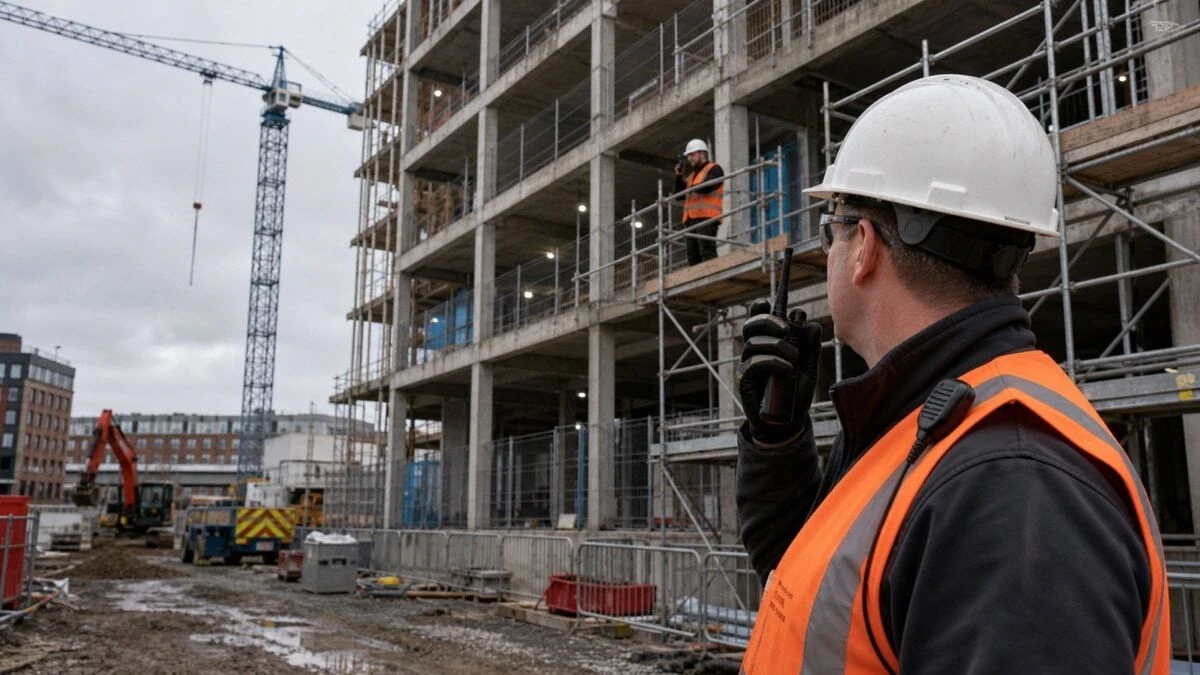 Construction sites present some of the most demanding two-way radio environments — multiple floors, reinforced concrete, steel structures and constantly changing site layouts all affect coverage. Testing in the actual environment is essential before committing to a large fleet.
 Business radios for construction sites
Construction sites are among the environments where instant communication has obvious operational value. Workers may be spread between floors, external areas, access points and temporary structures. Mobile phones can require too much attention when a quick instruction is needed, especially when workers are wearing gloves or moving between tasks.
Useful radio features for construction include robust housings, clear audio quality, straightforward push-to-talk controls, batteries capable of supporting a full shift, belt clips or protective pouches, speaker microphones, simple channel allocation and emergency functions where appropriate.
⚠️ Range testing is essential: The site environment needs to be considered carefully when assessing range. Reinforced concrete, steel structures, machinery, basement areas and changing building layouts can reduce coverage. A radio that performs well across an open field may behave very differently inside a multi-storey structure. Test radios at the locations where communication is most critical rather than selecting equipment from a maximum-distance claim alone.
For teams researching equipment for this environment, the construction two way radio range brings together options intended for site and contractor use.
Radios for security staff and monitoring
Security staff often rely on communication continuously throughout a shift. A radio may be used to coordinate entrances, patrols, control rooms, parking areas, crowd management and incident response. In these situations, audio clarity, battery condition and ease of access to the push-to-talk control can matter as much as nominal transmission power.
Headsets are useful when messages should not be played openly through a radio speaker. Speaker microphones can help staff operate a radio while the handset remains secured to a belt or uniform. Channel planning becomes more important as the number of users increases.
⚠️ Privacy codes are not encryption: Businesses that require secure communications should distinguish privacy codes from genuine security features. CTCSS and DCS tones can help users filter unwanted traffic on a shared analogue channel. They do not encrypt a conversation. Organisations dealing with sensitive information should evaluate the actual security capabilities of the radio technology and their own communication procedures.
 The UK Health and Safety Executive specifically identifies radios as one method employers can use for regular contact with lone workers. A radio is part of the safety system — not a replacement for appropriate risk assessment, training and emergency procedures.
 Business radios and lone worker safety
A radio can also form part of a lone worker communication process. The UK Health and Safety Executive states that employers must monitor lone workers, keep in touch with them and have procedures for responding to incidents. HSE specifically includes radios among the methods that organisations can use for regular contact.
⚠️ A radio alone is not a complete system: Employers still need appropriate risk assessment, training, supervision, monitoring arrangements and emergency procedures. For example, a farm worker operating in an isolated field may carry a radio to maintain contact with a manager. A security officer carrying out a patrol may check in at agreed times. A maintenance worker in a warehouse might use an emergency call procedure if assistance is required.
The communication equipment should integrate with the wider safety process so that everyone understands when to call, which channel to use and what should happen when somebody does not respond.
 For retail shops, restaurants and small hospitality businesses, the main benefit of a two-way radio is reducing the time between identifying a problem and finding the right person to resolve it — PMR446 licence-free radios make this straightforward without any licensing paperwork.
 Retail, hospitality and smaller businesses
Smaller businesses often have different priorities from large industrial sites. A retail business may need several lightweight handsets for floor staff, stock rooms and managers. A restaurant may want communication between front-of-house staff, management and other operational areas. Hotels and venues may need radios for housekeeping, facilities and security.
In these environments, the main benefit comes from reducing delays between identifying a problem and finding the right person to deal with it. PMR446 licence-free radios can be a practical choice when the required coverage is relatively local. The system remains simple for new or temporary staff, and multiple radios can be placed on the same channels without requiring each employee to use a personal mobile phone.
For growing organisations, multi-packs can also make deployment easier. The BF-88ST Pro bulk PMR446 radio pack is designed for multiple users and larger fleet quantities.
Radios for farms and rural teams
Farm workers and rural businesses frequently operate where mobile phone coverage varies considerably across the property. Two way radios can provide a direct communication option between workers, machinery operators, buildings and other locations within suitable radio range.
Open ground and line-of-sight conditions generally favour radio propagation. Hills, woodland, stone buildings and changes in elevation can create areas where communication becomes less reliable. This is another situation where a realistic site trial is more valuable than an advertised range figure.
🔵 Licensed radio for farms: Farm managers considering licensed radios should also assess whether greater range, higher authorised power, external infrastructure or repeaters are necessary. Any repeater or licensed system needs to operate within the relevant Ofcom licence conditions.
Why radio range should be tested on site
"Long range" is one of the most common terms used when people search for walkie talkies, yet a single range figure cannot accurately describe every environment. Radio coverage can be affected by frequency, authorised transmission power, antenna characteristics, terrain, building materials, height and position of users, machinery, local radio interference, indoor or outdoor operation and whether repeaters or other infrastructure are used.
For a business, useful range means reliable communication between the places where employees actually work. A construction company might need a radio to reach from a basement to a site office. A security operation may need coverage from a control point to the edge of a venue. A retailer may care more about signal penetration between a shop floor, stock room and loading area than outdoor distance.
🎯 Practical recommendation: Before committing to a large pack of handsets, test one or two radios across critical points whenever practical. Check normal voice quality as well as marginal areas. Testing under real working conditions creates a far better picture of likely performance than any specification sheet or advertised distance figure.
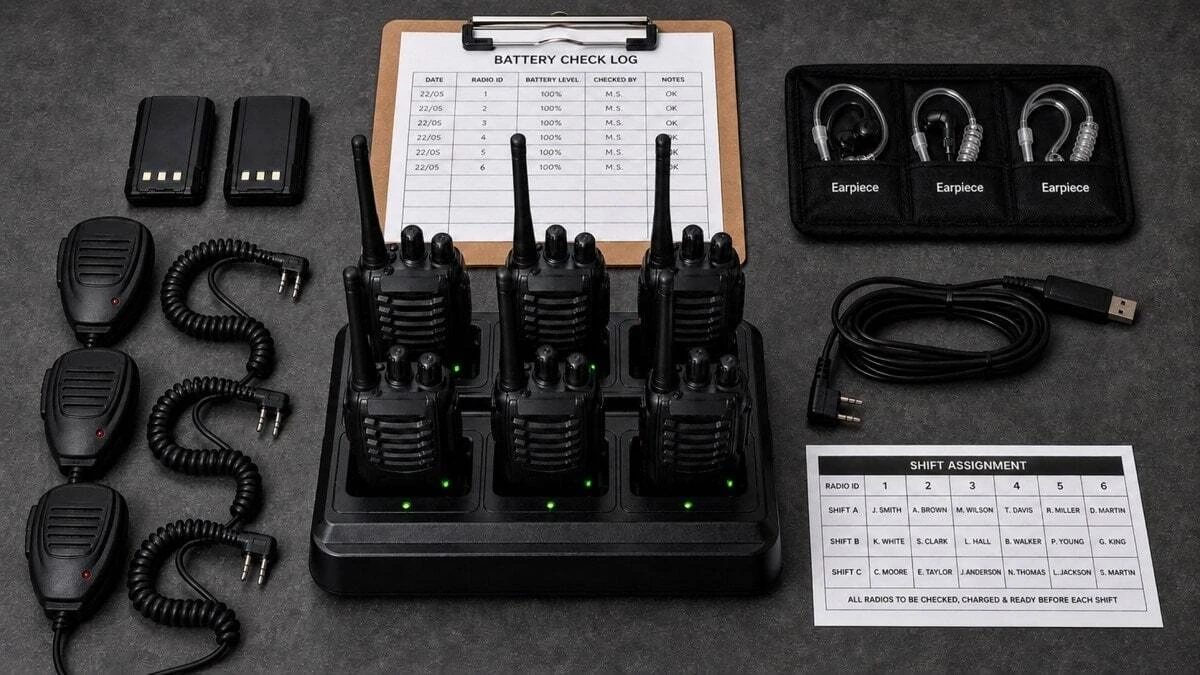 Battery management and accessory planning are often more important than the handset specification. A radio with the right earpiece and a reliable charging routine may outperform a more complex model that regularly runs flat before the end of a shift.
 Long battery life and shift management
Battery performance is another essential part of a business radio system. A radio with useful features and strong coverage has limited operational value if its battery regularly runs out before the end of a shift.
Managers should consider the complete charging process: expected shift duration, actual transmit and receive activity, spare battery requirements, time available between shifts, charging location, number of radios requiring simultaneous charging and replacement battery availability.
🔵 Fleet charging tip: Published battery capacity can help compare devices, although a larger mAh figure does not guarantee a specific number of operating hours. Transmission frequency, volume, battery condition, temperature and radio settings all influence real-world endurance. For businesses operating several handsets, multi unit chargers can make fleet management much easier. The radio charger collection includes desktop and multi-unit charging options for compatible handsets. Baofeng also offers a six-way BF-888S charger that can charge six compatible radios or batteries at once. Compatibility should always be checked before purchasing chargers, batteries or other accessories for an existing fleet.
Accessories that improve everyday communication
Accessories can make a significant difference to how comfortably and reliably radios are used.
- Speaker microphones allow a user to keep the main handset attached to a belt while positioning the microphone closer to the shoulder or chest — particularly useful on construction sites, during security work and in environments where users need frequent access to push-to-talk
- Headsets and earpieces support more discreet communication — useful for security staff, event teams, hospitality employees and managers who do not want every message broadcast through the radio speaker
- Protective pouches help secure handsets during physical work
- Spare batteries extend availability across long or overlapping shifts
Businesses can browse compatible options through the walkie talkie accessories collection, which includes speaker microphones, headsets, batteries, chargers, programming cables, pouches and other radio accessories.
🟢 Accessories as system: Avoid treating accessories as an afterthought. A relatively simple radio combined with the correct earpiece, charger and carrying method may work better for a team than a more complicated handset that is awkward to use throughout the day.
Managing channels and multiple users
As a radio fleet grows, communication management becomes increasingly important. Giving every employee access to dozens of channels rarely improves operations. A simple channel plan is usually easier for shift workers to understand.
| Channel | Example use |
|---|---|
| Channel 1 | General operations |
| Channel 2 | Security |
| Channel 3 | Management |
| Channel 4 | Logistics or maintenance |
The precise structure should match the business rather than follow a generic template. Staff should know which channel to monitor, when they are permitted to move to another channel, how to make an emergency call and what language to use when passing important information.
⚠️ Interference on shared channels: Managers also need to consider interference. Licence-free radios operate on shared spectrum, so another nearby user may use the same channel. Privacy codes can reduce how much unrelated traffic the user hears, although they do not give a team exclusive ownership of that frequency. Licensed frequencies can become valuable when predictable communication and more structured spectrum access are critical operational requirements.
Recommended business two way radios
The six models below cover the main business scenarios discussed in this guide — from simple PMR446 licence-free options for smaller teams to rugged waterproof and advanced digital systems for more demanding operations.
📻 Baofeng UK Business Two Way Radios — Matched to Your Operation
Choose by licence situation, site size and operational requirements — not by advertised range alone.
✅ Licence-Free PMR446 — For Smaller Businesses, Retail, Hospitality & Local Teams
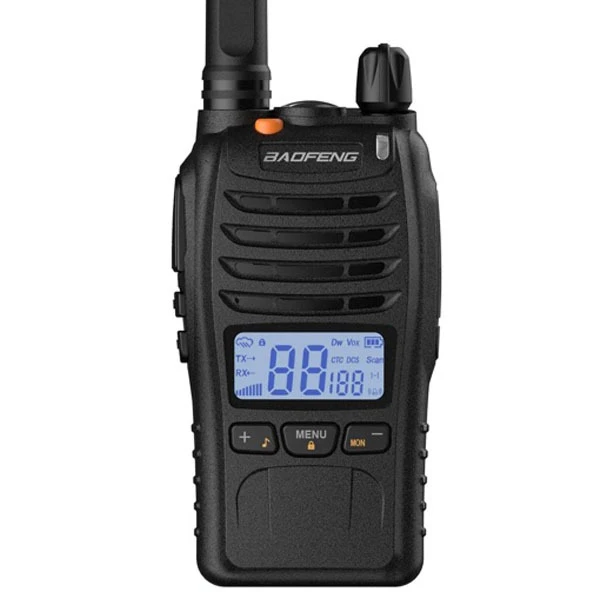
Baofeng BF-88ST Pro PMR446
PMR446 compliant · 16 channels · 1200mAh · VOX · USB charging · No licence needed — designed for professional licence-free fleet deployment across retail, hospitality, schools and smaller businesses.
View BF-88ST Pro PMR446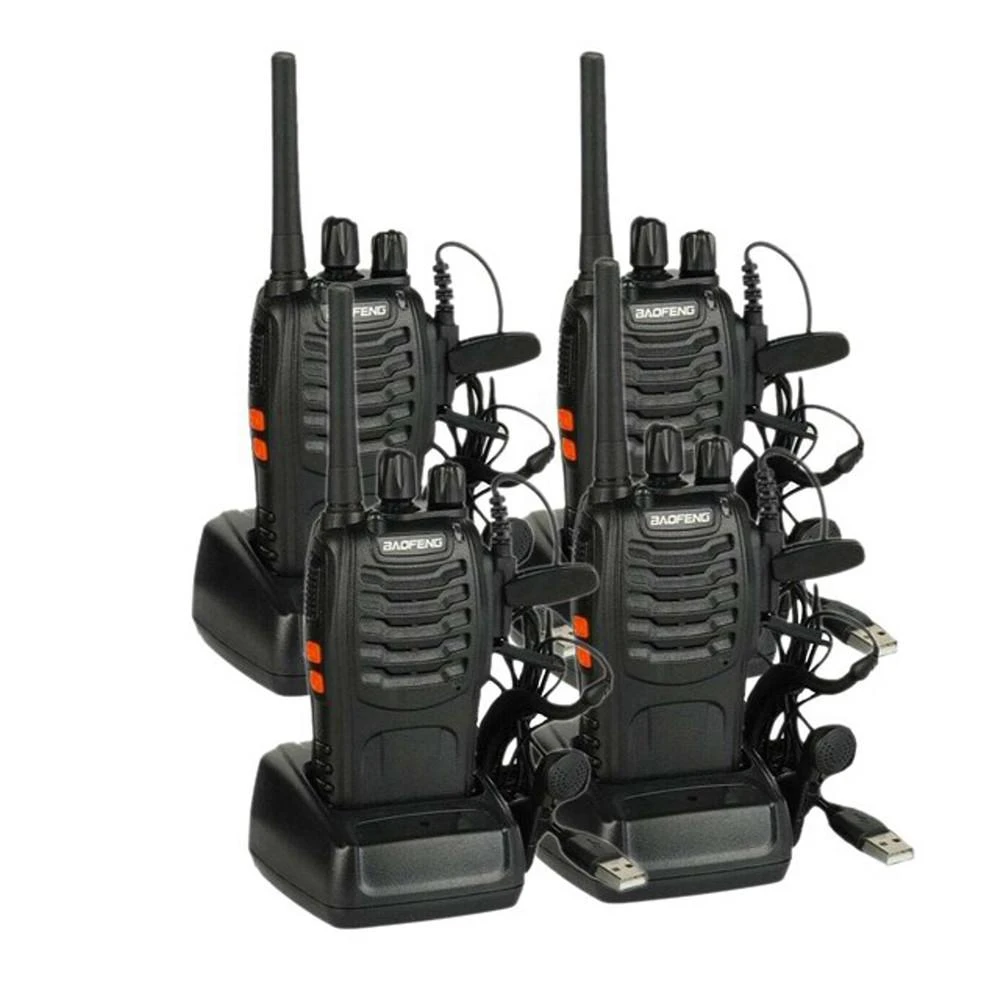
Baofeng BF-888S PMR446 Four-Pack
4 radios · Earpieces · Chargers · No licence needed — equip a small team covering host, kitchen, bar and manager simultaneously. Cost-effective entry point for hospitality and retail fleet deployment.
View Four-Pack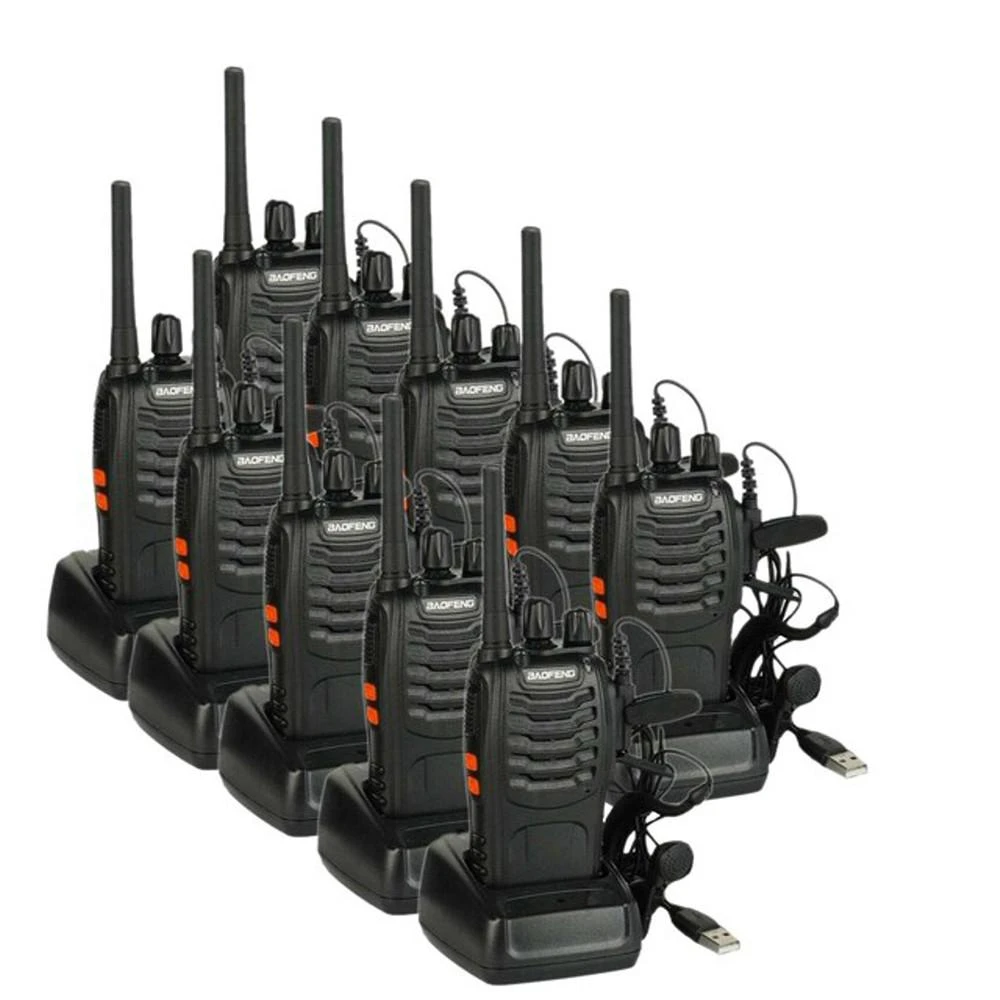
Baofeng BF-888S PMR446 Ten-Pack
10 radios · Earpieces · Chargers · No licence needed — full fleet deployment for hotels, larger venues, event teams and businesses needing standardised radios with spare capacity across a full shift.
View Ten-Pack📡 Licensed & Advanced — For Construction, Security, Digital Teams & Demanding Environments
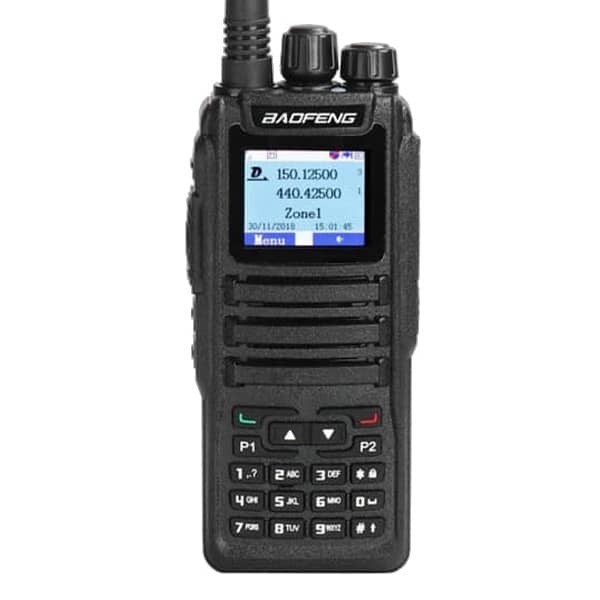
Baofeng DM-1701 DMR
Digital DMR · Dual time-slot · Clearer edge-of-range audio · Talk groups — for licensed business teams needing structured digital communication, larger contact lists and professional-grade operational control.
View DM-1701 DMR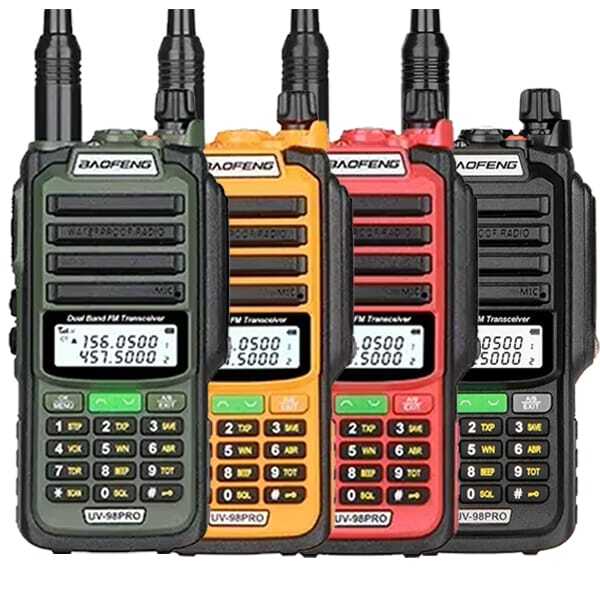
Baofeng UV-98 Pro IP68
IP68 waterproof · 8W listed · Dual-band — for licensed operators on construction sites, farms and outdoor industrial environments where rain, mud and physical demands require maximum weather protection.
View UV-98 Pro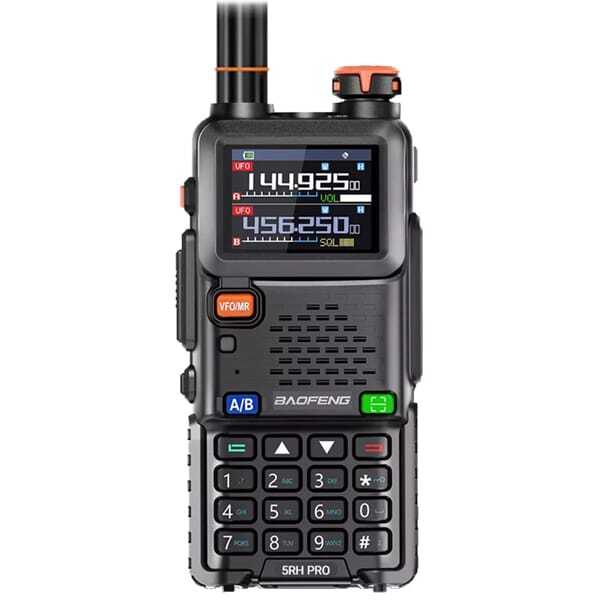
Baofeng UV-5RH Pro GPS
10W listed · GPS · 640ch · 2500mAh · USB-C — for licensed operators managing large sites, extended outdoor operations or security teams who need high output, GPS positioning and all-day battery endurance.
View UV-5RH Pro GPS⚠️ PMR446 packs are licence-free when equipment is fully compliant. DM-1701, UV-98 Pro and UV-5RH Pro GPS require an appropriate Ofcom licence to transmit legally in the UK.
Building a radio fleet around operational needs
The most cost effective business radio system starts with the way a team works. Begin by mapping the people who genuinely need a radio. Security staff, lone workers, supervisors and mobile maintenance personnel may require individually assigned devices. Some retail or hospitality workers may be able to share radios between shifts.
Then identify the critical communication points around the site. Test whether the proposed technology provides suitable coverage in those locations. Next, decide which features are essential. GPS functions may have value for some operations and little benefit for others. Large channel capacities can help complex teams while creating unnecessary complexity for a five-person business.
🎯 Whole-system thinking: Calculate the whole fleet requirement. Include radios, batteries, headsets, speaker microphones, chargers, replacements and any licensing cost. Buying the cheapest individual handset does not always produce the lowest operational cost if the surrounding system is difficult to manage.
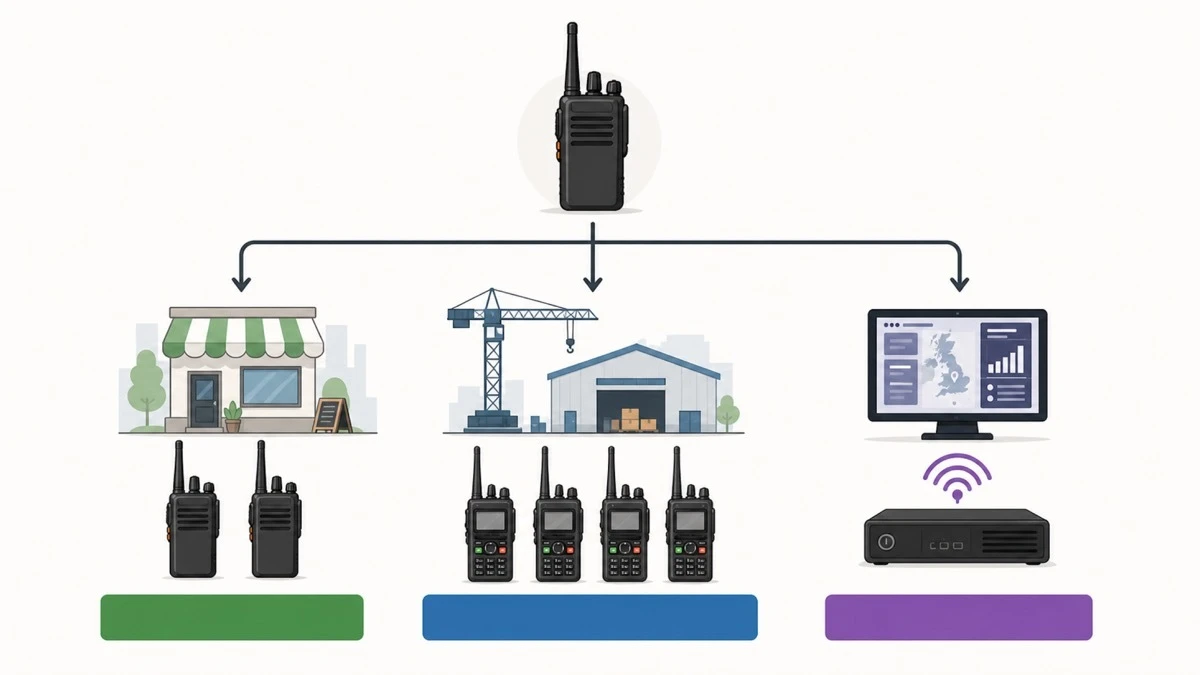 Three clear paths for UK business radio buyers — PMR446 licence-free for most smaller operations, licensed business radios for larger or coverage-critical sites, and digital systems for organisations that need talk groups, structured contacts and additional functionality.
 Choosing the right business two way radios
Reliable workplace communication comes from matching radio technology to a specific environment.
For smaller businesses with straightforward coverage needs, compliant PMR446 radios can provide an accessible licence-free route to instant communication. For larger sites, demanding environments or organisations requiring more controlled frequency use, licensed business radio systems may provide the flexibility needed to support the operation.
Digital radios can add useful functions for teams that genuinely need them. Analogue radios continue to serve many everyday communication requirements effectively. Long battery life, clear audio quality, sensible channel management and appropriate accessories often have a greater impact on day-to-day usability than an extensive feature list.
📋 Key takeaways for UK business buyers
- Assess range where the radios will actually operate — consider walls, steel, terrain, distance and interference, and test critical locations before rolling out a large fleet
- Choose the correct licence category first — PMR446 for smaller teams, licensed business radio when the operational requirements exceed what 0.5W licence-free equipment can provide
- Plan batteries, channels and accessories as one system, not as separate decisions
- Digital radios add value when talk groups, structured contacts or specific digital functions correspond to a genuine operational need
- Accessories — earpieces, speaker microphones, multi-unit chargers — often have more impact on daily usability than the handset specification alone
- A radio can form part of a lone worker safety process, but should integrate with wider risk assessment, monitoring and emergency procedures
Frequently asked questions about business two way radios
Can a business use both licence-free and licensed radios in the same operation?
Yes, a business can use both where each radio is operated within the correct UK licence conditions. Clear channel planning and staff instructions help ensure each system is used appropriately. PMR446 radios should remain on compliant PMR446 channels, while licensed equipment should be used within the frequency, power and operational conditions of the relevant Ofcom authorisation.
Does every employee need their own business radio?
No, radio allocation should depend on job role, shift pattern and communication needs. Supervisors, security staff and lone workers may need dedicated handsets, while other teams can often share radios between shifts. Mapping the people who genuinely need instant communication access is a more useful starting point than buying one radio per employee as a default.
What should a business test before buying two way radios in bulk?
Test coverage, audio clarity, battery performance and ease of use in the actual working environment. A small-scale trial can identify problems with buildings, noise, accessories or charging before a larger fleet is purchased. Check voice quality at the most critical communication points — a basement, site boundary, stock room or security patrol route — as well as in normal operating areas.
What is the difference between PMR446 and a Business Radio licence?
PMR446 is a licence-exempt short-range handheld radio service that businesses can use without obtaining an individual Ofcom radio licence, provided the equipment meets all PMR446 technical requirements including a fixed integral antenna and a maximum of 0.5W ERP. A Business Radio licence provides access to specific authorised frequencies at potentially higher power levels, with greater scope for coverage planning and more structured spectrum access. As of September 2026, Simple UK and Simple Site Light licences are listed at £75 for five years. Check the latest Ofcom information before applying.
When should a business consider digital radios instead of analogue?
Consider digital radios when the operation needs more structured talk groups, a larger number of contacts, clearer audio at the edge of usable coverage, text or data functions, or a radio system that may need to scale significantly over time. Analogue radios remain a practical choice for smaller teams where simplicity, fast staff training and predictable everyday operation are the main priorities. The decision should be driven by operational workflow rather than a general assumption that digital is always better.
Can a two way radio be used as part of a lone worker safety system?
Yes. The UK Health and Safety Executive includes radios among the methods that employers can use for maintaining regular contact with lone workers. However, a radio alone does not create a complete lone worker system. Employers still need appropriate risk assessment, monitoring arrangements, agreed check-in procedures and emergency response plans. The radio communication should integrate with the wider safety process, with clear instructions on when to call, which channel to use and what happens when a worker does not respond.
Find the Right Business Two Way Radios for Your UK Operation
From PMR446 licence-free packs for smaller businesses to IP68 waterproof radios for construction and digital DMR systems for complex teams — Baofeng UK has the right communication solution for every business environment and budget.