
5th Nov 2026
Q Code: A Practical Guide to International Q Signals for Amateur Radio Operators
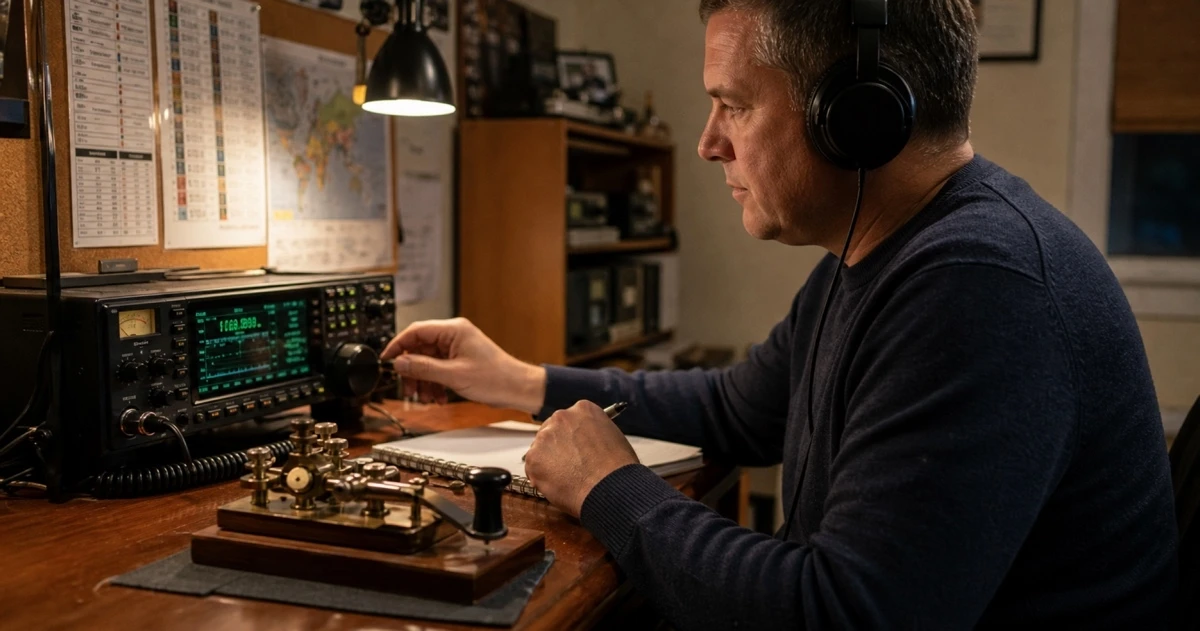
This guide was written and reviewed by the Baofeng UK technical team — UK-based radio communications specialists. Licensing information references current Ofcom guidance and the international Q code framework established by the ITU. This is an educational reference. Always verify current licence conditions before transmitting on any frequency.
New to amateur radio and wondering what QRM, QSL or QTH actually mean?
A Q code is a three-letter radio signal beginning with the letter Q. These compact codes were created to make radiocommunication faster and clearer, especially when operators were using Morse code or communicating across language barriers. For amateur radio operators, familiar Q signals such as QRM, QRN, QRP, QSL, QSO, QSY and QTH can replace complete questions or instructions in a single short group.
The complete international Q code system is considerably wider. It includes terminology associated with maritime services, message handling, direction finding, weather reports, navigation, distress traffic and search-and-rescue operations. Understanding where amateur radio Q signals fit within that broader tradition makes the whole system much easier to learn.
⚡ TL;DR — Key Takeaways
- A Q code is a three-letter group starting with Q, designed to replace full questions or instructions with a short, internationally recognised signal.
- Many codes work as either a question or a statement depending on whether a question mark follows — QRL? asks if the frequency is busy; QRL states that the station is busy.
- Common amateur radio Q signals include QRM (interference), QRN (static), QRP (reduce power), QSB (fading), QSL (acknowledge receipt), QSO (radio contact), QSY (change frequency) and QTH (location).
- The full international Q code extends to maritime, aeronautical, weather, navigation, distress and search-and-rescue communication — far beyond everyday amateur use.
- Beginners should master around a dozen practical signals first and treat the wider code as a reference.
- Q codes do not authorise transmission. UK operators must comply with the conditions of their Ofcom amateur licence or applicable licence-exempt requirements.
📋 Table of Contents
- What Is the Q Code?
- Why Q Signals Remain Useful in Amateur Radio
- Common Q Codes for Amateur Radio Operators
- Exact Frequency and Frequency Vary: QRG and QRH
- QRM, QRN and QSB: Understanding Difficult Signals
- QRO and QRP: Increase or Decrease Transmitter Power
- Calling Frequency, Working Frequency and QSY
- Call Signs, Station Identification and Acknowledgement
- QSO and Further Communication
- Sending Speed, Automatic Operation and Defective Keying
- Telegrams, Messages and the First Letter of Each Group
- Why the International Q Code Extends Beyond Amateur Radio
- Weather and Sea Observation Q Signals
- Navigation, Bearings and Direction Finding
- Urgency, Distress and Search-and-Rescue Codes
- Searchlights, Black Smoke Trails and Incident Marking
- Navigational Warnings and Gale Warnings
- Q Code and Modern Handheld Radios
- Which Q Codes Are Worth Learning First?
- Using Q Code Clearly and Responsibly
- Final Thoughts
- Shop Recommended Radios
- Frequently Asked Questions
What Is the Q Code?
Q codes consist of three letters, with Q always appearing as the first letter. They are designed to express frequently needed radio questions, answers and operating instructions with very little transmission time. This was especially valuable in radiotelegraphy, where every additional character had to be keyed individually.
In Morse code, the letter Q is sent as − − · −. Because every Q signal begins with the same first letter, operators can quickly recognise that a standard code group is being sent rather than a word from a message or conversation.
Many signals can be used as either a question or a statement. For example:
- QRL? asks whether the frequency is busy.
- QRL indicates that the station is busy.
- QRP? asks whether transmitter power should be decreased.
- QRP can instruct an operator to decrease power.
A question mark therefore matters. Additional information such as a call sign, word or group, frequency, time, number or other indication can make the Q signal more precise.
🔵 Regulatory note for UK operators: Understanding the Q code is only one part of good operating practice. Transmission must also remain within the frequencies, power levels and other conditions permitted by the applicable Ofcom licence or licence-exempt radio requirements.
Why Q Signals Remain Useful in Amateur Radio
The original value of Q signals came from efficiency. A three-letter group could replace an entire sentence and could be understood by operators who did not share a common spoken language. That advantage remains useful in amateur radio today.
During a Morse code contact, an operator can send QTH? instead of typing a complete question about location. QRS requests slower sending. QSB reports signals fading. QSL is used to request or confirm acknowledgement of receipt. QSY indicates a change of frequency.
Q signals also appear in voice communications. Operators might describe interference as QRM, static as QRN or a contact as a QSO. QRP has developed a particularly strong association with low-power amateur radio operation, to the point where "going QRP" is widely understood to mean operating at reduced power as a deliberate choice.
Beginners therefore do not need to memorise the entire international code. Learning a practical group of frequently encountered signals gives much greater value than attempting to master every code at once.
Common Q Codes for Amateur Radio Operators
The following signals cover many of the situations amateur operators are likely to encounter. The International Telecommunication Union maintains the formal radiocommunication framework from which these signals originate. In practical amateur radio, usage can become more conversational and abbreviated, so context remains important.
| Q Code | Meaning and Practical Use |
|---|---|
| QRG | Asks another station to report the exact frequency of your transmission, or that of a specified station. |
| QRH | Asks whether the frequency varies. |
| QRI | Concerns the tone of my transmission. |
| QRK | Concerns the intelligibility of signals. |
| QRL | Asks whether the station or frequency is busy. |
| QRM | Refers to interference from other transmissions. |
| QRN | Refers to atmospheric noise or static. |
| QRO | Asks whether to increase transmitter power, or instructs a request to increase transmitter power. |
| QRP | Asks whether to decrease transmitter power, or instructs a decrease in power. |
| QRQ | Asks whether sending speed should be increased. |
| QRS | Asks whether sending speed should be reduced. |
| QRT | Concerns stopping transmission. |
| QRV | Asks whether a station is ready. |
| QRX | Asks when the other station will call again. |
| QRZ | Asks who is calling. |
| QSA | Concerns signal strength. |
| QSB | Reports that signals are fading. |
| QSD | Concerns mutilated signals; often used in amateur CW to report defective keying. |
| QSL | Asks for or confirms acknowledgement of receipt. |
| QSM | Requests repetition of the last message or a previous message. |
| QSN | Asks whether a station or call sign was heard on a specified frequency. |
| QSO | Concerns communication between stations and is commonly used to mean a radio contact. |
| QSP | Concerns relaying communication to another station. |
| QSR | Concerns repeating a call on the calling frequency. |
| QSS | Asks what working frequency will be used. |
| QSU | Concerns sending or replying on this frequency or another specified frequency. |
| QSV | Concerns sending a series of Vs on this frequency. |
| QSW | Concerns transmitting on a stated frequency. |
| QSX | Concerns listening for a named station or call sign on a specified frequency. |
| QSY | Requests or indicates a change of frequency. |
| QSZ | Concerns sending each word or group more than once. |
| QTA | Concerns cancelling a telegram or message. |
| QTC | Asks how many telegrams or messages are waiting. |
| QTH | Asks for or states a station's location. |
| QTR | Asks for the correct time. |
| QTS | Concerns sending a call sign for a specified period, historically including tuning purposes. |
| QTV | Concerns standing guard on a stated frequency. |
| QTX | Concerns keeping a station open for further communication until a stated time or further notice. |
Exact Frequency and Frequency Vary: QRG and QRH
Frequency-related Q signals are among the easiest to understand in practice.
QRG? asks another station to report the exact frequency of your transmission, or that of a specified station. The reply gives the measured frequency in kHz or MHz. This was particularly valuable in earlier radio operation where frequency readout was less precise.
QRH asks whether the frequency varies. Historically, this was important when transmitter stability could vary more noticeably during operation. Modern amateur equipment generally offers much greater frequency stability, yet both codes remain part of the established vocabulary and can still be useful when checking unfamiliar equipment.
🎯 Practical note: Operators browsing programmable handheld equipment can see the current UV-5R Series collection for examples of radios intended for licensed users. Frequency programmability should always be separated from permission to transmit — a radio being capable of operating on a frequency does not itself authorise transmission there.
QRM, QRN and QSB: Understanding Difficult Signals
Several Q signals describe reception problems, and knowing the difference between them helps operators respond more effectively.
QRM refers to interference caused by other transmissions. If two stations are operating too close together in frequency, or another transmission is making reception difficult, an operator may report QRM. The source of QRM is a human transmission rather than a natural phenomenon.
QRN refers to static or atmospheric radio noise. Unlike QRM, QRN describes naturally occurring noise — electrical storms, atmospheric conditions and similar sources. QRN can vary significantly depending on frequency band, season and local weather.
QSB refers to fading. A station may initially arrive strongly and then become weaker as propagation changes. In that situation, saying that signals are fading provides useful information to the other operator, who may then adjust operating technique, antenna direction or frequency.
These distinctions help identify why communication is difficult. Increasing power is only one possible response. Frequency choice, antenna position, propagation and the source of interference can all affect the result.
QRO and QRP: Increase or Decrease Transmitter Power
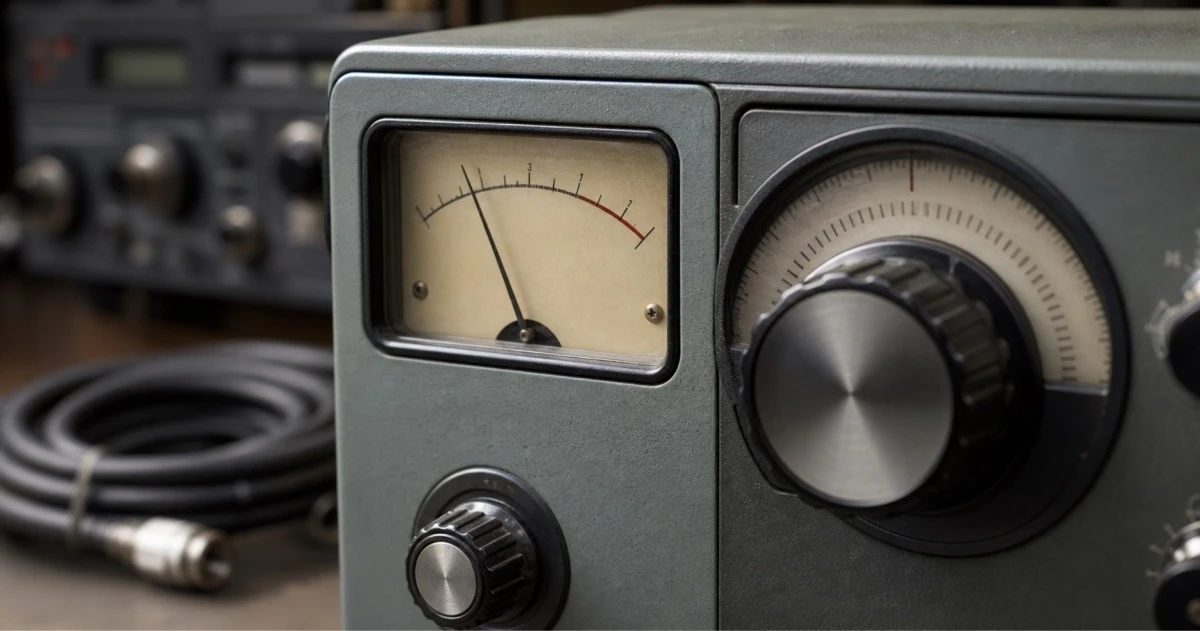
QRO and QRP deal directly with transmitter power and are among the most frequently used power-related signals in the amateur vocabulary.
QRO is associated with increasing power. In question form, it asks whether the operator shall increase transmitter power. Used as an instruction, it indicates a request to increase transmitter power.
QRP concerns reducing power. The formal question asks whether the operator shall decrease transmitter power, while the corresponding instruction means decrease transmitter power. Within amateur radio, QRP has also developed a wider meaning — operators frequently use it to describe low-power operating as an activity in its own right, often aiming to establish contacts using 5 W or less.
⚠️ Using greater power does not guarantee better communication. If a reliable link can be maintained at lower power, decreasing power can reduce battery consumption and unnecessary interference to other stations. The most effective approach often involves antenna and propagation choices rather than simply adding power.
🔵 UK licence conditions and power limits: UK operators must observe the power conditions attached to their amateur radio licence. Ofcom's current amateur radio guidance specifies different maximum power permissions according to licence level, and individual bands can carry additional restrictions. The UK ham radio licence guide provides a practical overview of what each licence class permits, from Foundation through to Full.

Calling Frequency, Working Frequency and QSY
Radio communication often separates the place where contact begins from the frequency used for further communication. A calling frequency is used to establish initial contact. Once communication has been established, the stations may move to a working frequency, leaving the calling channel free for other operators.
Several Q codes support this process directly:
- QSR relates to repeating a call on the calling frequency.
- QSS asks what working frequency will be used.
- QSU concerns sending or replying on this frequency or a specified alternative.
- QSV can request that a station send a series of Vs on this frequency.
- QSW concerns transmitting on a particular frequency.
- QSX concerns listening for a particular call sign on a stated frequency.
- QSY requests a change to another frequency.
Together, these signals provide a compact operating vocabulary for finding a station, confirming where communication will continue and keeping a calling frequency available for other users. The wider walkie talkies and handheld two-way radios collection provides a useful view of different handheld radio types, including radios intended for different operating requirements.
Call Signs, Station Identification and Acknowledgement
A call sign identifies an amateur station, and several Q signals interact directly with station identification during a contact.
QRZ is one of the best-known examples. It asks who is calling — commonly heard on a frequency when a station hears part of a transmission but could not fully identify the caller.
QSN can ask whether a particular station or call sign was heard on a particular frequency, which is useful when trying to confirm that a contact has been completed.
QTS concerns transmitting a call sign for a stated period. Historically, this could support identification, measurement or tuning purposes.
QSL concerns acknowledgement. Its formal function is to ask whether receipt can be acknowledged or to state that receipt is acknowledged. Among amateur radio operators, QSL has also become closely associated with confirming a completed contact. This can include a spoken or keyed acknowledgement during the contact and, in another context, a physical or electronic record confirming that a QSO took place.

QSO and Further Communication
QSO is central to amateur radio vocabulary. Formally, it concerns communication with another station, directly or through a relay. In everyday amateur use, "a QSO" simply means a radio contact or conversation between stations.
Other Q signals support what happens around that contact and form a natural sequence from readiness to closing:
- QRV asks whether a station is ready.
- QRX asks when another call will take place.
- QSP concerns relaying traffic to another station.
- QTX deals with keeping a station open for further communication, either until a stated time or until further notice.
- QRT indicates that transmission should stop — the final step in closing down.
Together, these signals provide a concise operating sequence covering the full arc of a typical amateur contact from first call to sign-off.
Sending Speed, Automatic Operation and Defective Keying
Q codes also developed around telegraph operating technique, and several remain relevant today in Morse code and CW operation.
QRQ asks whether the operator shall send faster. QRS requests slower sending — a code that remains genuinely useful when a less experienced operator is struggling to copy at the other station's current speed.
QRR concerns readiness for automatic operation in the formal international code. In ITU M.1172, QSD concerns mutilated signals. In amateur CW practice, it is often used to report defective keying, indicating that the other station's Morse characters are not clean or properly formed.
QSZ asks whether each word or group should be transmitted more than once, which can help when conditions make copying difficult.
✅ Tip for new CW operators: QRS is one of the most valuable signals when learning Morse code on air. Sending it to request slower transmission from an experienced operator is entirely accepted practice — there is no need to struggle in silence when a simple three-letter code can resolve the problem immediately.
Telegrams, Messages and the First Letter of Each Group
Parts of the international Q code reflect an era when radio stations routinely handled formal telegram traffic between commercial operators and ship stations.
QTA concerns cancelling a telegram or message. QTC asks how many telegrams or messages a station has to send. QSM can request repetition of the last message or a previous telegram.
Other formal procedures deal with word counting, repetition and identifying the first letter or digit of each word or group when message counts do not agree between stations.
These signals have limited relevance during a normal amateur voice conversation today, yet they remain useful for understanding how the international code developed. The vocabulary reveals that Q signals were designed to meet real operational needs across commercial, maritime and military radio services before amateur radio adopted and simplified the most useful subset.
Why the International Q Code Extends Beyond Amateur Radio
Searching for an international Q code list can produce terminology that appears surprisingly specialised. The reason is that the complete system served several radio services and operational situations.
ITU Recommendation M.1172 contains miscellaneous abbreviations and signals used for radiocommunications in the maritime mobile service and is incorporated by reference in the Radio Regulations. Within this wider environment, Q signals can concern a mobile station, cargo vessel, rescue vessel, rescue aircraft, survival craft, direction finding equipment, weather observations, navigational warnings and distress communication.
These are valid parts of the broader Q signal tradition, although most amateur radio operators will rarely need them during a normal QSO. Understanding that the system extends well beyond amateur use explains why a complete Q code list can appear far longer and more varied than everyday operating experience would suggest.
⚠️ Important context: When you encounter Q codes such as QUH (barometric pressure), QUK (sea state) or QUT (incident marking) in a reference list, these belong to the maritime and aeronautical portions of the international code. They are not signals you will normally encounter or need in a standard amateur radio contact.
Weather and Sea Observation Q Signals
Some international codes carry detailed environmental information designed for maritime and meteorological use.
- QUB deals with weather observations including surface wind, visibility, present weather and cloud information.
- QUH asks for present barometric pressure reduced to sea level.
- QUK concerns the sea observed at a specified place or position.
- QUL concerns the swell observed.
These are clearly more specialised than QRM or QTH. They illustrate how a three-letter international code could exchange structured operational information without requiring a lengthy voice transmission — compressing detailed environmental data into a compact, standardised exchange between operators who may not share a common language.
Navigation, Bearings and Direction Finding
Another group of international Q signals deals with navigation and direction finding equipment. These codes can communicate a true bearing, true heading, magnetic heading or true track between radio stations.
They can also support position finding through radio direction-finding stations and the transmission of identification signals for measurement. One procedure historically calls for a station to transmit a specified pattern for direction-finding purposes, including signals involving long characters or two dashes together with identification information.
These functions show how the code extended beyond simple station-to-station conversation and became part of practical navigation and radio-location procedures — particularly valuable for vessels and aircraft before modern GPS positioning became widely available.
Urgency, Distress and Search-and-Rescue Codes
Some of the most specialised Q signals deal with urgency and distress situations in maritime and aeronautical contexts.
- QUD concerns whether an urgency signal from a named mobile station has been received.
- QUF concerns receipt of a distress signal.
- QUM asks whether normal working may resume after restricted communication.
- QTD asks what a rescue vessel or rescue aircraft recovered — responses can identify survivors, wreckage or other recovery information as defined in ITU international radiocommunication material.
- QUR concerns whether survivors received survival equipment, were picked up by a rescue vessel or were reached by a ground rescue party.
- QUT concerns whether the incident is marked.
- QUW asks whether a station is within a designated search area.
- QUY concerns whether the position of a survival craft has been marked.
These signals belong to a specialised operational context. An amateur operator learning common Q signals does not need to memorise them as part of ordinary day-to-day radio use.
Searchlights, Black Smoke Trails and Incident Marking
Some historical international code descriptions are unusually visual in their detail. QUP relates to indicating a position using methods such as a searchlight, black smoke trail or pyrotechnic lights. Other signals concern whether an incident is marked, whether survival equipment has reached survivors, or whether a search should continue.
The wording reflects the practical realities of maritime and aeronautical search-and-rescue communication, where radio operators needed concise ways to coordinate aircraft, vessels and ground parties across a wide area in real time. This part of the Q code is useful context because it explains why search results for "list of Q codes" can mix familiar amateur terms with highly specialised rescue instructions in the same table.
Navigational Warnings and Gale Warnings
QUX concerns navigational warnings or gale warnings. This again places the international Q code in a broader context than amateur radio.
A maritime station dealing with navigational warnings, surface wind, present weather, sea state or a nearby rescue operation has communication requirements very different from an amateur operator exchanging call signs and signal reports. The underlying principle remains the same across both contexts: a short standard code efficiently communicates an agreed question, answer or instruction between operators who may not share a common language.
Q Code and Modern Handheld Radios
Modern handheld radios make frequency selection, memories, scanning and channel programming much easier than early radiotelegraph equipment, yet good operating discipline remains relevant.
A programmable radio can store frequencies, calling channels and working channels, while software can simplify configuration. The Baofeng programming software and drivers page provides model-specific programming resources and also reminds users that programming a frequency does not provide permission to transmit on it.
For operators who specifically require compliant licence-exempt equipment, the site also maintains a licence-free PMR446 radio collection. PMR446 use and amateur radio operation have different technical and regulatory frameworks, so the appropriate radio category should be selected before transmission begins.
⚠️ Important: Knowing Q codes, owning a programmable radio or knowing an exact frequency does not determine whether transmission is permitted. Programming capability on a radio does not create permission to transmit on any frequency outside the conditions of your licence.
Which Q Codes Are Worth Learning First?
For a new amateur operator, a compact working set is more useful than attempting to memorise every international code at once.
✅ Priority Q signals for beginners — start with these thirteen:
- QRL — busy frequency
- QRM — interference from other transmissions
- QRN — atmospheric noise or static
- QRP — reduced transmitter power or low-power operation
- QRS — slower sending requested
- QRT — stopping transmission
- QRV — station is ready
- QRZ — who is calling?
- QSB — signals are fading
- QSL — acknowledging receipt or confirming a contact
- QSO — a radio contact
- QSY — change of frequency
- QTH — station location
Once these become familiar, QRG, QRO, QSN, QSS, QSX and QTX are useful additions. The remaining international codes can be consulted when required. Weather, maritime services, search and rescue, direction finding and formal message handling each introduce their own specialised terminology that can be explored as operating experience grows.
Using Q Code Clearly and Responsibly
Q signals work best when both operators understand the same meaning. In Morse code, their brevity can save considerable operating time. During voice communications, familiar codes can make conversation quicker, although plain English is often clearer when the other operator may not recognise a less common signal.
It is also important to distinguish operating vocabulary from operating authority. Knowing the international code, owning a programmable radio or knowing an exact frequency does not determine whether transmission is permitted.
UK amateur radio operators should follow the conditions of their Ofcom amateur radio licence, including applicable frequency and transmitter power limits. Users who require licence-exempt operation should choose radio equipment that meets the applicable licence-exemption requirements before transmitting.
Final Thoughts
Q code has survived because it turns complex radio instructions into short, internationally recognisable groups. For amateur radio, the most useful codes cover everyday needs: exact frequency, interference, static, transmitter power, signal fading, call signs, acknowledgement, working frequency, location and further communication.
The wider international code goes much further. It reaches into radiotelephone calls, telegram handling, automatic operation, direction finding, present barometric pressure, surface wind, true bearing, true track, magnetic heading, rescue aircraft, survival craft, search areas, distress signals, navigational warnings and gale warnings.
Understanding that distinction makes the whole system much easier to learn. An amateur radio operator can begin with a dozen practical Q signals and gradually recognise more as operating experience grows. The full international Q code then serves as a reference, providing a fascinating link between modern amateur radio and the much broader history of international radiocommunication.
Editorial methodology: This guide explains the international Q code system using the ITU radiocommunication framework and Ofcom amateur licence guidance. It is an educational reference and does not constitute legal or regulatory advice. Licence conditions and frequency allocations are subject to change. Always verify the current Ofcom licence schedule before operating on any amateur radio frequency.
Shop Recommended Radios
Whether you are a licensed operator looking to get on the air, need a rugged waterproof handheld for field operating, or require simple licence-free communication, the three radios below cover the main use cases discussed in this guide.
📻 Baofeng Radios for Licensed and Licence-Free Operators
From advanced programmable handhelds for licensed amateur operators to compliant licence-free radios for everyday short-range communication.
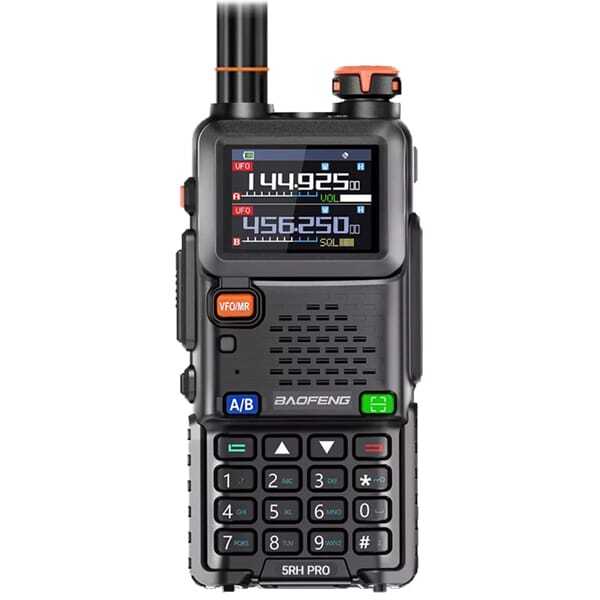
Baofeng UV-5RH Pro GPS
10W · Multi-band · 640ch · USB-C · GPS — the most capable Baofeng handheld for licensed amateur operators putting Q signals into practice on VHF, UHF and beyond.
View UV-5RH Pro GPS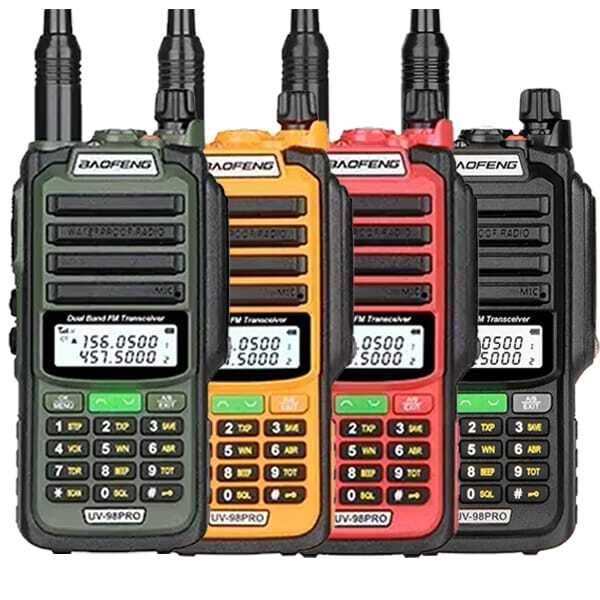
Baofeng UV-98 Pro
IP68 waterproof · Dual-band VHF/UHF · Robust build — ideal for licensed operators who need a durable handheld during portable and outdoor QRP operation.
View UV-98 Pro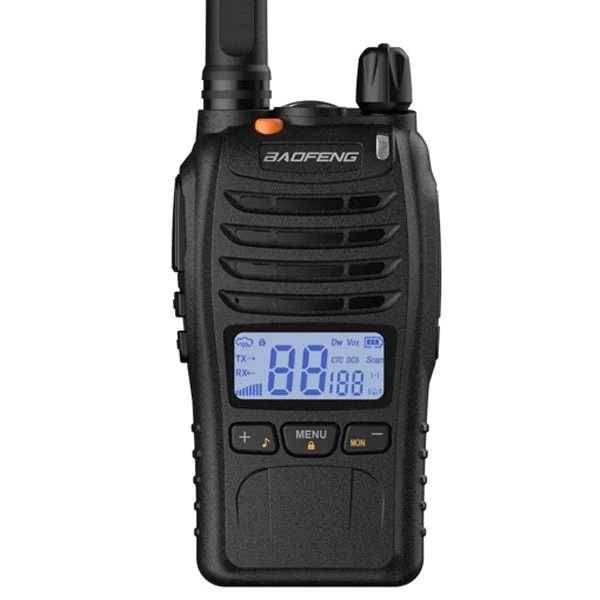
Baofeng BF-88ST Pro PMR446
PMR446 compliant · 0.5W ERP · Licence-free — for short-range communication without an amateur licence. Not for amateur band use.
View BF-88ST Pro PMR446Browse the full walkie talkies and handheld two-way radios collection for more options, or visit the Baofeng software and drivers page for model-specific programming resources and drivers.
Frequently Asked Questions About Q Codes
1. Are Q codes the same across every radio service?
No, not every Q code is equally relevant across all radio services. Many are internationally standardised, but some are mainly associated with amateur, maritime, aeronautical or search-and-rescue communications. The core signals used in everyday amateur radio — such as QRM, QSL, QSO and QSY — are widely understood across the hobby. Signals relating to weather observations, navigational warnings and distress traffic belong to more specialised operational contexts and are unlikely to appear during a normal amateur QSO.
2. Can Q codes be used during voice communications?
Yes, Q codes can be used during voice communications as well as Morse code. Familiar signals such as QSL, QSY, QRM and QTH are widely understood in both modes and are commonly heard in amateur radio voice contacts. Plain English may be clearer for less common codes, particularly when the other operator may not immediately recognise a more specialised signal. Using well-known Q signals in voice operation is an accepted part of amateur radio convention.
3. Does knowing a Q code allow me to transmit on any frequency?
No, Q codes do not give permission to transmit on a particular frequency. In the UK, transmitting must still comply with the relevant Ofcom licence conditions or licence-exempt requirements. A radio being capable of operating on a frequency, and an operator knowing the correct Q signal for that frequency, does not in itself authorise transmission there. Always verify that your licence class permits operation on the relevant band and within the applicable power limits before transmitting.
4. What is the difference between QRM and QRN?
QRM refers to interference caused by other radio transmissions — a human-made source. QRN refers to atmospheric noise or static from natural sources such as electrical storms. The distinction matters because the response to each is different. QRM may be addressed by changing frequency or working around another station, while QRN may require adjusting operating time, band or technique to work around natural noise conditions.
5. What does QRP mean in amateur radio?
QRP formally means to decrease transmitter power or, in question form, to ask whether power should be decreased. In amateur radio, QRP has also developed a broader meaning as a description of low-power operating as a deliberate activity. Many operators pursue QRP contacts specifically as a technical challenge, aiming to establish communication using 5 W or less. This has led to dedicated QRP contests, frequencies and operating groups within the amateur radio community.
6. Why does a list of Q codes include maritime and rescue terminology?
The international Q code system was developed to serve multiple radio services, not just amateur radio. ITU Recommendation M.1172 covers Q signals used in maritime mobile service radiocommunications, and the full code therefore includes terms for weather observations, sea state, navigational warnings, distress signals, search areas and rescue coordination. Amateur radio operators adopted and simplified the most useful subset. When searching for a complete Q code list, the maritime and aeronautical codes explain why the full list appears far longer than the everyday amateur vocabulary.