
5th Nov 2026
Ham Radio Bands Explained: A UK Guide to HF, VHF and UHF Frequencies
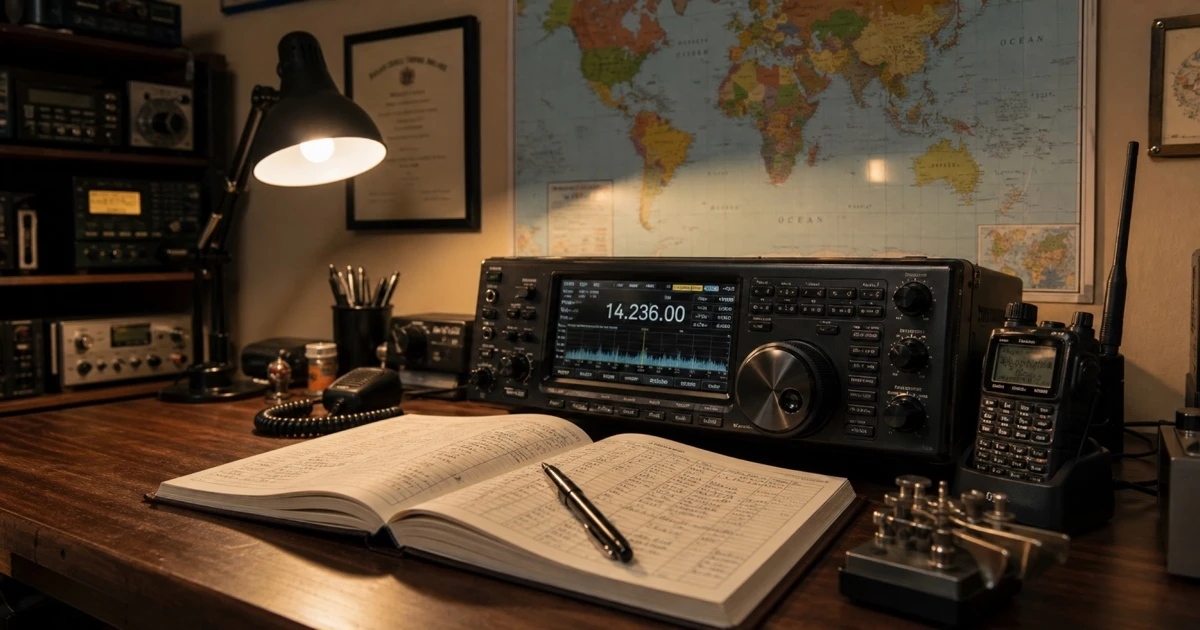
This guide was written and reviewed by the Baofeng UK technical team — UK-based radio communications specialists. Licensing information references current Ofcom guidance and published RSGB band plan documentation. This is an educational reference. Always verify current licence conditions and the latest RSGB band plan before transmitting on any amateur radio band.
New to amateur radio and wondering which frequency band to use?
Ham radio bands are sections of the radio spectrum allocated to the amateur service. Each band has its own frequency range, propagation characteristics, common operating modes and band plan. For a UK amateur radio operator, choosing the right frequency depends on the distance you want to cover, time of day, solar activity, antenna system, operating mode and the privileges granted by your amateur radio licence.
Understanding amateur radio bands helps you move confidently between local communication on VHF and UHF, regional communication on lower HF frequencies, and international contacts on popular HF bands such as 20 metres and 10 metres.
⚡ TL;DR — Key Takeaways
- Ham radio bands are defined frequency allocations where licensed amateur operators can transmit. Each band has distinct propagation behaviour, typical uses and an RSGB band plan.
- UK licence classes — Foundation, Intermediate and Full — determine which bands and power levels are available to each operator.
- HF bands such as 40 metres and 20 metres can support regional and international contacts through ionospheric propagation. The 10 metre band varies dramatically with solar activity.
- VHF and UHF bands, particularly 2 metres (144–146 MHz) and 70 centimetres (430–440 MHz), are the most common starting points for local FM and repeater operation.
- The UK FM calling frequency on 2 metres is 145.500 MHz. On 70 centimetres it is 433.500 MHz. After making contact, move to a clear working channel.
- Band plans, licence conditions and Ofcom requirements should always be checked before transmitting. Programming capability on a radio does not create permission to transmit.
📋 Table of Contents
- What Are Ham Radio Bands?
- UK Amateur Radio Licence Classes and Band Access
- Popular Ham Radio Bands in the UK
- HF Bands for Local, Regional and International Communication
- Why the 10 Metre Band Changes So Much
- WARC Bands: 30, 17 and 12 Metres
- VHF and UHF Bands for Local Communication
- How to Choose the Right Frequency Band
- Band Plans, Interference and Good Operating Practice
- Where Baofeng Handheld Radios Fit Into the Ham Bands
- Shop Recommended Radios
- Final Thoughts on Ham Radio Bands
- Frequently Asked Questions
What Are Ham Radio Bands?
The radio spectrum is divided into frequency allocations for many different services. Amateur radio receives access to specific frequency bands through international agreements and national licensing rules. Within those allocations, band plans organise common activities so that voice communications, Morse code, digital modes, image transmissions, repeaters, beacons and other forms of amateur communication can share the available spectrum while reducing interference.
A band may be described by frequency, such as the 14 MHz band, or by approximate wavelength, such as the 20 metre band. Both names refer to the same part of the spectrum. As frequency rises, wavelength becomes shorter.
In the UK, Ofcom sets the legal amateur radio licence conditions. The RSGB publishes UK band plans that are largely derived from IARU Region 1 arrangements, with national variations where required. The RSGB also stresses that band plans are updated, so operators should refer to the current edition rather than relying on old frequency charts.
UK Amateur Radio Licence Classes and Band Access
The UK has three amateur radio licence classes: Foundation, Intermediate and Full. Ofcom's current guidance sets a high-level maximum of 25 W PEP for Foundation operators in most bands and 100 W PEP for Intermediate operators in most bands. Full licence holders may use up to 1,000 W PEP in bands where the amateur service has a primary allocation, with 400 W PEP available in most other bands. Individual frequency bands can carry additional power restrictions and licence conditions.
Entry-level licence. Useful access to many popular bands. Ideal starting point for new UK amateur radio operators.
Expanded technical knowledge and operating privileges. Access to a broader range of bands and operating modes.
Broadest privileges across the most bands. Up to 400 W PEP in secondary allocations. Subject to individual band conditions.
Foundation is the entry-level licence and gives a new operator useful access to many popular bands. Intermediate expands technical knowledge and operating privileges. A Full licence provides the broadest privileges, while the conditions attached to a specific frequency allocation still apply.
🔵 Note for UK readers: Overseas content may refer to a technician class entry-level licence. Those terms belong to a different licensing framework. In the UK, operators follow the Foundation, Intermediate and Full system defined by Ofcom. If you are beginning the hobby, the UK ham radio licence guide explains the route from first steps to a first contact.
Popular Ham Radio Bands in the UK
The following table gives a practical overview of several widely used ham bands. It is a starting point rather than a substitute for your current licence schedule and the full RSGB band plan.
| Band | Frequency Range | Typical Characteristics and Use |
|---|---|---|
| 80 metres | 3.500 – 3.800 MHz | UK and regional communication, particularly after dark, with stronger long-distance potential in winter |
| 40 metres | 7.000 – 7.200 MHz | Local and regional contacts by day, plus long-distance communications after dark |
| 30 metres | 10.100 – 10.150 MHz | DX using Morse code and narrow digital modes; one of the WARC bands |
| 20 metres | 14.000 – 14.350 MHz | One of the most popular bands for international communication and regular DX |
| 17 metres | 18.068 – 18.168 MHz | International contacts with less contest activity; another WARC band |
| 15 metres | 21.000 – 21.450 MHz | Strong daytime long-distance communication when solar conditions are favourable |
| 12 metres | 24.890 – 24.990 MHz | A relatively quiet WARC band that can provide excellent DX openings |
| 10 metres | 28.000 – 29.700 MHz | Worldwide propagation during favourable solar conditions and regular summer Sporadic E |
| 6 metres | 50.000 – 52.000 MHz | VHF operation with local contacts plus occasional dramatic long-distance openings |
| 4 metres | 70.000 – 70.500 MHz | UK VHF activity covering several modes and regional communication |
| 2 metres | 144.000 – 146.000 MHz | Local contacts, FM simplex, repeaters, SSB, data, image modes and satellites |
| 70 centimetres | 430.000 – 440.000 MHz | UHF local communication, repeaters, digital activity and satellites |
The HF allocations discussed here are at 3.5, 5, 7, 10, 14, 18, 21, 24 and 28 MHz. Amateur allocations also exist below HF, including the 1.8 MHz (160 metre) band. RSGB VHF and UHF guidance covers bands including 50 MHz, 70 MHz, 144 MHz and 430 MHz.
⚠️ Important: Some allocations, particularly 5 MHz and parts of the 430 MHz band, have more specific conditions. Checking the current licence and detailed band plan is therefore essential before transmitting.
HF Bands for Local, Regional and International Communication
HF, or high frequency, is where many operators experience the classic long-distance side of amateur radio. Ionospheric propagation can return HF radio waves towards Earth, allowing signals to cover hundreds or thousands of miles. Results vary according to frequency, time, season, solar activity, geomagnetic conditions and the current state of the ionosphere.
The 40 metre band is widely used because it can provide UK and regional contacts during daylight while opening longer paths at night. RSGB guidance describes 40 metres as useful for intra-UK and European contacts by day, with worldwide DX possibilities after dark. It can remain productive at different stages of the sunspot cycle.
The 20 metre band, from 14.000 to 14.350 MHz, is one of the most popular bands for international contacts. RSGB describes 20 metres as particularly reliable for regular DX and notes that it can remain productive even during weaker parts of the solar cycle. Around periods of high solar activity, international paths can remain open for extended periods.
🎯 Band edge reminder: 14.350 MHz is the upper band edge for the 20 metre allocation. Operators need to select a carrier frequency that keeps the complete transmitted signal within the permitted allocation. Simply placing the displayed frequency on a band edge can allow part of a voice or data signal to extend outside the band.
Why the 10 Metre Band Changes So Much
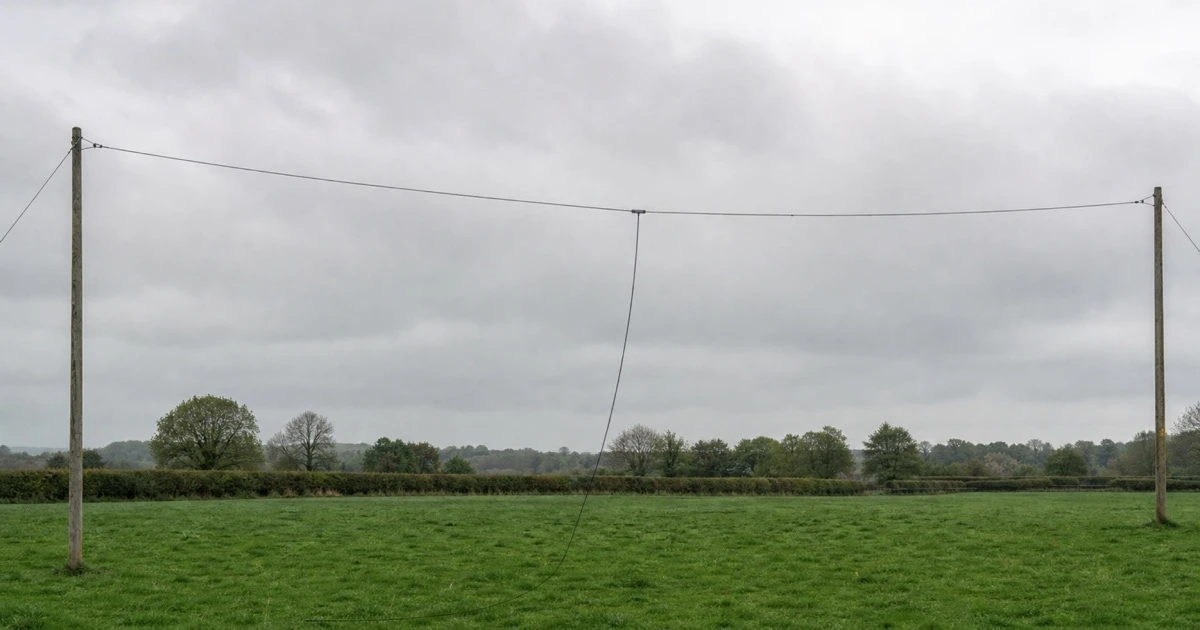
The 10 metre band, from 28.000 to 29.700 MHz, has especially distinctive propagation characteristics.
During favourable solar conditions and solar maximum periods, the band can support long-distance and worldwide propagation with surprisingly modest power and antennas. When solar activity falls, 10 metres can become much quieter.
Sporadic E adds another dimension. During the warmer months, operators can experience Sporadic E openings that produce very strong signals over European and longer paths. An apparently inactive band can become busy within a short period, which is one reason experienced operators continue listening and calling even when activity initially seems low. RSGB guidance specifically highlights both worldwide propagation during sunspot maxima and strong summer Sporadic E on 10 metres.
This makes the 10 metre band a good example of why the right frequency depends on solar activity, season and propagation rather than distance alone.

WARC Bands: 30, 17 and 12 Metres
The WARC bands are 30 metres, 17 metres and 12 metres. They provide useful HF frequencies outside the main contest bands and are kept free of normal contest activity by international agreement.
Thirty metres covers 10.100 to 10.150 MHz. It is a narrow allocation used for CW and narrow digital modes, making it particularly attractive for Morse code and weak-signal data contacts. RSGB describes it as an effective DX band across different times of day and phases of the sunspot cycle.
Seventeen metres covers 18.068 to 18.168 MHz and shares some characteristics with 20 metres. It often provides useful international communication with less congestion. Twelve metres, from 24.890 to 24.990 MHz, sits closer to the upper HF bands and can produce excellent international contacts when conditions support it.
✅ Tip: For an amateur radio operator who wants a broader spectrum of HF choices with reduced contest activity, the 30, 17 and 12 metre WARC bands are well worth exploring. They are particularly useful for CW, narrow digital modes and relaxed DX operating.
VHF and UHF Bands for Local Communication
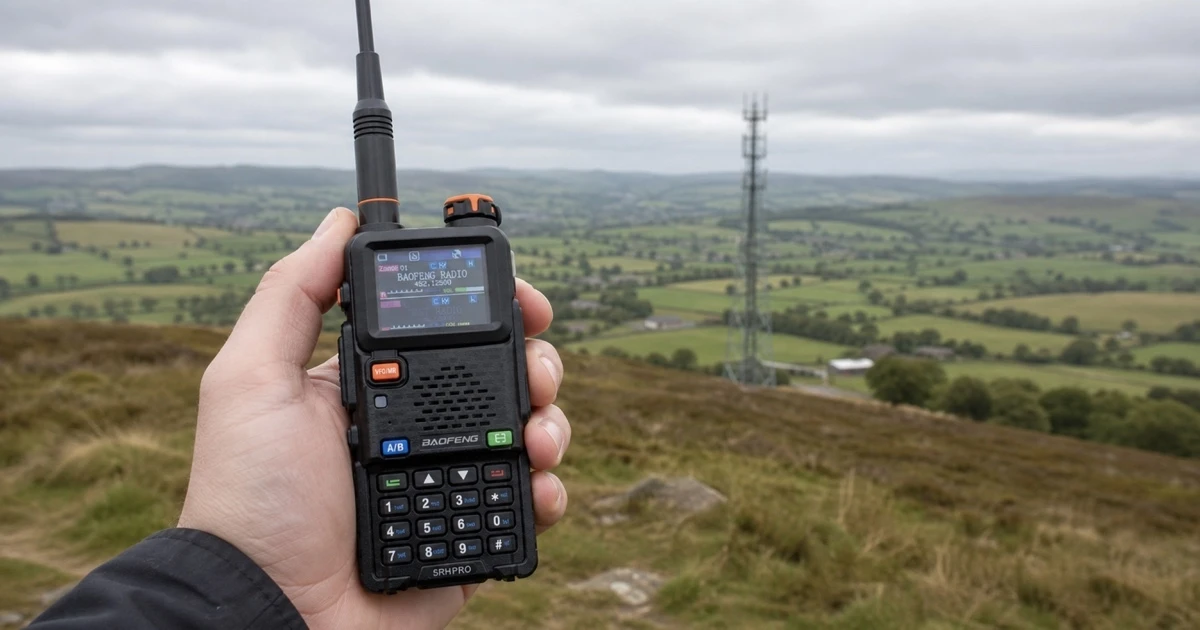
For everyday local communication, VHF and UHF bands are particularly important. The 2 metre and 70 centimetre bands support FM simplex, repeaters, voice communications, digital modes, data, satellites and specialist weak-signal operation.
The standard UK 2 metre amateur allocation runs from 144.000 to 146.000 MHz. Additional access outside that range, where available, requires separate authorisation. The current band plan identifies 145.500 MHz as the FM calling frequency. This is a useful place to establish a contact before moving to a suitable clear simplex channel.
The same band supports much more than FM voice. It contains areas for SSB, Morse code, machine-generated modes, repeaters, satellites and image transmissions. RSGB identifies 144.500 MHz for image modes such as slow-scan television and fax within the all-modes section.
The standard UK 70 centimetre amateur allocation extends from 430.000 to 440.000 MHz. The 2026 UK plan identifies 433.500 MHz as the FM calling channel. The band also contains repeater, digital, satellite and experimental activity. Parts of 430 MHz carry additional UK restrictions, including specific power and geographical conditions, so the licence notes require particular attention.
Establish contact here, then move to a clear simplex channel. Part of the 144–146 MHz allocation.
Equivalent FM calling role within the UK 70cm plan. Part of the 430–440 MHz allocation.
How to Choose the Right Frequency Band
There is no single frequency band that suits every contact. Careful selection begins with the type of communication you want.
| Communication Goal | Recommended Starting Bands | Key Considerations |
|---|---|---|
| Local contacts | 2 metres, 70 centimetres | FM simplex and repeaters. Practical handheld antennas available. Terrain and obstructions affect coverage. |
| Regional communication | 40 metres, VHF repeaters | 40m works well when ionospheric skip is short. VHF repeaters extend regional reach from favourable sites. |
| International DX | 20 metres, 15 metres | 20m is reliable across much of the solar cycle. 15 and 10m improve significantly during solar maximum. |
| Digital modes | Various — check band plan | Use the data segments in the current RSGB band plan. Bandwidth must stay within the allocated segment. |
| Morse code (CW) | 30 metres, 40 metres, 20 metres | 30m is particularly associated with CW and narrow digital operation. No contest use on WARC bands. |
| Sporadic or seasonal openings | 10 metres, 6 metres | Both bands can produce dramatic Sporadic E openings during summer. Solar conditions drive 10m activity. |
Amateur radio also has an established role in emergency communication through organised licensed volunteer operators. The RSGB documents UK emergency communications groups and the use of amateur radio where normal infrastructure may be disrupted.
Band Plans, Interference and Good Operating Practice
Frequency access carries a responsibility to minimise interference. Band plans organise different activities according to mode and bandwidth so that voice, weak-signal operation, data, repeaters, satellites and beacons can coexist more effectively.
Before transmitting, confirm that your licence class permits the relevant band. Then check that the frequency lies within the allocation, your selected mode fits the current band plan and the complete transmitted bandwidth stays inside the appropriate segment.
Calling channels deserve particular care. On 2 metres, 145.500 MHz is intended for establishing FM contact. Moving to a clear FM simplex channel after making contact leaves the calling frequency available for other operators. The same principle is useful around 433.500 MHz on 70 centimetres.
⚠️ Important: A programmable radio may be technically capable of displaying frequencies outside an amateur allocation. Frequency access on the equipment does not create permission to transmit. Programming and operation must remain within the permissions of the relevant amateur radio licence.
Where Baofeng Handheld Radios Fit Into the Ham Bands
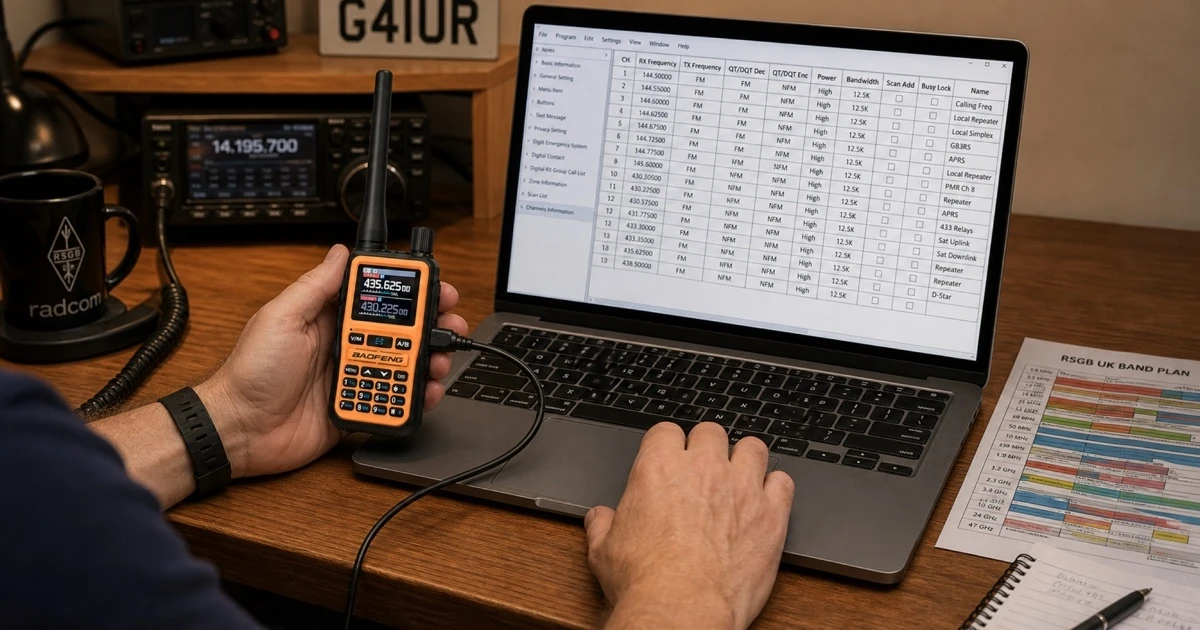
Many Baofeng handheld amateur radios focus on VHF and UHF communication, with exact frequency coverage depending on the individual model. This makes them practical for activities such as 2 metre and 70 centimetre local contacts, repeater operation and learning frequency, channel and tone configuration.
Beginners comparing equipment can start with the Baofeng amateur radio collection, then compare models within the Baofeng UV-5R Series collection. For a straightforward dual-band example, the Baofeng UV-5R Black VHF/UHF radio is designed around VHF and UHF operation.
🔵 HF note: A VHF/UHF handheld does not provide HF operation on bands such as 40 metres or 20 metres. HF frequencies require a transceiver designed for the relevant bands and a suitable antenna system.
For model-specific configuration resources, drivers and programming files, the Baofeng software download centre provides support by radio model.
If your requirement is simple short-range communication without obtaining an amateur radio licence, equipment designed specifically for PMR446 is the appropriate category to investigate. The licence-free PMR446 radio collection covers that separate type of radio communication.
Shop Recommended Radios
Whether you are starting on 2 metres as a Foundation licensee, building a more capable VHF/UHF station or looking for licence-free short-range communication, the three radios below cover the main use cases.
📻 Baofeng Radios for UK Amateur Radio and Licence-Free Use
From advanced programmable handhelds for licensed operators to simple licence-free radios for everyday short-range communication.
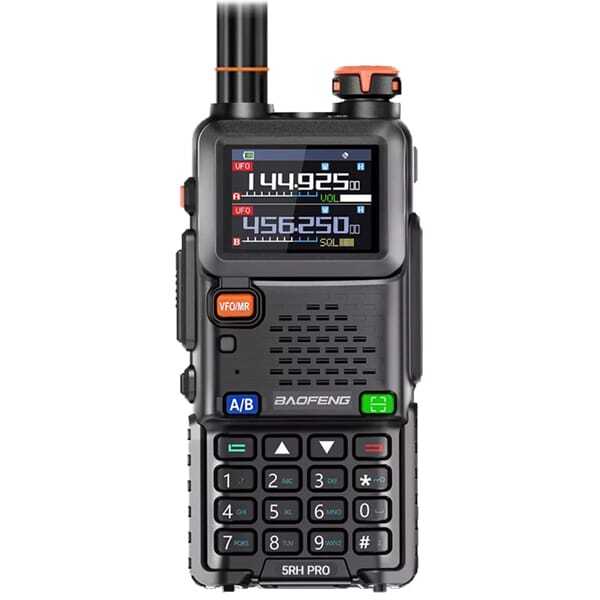
Baofeng UV-5RH Pro GPS
10W · Multi-band · 640ch · USB-C · GPS — the most capable Baofeng handheld for licensed amateur operators working 2m and 70cm and beyond.
View UV-5RH Pro GPS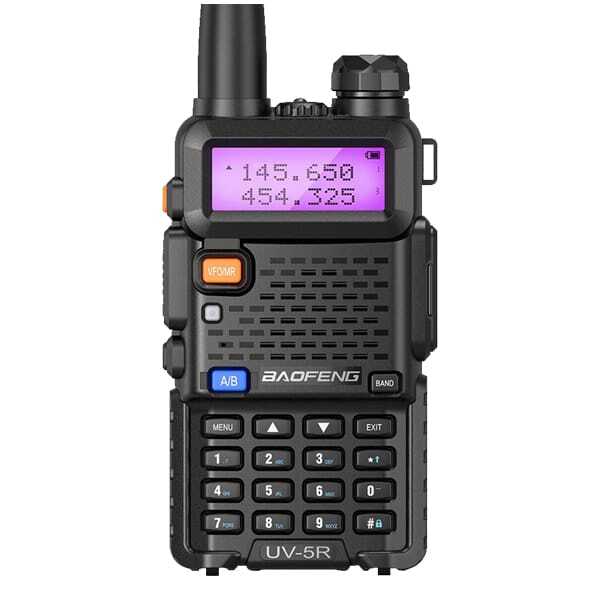
Baofeng UV-5R Black
Dual-band VHF/UHF · Programmable · Compact — a proven entry-level dual-band handheld, ideal for Foundation licensees starting on 2 metres and 70 centimetres.
View UV-5R Black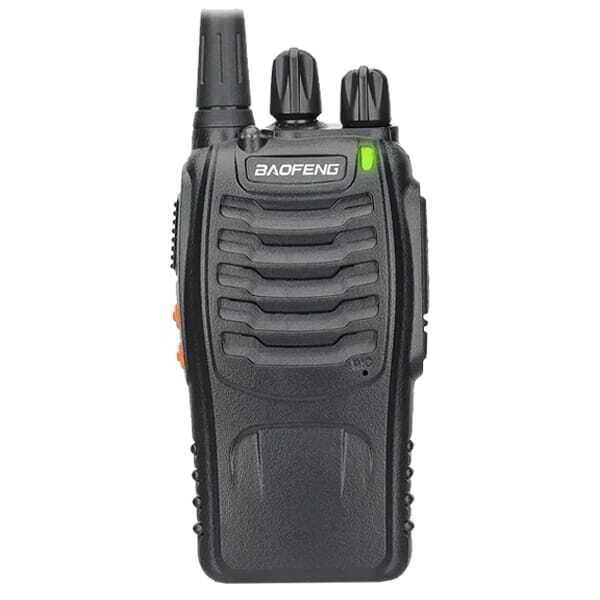
Baofeng BF-888S PMR446
0.5W ERP · 16 channels · Fixed antenna · Licence-free — for short-range communication without an amateur radio licence. Not for amateur band use.
View BF-888S PMR446Browse the full Baofeng amateur radio collection for more programmable models, or visit the Baofeng software download centre for programming support files and drivers by model.
Final Thoughts on Ham Radio Bands
Learning the ham radio bands is one of the most valuable early steps in amateur radio. The selected frequency band influences range, antenna size, propagation, activity level, available modes and the types of contacts you are likely to make.
For local communication, 2 metres and 70 centimetres are natural places to begin. Forty metres offers a useful mixture of regional and long-distance communication. Twenty metres remains one of the most widely used bands for international contacts. Ten metres can become exceptionally active when the sunspot cycle, solar activity or Sporadic E supports the path. The WARC bands provide additional options for CW, digital modes and international DX.
The most useful habit is to treat the band plan as a current operating reference. Radio frequencies, band plans and licence conditions can change. Check your Ofcom licence permissions and the latest RSGB information before transmitting, then select the frequency, mode and power that suit the contact while minimising interference.
For everything you need to know about getting licensed in the UK, the UK ham radio licence guide covers the Foundation, Intermediate and Full licence process from start to first contact.
Editorial methodology: This guide explains UK amateur radio band allocations and propagation characteristics using published Ofcom licence guidance and RSGB band plan documentation. It is an educational reference and does not constitute legal or regulatory advice. Band plans, licence conditions and frequency allocations are subject to change. Always verify the current Ofcom licence schedule and the latest RSGB band plan before operating on any amateur radio frequency.
Frequently Asked Questions About Ham Radio Bands
1. Can I use the same antenna on every amateur radio band?
No, most antennas are designed for specific frequency ranges. A multi-band antenna may cover several bands, but you should always check its supported frequencies before transmitting. HF and VHF/UHF bands require very different antenna designs — a 2 metre antenna is not suitable for the 40 metre band, and a full-size HF dipole is not a practical handheld antenna.
2. Why can a ham radio band sound completely quiet?
A band can sound quiet because propagation conditions, time of day, season or solar activity are unfavourable. Activity may increase quickly when conditions improve. On the 10 metre band, for example, an apparently silent frequency can become busy within a short period when a Sporadic E opening develops. Experienced operators listen regularly and call even when initial activity seems low.
3. Can a handheld amateur radio receive frequencies that I cannot transmit on?
Yes, some radios can receive a wider range of frequencies than you are licensed to transmit on. In the UK, always follow your Ofcom licence conditions and the current band plan before transmitting. The ability to display or receive a frequency does not create permission to transmit on it.
4. What is the UK FM calling frequency on 2 metres?
The UK FM calling frequency on 2 metres is 145.500 MHz. This is where operators establish initial contact before moving to a clear working simplex channel. The equivalent FM calling frequency on 70 centimetres is 433.500 MHz under the current UK band plan.
5. What is the difference between WARC bands and normal contest bands?
The WARC bands — 30 metres (10.100–10.150 MHz), 17 metres (18.068–18.168 MHz) and 12 metres (24.890–24.990 MHz) — are kept free of normal contest activity by international agreement. This makes them popular for relaxed DX operating, Morse code and narrow digital modes, particularly for operators who prefer to avoid congested contest weekends on the main HF bands.
6. Can a Foundation licence holder access the 20 metre band?
Foundation licence holders in the UK do have access to a number of HF bands including 20 metres, subject to the power limits and conditions set out in their Ofcom licence schedule. The maximum power for Foundation operators is generally 25 W PEP in most bands, though individual band conditions may apply. Always check your current licence schedule for the exact permitted frequencies and power levels.