
13th Sep 2026
Best Two Way Radios for Construction Sites in the UK
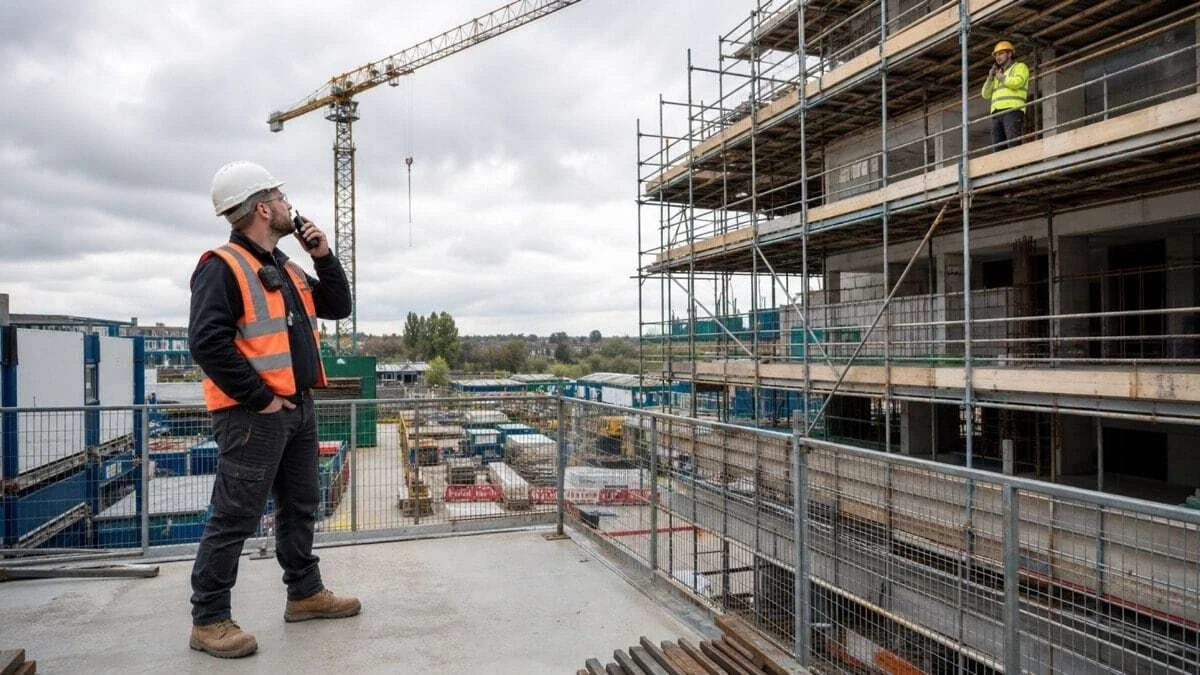
This guide was written and reviewed by the Baofeng UK technical team — UK-based radio communications specialists with over 10 years of experience supplying construction teams, site managers and contractors with reliable two-way radio equipment. Licensing information reflects current Ofcom guidance. HSE lone worker references are consistent with current Health and Safety Executive guidance for isolated and remote workers.
Reliable communication is essential on a construction site.
Site managers may need to coordinate deliveries, supervisors may be working several floors away from a team, and workers need a quick way to report hazards, request equipment or call for assistance. On large construction sites, relying entirely on mobile phones can add unnecessary delays when teams need to communicate immediately.
Two way radios give construction teams direct push-to-talk communication without dialling a number or waiting for someone to answer a phone. With the right channels, battery life and accessories, they can support daily coordination across different areas of a project and become a useful part of wider site safety procedures.
The best two way radios for construction depend on the size of the site, the materials surrounding workers, expected weather conditions and whether the business requires licence-free or licensed radio communications. You can start by exploring the Baofeng construction two way radio collection, then compare individual models according to your site's communication needs.
Licence-free PMR446: BF-88ST Pro PMR446 — no individual Ofcom licence required, simple deployment, emergency alarm included. Best for smaller and medium-sized sites.
Rugged waterproof: UV-9R Plus IP67 — designed for outdoor groundwork, rain and dust. Appropriate licence required to transmit.
Larger sites: UV-5RH 10W — up to 10W selectable output, 999 channels, USB-C charging. Licensed radio for demanding site environments.
⚡ Two way radios for construction — key points
- ✅ PMR446 is often the simplest starting point: No individual Ofcom licence required for compliant equipment — Ofcom specifically includes building sites as a suitable PMR446 environment
- 🌧️ Weather and durability matter: IP-rated waterproof radios protect against rain, dust and mud common on UK construction sites
- 📏 Test range in the actual site: Concrete, steel, floors and terrain all affect coverage — advertised range is a best-case figure
- 🔋 Battery must last the full shift: Plan charging routines and spare batteries as part of the system, not as an afterthought
- 👷 Radios support worker safety: HSE guidance identifies radios as one method for maintaining contact with lone and remote workers
- 📋 Licenced radios need correct authorisation: High-power programmable radios require the appropriate Ofcom Business Radio licence before transmission
- 🎧 Speaker microphones help on noisy sites: Keeping hands free improves safety around machinery and active work areas
📋 Table of Contents
- Why two way radios matter on construction sites
- What to look for in construction two way radios
- Best two way radios for construction
- Shop recommended construction radios
- Licence-free or licensed radios for construction?
- Two way radios and worker safety
- Building a reliable construction radio setup
- Choosing the best radios for your construction project
- Frequently asked questions
Why two way radios matter on construction sites
Construction environments change constantly. Workers move between floors, contractors arrive and leave, machinery is repositioned and access routes may change during the day. Communication therefore needs to remain straightforward.
A walkie talkie allows one worker to contact another team member in seconds through a dedicated push-to-talk button. This can be particularly useful for coordinating crane movements, deliveries, access control, maintenance work and different trades operating across the same building site. Radios can also support communication where mobile coverage is inconsistent — basements, concrete structures and remote areas of construction sites can all create difficulties for cellular networks.
⚠️ Range is not guaranteed: Radio performance is still affected by the physical environment. Reinforced concrete, steel structures, buildings, terrain and the position of each user can reduce usable range. Maximum range figures should be treated as ideal-condition measurements rather than guaranteed coverage across a particular construction project. For larger sites, testing radios in the actual environment before deploying an entire fleet is one of the most useful steps a site manager can take.
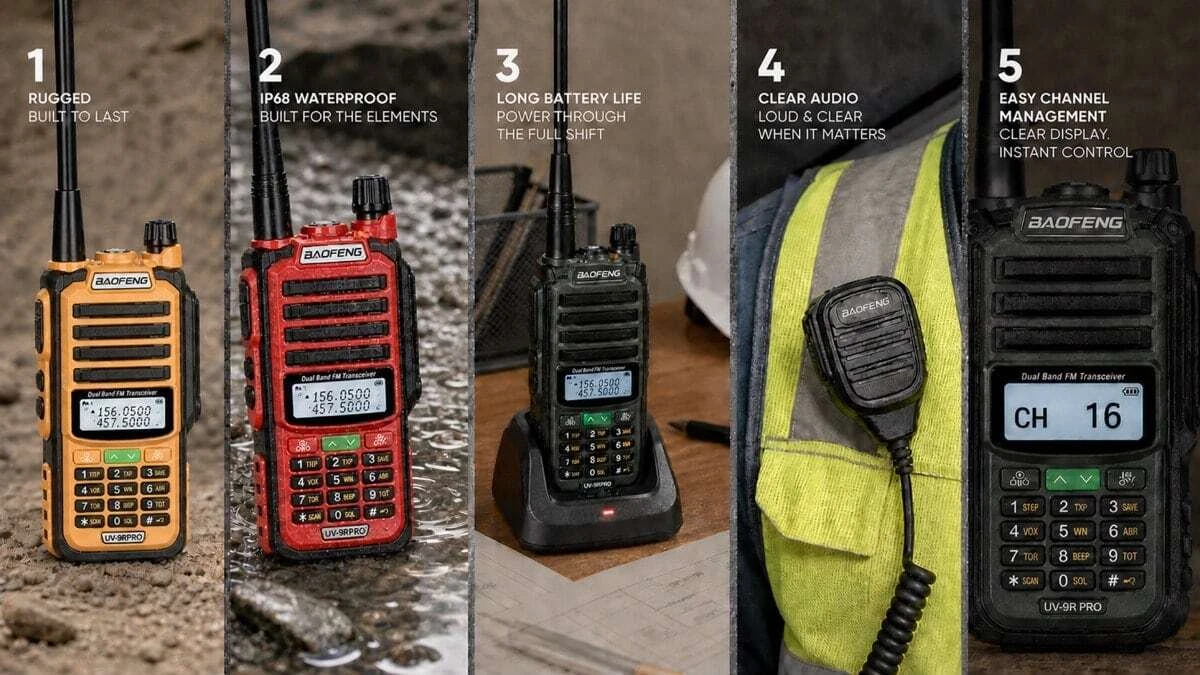 Five features matter more than headline wattage when choosing a construction walkie-talkie — rugged casing for physical durability, water resistance for wet weather work, sufficient battery for a full shift, clear audio around machinery and a simple channel plan for team organisation.
 What to look for in construction two way radios
A construction walkie talkie needs to cope with a very different environment from a radio used inside a shop or office. Durability, usable range, battery performance and clear audio should take priority.
- Rugged Construction and Water Resistance Dust, rain, mud and rough handling are common across building sites. A robust radio with a reinforced casing and an appropriate ingress protection rating is therefore valuable. An IP rating provides a standardised indication of resistance to dust and water. IP67 radios provide a high level of dust protection and protection against temporary immersion under specified conditions — a practical choice for outdoor construction projects where radios may regularly encounter rain or dusty working areas. For teams working outside throughout the year, consider the waterproof radios available through the construction range. Water resistance should still be treated according to the manufacturer's stated conditions — accessories, open connector covers and damaged seals can affect protection.
- Range That Matches the Actual Site Long range is one of the most common requirements when choosing radios for construction, yet there is no single maximum range that applies to every project. Open areas with clear line of sight usually provide better communication than multi-storey developments filled with concrete, scaffolding and steel. For particularly large sites, the Baofeng long range radio collection provides higher-power options for users operating under the appropriate radio licence. Test reception between site offices, working floors, basements, loading zones and the furthest active parts of the project.
- Long Battery Life A radio that runs out of power halfway through a shift quickly becomes an operational problem. Construction two way radios should have enough battery capacity for normal use throughout the expected working day. Site management should also consider charging arrangements — if handsets are shared between shifts, spare batteries or charging stations may be more important than headline battery capacity alone. USB-C charging can add flexibility because compatible radios can be charged from suitable power sources around the site.
- Clear Audio in Noisy Environments Construction sites can contain drills, generators, vehicles and heavy equipment. A radio therefore needs enough audio output for messages to remain understandable. Speaker microphones and earpieces may help certain workers hear and respond without repeatedly removing the radio from a belt or pocket. Baofeng provides a range of walkie talkie accessories including speaker mics, earpieces and chargers. VOX hands-free communication is available on several models, although in very noisy areas a physical push-to-talk control often provides more deliberate communication around active machinery.
- Channels and Team Organisation A construction project may involve several groups that do not need to hear every conversation. Separate channels can help divide communication between site management, logistics, security, ground teams or specific trades. Privacy codes such as CTCSS and DCS can help radios filter unwanted transmissions, although they do not encrypt conversations or make a channel genuinely private.
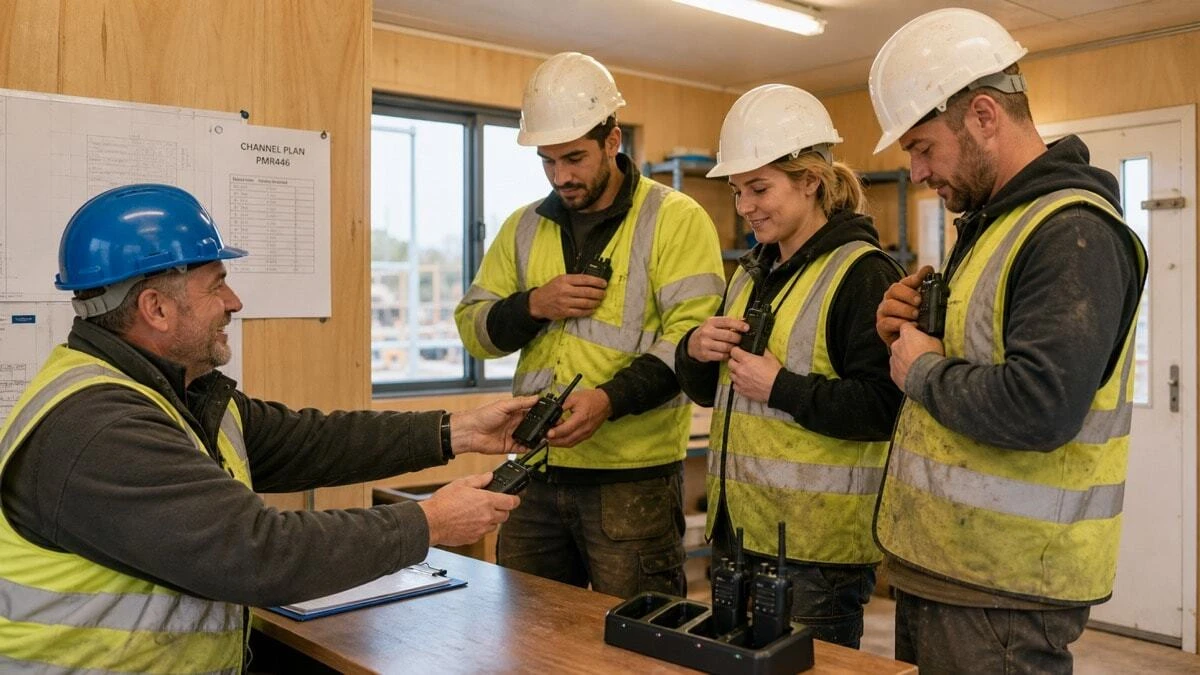 PMR446 licence-free radios can be distributed to construction workers before a shift without any additional Ofcom licensing administration. Ofcom specifically identifies building sites as a suitable PMR446 environment for this type of push-to-talk team communication.
 Best two way radios for construction
Different construction sites require different radio solutions. The following options cover three common requirements: licence-free simplicity, weather resistance and higher-power communication.
Baofeng BF-88ST Pro PMR446: Best for Licence-Free Site Communication
PMR446 Compliant · 16 Channels · Emergency Alarm · No Individual Licence Required
For smaller and medium-sized construction sites where straightforward deployment is the priority, the Baofeng BF-88ST Pro PMR446 is a practical option. It operates as a compliant PMR446 radio and is supplied pre-programmed with 16 PMR446 channels. UK users can therefore operate it without applying for an individual Ofcom radio licence, provided the radio continues to meet the applicable PMR446 requirements.
The BF-88ST Pro also includes VOX, dual watch and two emergency alarm modes — a local alarm and a fleet-wide alarm. Its 1200mAh battery is specified for approximately 8 to 12 hours of use depending on operating conditions. Ofcom identifies PMR446 as a short-range radio service suitable for both business and non-business users, including communication within building sites.
For an even simpler PMR446 option, the Baofeng BF-888S PMR446 range provides licence-free radios in several pack sizes for teams that mainly need basic push-to-talk communication.
Baofeng UV-9R Plus: Best for Wet and Dusty Construction Environments
IP67 · 8W Listed · VHF/UHF · Emergency Alert · Appropriate Licence Required
When durability is the main concern, the Baofeng UV-9R Plus offers an IP67-rated casing designed to resist dust and water exposure. The radio supports VHF and UHF operation, selectable transmission power, VOX, battery-saving functions and an emergency alert button. Current specifications list an 8W maximum output and a 2800mAh battery.
Its IP67 protection makes it particularly relevant for groundwork, external construction and projects where equipment may regularly encounter rain, dust or mud.
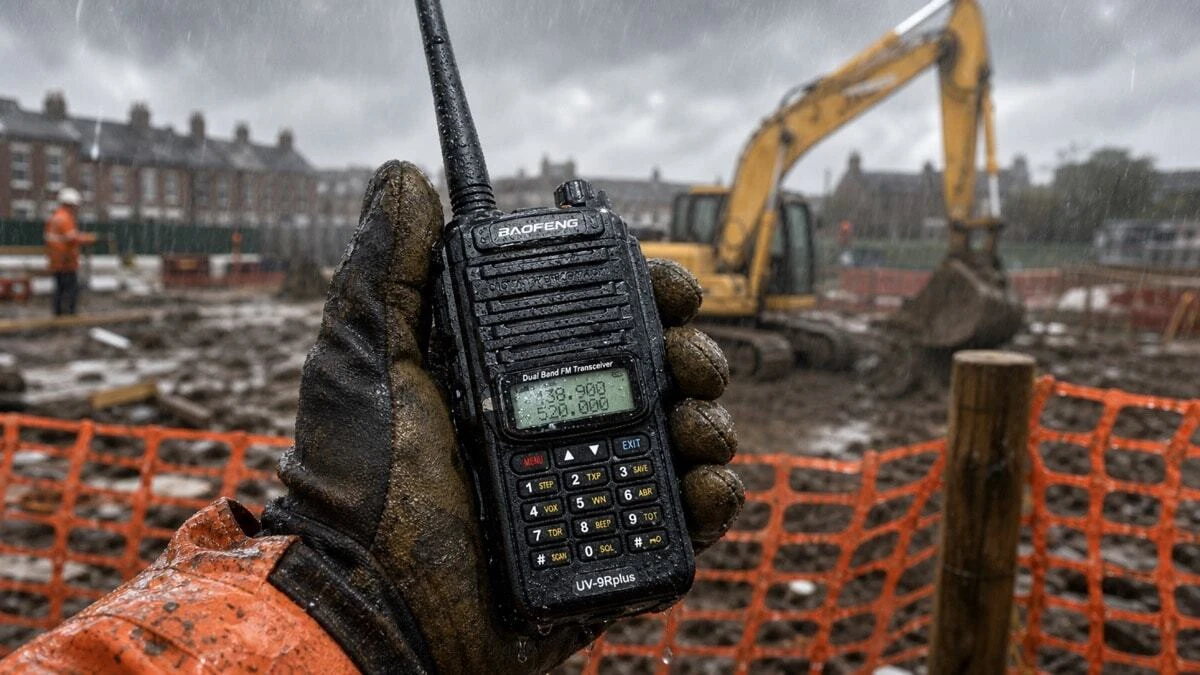 An IP67 rating provides a high level of dust protection and resistance against temporary water immersion — a practical choice for UK groundwork and external construction where radios regularly encounter rain, mud and demanding site conditions.
 Baofeng UV-5RH 10W: Best for Larger Sites Requiring More Flexible Coverage
Up to 10W · 2500mAh · USB-C · 999 Channels · Appropriate Licence Required
Large construction sites often introduce additional communication challenges. Long distances, several buildings, steelwork and concrete structures can all affect coverage. The Baofeng UV-5RH provides up to 10W selectable output, a 2500mAh lithium-ion battery, USB-C charging and up to 999 memory channels. It also supports VOX and dual-watch functions.
These features make it useful for teams that need greater flexibility when establishing a radio system across larger construction projects. Higher output does not guarantee a particular range — buildings and terrain continue to influence radio performance, so site testing and channel planning remain important.
Shop recommended construction radios
The five models below cover the main construction site scenarios discussed in this guide — from simple PMR446 licence-free options for smaller sites to rugged waterproof and high-power radios for more demanding environments.
🏗️ Baofeng Two Way Radios for UK Construction Sites
Choose by site size, weather conditions and licence situation — not by headline wattage alone.
🏗️ Licence-Free, Waterproof & High-Power — For Every Construction Scenario
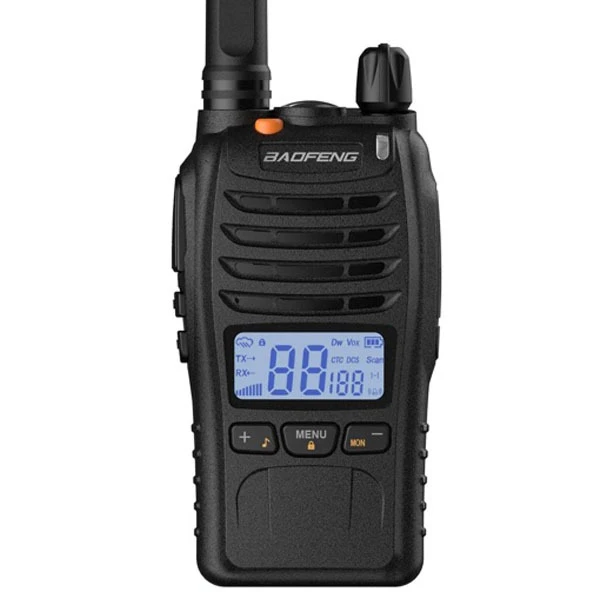
Baofeng BF-88ST Pro PMR446
PMR446 compliant · 16 channels · Emergency alarm · VOX · 1200mAh · No licence needed — simple deployment for smaller and medium-sized construction sites without Ofcom licence administration.
View BF-88ST Pro PMR446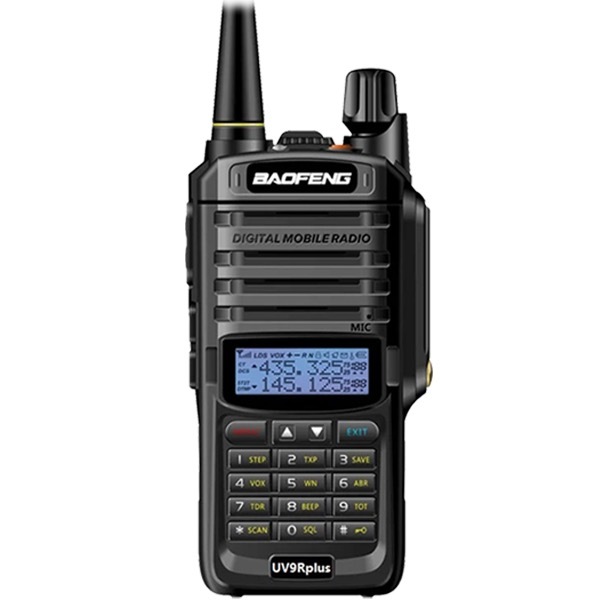
Baofeng UV-9R Plus IP67
IP67 waterproof · 8W listed · 2800mAh · VHF/UHF · Earpiece included — maximum weather protection for groundwork, external construction and outdoor sites. Licensed radio — appropriate Ofcom licence required to transmit.
View UV-9R Plus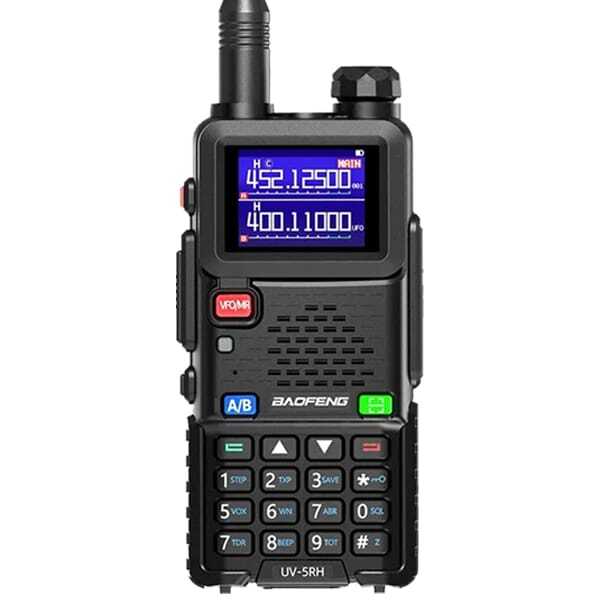
Baofeng UV-5RH 10W
Up to 10W listed · 2500mAh · USB-C · 999 channels · Multi-band — for large construction sites requiring more demanding coverage. Licensed radio — appropriate Ofcom licence required to transmit.
View UV-5RH 10W✅ PMR446 Fleet Packs — For Teams Needing Multiple Licence-Free Radios
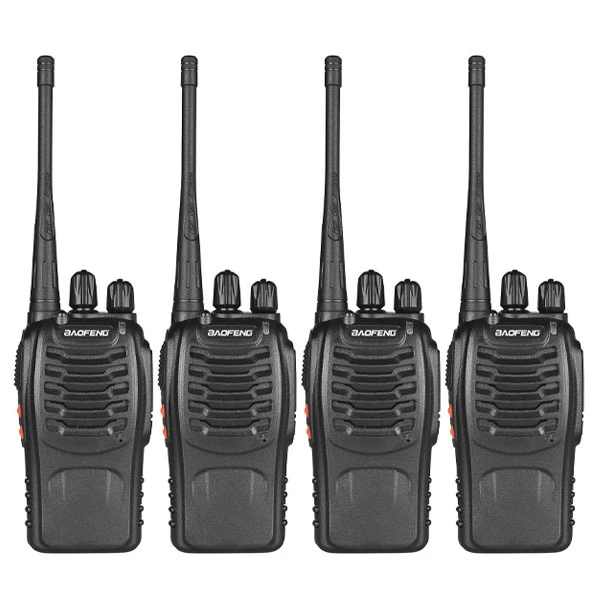
Baofeng BF-888S PMR446 Four-Pack
4 radios · Earpieces · Chargers · No licence needed — a practical starting point for smaller construction teams covering a site manager, supervisor, gate and delivery coordination without any additional licensing process.
View Four-Pack
Baofeng BF-888S PMR446 Eight-Pack
8 radios · Earpieces · Chargers · No licence needed — covers site management, ground team, access control, logistics, safety and spare capacity. Standardises the fleet for consistent training and charging management across shifts.
View Eight-Pack⚠️ PMR446 packs are licence-free when equipment is fully compliant. UV-9R Plus and UV-5RH 10W require an appropriate Ofcom licence to transmit legally in the UK.
Licence-free or licensed radios for construction?
This is an important decision for any UK construction company. PMR446 radios provide the simplest option. Compliant equipment can be operated licence-free and is suitable for many short-range communication requirements. Ofcom specifically includes factories and building sites among the environments where PMR446 can provide an effective service.
For sites requiring more specialised frequencies, greater coverage or a more structured radio network, an Ofcom Business Radio licence may be appropriate. Ofcom currently provides several Business Radio licence categories. Simple UK and Simple Site are examples of Light licences, while Technically Assigned licences support requirements that need specific technical coordination.
⚠️ Purchasing a radio does not authorise transmission: Businesses need to select equipment and settings that comply with the exact licence they hold. Purchasing a programmable radio does not by itself authorise transmission on a particular frequency. Read the complete guide on whether you need a licence for a walkie talkie in the UK before deploying licensed radios on site.
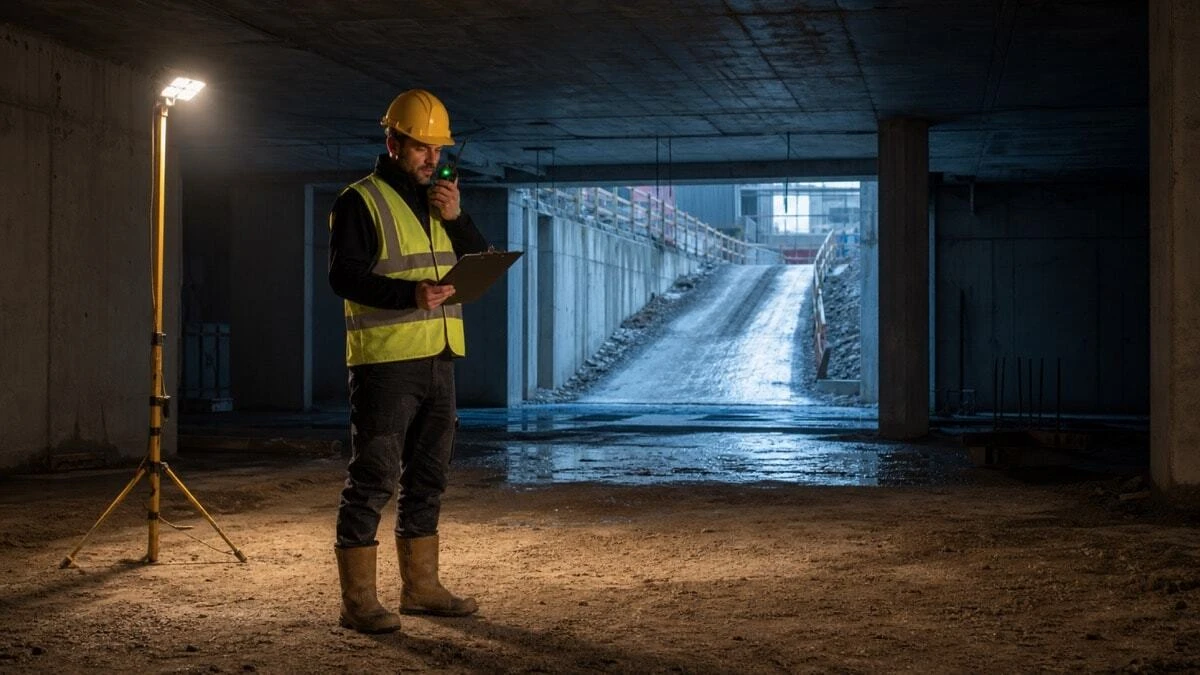 The Health and Safety Executive identifies radios as one method employers can use for maintaining regular contact with lone and isolated workers on construction sites. A radio is most effective when it forms part of a documented safety procedure — not a standalone solution.
 Two way radios and worker safety
Reliable communication can contribute to safer site operations when it is integrated into established safety protocols. For lone workers in particular, the Health and Safety Executive states that employers must monitor workers and keep in touch with them. Its guidance lists radios among the methods that may be used for regular contact and stresses the importance of testing monitoring systems and emergency procedures.
A radio can therefore support lone worker arrangements by allowing someone to call a supervisor, report a problem or confirm their status at agreed intervals.
⚠️ A radio is not a complete safety system: Emergency features on a walkie talkie should form part of a wider site procedure. An alarm button is most effective when every worker understands what happens after it is activated, which channel is monitored and who is responsible for responding. The same principle applies across general worker safety — radios help teams communicate hazards quickly, yet training, risk assessments and established site procedures remain essential.
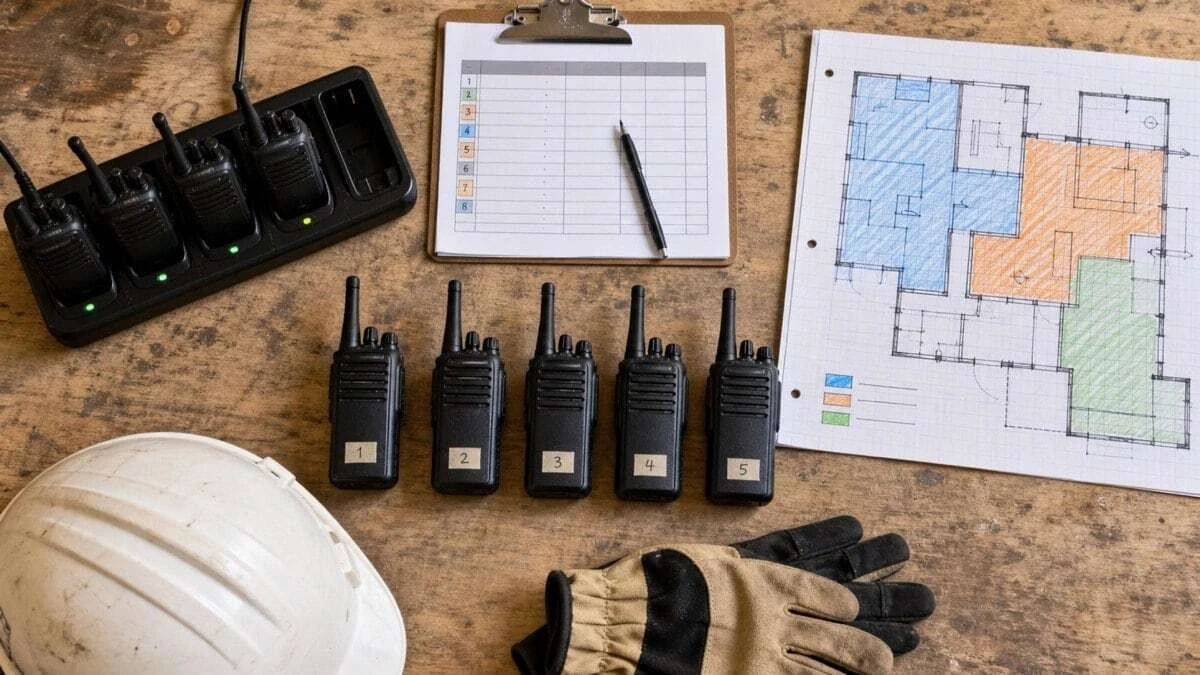 A reliable construction radio system goes beyond the handset — numbered radios, role assignments, a colour-coded site coverage map, a charging routine and a shift issue log all contribute to communication that works consistently throughout the project.
 Building a reliable construction radio setup
Choosing the handset is only part of creating reliable communication. Start by identifying the physical areas that need coverage. Walk the site and test communication from the places where workers actually operate, including basements, stairwells, temporary offices and external boundaries.
Next, create a simple channel structure. Avoid giving teams more channels than they need. Clear operating procedures usually produce better results than an unnecessarily complicated configuration. Accessories should also match the user's job — a site manager who communicates constantly may benefit from a speaker microphone, while another worker may only need a secure belt clip. Check accessory compatibility carefully, particularly with waterproof radios that may use different connectors.
🎯 Important reminder: Battery management should form part of the daily equipment routine. Charge radios after each shift, identify damaged batteries and keep spare equipment available for critical roles. Finally, review the radio system as the construction project develops. Coverage that worked during early groundwork may change as concrete walls, steel framing and additional floors are added.
Choosing the best radios for your construction project
The best two way radios for construction are the models that suit the environment, team size and communication requirements of the project.
For a smaller site needing straightforward licence-free communication, a compliant PMR446 radio such as the BF-88ST Pro can provide an easy-to-deploy solution. For teams regularly exposed to dust and wet weather, an IP-rated rugged radio such as the UV-9R Plus provides greater environmental protection when operated under the appropriate licence. For large sites where communication paths are more demanding, a higher-power programmable model such as the UV-5RH can provide additional flexibility as part of a correctly licensed radio system.
📋 Key takeaways for UK construction buyers
- Test range in real working conditions — concrete, steel, floors and terrain all reduce coverage differently from open ground
- PMR446 licence-free radios are specifically identified by Ofcom as suitable for building site communication — no individual licence required for compliant equipment
- Higher-power programmable radios require an appropriate Ofcom Business Radio licence before transmission — confirm this before issuing them to workers
- IP-rated waterproof radios provide better protection for outdoor and groundwork environments than standard handsets
- Battery planning, charging routines and spare equipment are often more important than the mAh figure on the specification sheet
- Emergency features only add value when the whole site understands the procedure — include radios in safety training and emergency exercises
- Browse the Baofeng construction walkie talkie range to compare radios, multi-packs and features for different site types
Frequently asked questions
How many two way radios does a construction team need?
Most sites should provide radios to supervisors, safety personnel and workers whose roles depend on frequent coordination. Larger construction projects may also benefit from keeping spare handsets available for shift changes, contractors or replacement equipment. A practical approach is to map the roles that genuinely need immediate communication access, then add spare capacity for critical positions rather than buying one radio per worker as a default.
Can construction radios work in basements or partially completed buildings?
Yes, but performance depends on the building materials, layout and distance between users. Concrete walls, steel structures and underground areas can reduce coverage significantly compared with open ground. Testing radios in these locations before full deployment is strongly recommended — a radio that performs well on the surface may behave very differently below ground or inside a reinforced concrete structure.
Should construction teams use separate radio channels for different tasks?
Yes, separate channels can make communication easier when several teams are working at the same time. For example, site management, logistics and security can use different channels while keeping an agreed emergency channel or procedure for urgent situations. Staff should know which channel to use for normal operations and what procedure applies when an emergency communication is needed.
Do construction companies need an Ofcom licence for two way radios?
It depends on the radio. Compliant PMR446 handheld radios can be operated without an individual Ofcom licence when the equipment meets all PMR446 technical requirements. Ofcom specifically identifies building sites as a suitable environment for PMR446 communication. Higher-power programmable radios such as the UV-9R Plus and UV-5RH require an appropriate Ofcom Business Radio licence before transmitting legally in the UK. Always confirm the licence requirements for the specific equipment before deployment.
What IP rating do I need for outdoor construction work?
For most outdoor construction work involving regular rain and dust exposure, IP67 provides a high level of protection — including resistance to temporary water immersion under specified test conditions. IP67 is a practical choice for groundwork, external construction and site environments where radios may regularly encounter wet or dusty conditions. The rating should still be treated according to the manufacturer's stated conditions — damaged seals, open connector covers and accessory compatibility can affect actual protection.
Can two way radios form part of a lone worker safety system on a construction site?
Yes. The Health and Safety Executive identifies radios as one method employers can use for maintaining regular contact with lone and isolated workers. A radio can allow a worker to check in at agreed intervals, report a problem or call for assistance. However, a radio alone does not constitute a complete lone worker safety system — employers still need appropriate risk assessment, agreed check-in procedures, monitoring arrangements and emergency response plans to meet HSE requirements.
Find the Right Radios for Your Construction Site
From PMR446 licence-free options for smaller sites to IP67 waterproof radios for outdoor groundwork and high-power systems for large projects — Baofeng UK has the right construction radio for every site size and environment.