Shop the Best Tri-Band Radios
by Baofeng
Ideal for HAM Operators, Off-Grid Users & Tactical Teams
Unlike restrictive single-purpose gear, a high-quality three-band transceiver works as a versatile mobile station, letting operators switch back and forth between different systems instantly. This configuration ensures consistent connectivity across changing environments, making it easy to coordinate separate crews working on completely unique frequency allocations. From remote outdoor survival setups and emergency disaster responses to industrial environments, these devices offer an ultra-adaptable asset.
Our flagship tri-band models integrate reinforced physical structures with advanced firmware features for a superior experience:
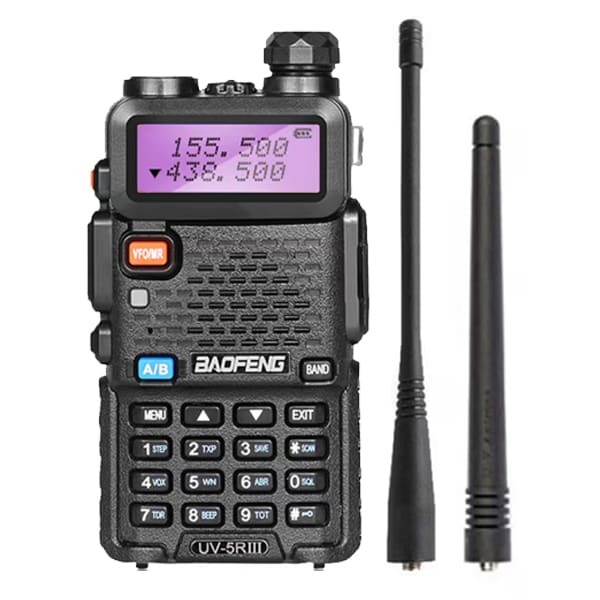
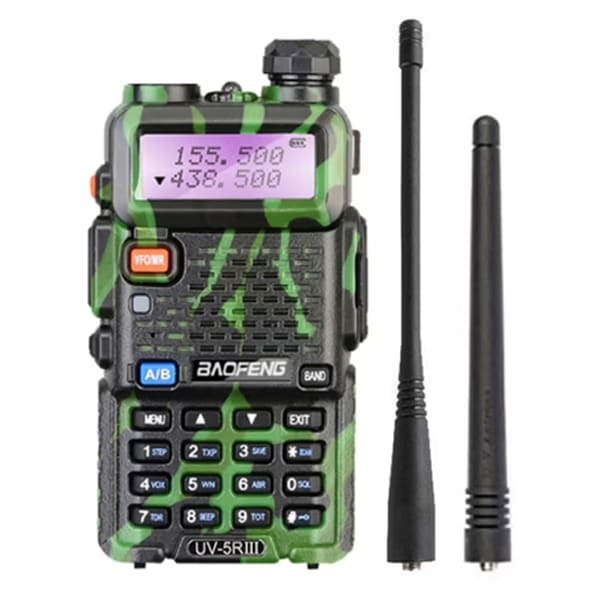
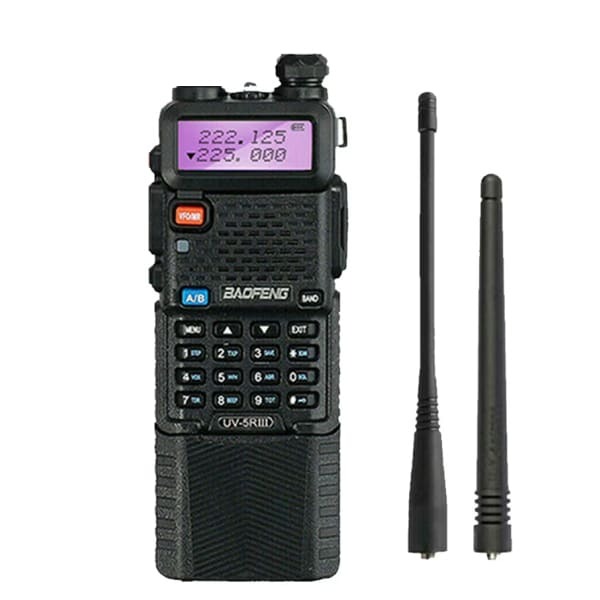
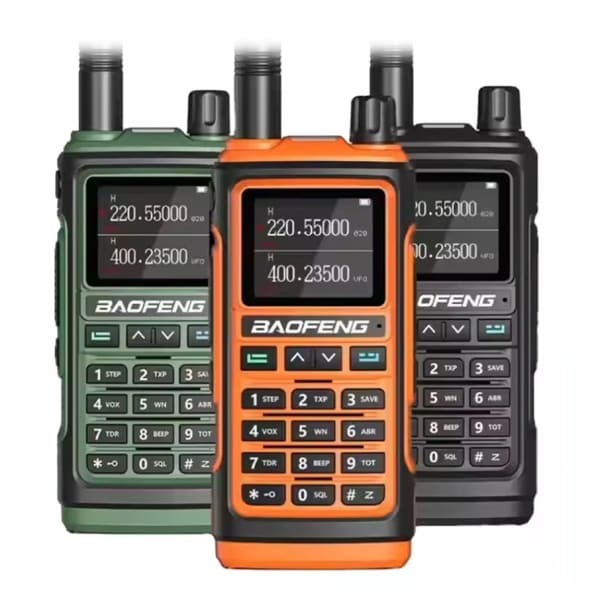
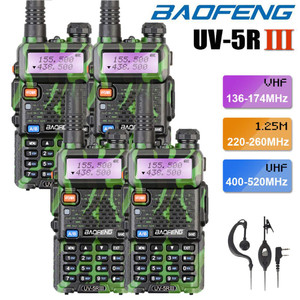
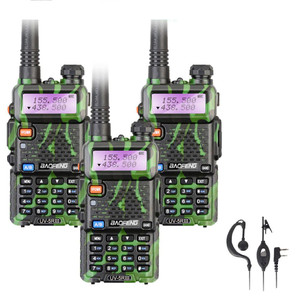
- UV-5R III Series: The definitive classic format offering comprehensive tri-band functions at an accessible entry point. Available in stealth Black or rugged Camo finishes, as well as an extended-life version bundled with a high-capacity 3800mAh battery pack.
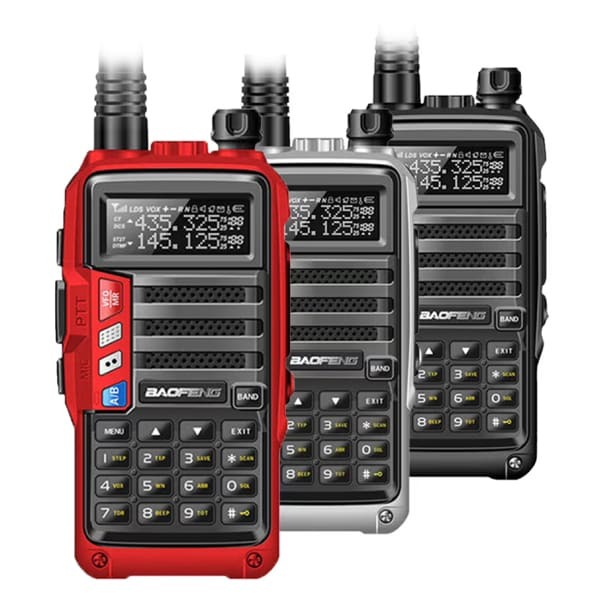
- UV-S9 Plus Tri-Band: An upgraded, highly popular variant recognized for its distinctive bold aesthetics, optimized chassis layout, and excellent long-range three-band coverage.
- UV-17 Pro: A highly robust, modernised transceiver featuring an advanced menu system, structured chassis protection, and optimized internal component shielding.
- UV-S9: A high-power tri-band staple recognized for its comfortable ergonomics, striking multi-color housing options, and exceptional signal stability.
Advanced Architecture for Demanding Field Operations
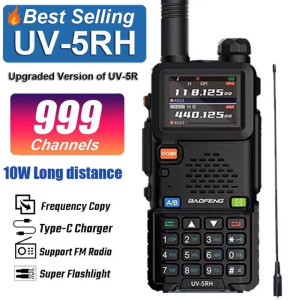
Every Baofeng tri-band transceiver is engineered to handle crowded radio spaces with ease. They come equipped with dual display layouts, dual watch frequency tracking, full base station integration support, and broad frequency range scanning matrices. Modern upgrades like direct USB-C charging interfaces, busy channel lockouts, and computer channel modifications via standard programming software make adjustments simple.
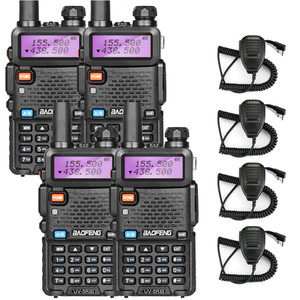
Consolidating your gear into a single, compact three-band unit lightens your load while future-proofing your capability against shifting local communications. To upgrade your setup further, browse our matching selection of high-gain antennas, tactical earpieces, and durable speaker mics to build a complete, highly affordable multi-pack toolkit.
Frequently Asked Questions
1. What are the main differences between using a tri-band radio and a standard dual-band radio?
Quick Answer: Tri-band radios open up an entirely separate third operational frequency range—most commonly adding the 220 MHz (1.25-meter) amateur band alongside basic VHF and UHF networks.
While standard dual-band hardware limits you strictly to basic VHF and UHF channels, a dedicated three-band transceiver lets you scan, transmit, and receive on a third distinct block. This added flexibility is incredibly valuable for emergency response teams and amateur ham operators because it allows seamless cross-band communication with multiple radio systems using just one compact device.
2. What distinguishes the Baofeng UV-5R III Tri-Band from the classic standard UV-5R model?
Quick Answer: The standard UV-5R is strictly a dual-band (VHF/UHF) radio, whereas the upgraded UV-5R III adds an entirely separate third frequency band—the 220 MHz (1.25-meter) allocation.
While both radios share the same iconic, rugged military-style chassis and durable interface, the standard UV-5R limits your operations to basic VHF and UHF bands. The specialized UV-5R III variant expands your capability by unlocking the 220 MHz band. It also includes dedicated, separate antennas optimized for these different frequency sets right in the package to ensure safe, stable signal transmission.
3. Why is the 220 MHz frequency band important for amateur radio and emergency setups?
Quick Answer: The 220 MHz band (1.25 meters) offers an ideal balance between long-distance rural reach and solid urban building penetration, usually with far less traffic congestion.
The 220 MHz band balances the open-air range of VHF with the building-penetrating power of UHF. Because this band is less crowded than standard frequencies, it provides clear, reliable channels during major events or regional emergencies when main lines are overwhelmed, keeping emergency teams connected when they need it most.
4. Do I need a special antenna to make full use of a tri-band walkie-talkie?
Quick Answer: Yes. To get the best signal and avoid damaging your radio, you should use an antenna designed to handle VHF, UHF, and 220 MHz frequencies simultaneously.
Using a standard dual-band antenna on a three-band radio can cause high SWR (Standing Wave Ratio) when transmitting on the third band, which can lower your range or overheat the internal circuits. Many of our kits include tailored multi-frequency antennas, or you can check our accessories page to find high-performance components built to keep your system safe and stable.
5. Do Baofeng tri-band hand-held radios require an official Ofcom licence to operate legally in the UK?
Quick Answer: Yes. Because these professional transceivers transmit high power across regulated amateur and commercial bands, they require a valid Ofcom licence for legal use in the United Kingdom.
Unlike low-power consumer walkie-talkies, high-wattage tri-band transceivers operate on regulated frequencies to prevent interference with critical commercial lines or emergency services. Registering an official licence keeps you fully compliant with UK law. For a complete, step-by-step walkthrough on getting authorized, check out our localized UK Ham Radio Licence Guide.