
17th Aug 2026
What Is a Two Way Radio? A Complete UK Guide to How They Work
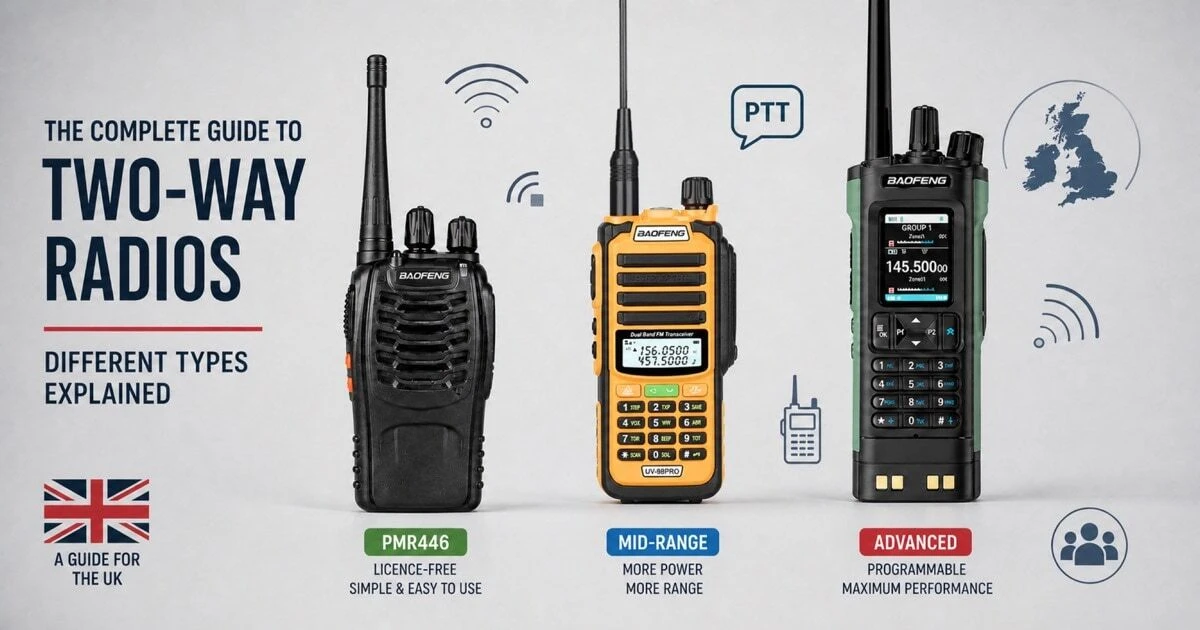
This guide was written and reviewed by the Baofeng UK team — UK-based radio communications specialists with over 10 years of experience helping beginners and businesses choose the right two-way radio. Licensing information reflects current Ofcom guidance on PMR446 and UK radio use.
A two way radio is a communication device that allows people to send and receive voice messages using radio frequencies instead of a mobile phone network.
Unlike a one-way radio that only receives signals, a two way radio allows users to communicate back and forth. This makes it useful for teams, outdoor groups, businesses, and anyone who needs instant communication without relying on mobile coverage.
In the UK, two way radios include simple licence-free PMR446 walkie talkies, as well as more advanced radios used by licensed amateur radio operators and businesses.
What is a two way radio? A device that lets you both send and receive voice messages using radio frequencies — no mobile network needed.
UK types: PMR446 licence-free · Amateur radios (licence required) · Business radios (licence required) · Digital DMR radios
⚡ Key points at a glance
- 📻 Two way = both directions: Send and receive — unlike a one-way radio that only receives
- 🖐️ Push-to-talk: Press a button to speak, release to listen — simple and instant
- ✅ Licence-free option: PMR446 radios require no individual Ofcom licence when compliant
- ⚠️ Not all radios are licence-free: Amateur and business radios need appropriate Ofcom authorisation
- 📱 Better than phones for groups: One message reaches the whole team instantly — no dialling, no waiting
- 🏔️ Works without mobile signal: Ideal for rural areas, outdoor events and sites with poor coverage
📋 Table of Contents
- What does two way radio mean?
- Are two way radios the same as walkie talkies?
- How does a two way radio work?
- Why do people still use two way radios instead of mobile phones?
- Types of two way radios available in the UK
- What is a PMR446 two way radio?
- Recommended two way radios for UK buyers
- Do you need a licence for a two way radio in the UK?
- Who uses two way radios?
- What should you consider before buying?
- Two way radio pros and cons
- Final thoughts
- Frequently asked questions
What does two way radio mean?
The term "two way radio" describes any radio system where communication can travel in both directions. A user can:
- Press a button to transmit their voice
- Send the signal through a radio frequency
- Allow another radio to receive the message
- Reply using the same system
This simple push-to-talk method is why two way radios remain popular decades after their invention.
🔵 Key difference: A mobile phone connects through a cellular network, while a two way radio communicates directly with another radio or through a dedicated radio system — no network subscription or signal tower required.
Are two way radios the same as walkie talkies?
Many people use the words two way radio and walkie talkie interchangeably, and in everyday conversation they often mean the same thing. However, there is a small difference.
| Feature | Walkie Talkie | Two Way Radio |
|---|---|---|
| Meaning | Usually refers to handheld radios | A broader category of radios that transmit and receive |
| Users | Families, outdoor groups, small teams | Consumers, businesses, security, professionals |
| Range | Usually short-range | Depends on model, frequency, power, antenna and environment |
| Licensing | Some are licence-free | Some require licences |
| Examples | PMR446 radios | PMR446, amateur radios, business radios |
🟢 Simple rule: A walkie talkie is usually a type of two way radio, but not every two way radio is a basic walkie talkie.
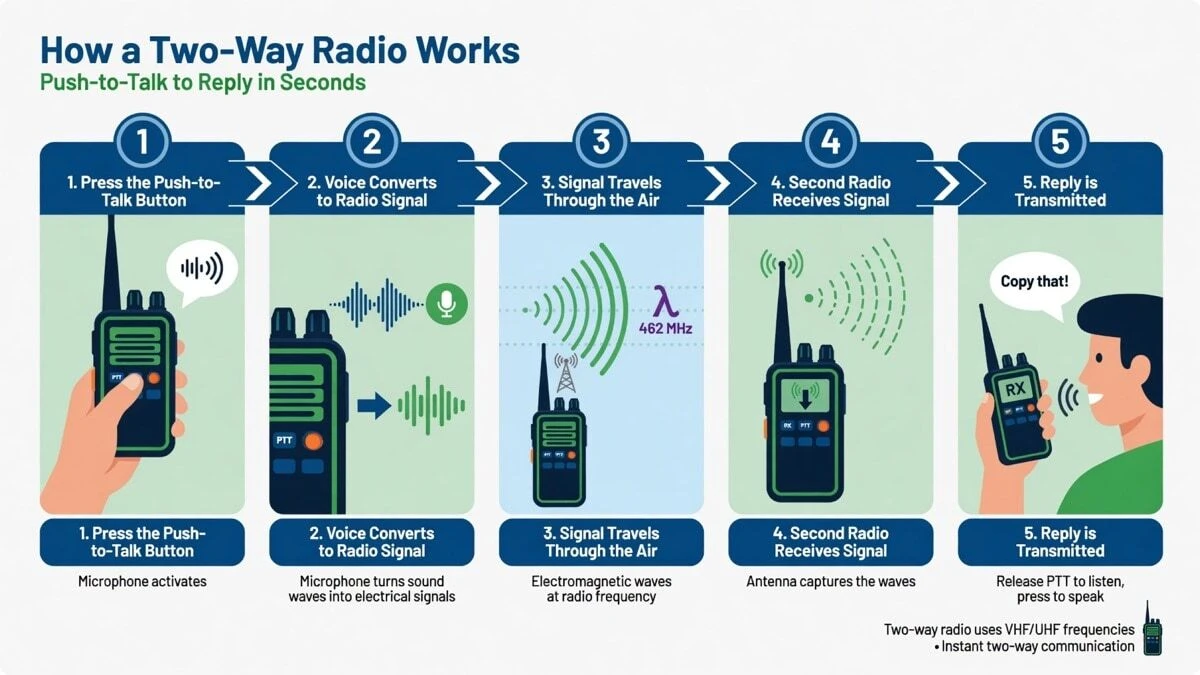 The five steps of two-way radio communication — press, convert, transmit, receive, reply. The same simple process that made radios essential in the 1940s still powers every modern walkie-talkie today.
 How does a two way radio work?
A two way radio works by converting your voice into a radio signal. The process is simple:
Press the push-to-talk button
Voice converts into a radio transmission
Signal travels through a chosen frequency
Another radio receives the signal
The user replies through the same process
Most handheld radios are designed around quick communication rather than long conversations. This is why they are popular in environments where speed matters:
- Security teams responding to incidents
- Restaurant staff coordinating service
- Construction workers communicating across a site
- Outdoor groups staying connected
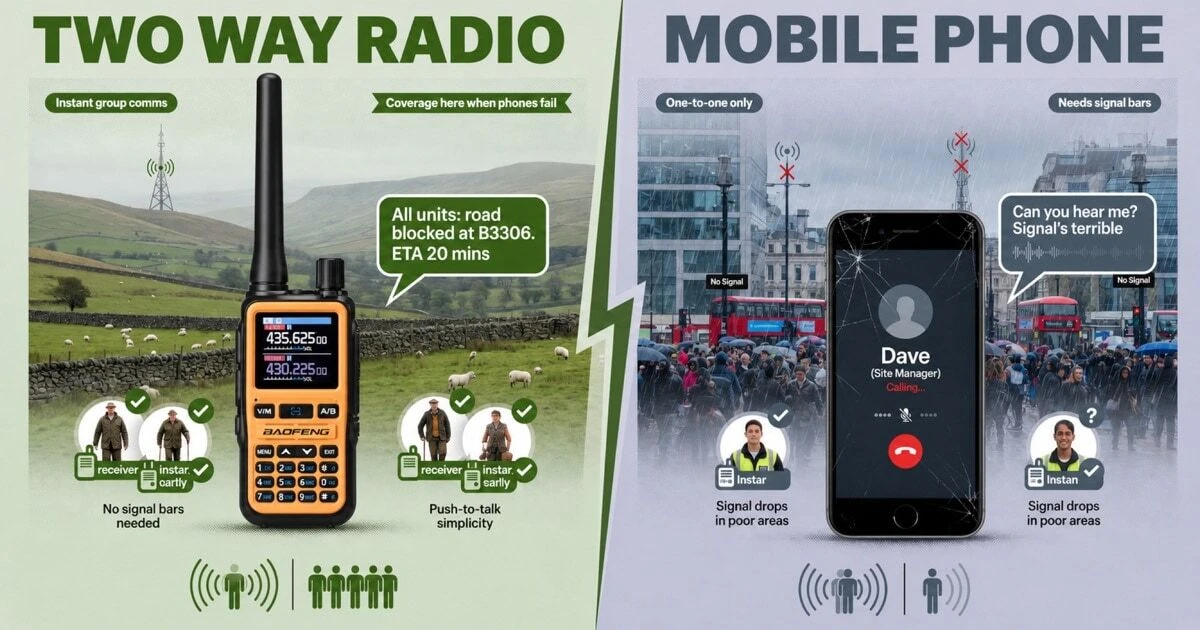 Two way radios and mobile phones solve different problems. When you need to reach the whole team instantly — or when there is no mobile signal — a radio is the more reliable tool.
 Why do people still use two way radios instead of mobile phones?
Many people assume smartphones have replaced radios. In reality, two way radios solve problems that mobile phones do not always handle well.
Instant communication
A radio allows a group to communicate immediately. There is no need to dial a number, wait for connection or search through contacts. One person can speak and multiple team members can hear the message.
Works where mobile signal is weak
Mobile coverage is not available everywhere. Two way radios can be useful for hiking areas, farms, rural properties, outdoor events and construction sites.
⚠️ Range reminder: Actual range depends on terrain, buildings, antenna quality, radio power and frequency regulations. Buyers should be careful with exaggerated "long range" claims because real-world conditions often reduce distance.
Lower operating cost for teams
For businesses, radios can be simpler than providing every employee with a mobile phone. Common users include restaurants, hotels, retail stores, event teams and security staff. Baofengradio.co.uk identifies small businesses, security teams, hospitality, construction, and schools as important UK audiences for affordable radio communication solutions.
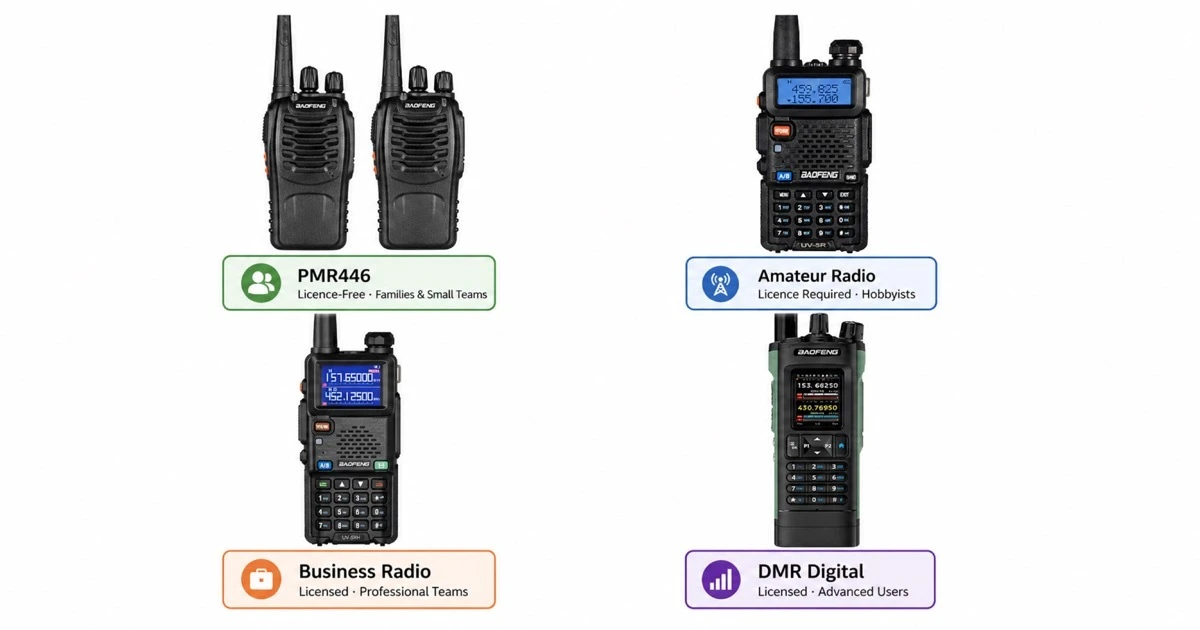 Four categories of UK two-way radio — each with different features, users and licensing requirements. Choosing the wrong category is the most common and costly mistake UK buyers make.
 Types of two way radios available in the UK
Choosing the right radio depends on how you plan to use it.
| Radio Type | Best For | Licence Requirement |
|---|---|---|
| PMR446 Radios | Families, schools, hospitality, outdoor groups | Licence-free when compliant with UK PMR446 rules |
| Amateur Radios | Radio enthusiasts and hobby users | Amateur radio licence required for transmission |
| Business Radios | Security, construction, professional teams | Often requires appropriate business radio licensing |
| DMR Radios | Advanced users needing digital communication | Usually requires licensing and programming knowledge |
⚠️ Biggest UK buying mistake: Choosing a powerful radio without understanding whether you can legally transmit with it. Always check the licence requirements for the specific model before purchasing.
What is a PMR446 two way radio?
PMR446 is the licence-free radio standard commonly used in the UK and Europe. These radios are designed for simple short-range communication and are popular because users do not need to apply for a radio licence when the equipment meets PMR446 requirements.
Typical users include families, schools, campsites, hospitality teams and small events. For buyers who simply need easy communication without technical setup, PMR446 radios are often the easiest starting point.
🟢 PMR446 key facts: Fixed integral antenna · Maximum 0.5W ERP · Operates between 446.0 and 446.2 MHz · Hand-portable use only · No individual Ofcom licence needed when equipment is compliant
Recommended two way radios for UK buyers
The four models below cover the main categories discussed in this guide — from simple licence-free options for beginners to advanced licensed radios for hobbyists and business teams.
📻 Baofeng Two Way Radios — Matched to Your Needs
Choose by use case and licence situation — not just by wattage.
✅ Licence-Free PMR446 — No Individual Ofcom Licence Required
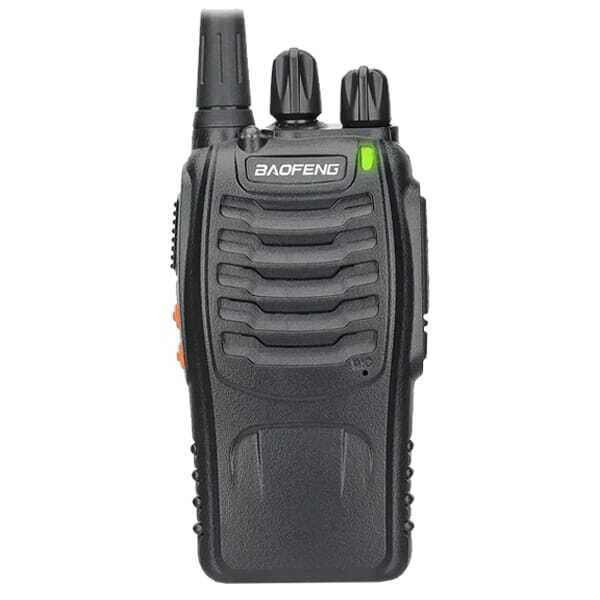
Baofeng BF-888S PMR446
0.5W · 16 PMR446 channels · Fixed antenna · No licence needed — the simplest and most popular licence-free two way radio for UK families, restaurants, schools and small teams.
View BF-888S PMR446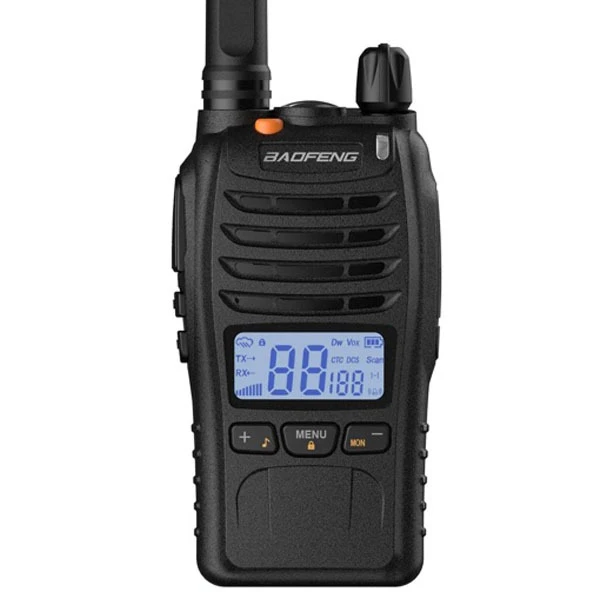
Baofeng BF-88ST Pro PMR446
PMR446 compliant · Pro upgrade · Fixed antenna · No licence needed — enhanced features for beginners who want a step up from the basic BF-888S without leaving the licence-free category.
View BF-88ST Pro PMR446📡 Licensed Radios — For Amateur Operators & Advanced Users
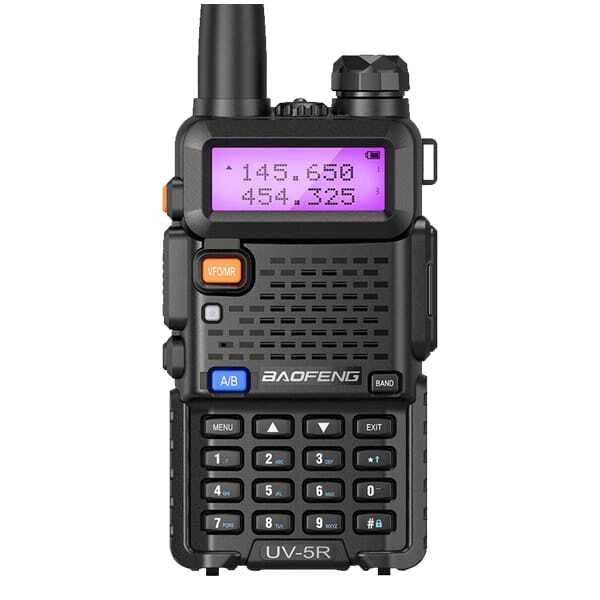
Baofeng UV-5R
Dual-band VHF/UHF · Programmable · Removable antenna — the iconic amateur radio entry point. Requires an appropriate UK Amateur Radio Licence to transmit legally.
View UV-5R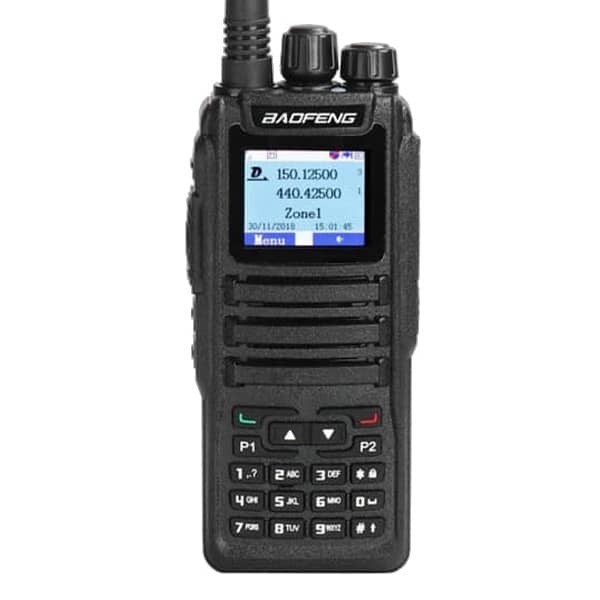
Baofeng DM-1701 DMR
Digital DMR · Dual time-slot · Clearer audio — for licensed business teams and advanced users requiring digital voice quality, structured talk groups and professional-grade communication.
View DM-1701 DMR⚠️ Always verify the licence requirements for any radio before transmitting. PMR446 models are licence-free when compliant. Licensed radios require appropriate Ofcom authorisation.
Do you need a licence for a two way radio in the UK?
It depends on the radio. A common misunderstanding is: "Any walkie talkie can be used without a licence." That is not always true.
Licence-free PMR446 radios are designed specifically for legal unlicensed use. Higher-powered radios, such as many Baofeng handheld models, may require the correct licence before transmitting.
Before purchasing, UK buyers should check: radio type, frequency bands, power output, antenna type and intended use.
⚠️ Important: This licensing confusion is one of the biggest barriers for UK radio buyers, especially beginners choosing their first Baofeng radio. Read the full UK radio licence guide before purchasing any programmable handheld radio.
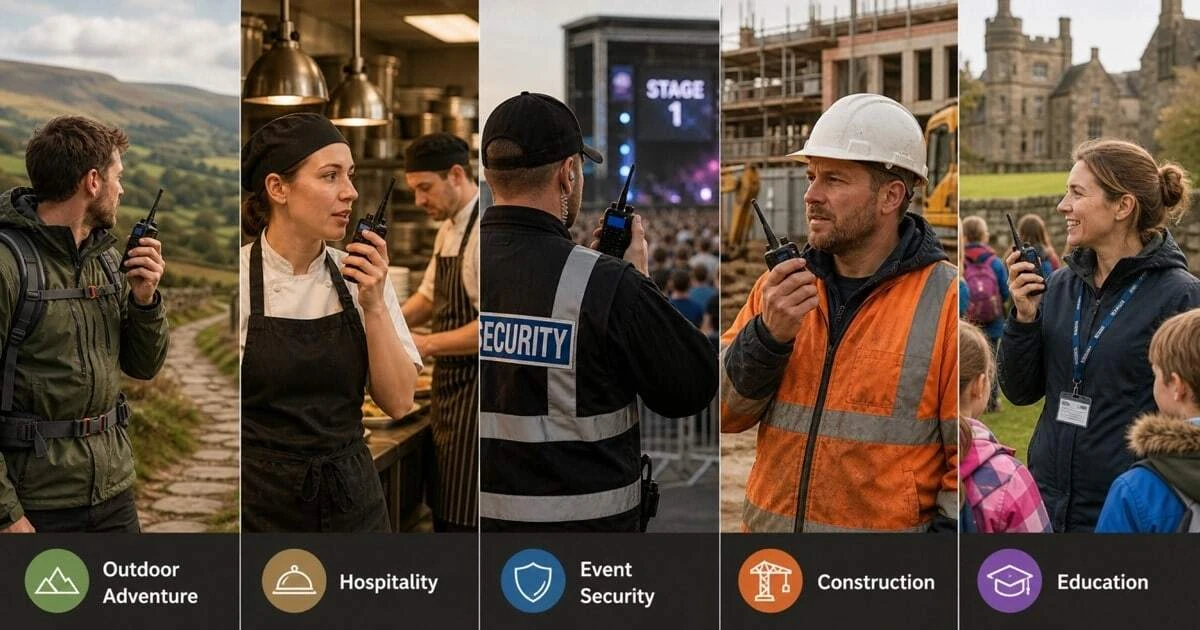 Two way radios are used every day across the UK — from hikers in the countryside to restaurant kitchens, security teams at events, construction sites and school outdoor activities. The common thread is the need for instant, reliable group communication.
 Who uses two way radios?
- Hikers, campers and adventure groups
- Communication away from mobile networks
- Battery life and weather resistance matter
- Easy operation and reliable group communication
- Restaurant teams coordinating tables
- Hotel staff communicating between floors
- Retail workers managing customer support
- Simple, fast and cost-effective for teams
- Quick communication during busy situations
- Earpieces for discreet communication
- Spare batteries for long shifts
- Charging stations between shifts
- Noisy environments need reliable audio
- Large sites with multiple workers
- Safety-critical communication
- Quick alternative to relying on phones
What should you consider before buying a two way radio?
Before choosing a radio, ask these questions:
| Question | Why it matters |
|---|---|
| Where will I use it? | Buildings, countryside and open areas affect range |
| How many users need radios? | Determines whether you need a single unit or bundle |
| Do I need licence-free use? | Helps avoid buying unsuitable equipment |
| Do I need accessories? | Earpieces and chargers improve usability |
| Am I a beginner? | Some radios require programming knowledge |
🎯 Expert note: For beginners, ease of setup is often more important than maximum power. Baofeng products attract many first-time radio users because they offer affordable entry points, but buyers benefit from clear setup guidance and licence information before purchase.
Two way radio pros and cons
| ✅ Advantages | ⚠️ Limitations |
|---|---|
| Instant group communication | Range depends heavily on conditions |
| Works without mobile networks | Some radios require licences |
| Long battery life | Advanced models may need programming |
| Useful for teams | Not designed for private phone-style conversations |
| Affordable compared with some communication systems | Users must choose the correct radio type |
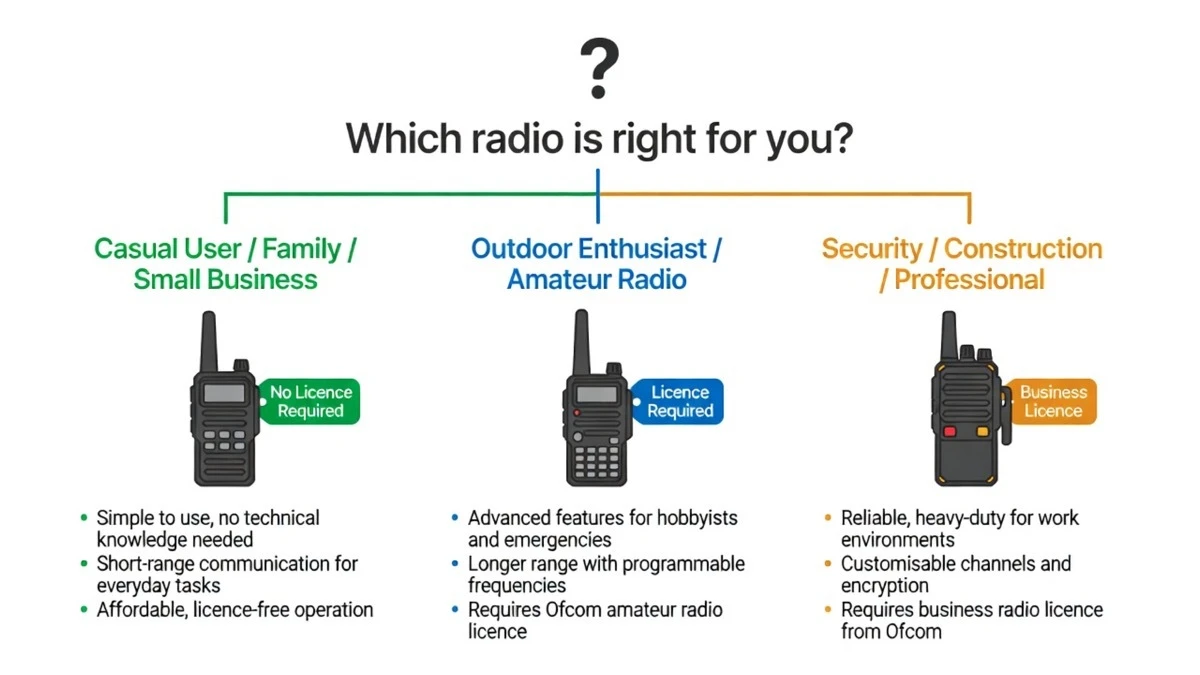 Three paths for UK radio buyers — PMR446 licence-free for casual users and small businesses, amateur radio for hobbyists who want to learn radio technology, and licensed business radios for professional operational teams.
 Final thoughts: is a two way radio right for you?
A two way radio remains one of the simplest ways to keep people connected when speed, reliability, and group communication matter.
For casual users, a licence-free PMR446 radio may be the right choice. For hobbyists, professionals, or users needing advanced features, a more capable radio system may be suitable with the correct licensing.
📋 Key takeaways
- A two way radio sends and receives — unlike a one-way radio that only receives
- PMR446 radios are the main licence-free option for UK beginners, families and small businesses
- Amateur and business radios offer more capability but require appropriate Ofcom licensing
- The key is not choosing the most powerful radio — it is choosing the radio that matches your location, users and communication needs
- Baofengradio.co.uk focuses on helping UK customers access affordable two way radios, accessories and guidance for different use cases
Frequently asked questions
What is a two way radio?
A two way radio is a communication device that allows users to both send and receive voice messages using radio frequencies. Unlike a one-way radio that can only receive, a two way radio uses a push-to-talk button to transmit, allowing back-and-forth communication without a mobile phone network or internet connection.
What is the difference between a two way radio and a walkie talkie?
In everyday use, the terms are often interchangeable. However, "two way radio" is a broader category covering PMR446 handhelds, amateur transceivers, business radios and digital DMR systems. A "walkie talkie" usually refers specifically to a handheld two way radio — often a compact licence-free PMR446 model used by families, outdoor groups or small teams.
Do I need a licence to use a two way radio in the UK?
It depends on the specific radio. Compliant PMR446 handheld radios can be operated without an individual Ofcom licence when the equipment meets all PMR446 technical requirements — including a fixed integral antenna, operation between 446.0 and 446.2 MHz and a maximum of 0.5W ERP. Amateur radios and higher-powered programmable handhelds generally require an appropriate Amateur Radio or Business Radio licence before transmitting.
What is PMR446?
PMR446 is the licence-free radio standard used across the UK and Europe. Radios that comply with PMR446 technical requirements — including a fixed antenna, limited transmit power and operation on designated 446 MHz frequencies — can be used without an individual Ofcom licence. They are designed for short-range personal and business communication and are the most common choice for families, schools, hospitality teams and small events.
How far can a two way radio communicate?
There is no guaranteed distance. Range depends on terrain, buildings, antenna quality, output power and frequency. In open countryside, range is typically much better than in urban areas, forests or between floors of a building. Manufacturer maximum-range figures are based on ideal open-air conditions and should not be taken as reliable guides for typical UK environments.
What two way radio is best for beginners in the UK?
For most beginners, a compliant PMR446 radio such as the Baofeng BF-888S PMR446 is the most practical starting point. It requires no licence, arrives pre-programmed, has simple controls and can be used immediately. Beginners who want to explore amateur radio should study for and obtain an Amateur Radio Licence before purchasing a programmable handheld transceiver.
Can a two way radio replace a mobile phone?
Not as a general-purpose device, but it solves different problems well. A two way radio allows a group to communicate instantly without dialling, without waiting and without mobile signal. It is better suited to team coordination in one location or area. It cannot make calls to mobile numbers, access the internet or work across long distances without infrastructure.
Ready to Choose Your First Two Way Radio?
From simple PMR446 licence-free handhelds for beginners to advanced radios for licensed operators — Baofeng UK has the right two way radio for every use case and budget.
Browse All Two Way Radios