
12th Sep 2026
Two Way Radios for Schools: A Practical Guide to Reliable Communication
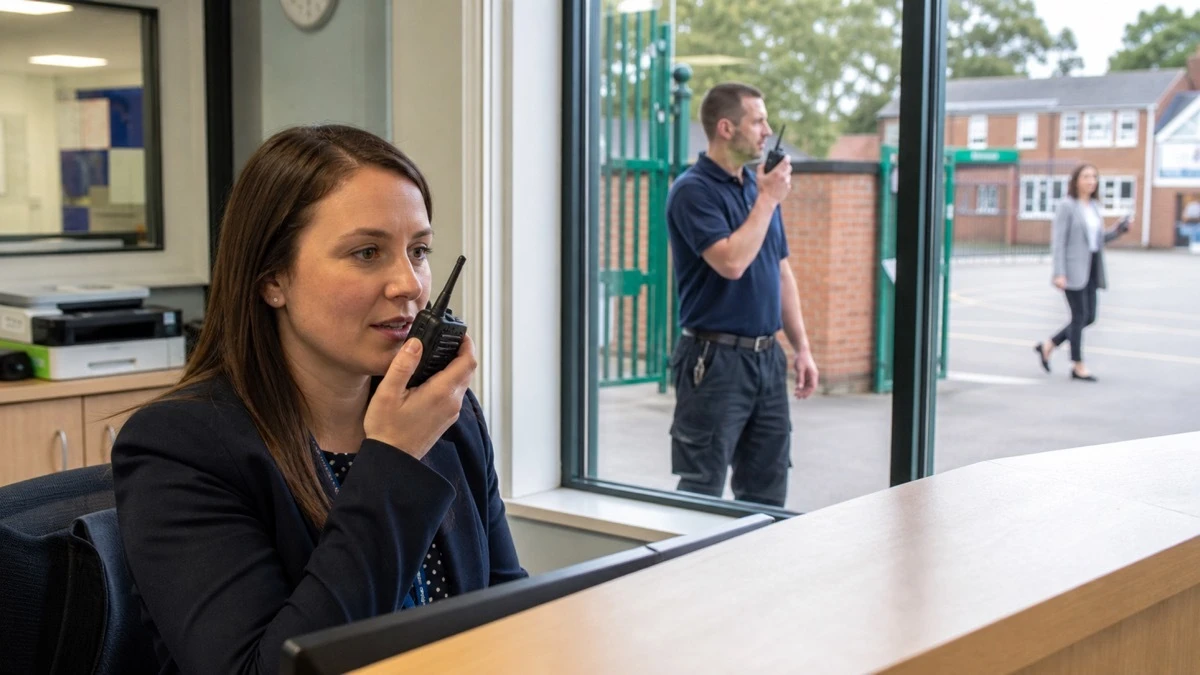
This guide was written and reviewed by the Baofeng UK technical team — UK-based radio communications specialists with over 10 years of experience helping education teams, schools and colleges choose the right two-way radio system. All licensing references reflect current Ofcom guidance. Health and Safety references are consistent with current UK HSE guidance on lone worker monitoring.
Clear communication matters every day in a school.
Teachers may need assistance in a playground, reception staff may need to reach a caretaker, and site teams may be spread between classrooms, sports facilities, gates and car parks. During an emergency, the ability to contact the right member of staff quickly becomes even more important.
This is why two way radios for schools have become a practical communication tool across the education sector. A handheld radio gives staff a direct way to speak to colleagues at the press of a talk button, without opening an app, searching for a phone number or waiting for a mobile call to connect.
For schools, colleges and other educational environments, the right radio system can support daily operations, improve coordination and provide an additional communication channel when staff are supervising students across a large site. Schools considering a dedicated radio system can explore Baofeng's range of radios for schools and education.
For most UK schools: Compliant PMR446 licence-free walkie talkies — no individual Ofcom licence required, simple push-to-talk operation, no monthly airtime fees and immediate deployment across the school site.
Key model: The Baofeng BF-88ST Pro PMR446 is specifically designed for professional licence-free fleet deployment and includes local and fleet-wide emergency alarm modes alongside 16 PMR446 channels.
⚡ Two way radios for schools — key points
- ✅ PMR446 is the right starting point: No Ofcom licence required for compliant equipment — simple for all staff to use
- 📞 Faster than phones for on-site coordination: One press reaches colleagues or the whole group — no dialling, no waiting
- 💷 No monthly fees: Once purchased, local radio communication generates no airtime cost
- 🚨 Emergency alarm feature: BF-88ST Pro PMR446 includes local and fleet-wide emergency alarm modes for rapid staff response
- 📏 Range must be tested on site: Walls, corridors, separate buildings and outdoor areas all affect real coverage
- 🔋 Battery routine matters: Charge nightly, establish a return location and keep a spare handset available
- 🔒 Privacy codes ≠ encryption: Do not transmit sensitive student information over shared PMR446 channels
📋 Table of Contents
- Why reliable communication matters in busy school environments
- Two way radios compared with mobile phones
- Licence-free PMR446 radios for schools
- What makes the best walkie talkies for schools?
- Understanding radio range and school coverage
- Using radios during emergencies
- Keep radio messages appropriate
- Radios for school trips and outdoor activities
- Choosing a radio fleet to suit the school budget
- Recommended school two way radios
- Building a reliable school radio system
- Frequently asked questions
Why reliable communication matters in busy school environments
A school is rarely a single communication environment. During the same day, staff may be working inside classrooms, in corridors, on outdoor pitches, near entrances, in kitchens or around separate buildings. Teachers are also only one part of the communication network. Reception teams, cleaners, caretakers, facilities staff, security personnel and senior leadership may all need a simple way to communicate.
Two way radios allow a message to reach another handset, or a whole group of handsets, almost immediately. For routine situations, that could mean asking a caretaker to attend a classroom or coordinating staff at the end of the school day. During sports events or school trips, radios can help teachers remain in touch when groups are spread across a wider area.
🔵 The main benefit is speed. Staff can keep a radio clipped to clothing or carried in a pocket and use the push-to-talk button whenever assistance is required. This makes radio communications particularly useful in busy school environments where staff may need to react while continuing to supervise students.
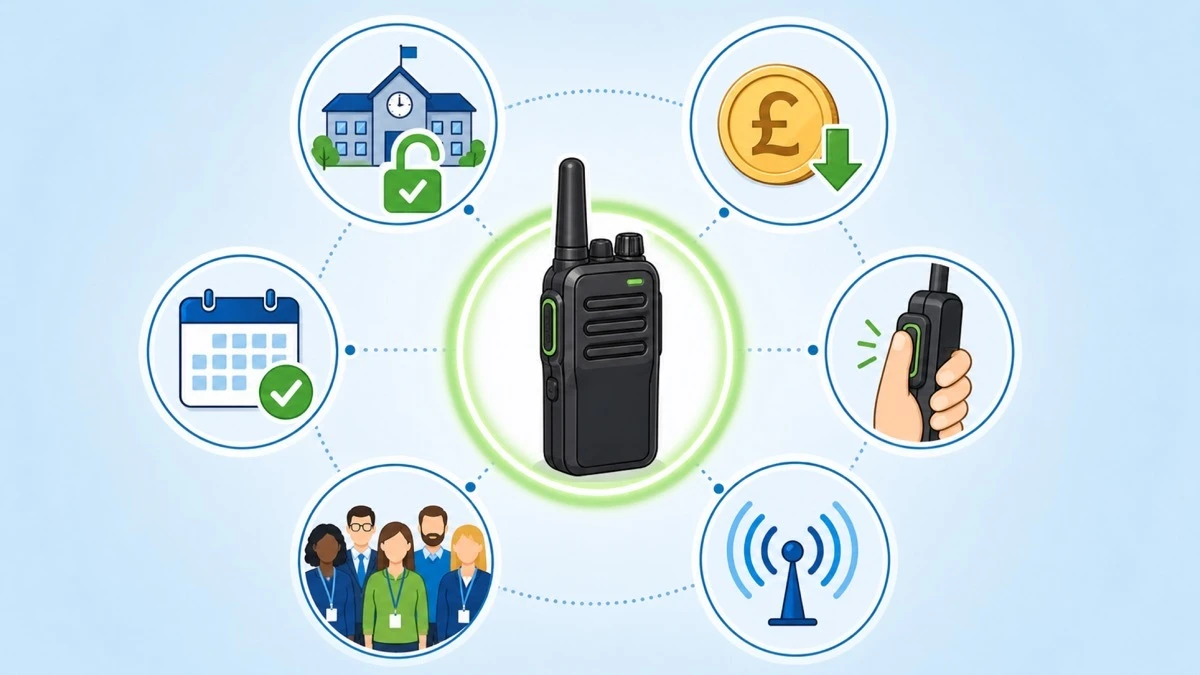 PMR446 licence-free walkie-talkies offer UK schools three key advantages over other communication options — no individual Ofcom licence required, no monthly airtime fees and simple push-to-talk operation that any member of staff can learn quickly.
 Two way radios compared with mobile phones
Mobile phones remain essential for many forms of school communication. They allow staff to call parents, emergency services and external organisations, and they support messaging, email and other digital systems. Walkie talkies serve a different purpose.
For communication between staff on the same site, radios can create a direct group communication channel. A teacher can press the talk button and reach colleagues using the same radio channel without placing individual calls. Radio handsets also communicate directly over radio frequencies — they do not require a mobile network, Wi-Fi connection or SIM card for radio-to-radio communication.
🟢 No ongoing fees: For compliant licence-free models, there are no monthly fees for airtime or mobile data. Once the radios and charging equipment have been purchased, ordinary local radio communication does not generate a charge each time someone speaks. Mobile phones and radios can work alongside each other — radios for immediate on-site coordination, phones for communicating beyond the radio group or contacting emergency services.
Licence-free PMR446 radios for schools
One of the first decisions when choosing two way radios for schools is whether the school requires licence-free PMR446 radios or a licensed radio system. PMR446 is a short-range radio system used in the UK. Compliant equipment operates within the 446.0 to 446.2 MHz UHF frequency range and can be used without applying for an Ofcom radio licence.
For many schools looking for straightforward local communication, this makes PMR446 a practical place to start. The radios can be deployed without annual spectrum licensing costs, and pre-programmed models require relatively little technical knowledge from teachers or other staff. You can compare the current licence-free PMR446 walkie talkies available from Baofeng UK.
⚠️ Site testing is important: PMR446 radios are UHF radios designed primarily for short-range communication. Their performance still depends heavily on the site. Walls, reinforced concrete, metal structures, terrain and the position of the person using the radio can all affect coverage. Larger educational sites may have requirements that exceed what a licence-free system can reliably provide. Testing the radios on the actual site is therefore an important part of choosing the best radios for any school.
What makes the best walkie talkies for schools?
With many models available, specifications can quickly become distracting. Schools usually benefit from focusing on the features that affect everyday operation.
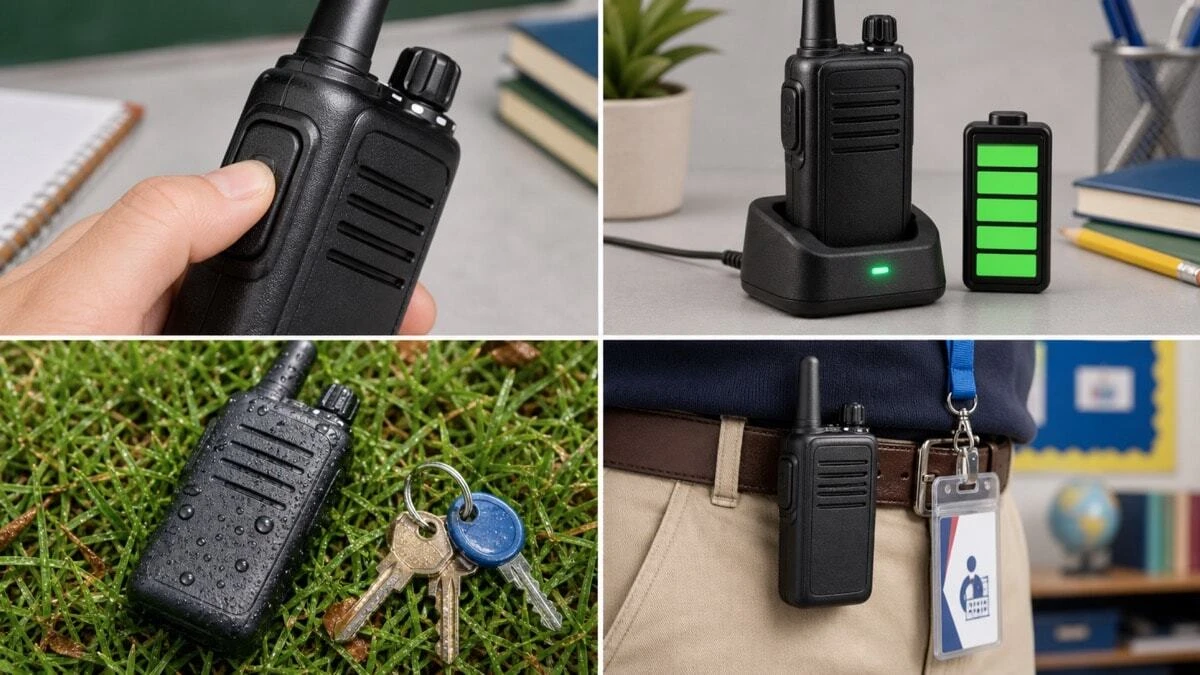 Four practical features matter more than headline specifications for school deployments — simple controls that any staff member can use, reliable charging routines, durability for outdoor and physical environments and a compact size that does not get in the way of supervision.
 A school radio may be used by different members of staff throughout the week. A simple channel selector, volume control and clearly accessible push-to-talk button can make deployment easier. During an urgent situation, staff should already know how to operate the handset without needing to navigate complicated settings.
Battery life is especially important when radios are issued at the beginning of the school day and expected to remain available until staff leave the site. A central charging location can help ensure that handsets are returned, charged and ready for the next day. Standardising the same model can also simplify battery and charger management.
School radios may spend much of their life being carried between classrooms, placed on desks, clipped to belts or used outdoors. A robust handset is therefore valuable. Schools using radios around playgrounds, sports fields or outdoor facilities may also want to consider resistance to dust and light rain.
Teachers already carry keys, access cards, phones and other equipment. A compact radio is easier to keep accessible throughout the day. Belt clips and suitable earpieces can help staff keep their hands free. Baofeng UK provides a selection of walkie talkie accessories, including earpieces, speaker microphones, chargers and replacement batteries.
Understanding radio range and school coverage
Range is one of the most important requirements for schools, and one of the easiest specifications to misunderstand. Maximum advertised range is normally measured under favourable conditions. A real school contains walls, doors, stairwells, electrical equipment and sometimes several separate buildings. These obstacles can reduce the usable range considerably.
A better approach is to test coverage around the actual site. Start with the places where reliable communication is essential — reception, the main office, playgrounds, sports areas, gates, car parks, halls and isolated classrooms. Staff should also test staircases, corridors and any building areas known to have weak mobile phone reception.
🎯 Practical recommendation: The best two way radios are the ones that meet the school's real coverage requirement after testing. A higher claimed range alone does not guarantee better communication throughout a particular campus. For school trips and outdoor activities, terrain also matters — open areas usually provide better radio coverage than dense buildings, although hills, woodland and other obstacles can still affect the signal.
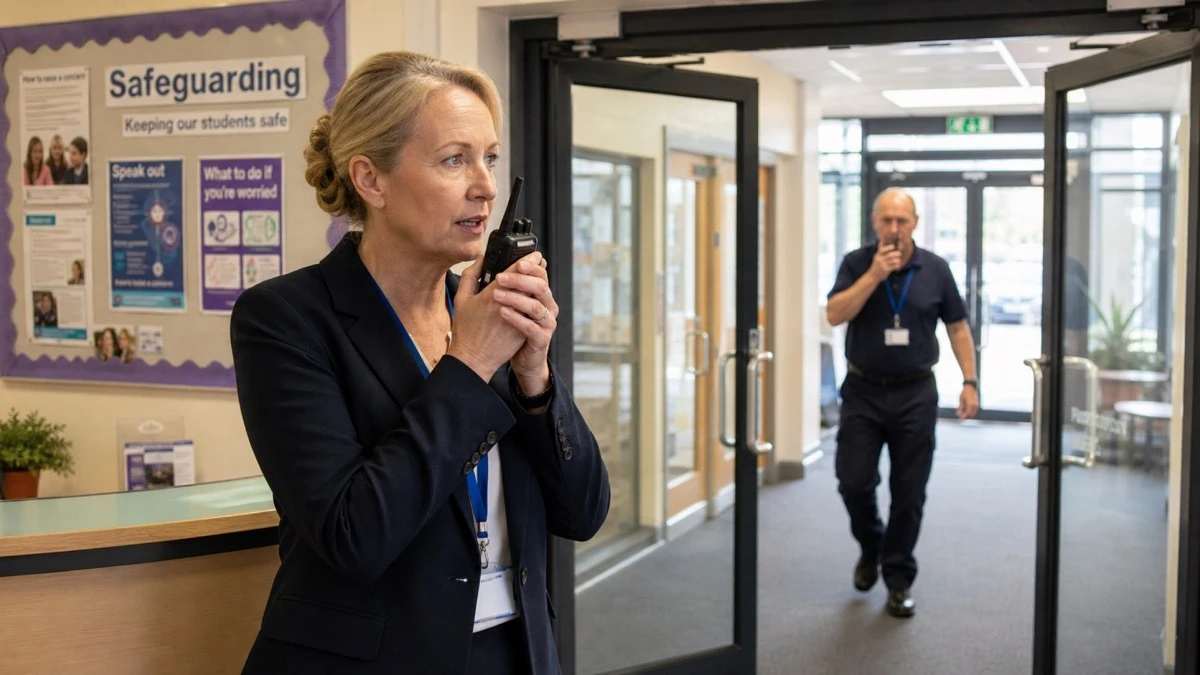 During an incident, a radio provides a direct channel between designated staff members without any dialling, waiting or network dependency. Any emergency radio feature should be incorporated into the school's own procedures and staff training before the system is deployed.
 Using radios during emergencies
UK education guidance places significant importance on effective communication during incidents and emergencies. Staff need to understand who to contact, how to raise an alarm and what action to take when a situation develops. Radios can support that process by providing a quick channel between designated members of staff.
For example, reception could contact the site team about an incident near an entrance, a teacher could request assistance from another part of the campus, or staff supervising an outdoor area could report a developing situation. Where a school already uses panic alarms, access control systems or other emergency procedures, radios can provide an additional method of staff coordination after an alert has been raised.
🔵 Emergency alarm feature: Some handsets include an emergency alarm feature. The Baofeng BF-88ST Pro PMR446, for example, includes local and fleet-wide emergency alarm modes alongside 16 PMR446 channels. Any such feature should be incorporated into the school's own emergency procedures and staff training. Schools should decide in advance what an emergency radio alert means, who should respond and what action follows.
Keep radio messages appropriate
PMR446 channels are shared radio channels. Schools should therefore use them for concise operational communication and avoid transmitting sensitive personal information. Privacy codes such as CTCSS and DCS can help a radio ignore transmissions that use different settings. They do not encrypt the conversation.
⚠️ Safeguarding reminder: Safeguarding details, medical information and other confidential student data should be handled through suitable secure communication procedures — not over shared PMR446 radio channels. Good radio discipline also improves clarity. Staff can use short messages, identify themselves or their location when required, and keep the channel available for other users.
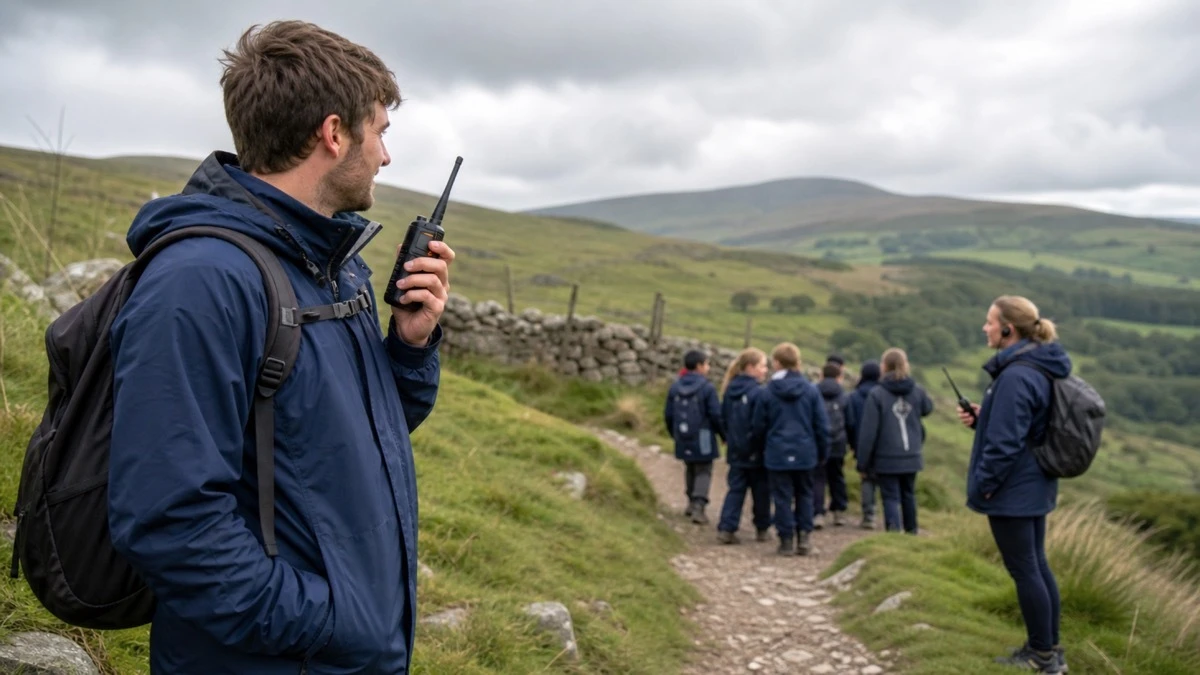 Walkie-talkies can be useful on school trips when teachers and students are spread between locations or operating in separate groups. Staff should test the radios in the actual environment where the trip will take place and establish a clear communication plan before setting off.
 Radios for school trips and outdoor activities
School trips create a different communication challenge because teachers and students may be moving between locations or operating in several groups. Walkie talkies can be useful when staff remain within radio range and want quick communication between group leaders. They can also support sports days, outdoor activities and large events taking place on school grounds.
Before using radios on a trip, staff should test them in the relevant environment wherever practical and establish a communication plan. Teachers should know which channel to use, when radios will be checked and what happens if radio contact is lost.
⚠️ Radios are one part of the plan: Radios should form one part of the wider trip communication arrangement. Staff still need access to appropriate methods of contacting the school, parents or emergency services when necessary. Battery preparation is equally important — radios should begin the day fully charged, and longer activities may require spare batteries or suitable charging arrangements depending on the model.
Choosing a radio fleet to suit the school budget
The number of handsets required varies considerably between schools. A smaller school may only need radios for reception, senior staff, playground supervision and the caretaker. A larger campus may want sets for multiple departments, facilities teams and event staff.
Before purchasing, it helps to map the people who genuinely need immediate radio access. This avoids buying too few handsets for effective coverage or spending budget on units that rarely leave the charger. Standardising one model across the main fleet can make staff training, charging and replacement easier.
For schools looking to equip a larger staff group, Baofeng UK's 10-pack two way radio collection includes fleet options, including PMR446 sets intended for licence-free use. The BF-88ST Pro is also available in larger fleet quantities, allowing schools to scale the number of handsets as their communication requirement grows.
Recommended school two way radios
The five models below are matched to different school sizes and deployment requirements — from a single model with emergency alarm features to full fleet packs for larger campuses.
📻 Baofeng PMR446 Radios for UK Schools & Education
All models are PMR446 compliant — no individual Ofcom licence required. Choose by school size and fleet requirement.
✅ PMR446 Licence-Free — Core School Radio Options
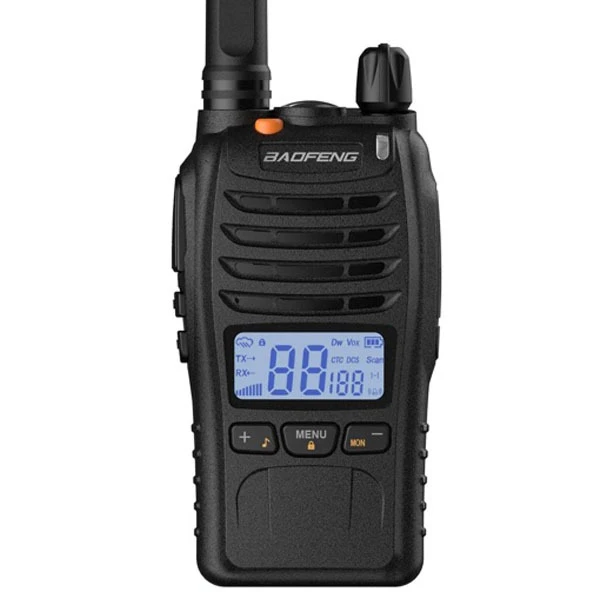
Baofeng BF-88ST Pro PMR446
PMR446 compliant · 16 channels · Emergency alarm · VOX · USB charging · No licence needed — specifically designed for professional licence-free fleet deployment with local and fleet-wide emergency alarm modes for school safety.
View BF-88ST Pro PMR446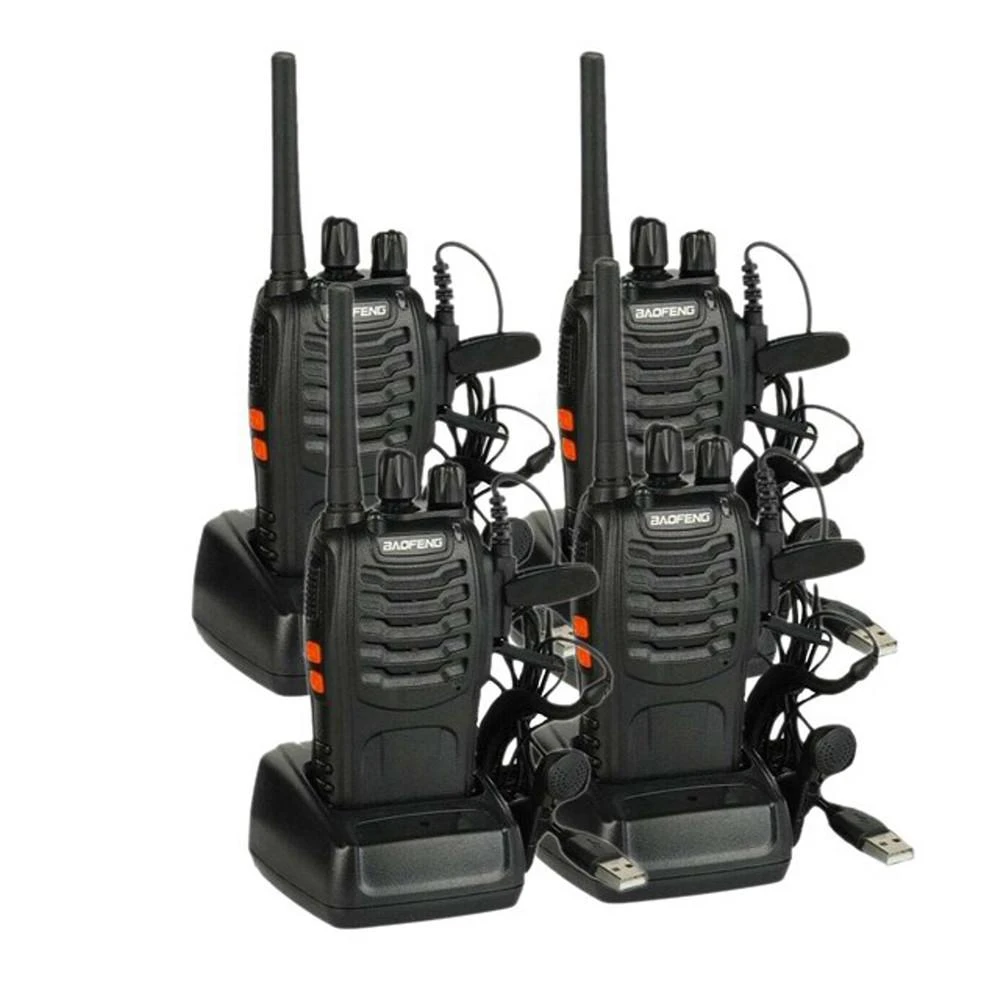
Baofeng BF-888S PMR446 Four-Pack
4 radios · Earpieces · Chargers · No licence needed — ideal for smaller schools covering reception, caretaker, playground supervisor and senior staff. Simple deployment with pre-programmed PMR446 channels.
View Four-Pack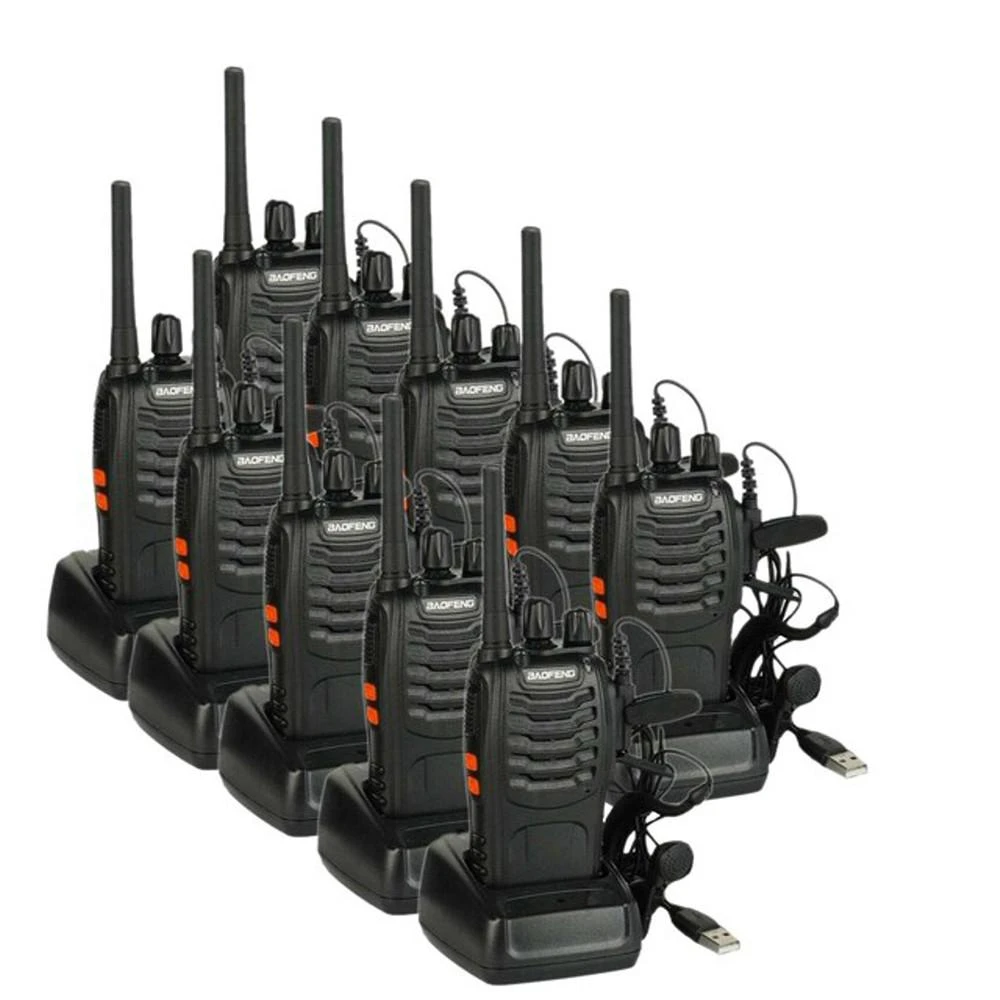
Baofeng BF-888S PMR446 Ten-Pack
10 radios · Earpieces · Chargers · No licence needed — full school fleet deployment covering multiple departments, facilities teams, security and event staff with standardised equipment and spare capacity.
View Ten-Pack📦 Larger Fleet Options — For Growing Schools & Bigger Campuses
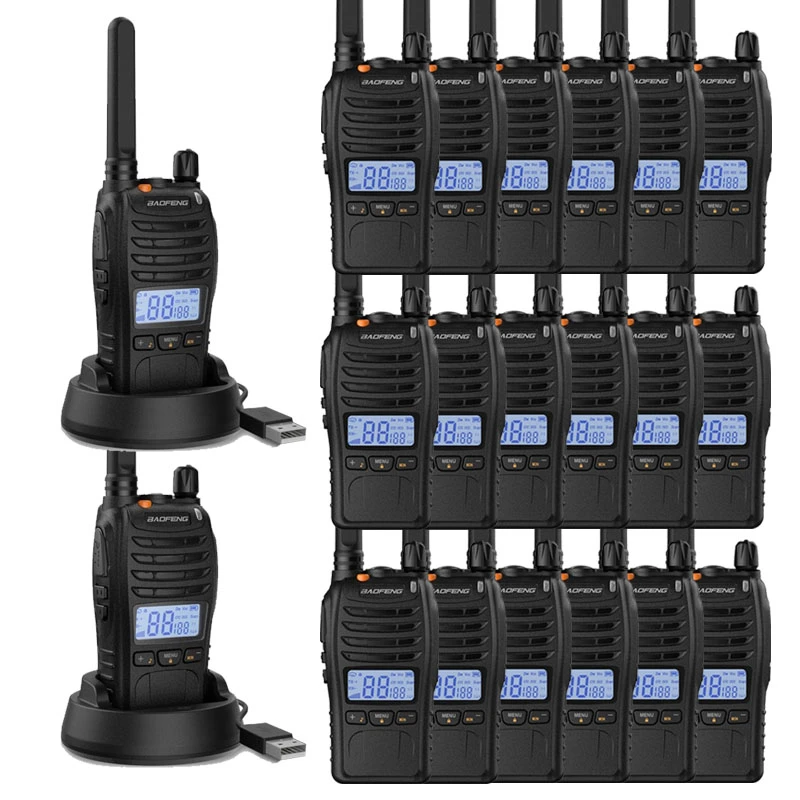
Baofeng BF-88ST Pro PMR446 Bulk Pack
Larger fleet quantities · Emergency alarm · PMR446 compliant · No licence needed · Free shipping — scale the BF-88ST Pro fleet as your school's communication requirement grows. Ideal for larger campuses, multi-site schools and academy groups.
View Bulk Pack
Baofeng BF-888S PMR446 Eight-Pack
8 radios · Earpieces · Chargers · No licence needed — the practical mid-size option for schools that have outgrown a four-pack but do not yet need a full ten-unit fleet. Covers most departments plus spares.
View Eight-Pack✅ All models above are PMR446 licence-free when fully compliant. No individual Ofcom radio licence is required for compliant PMR446 operation in the UK.
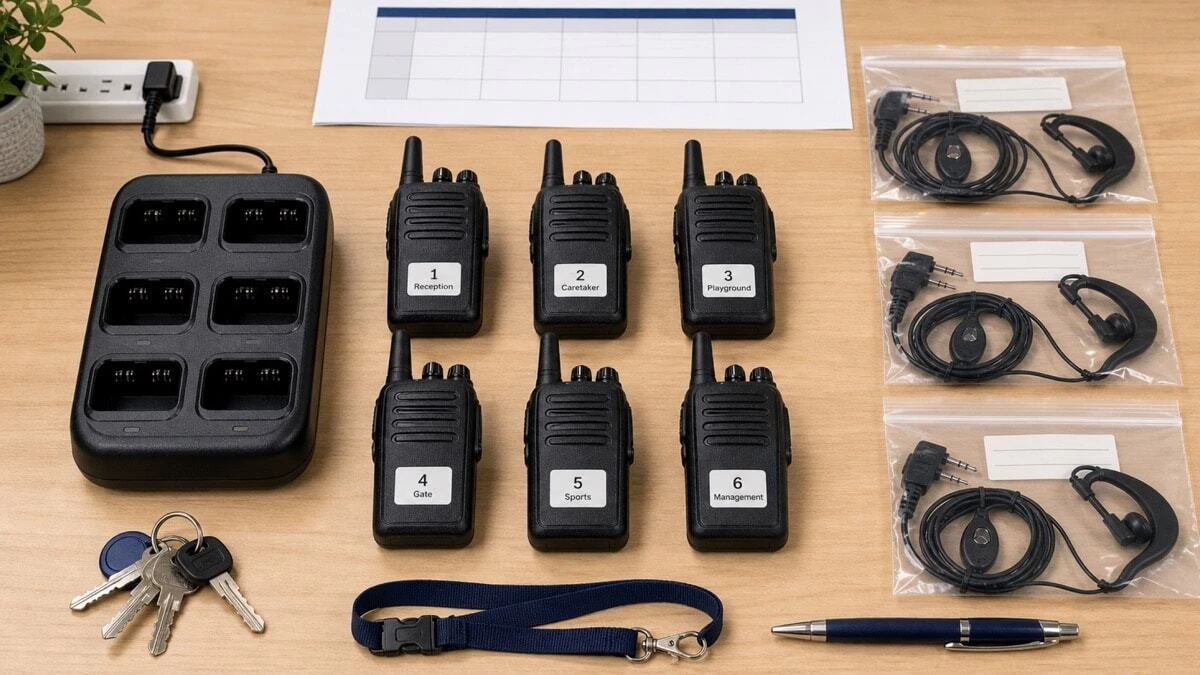 A reliable school radio system requires more than purchasing the handsets. Numbered radios, role assignments, a clear channel plan, a central charging location and regular staff training all determine how well the system works in practice.
 Building a reliable school radio system
Buying the handsets is only the first part of creating reliable communication. Before full deployment, test several radios across the campus. Check the indoor and outdoor locations where communication is most important and note any areas affected by weak coverage.
Next, decide how the radios will be issued. Some schools may assign a handset to a specific role, such as reception or caretaker, while others may use numbered radios collected at the beginning of each day. A simple channel plan can reduce confusion — staff should know which channel is used for normal communication and whether any alternative channels have been allocated for particular teams or situations.
Charging also needs a clear routine. At the end of the day, radios should return to a known location where staff can identify missing handsets, damaged equipment or batteries that require attention. Finally, include radio use in staff training and emergency exercises. Familiarity makes communication quicker and clearer when assistance is genuinely required.
📋 Key takeaways for school radio deployment
- PMR446 compliant models require no individual Ofcom licence — the simplest route for most schools
- Test coverage in every critical school location before committing to a fleet purchase
- Match the pack size to the actual number of staff roles that need immediate radio access
- Standardise one model across the fleet to simplify training, charging and replacement
- Establish a clear channel plan, charging routine and radio-return procedure before deployment
- Include radio use in emergency procedures and staff training — familiarity is essential when speed matters
- Never transmit sensitive safeguarding or student information over shared PMR446 radio channels
FAQs about two way radios for schools
Who should carry two way radios in a school?
Radios are most useful for staff who need to move around the site or respond quickly to requests. This often includes reception staff, caretakers, senior staff, playground supervisors, cleaners and staff responsible for entrances or outdoor areas. The right allocation depends on the school's size, layout and daily communication needs rather than a fixed rule about job titles.
How many walkie talkies does a school need?
The right number depends on the size of the campus and how many staff roles require immediate communication. A practical approach is to assign radios to key locations and responsibilities first, then add more handsets if coverage or coordination gaps appear. A smaller school might need four to six radios covering reception, caretaker, playground and management. A larger campus may need eight or more to cover multiple departments and areas effectively.
Should schools keep spare radios available?
Yes, keeping one or two spare radios can help when a handset is charging, damaged or needed for temporary staff and events. Spare units should use the same channels and settings as the main radio fleet so they can be deployed immediately without reconfiguration.
Do schools need an Ofcom licence to use walkie talkies?
Not if they use compliant PMR446 equipment. Compliant PMR446 handheld radios can be operated without an individual Ofcom radio licence when the equipment meets all PMR446 technical requirements — including a fixed integral antenna, operation between 446.0 and 446.2 MHz and a maximum of 0.5W ERP. Schools should confirm that the model they purchase is explicitly identified as a UK-compliant PMR446 radio, rather than assuming that any handset is automatically licence-free.
Can school walkie talkies be used on trips and outdoor activities?
Yes, walkie talkies can support outdoor activities, sports days and school trips when staff remain within radio range and a clear communication plan has been established. Staff should test the radios in the actual environment before the trip where practical and ensure batteries are fully charged. Radios should form one part of the wider trip communication arrangement — staff still need appropriate methods of contacting the school, parents or emergency services when necessary.
Are PMR446 walkie talkies private enough for school use?
PMR446 is a shared radio service — privacy codes such as CTCSS and DCS can filter unwanted traffic from the radio speaker, but they do not encrypt the conversation. Schools should use radios for concise operational communication and ensure that sensitive safeguarding information, medical data and confidential student details are handled through secure communication procedures rather than being transmitted over shared PMR446 channels.
Find the Right Radios for Your School
From single handsets with emergency alarm features to full fleet packs for larger campuses — Baofeng UK has PMR446 licence-free radio options for every school size and communication requirement.