
6th Feb 2026
Professional Radios: Reliable Communication for Business and Industry
In many professional environments, clear and dependable communication is not optional—it is crucial. Professional radios are designed to deliver reliable communication where mobile phones struggle, especially across long distances, complex terrain, or demanding working conditions.
From construction sites and security teams to schools, outdoor activities, and business operations, professional radios remain an essential tool for maintaining contact and ensuring smooth coordination.
What Are Professional Radios?
Professional radios are advanced two way radios built for consistent performance, durability, and clarity. Unlike consumer devices, these radios are engineered to operate in challenging environments and support teams with specific needs.
They are commonly available as walkie talkies or handheld walkie talkie devices, designed for instant push-to-talk communication without reliance on mobile networks.
Why Businesses Rely on Two Way Radios
Many industries rely on two way radios because they provide:
- Instant group communication
- Stable performance in remote areas
- Reliable operation in noisy or crowded environments
- Lower long-term price compared with phones and service contracts
For business users, professional radios address communication challenges that phones cannot, especially when connecting teams across large sites or moving vehicles.
Communication Range and Performance
Range is one of the most important factors in professional radio selection. A well-designed radio can maintain clear communication across long distances, depending on frequency band, power output, and environment.
Performance is influenced by:
- VHF or UHF frequency choice
- Antenna efficiency
- Physical surroundings and terrain
- Radio durability and build quality
These factors directly affect sound quality, crystal clear sound quality, and overall communication reliability.
Analogue Radios and Licence-Free Operation
Many professional radios operate in analogue mode, valued for simplicity and reliability. In some regions, licence free radios allow organisations to deploy communication systems quickly without regulatory complexity.
Licence-free solutions are especially popular for:
They offer a balance between ease of usage and dependable performance.
Battery Life and Power Management
In professional use, battery life directly impacts productivity. Radios with efficient power management and long-lasting battery systems reduce downtime and maintenance effort.
Modern professional radios may also support fast charging, allowing devices to return to service quickly. This is particularly important for lone worker safety, extended shifts, and operations that run continuously.
Accessories and System Expansion
Professional radios are often equipped with a wide range of accessories to suit different roles and environments. Common accessories include:
- Earpieces and headsets for discreet communication
- Speaker microphones for hands-free operation
- Programming cables for configuring channels and features
- Vehicle mounts and chargers for mobile teams
Accessories allow radios to be tailored to different tasks while maintaining consistent performance.
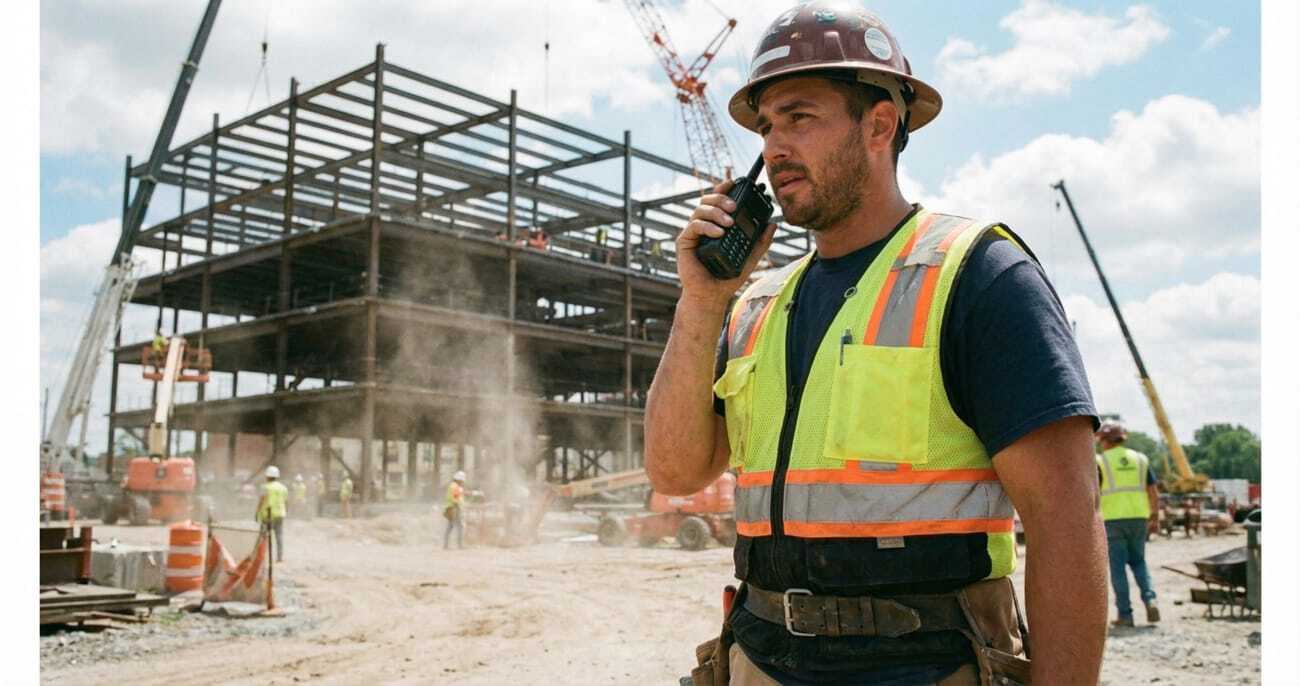
Professional radios ensure safety on complex job sites.
Professional Radios in Key Industries
Professional radios are widely used across many sectors:
- Construction and infrastructure projects
- Security and event management
- Logistics and vehicle-based operations
- Outdoor work such as camping, hiking, and field services
- Education environments like schools
In each case, radios support team coordination, safety, and operational efficiency.
Reliability, Support, and Maintenance
A professional radio system must be reliable over its entire working life. Regular maintenance, proper programming, and access to technical support help ensure long-term performance.
Businesses often evaluate radios based not only on features but also on after-sales service, availability of spare parts, and system scalability as teams grow.
Comparing the Professional Radio Market
The professional radio category includes many brands and models. Some companies may also consider alternatives from established manufacturers such as Motorola or Entel, depending on budget and operational needs.
However, regardless of company or models, the core evaluation criteria remain the same: performance, reliability, range, and suitability for the working environment.
Choosing the Right Professional Radio
When exploring professional radios, it is important to:
- Assess communication range and environment
- Consider price versus long-term value
- Identify required features such as GPS, screen visibility, or compact design
- Ensure the radio suits your team size and operational structure
A radio that suits one industry or team may not be ideal for another.
Recommended Professional Radios (2026 Picks)
UV-5RH Pro
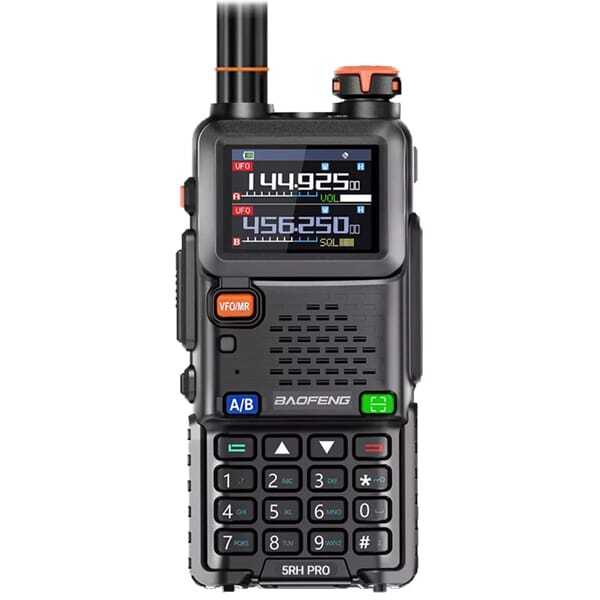
Best For: Power Users & Hams
The evolution of the classic UV-5R. Features a massive battery upgrade, higher wattage, and "One Touch Frequency Search" for instant scanning.
Key Feature: GPS & Type-C Charging
UV-32 Long Range
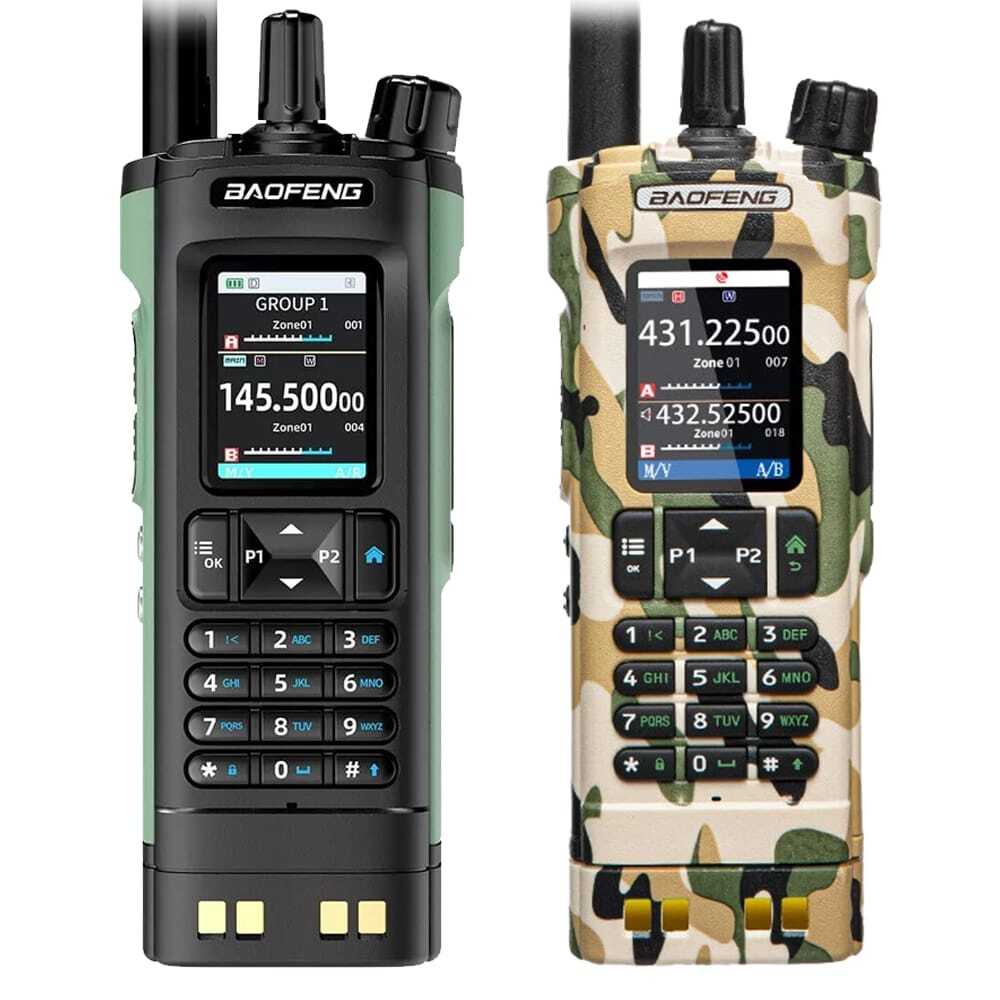
Best For: Extreme Distance / Hiking
Engineered for distance with a high-gain antenna setup and optimized circuitry. Ideal for hitting repeaters from difficult terrain.
Key Feature: Extended Range Architecture
UV-98 PRO IP68
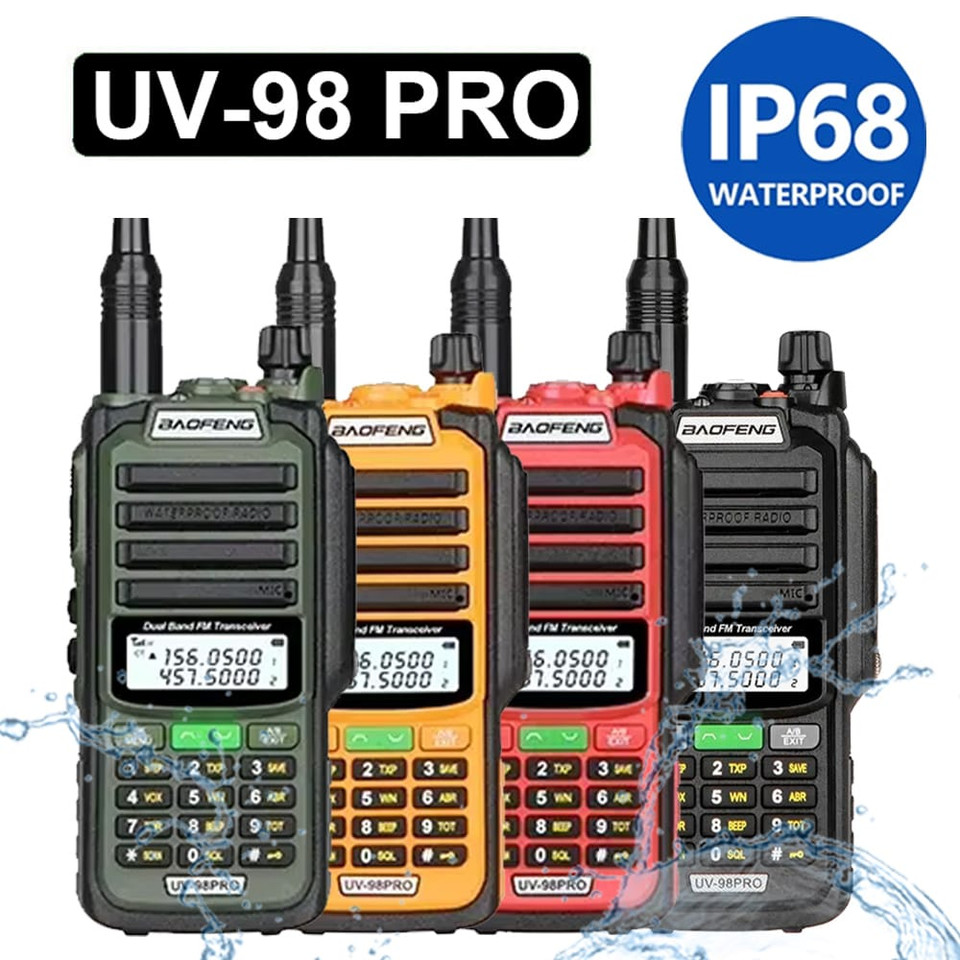
Best For: Wet Weather & Industrial
An IP68-rated beast that withstands submersion in water. The ultimate survival radio for unpredictable British weather.
Key Feature: 100% Waterproof (IP68)
UV-5R Mini
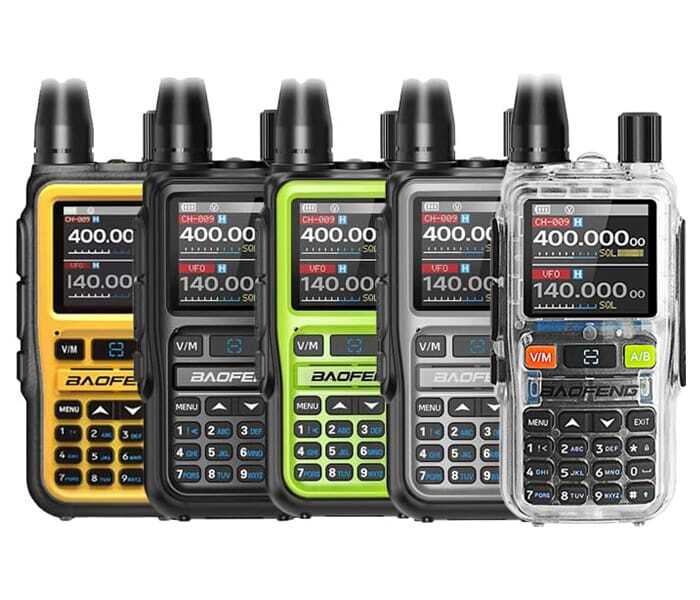
Best For: EDC & Travel
The legendary UV-5R circuitry shrunk down to fit in a shirt pocket. Perfect for lightweight carry without sacrificing comms.
Key Feature: Bluetooth App Programming
DM-32 Digital
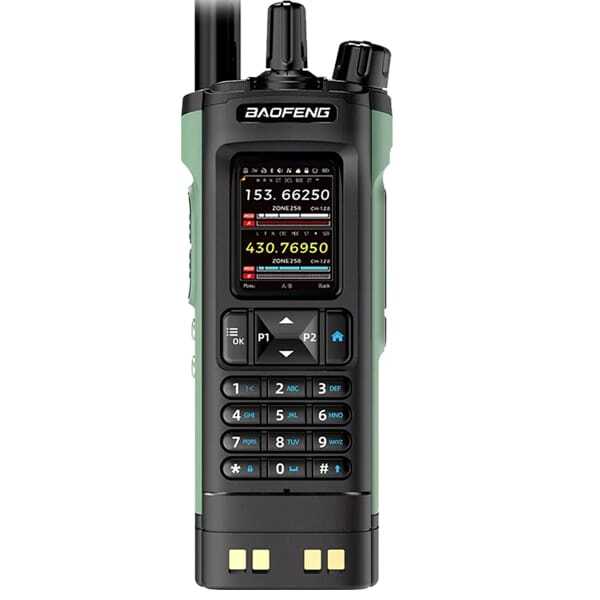
Best For: Crystal Clear Audio
DMR technology offers static-free audio and better privacy options. Supports two talk paths on a single frequency (TDMA).
Key Feature: Digital Noise Cancellation
BF-888S PMR446

Best For: Licence-Free Simplicity
100% UK Legal PMR446 version. Pre-programmed to legal channels with fixed antenna. No exams, no fines—just switch on and talk.
Key Feature: Legal Ready-to-Use (Twin Pack)
Professional vs. Consumer Radios
To help you decide, here is a quick comparison between professional-grade equipment and standard consumer radios.
| Feature | Professional Radios | Consumer Radios |
|---|---|---|
| Durability | High (Rugged, often Waterproof) | Low to Moderate (Plastic casing) |
| Battery Life | Extended (12-24+ Hours) | Standard (8-10 Hours) |
| Range/Power | High Wattage (Better penetration) | Low Wattage (Line-of-sight mostly) |
| Best For | Construction, Security, Business | Kids, Light Camping, Short Trips |
Frequently Asked Questions
Do professional radios require a licence?
It depends on the model. "Licence-free" (PMR446) radios do not require a licence and are ready to use out of the box. However, high-powered professional radios usually require a business radio licence to operate legally on specific frequencies.
What is the range of a professional radio?
Range varies by terrain. Professional handhelds typically cover 1-3 miles in urban areas and up to 5+ miles in open rural terrain. Mobile vehicle radios with external antennas can communicate over 10-20 miles.
Why are professional radios better than mobile phones?
Radios offer instant "push-to-talk" connection without dialling, work in areas with no mobile signal, are more durable, and do not have monthly contract fees, making them cheaper and more reliable for teams.
Final Thoughts
Professional radios continue to play a vital role in modern communication. With strong performance, dependable reliability, and flexible configuration, walkie talkies and two way radios remain a trusted solution for organisations across the world.
For businesses that value clarity, safety, and efficiency, professional radios offer a proven and practical communication solution—today and into the future.