
1st May 2026
Phone With Walkie Talkie Feature vs. Traditional Radios: The Ultimate Guide
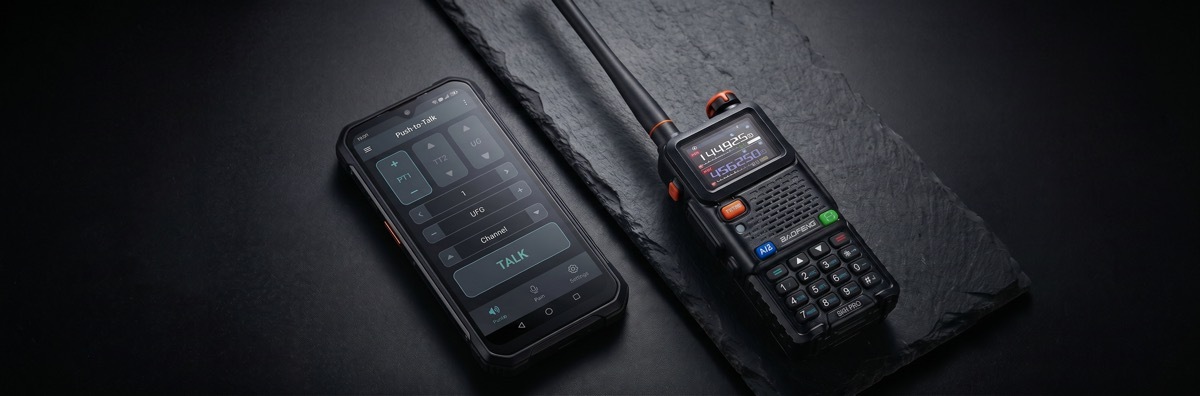
Tested and Reviewed by The Baofeng UK Radio Experts | Communication Technology Guide | Read time: 7 mins
Are you planning an expedition into the wilderness, managing a busy construction site, or coordinating a fast-paced logistics team? If so, you might guess that standard smartphones aren't always enough to keep your team connected safely. Enter the phone with walkie talkie capability. For outdoor adventurers and industrial workers alike, having a single device that combines the everyday features of a normal phone with the instant communication of a Baofeng radio sounds like the ultimate solution.
In this guide, we will explore how this hybrid technology works, evaluate the pros and cons of cellular-based systems, and help you decide if a rugged smartphone is a perfect match for your usage scenario, or if traditional walkie talkies remain the undisputed choice for reliable, off-grid safety.
Key Takeaways: Phone vs. Walkie Talkie
- Network Dependency: Walkie-talkie apps on phones stop working the moment you lose 4G, 5G, or Wi-Fi signal.
- True Reliability: Traditional Baofeng two-way radios create their own local signal and work 100% off-grid.
- Durability: Rugged phones are tough, but dedicated radios offer better battery life and physical PTT buttons designed for gloved use.
What Exactly is a Phone With Walkie Talkie Capability?
When people search for a phone with walkie talkie features, they are usually referring to one of two things. The first is Push-to-Talk over Cellular (PoC). This involves using software apps downloaded from the Google Play Store (such as Zello or Microsoft Teams) to simulate a radio system. The second is a hardware-based hybrid: a heavy-duty mobile phone built with a dedicated push-to-talk button and sometimes even an external antenna.
These devices aim to give the user the best of both worlds. You can make phone calls, browse a website, and instantly connect and talk to your team at the push of a button. But how do they actually hold up in the real world?
The Appeal of the Rugged Hybrid Smartphone
Many tech companies have developed specialized handsets to cater to this niche. A prime instance of this is the Unihertz Atom XL (as well as the standard Atom model). The xl version, while compact, is built like a tank. It is heavily equipped to survive extreme environments, featuring a waterproof, dustproof, and incredibly durable chassis.
If you are looking for a good phone for outdoor use, these devices check a lot of boxes. They typically feature a bright colour screen that is highly scratch resistant. Under the hood, they operate just like any modern mobile device, meaning they accept SIM cards, utilize a micro SD card for expandable storage, and boast standard features like bluetooth, GPS tracking, a high-quality speaker, and a high-resolution camera. On paper, having a tough, robust phone that also has a built-in walkie talkie feature seems like the perfect phone for professionals and adventurers alike.
The Catch: Relying on an Internet Connection
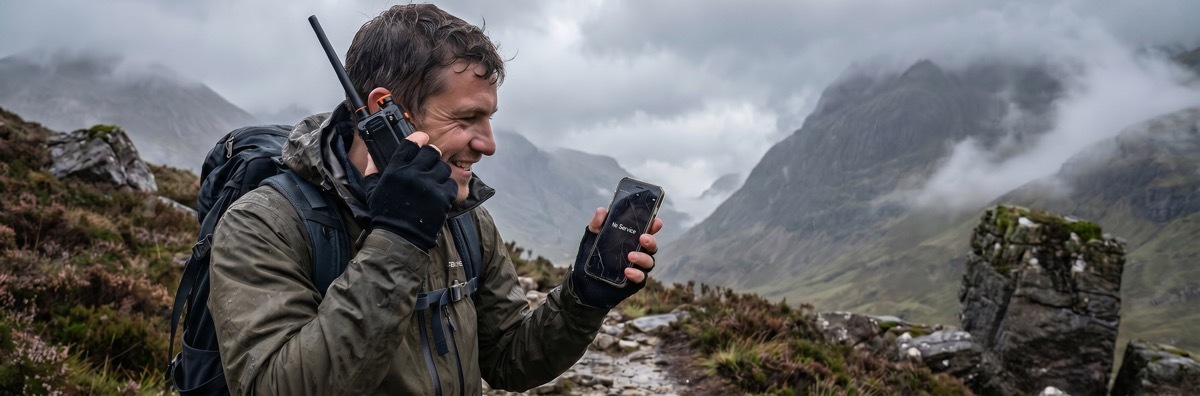
However, the primary subject of concern with these hybrid devices is how they operate. Unless the phone has a built-in UHF/VHF analogue transmitter (which is rare and heavily drains battery), the walkie-talkie app is entirely relying on your mobile data, wi fi (or wifi), or general internet connection.
This creates a critical point of failure. If you are exploring the remote outback of Australia, hiking deep in the UK National Parks, or working in a concrete basement where cell towers can't reach, your communication is instantly cut off. You cannot use the walkie talkie feature without a network signal. In a critical moment, a request for emergency assistance simply won't go through. While PoC offers incredible distance—allowing you to talk to someone in another country—it sacrifices the localized, off-grid reliability that true radio frequencies provide.
Why Traditional Walkie Talkies Still Dominate the Market
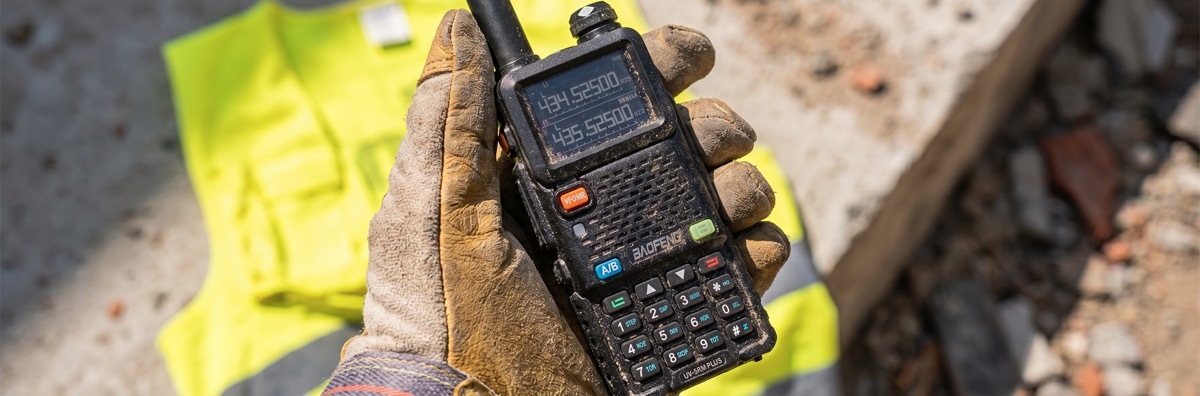
This brings us to why dedicated two-way radios—like our trusted Baofeng models—remain the industry standard. When you use traditional walkie talkies, you generate your own local radio system. You do not need an internet connection, Wi-Fi, or a SIM card to broadcast.
Furthermore, traditional radios excel in battery life. A smartphone consumes massive amounts of power constantly searching for cellular towers, updating background apps, and powering a large touchscreen. A Baofeng Radio, on the other hand, utilizes its battery strictly for receiving and transmitting voice, providing exceptional standby life.
When comparing price and quality, purchasing a dedicated Baofeng radio alongside your standard smartphone is often far more cost-effective than buying a specialized hybrid phone. Our brand is known worldwide for delivering high-performance equipment that guarantees you stay connected within radio range, completely independent of any external network.
Experience True Off-Grid Communication
Whether you need licence-free PMR446 radios for family camping or high-powered commercial gear for a business, a dedicated radio is the safest bet. They are universally compatible with a massive range of headsets, spare batteries, and upgraded antennas. Before choosing your equipment, it is wise to understand the UK radio licensing requirements to stay compliant while on the air.
Making the Right Purchase for Your Needs
When you are ready to upgrade your tactical or business communication, navigating our Baofeng UK online store is incredibly easy. Every product page provides transparent specifications to ensure you find the right device.
Customers can quickly browse our extensive stock, find the gear that fits their specific needs, and add it directly to their basket. From there, you can securely create an account and proceed to the checkout page to finalise your purchase. We take pride in our logistics; expected delivery times are always kept to an absolute minimum. We offer fast delivery to ensure your new gear arrives right when you need it.
While a phone with walkie talkie capabilities is an interesting piece of modern technology, nothing beats the failsafe, direct communication of a true two-way radio.
Frequently Asked Questions (FAQs)
1. Can any smartphone be used as a walkie-talkie?
Yes, technically any smartphone can act like a walkie-talkie if you download Push-to-Talk (PTT) apps from the Google Play Store or Apple App Store (such as Zello). However, these apps require a constant cellular or Wi-Fi connection to function.
2. Does a phone with a walkie-talkie feature use mobile data?
If the phone uses a PoC (Push-to-Talk over Cellular) system or an app, it will consume mobile data or Wi-Fi. Only phones with specialized, built-in UHF/VHF radio antennas can transmit over radio frequencies without using mobile data.
3. Is a rugged phone better than a dedicated Baofeng radio?
It depends on your needs. A rugged phone is great if you need cellular calls, apps, and a camera in a tough shell. However, for instant, reliable group communication in areas with no cellular signal, a dedicated Baofeng two-way radio is vastly superior and far more battery-efficient.
4. What happens to a walkie-talkie app when there is no network coverage?
If you lose your 4G, 5G, or Wi-Fi connection, walkie-talkie apps will completely stop working. You will not be able to send or receive voice messages until you return to an area with network coverage.
5. Do I need a SIM card to use a Baofeng walkie-talkie?
No! Traditional Baofeng two-way radios transmit directly over radio waves (RF). They do not require SIM cards, monthly contracts, mobile data, or Wi-Fi connections to operate.