
2nd Aug 2026
What Are the Do’s and Don’ts of Radio Communication?
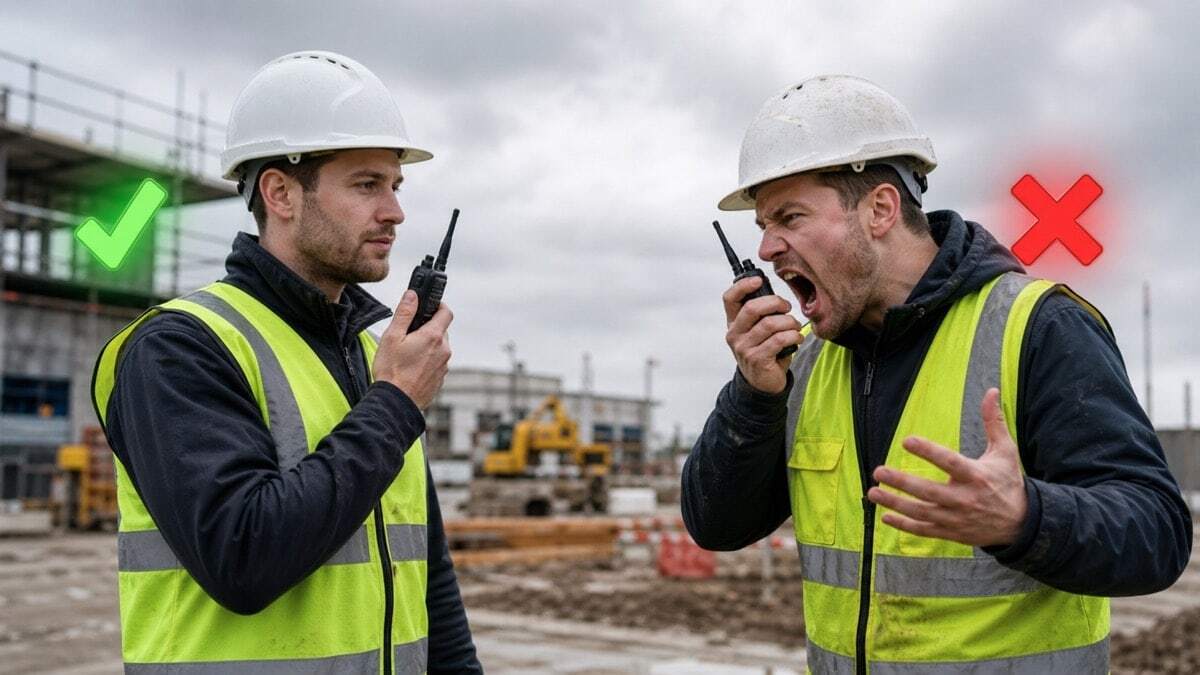
This guide was produced by the Baofeng UK team — UK-based radio communications specialists with over 10 years of experience supporting business teams, outdoor groups and licensed amateur operators. Licensing guidance reflects current Ofcom Business Radio Guidance (updated 5 December 2025). RSGB operating advice is attributed to the Radio Society of Great Britain.
Radio communication works best when nobody has to guess what the speaker meant.
That sounds obvious, yet anyone who has worked through a busy restaurant service, crowded event, noisy building site or wet outdoor expedition knows how quickly a shared radio channel can become chaotic. One person talks for too long. Another presses the push-to-talk button before listening. A third replies "okay" without confirming which gate, table or delivery they mean.
Used properly, radio communication is fast, direct and practical. Used carelessly, it creates more confusion than the problem it was meant to solve.
Listen before transmitting, identify who you are calling, deliver one clear message, confirm important details and release the channel.
Do not interrupt an active call, shout into the microphone, use unexplained codes, share confidential information or assume that a "privacy code" makes your conversation private.
⚡ Do's and don'ts at a glance
- ✅ Do: Listen first · identify sender and recipient · pause after pressing PTT · use plain English · keep one message focused · read back critical details · end exchanges clearly
- ❌ Don't: Interrupt active calls · shout · use vague language · share sensitive information · assume privacy codes encrypt speech · change channel settings without telling the team
- ⚖️ Legal first: Confirm your radio equipment and frequencies are authorised under UK Ofcom rules before transmitting
- 📻 RSGB principle: Listen carefully, check the frequency is clear, use standard expressions and identify correctly
📋 Table of Contents
- Radio communication do's and don'ts comparison table
- Do check that your radio use is legal in the UK
- Do listen before you speak
- Do identify the recipient and the sender
- Do press, pause and then speak
- Do use plain, direct language
- Do keep one transmission to one main purpose
- Do repeat and read back important details
- Do end the exchange clearly
- Don't interrupt unless the message has genuine priority
- Don't assume a radio channel is private
- Don't use vague language
- Don't change channels or settings without telling the team
- Practical radio scripts for UK teams
- A 60-second radio check before work or travel
- Recommended radios for UK teams
- Frequently asked questions
Radio communication do's and don'ts comparison table
| ✅ Do | Why it helps | ❌ Don't |
|---|---|---|
| Listen before pressing PTT | Prevents you talking over another user | Interrupt an active transmission |
| Think through the message | Reduces hesitation and repetition | Work out what to say while transmitting |
| Name the recipient and yourself | Makes the intended listener pay attention | Begin with a vague "Hello, can anyone hear me?" |
| Pause briefly after pressing PTT | Helps prevent the opening word being clipped | Speak the instant your thumb touches the button |
| Use plain English | Reduces confusion between teams | Depend on slang or unexplained codes |
| Keep each transmission focused | Makes information easier to remember | Combine several unrelated requests |
| Read back critical details | Catches mistakes involving numbers or locations | Reply "okay" when precision matters |
| Protect sensitive information | Radio channels may be heard by others | Share passwords, medical details or personal data |
| Follow your approved channel plan | Keeps the team organised and compliant | Retune or reprogramme radios without authority |
| End the exchange clearly | Releases the shared channel | Leave listeners wondering whether you have finished |
Do check that your radio use is legal in the UK
Good operating practice begins before anyone presses the transmit button.
Ofcom's Business Radio Guidance, published on 5 December 2025, states that PMR446 is a licence-exempt option for compliant handheld radios operating between 446.0 and 446.2 MHz, with a maximum permitted power of 0.5 watts ERP. Ofcom also describes PMR446 as a shared, non-protected service: interference may occur, and users may need to move to another available channel.
⚠️ Important: Not every programmable handheld radio becomes licence-free simply because it can be set near a PMR446 frequency. Higher-power amateur or business radios must be operated under the relevant licence and within its conditions. The distinction between compliant PMR446 radios and higher-power models is one of the biggest sources of confusion for UK Baofeng buyers.
For straightforward family, hospitality, retail or small-team use, start by comparing licence-free PMR446 radios. Amateur radio beginners should review the UK beginner's guide to affordable ham radios before transmitting.
Do listen before you speak
A radio channel is shared space. It cannot carry several clear conversations at the same moment.
Before transmitting:
- Check that no one is already speaking
- Wait for an existing exchange to finish
- Consider whether your message is important enough to interrupt normal traffic
- Know what you need to say before pressing PTT
🔵 RSGB guidance: Listening matters even when the channel appears silent. You may be able to hear only one side of a conversation because the other user is outside your reception range. The RSGB advises operators to listen carefully and check whether a frequency is in use before beginning a call. In a workplace setting, the same principle is simpler: pause, listen and then call.
 Always check the channel is clear before pressing push-to-talk — a simple habit that prevents two people talking over each other and losing both messages.
 Do identify the recipient and the sender
A useful opening tells everyone two things: who should listen and who is speaking.
A consistent format is:
"Kitchen, this is Front Desk."
"Gate Two, this is Site Office."
Putting the intended recipient at the beginning helps that person recognise immediately that the message is for them. Your organisation may use names, departments, roles or unit numbers. Licensed amateur operators should use their callsigns according to their licence and normal operating procedures.
🎯 Training tip: What matters for a business team is consistency. Decide the format during training rather than allowing every member of staff to invent a different style.
Do press, pause and then speak
Push-to-talk radios need a fraction of a moment to begin transmitting. Speaking too early can cut off the first word — often the very word identifying the recipient.
Use this rhythm:
Press → brief pause → speak → finish → release
Keep the microphone in a consistent position and speak across it in a normal, controlled voice. Shouting usually adds distortion rather than useful range.
Earpieces and speaker microphones can make the process easier in noisy or customer-facing environments. Check compatibility before purchasing from the Baofeng radio accessories collection.
Do use plain, direct language
Radio is not the place for a polished speech. The listener may be walking, serving a customer, supervising machinery or trying to hear through background noise.
A good transmission answers:
- Who is being called?
- What has happened?
- Where is it happening?
- What action is required?
- Does the message need confirmation?
"Hi, we have that thing happening again near the back, so could somebody maybe come over when they get a chance?"
"Duty Manager, this is Stockroom. A delivery is waiting at the rear entrance. Please attend."
⚠️ On codes: Plain language is usually safer than an elaborate collection of "10-codes". Codes vary between organisations and countries, so a number that means one thing to one team may mean something completely different to another. Unless your workplace has a documented and trained code system, say what you mean.
Do keep one transmission to one main purpose
Long radio messages are difficult to remember, particularly when the listener cannot write them down. Break complicated instructions into smaller exchanges:
"Maintenance, this is Reception. Please attend the ground-floor lift. Over."
— [After the reply] —
"The doors are not closing. No passenger is trapped. Confirm understood."
This structure gives the recipient a chance to acknowledge the location before receiving additional details. It also keeps the channel available — other team members should not have to wait through a minute-long conversation to report something urgent.
Do repeat and read back important details
"Received" does not always mean "understood correctly". Read-backs are especially valuable for:
- Room, gate or table numbers
- Vehicle registrations
- Times and deadlines
- Quantities
- Locations
- Names that sound similar
- Safety-related instructions
Control: "Team Two, move to Gate Four."
Team Two: "Gate Four confirmed."
🔵 Phonetics: For an unfamiliar name, reference, postcode or registration, use a standard phonetic alphabet: "Registration ends Bravo, Seven, Kilo." There is no need to spell every ordinary word phonetically — use phonetics where background noise or similar-sounding letters create a genuine risk of error.
Do end the exchange clearly
Radio users need to know whether you are waiting for a response or have finished.
- Over means you have finished speaking and expect a reply
- Out means the exchange has ended and no reply is expected
⚠️ Common mistake: Do not combine them as "over and out" — the two words give conflicting instructions. Many hospitality, retail and school teams do not need formal prowords in every exchange. A natural confirmation such as "received", "confirmed" or "thank you, Reception out" may be sufficient. Choose a simple team standard and train everyone to use it consistently.
Don't interrupt unless the message has genuine priority
Talking over another user may block both messages.
For routine calls, wait until the current exchange ends. For urgent communication, use the priority procedure defined by your workplace or event plan. Do not invent emergency expressions during an incident, and do not use priority words as a joke.
Every organisation handling safety-related operations should decide in advance:
- How an urgent call is announced
- Who takes control of the channel
- Which information must be reported
- Whether users should move routine traffic to a backup channel
- When someone must contact the emergency services by telephone
⚠️ Emergency services: A two-way radio supports local coordination. It is not a replacement for calling 999 or 112 when emergency assistance is required.
Don't assume a radio channel is private
PMR446 channels are shared. Other users within range may hear your transmission, even when your team uses a matching CTCSS or DCS setting.
These settings filter which transmissions open your radio's speaker. They do not encrypt the conversation or prevent another receiver from hearing it. The guide to CTCSS and DCS privacy codes makes the same distinction: tone codes reduce unwanted audio but should not be treated as a security barrier.
Avoid transmitting:
- Passwords or access codes
- Full customer details
- Sensitive medical information
- Payment information
- Private staff matters
- Detailed security vulnerabilities
- Information that could embarrass or endanger someone if overheard
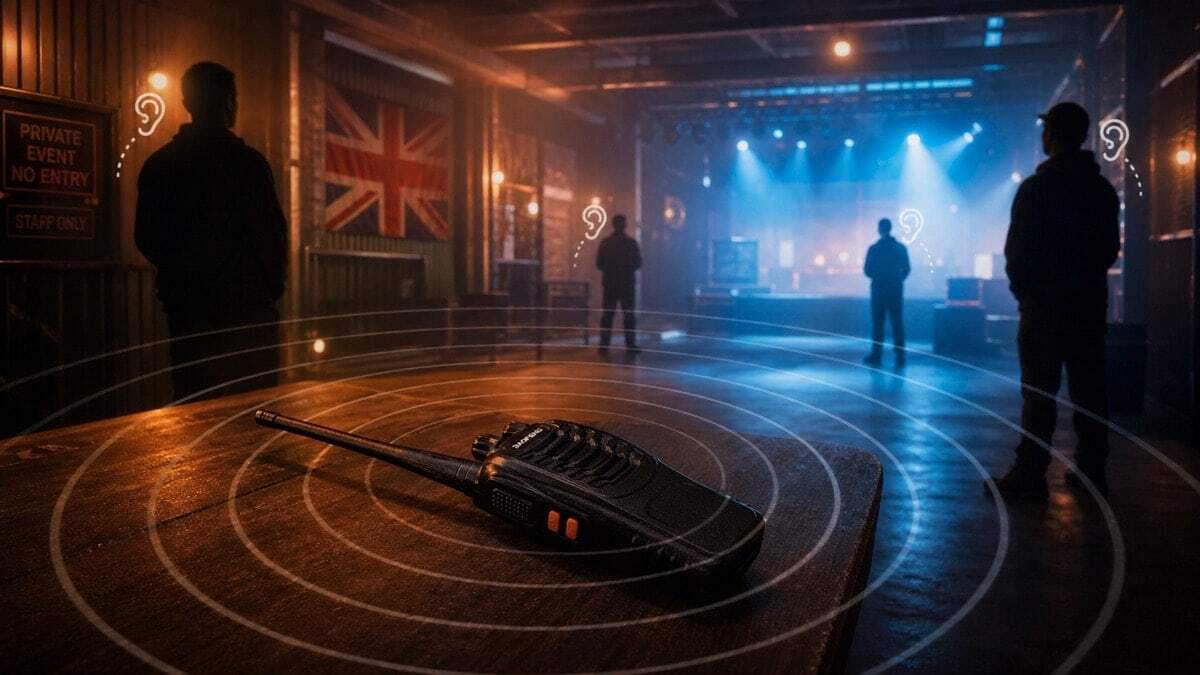 PMR446 channels are shared — tone codes filter your speaker but do not prevent nearby users from hearing your transmission. Never share sensitive information over an open radio channel.
 Don't use vague language
Words such as "there", "that one", "soon" and "a few" force the listener to guess. Replace them with precise information:
| ❌ Vague message | ✅ Better message |
|---|---|
| "Meet me over there." | "Meet me at the north entrance." |
| "Bring some batteries." | "Bring two charged spare batteries." |
| "Come down soon." | "Attend Reception within five minutes." |
| "The customer needs help." | "A customer needs wheelchair access at Gate Three." |
| "It's not working." | "Radio Four can receive but cannot transmit." |
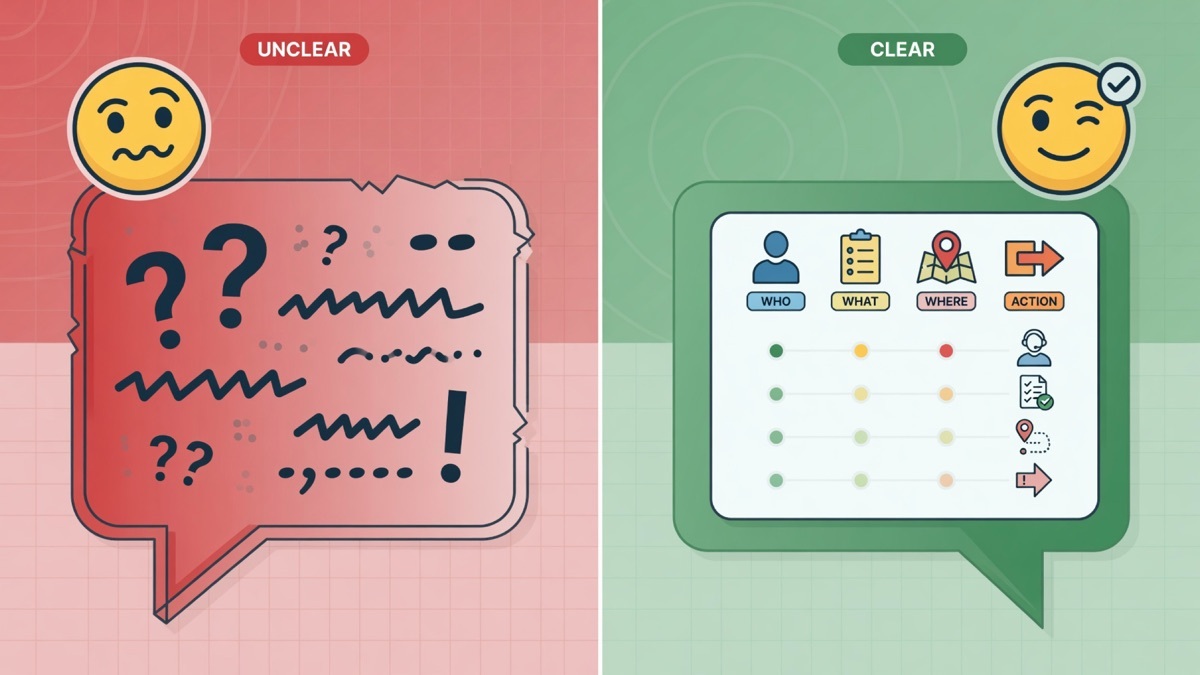 Precision does not mean giving a long explanation — it means including the details required for the next action. Compare these two messages and the difference becomes obvious.
 Don't change channels or settings without telling the team
A radio fleet only works when its members share the same approved channel plan and compatible settings. Users should not casually change:
- Operating channel
- CTCSS or DCS code
- Transmit power
- Bandwidth
- Scanning settings
- VOX settings
- Programmed frequencies
An accidental settings change can make one radio appear faulty when it has simply stopped matching the rest of the group.
🎯 Fleet management tip: Businesses that need several radios configured alike should assign one responsible person to manage the fleet. Compatible models can be programmed consistently using the correct software and radio programming cables, but any frequency programming must remain within the organisation's authorised use.
Practical radio scripts for UK teams
The following examples are brief but include enough information for the listener to act without chasing the speaker for clarification.
🍽️ Restaurant or hotel
"Kitchen, this is Floor One. Table eighteen is ready for mains. Confirm."
"Floor One, received. Table eighteen."
🏗️ Construction or facilities team
"Gate, this is Site Office. Hold the delivery at the entrance. The vehicle route is blocked. Confirm."
"Site Office, delivery held at the entrance."
🛒 Retail team
"Duty Manager, this is Till Four. Manager approval required, please."
"Till Four, received. On my way."
🥾 Outdoor group
"Base, this is Group Two. We are at checkpoint three, all members present, moving to checkpoint four. Over."
"Group Two, location and status received. Base out."
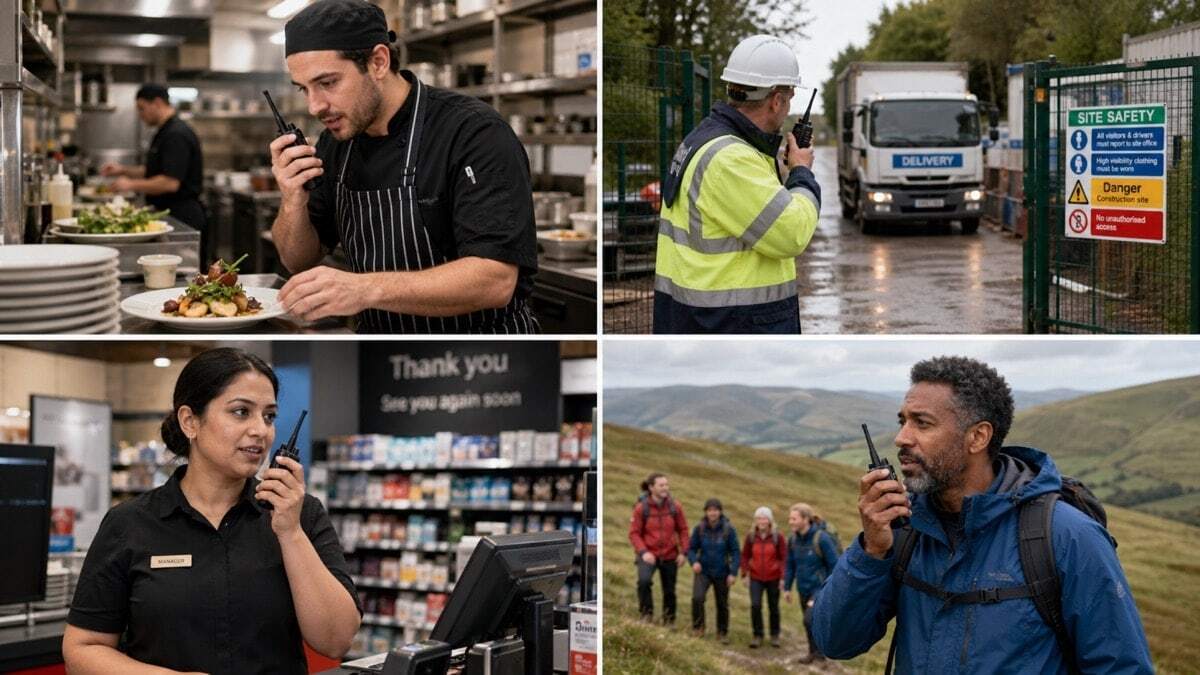 Practical radio scripts work across every environment — the format stays the same whether the team is in a kitchen, on a building site, behind a till or on a hillside.
 A 60-second radio check before work or travel
Before a shift, event or group activity begins, confirm:
- Every radio powers on
- Batteries are adequately charged
- The correct channel and tone settings are selected
- Users can both transmit and receive
- Earpieces or speaker microphones work
- Volume is appropriate for the environment
- Team identifiers are understood
- A backup channel has been agreed where appropriate
- Users know the priority or emergency procedure
- The equipment and frequencies are authorised for the intended UK use
🟢 Why this matters: A radio check catches simple failures while there is still time to fix them. It is far better to discover a damaged earpiece before an event opens than during a crowd-management problem.
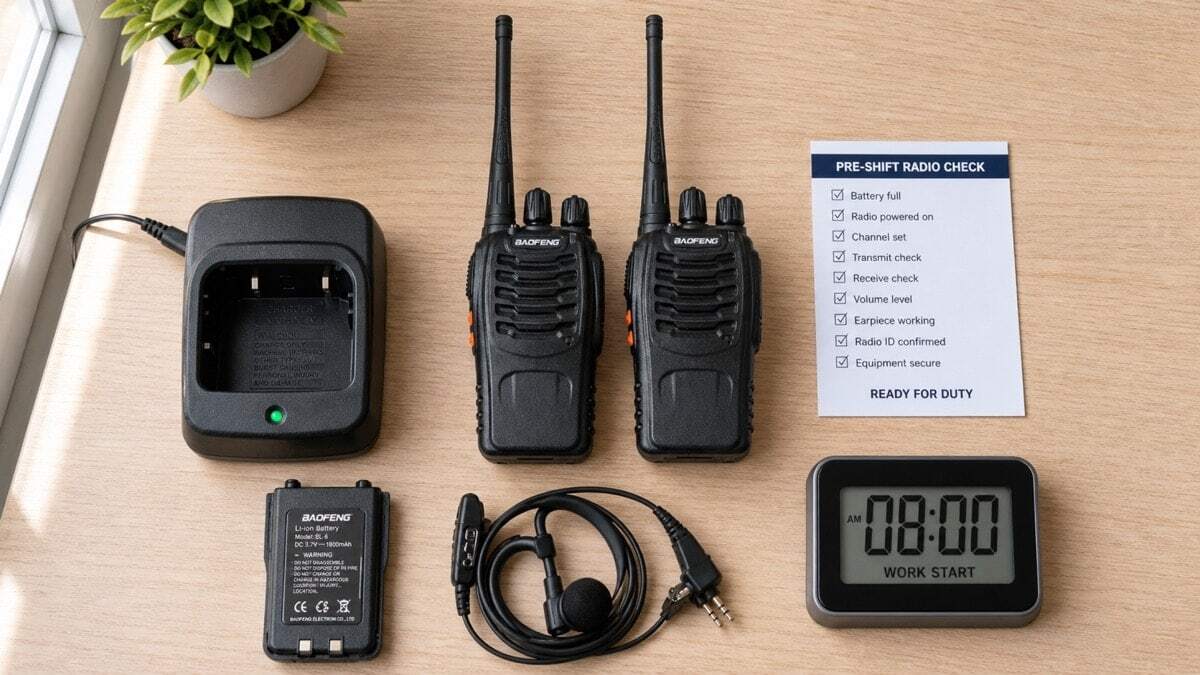 A 60-second pre-shift radio check — power on, check channel, confirm transmit and receive, test earpiece, review backup plan. Two minutes invested now prevents problems later.
 Clear radio communication is a team habit
Buying a more powerful radio does not solve poor operating discipline.
Reliable communication comes from people who listen before transmitting, think before speaking and confirm details that matter. The same habits work whether the radio is being used in a café, warehouse, school, hotel, campsite or amateur station.
Choose equipment that is lawful and appropriate for the environment, agree a simple procedure and practise it before the channel becomes busy.
🟢 Ready to choose a radio? Compare Baofeng walkie-talkies and handheld two-way radios, or begin with licence-free PMR446 models for straightforward UK team communication.
Recommended radios for UK teams
Whether you need a simple licence-free radio for a hospitality team, a compact model for travel, or a high-power handheld for licensed operators, the three models below cover the most common UK use cases.
📻 Baofeng Radios for Clear Team Communication
From PMR446 licence-free simplicity to high-power licensed handsets — matched to your team and environment.
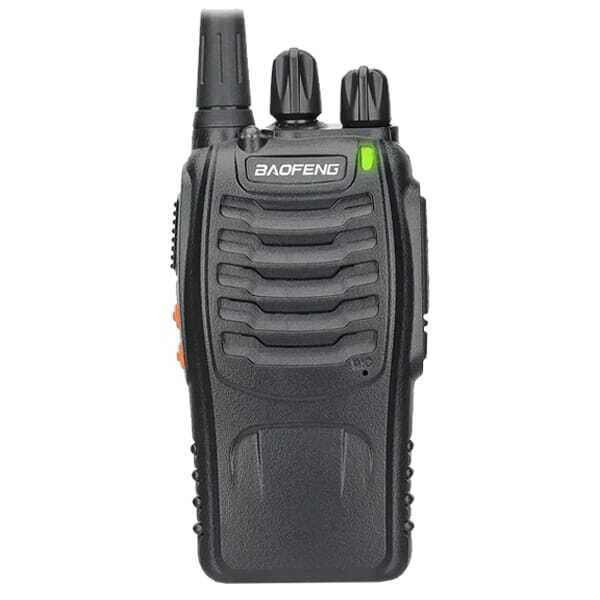
Baofeng BF-888S PMR446
0.5W · 16 PMR446 channels · Fixed antenna · No licence needed — the simplest choice for restaurants, retail, schools and small event teams.
View BF-888S PMR446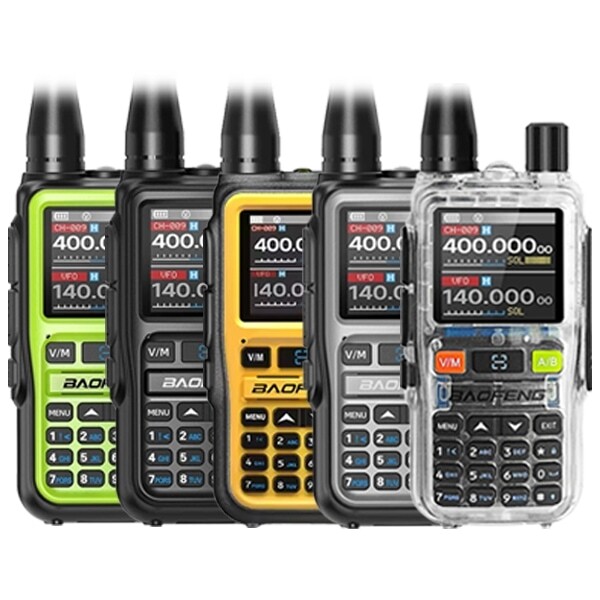
Baofeng UV-5R Mini
Compact dual-band · Bluetooth programming · Lightweight — ideal for licensed operators who need a pocketable radio for travel or lightweight kits.
View UV-5R Mini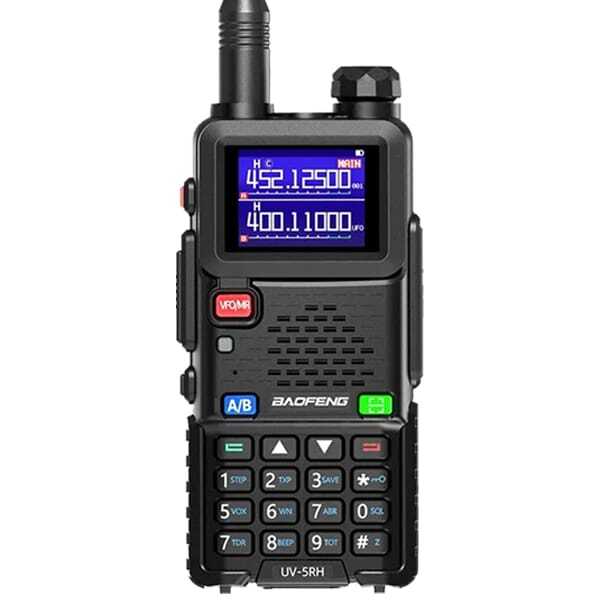
Baofeng UV-5RH
10W · 2500mAh · USB-C · 999 channels · Colour display — high-output programmable radio for appropriately licensed operators on demanding sites.
View UV-5RHFrequently asked questions
What is the most important rule of radio communication?
Listen before transmitting. A radio channel is shared space, and speaking over an active transmission may block both messages. The RSGB advises operators to listen carefully and check whether a frequency is in use before beginning a call. In a workplace setting, the principle is identical: pause, confirm the channel is clear and then transmit.
Why should I pause after pressing push-to-talk?
Push-to-talk radios require a brief moment to begin transmitting. If you speak the instant your thumb touches the button, the opening word — usually the name of the person you are calling — may be clipped and lost. A brief pause after pressing PTT ensures the radio is fully transmitting before you begin speaking.
Are CTCSS and DCS codes enough to keep a radio conversation private?
No. CTCSS and DCS tone codes tell your radio when to open its speaker, but they do not prevent another receiver from hearing the transmission. Anyone monitoring the same frequency without a matching tone filter can still hear everything you say. Never share passwords, medical details, payment information or sensitive staff matters over a radio channel.
What does "over" mean on a radio?
"Over" means you have finished speaking and are expecting a reply. "Out" means the exchange has ended and no reply is expected. The two words should not be combined as "over and out" because they give conflicting instructions — one implies you are waiting and the other says the conversation is finished.
Can I use a PMR446 radio without a licence in the UK?
Yes, but only when the equipment meets all of Ofcom's PMR446 technical requirements — including using an integral antenna, operating between 446.0 and 446.2 MHz and not exceeding 0.5 watts ERP. Programming a PMR446 frequency into a higher-power radio with a removable antenna does not make it licence-free. Always confirm the product is explicitly sold as the UK-compliant PMR446 version before assuming licence-free operation.
What should I include in a pre-shift radio check?
A basic radio check should confirm that every handset powers on, batteries are adequately charged, the correct channel and tone settings are selected, users can both transmit and receive, earpieces or speaker microphones are working, volume is appropriate for the environment and all team members know the backup channel and emergency procedure. Two minutes invested before a shift or event can prevent communication failures at the worst possible moment.
Why should I use plain English instead of 10-codes on a radio?
Ten-codes vary significantly between organisations and countries, so a number that means one thing to your team may mean something completely different to another. Plain language eliminates this ambiguity and is generally faster and clearer, particularly for staff who have not memorised a code list. Unless your workplace has a documented and consistently trained code system, saying exactly what you mean is the safer and more practical approach.
Ready to Improve Your Team's Radio Communication?
From PMR446 licence-free handhelds for restaurants and retail teams to high-power radios for licensed operators — Baofeng UK has the right radio for every environment and discipline.
Shop All Walkie Talkies