
16th Aug 2026
Do You Need a Licence for a Walkie Talkie in the UK? A Complete Guide
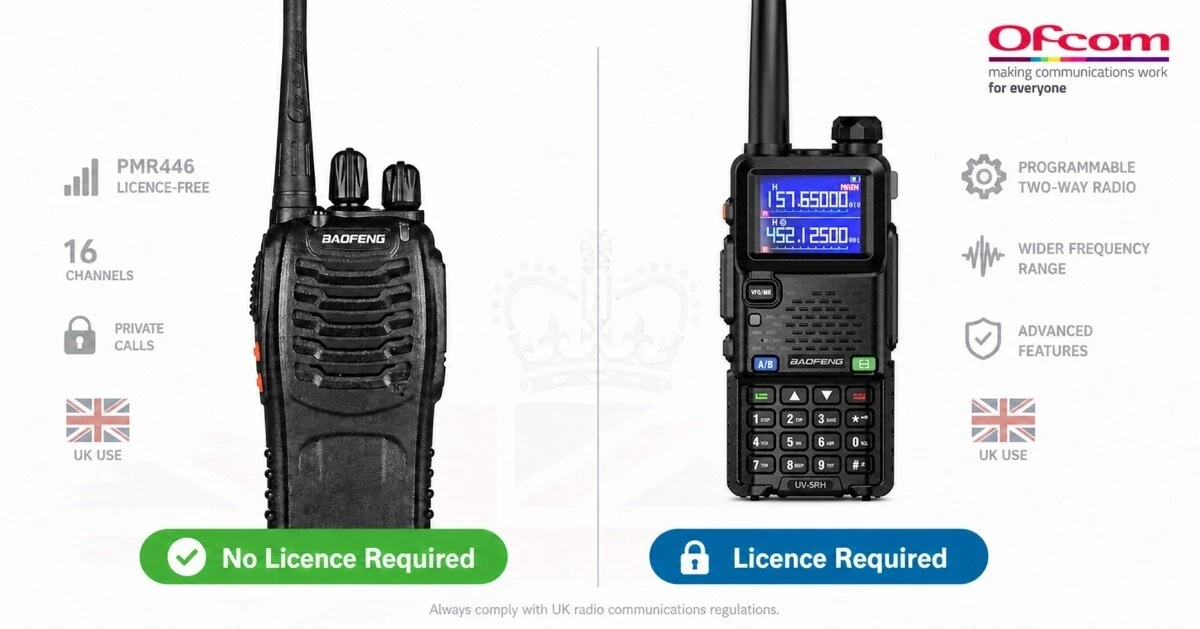
This guide was written and reviewed by the Baofeng UK team — UK-based radio communications specialists with over 10 years of experience helping buyers choose the correct radio for their legal situation. Licensing information reflects current Ofcom guidance on PMR446 licence-exempt equipment and amateur radio use.
Some walkie talkies in the UK do not require a licence, but others do.
Licence-free PMR446 radios can usually be used without a radio licence, while higher-power radios such as many Baofeng UV-5R models generally require an appropriate Ofcom licence before transmitting.
The confusing part is that many buyers call every handheld radio a "walkie talkie", but UK regulations treat different radio types differently.
Before buying a radio, it is important to understand whether you need a simple licence-free communication tool or a more advanced radio that requires authorised operation.
PMR446 radios — licence-free when compliant. | Baofeng UV-5R style — licence required. | Business radios — Ofcom Business Radio licence required. The right answer depends on the specific radio model and how you intend to use it.
⚡ UK walkie talkie licence rules at a glance
- ✅ No licence needed: Compliant PMR446 handheld radios — 0.5W max, fixed antenna, 446 MHz, ideal for families, small businesses and outdoor groups
- ⚠️ Licence required: Higher-power programmable radios including most Baofeng UV-5R-style models — need an Amateur Radio or Business Radio licence
- 🏢 Business teams: May need an Ofcom Business Radio licence for operations beyond short-range PMR446 communication
- ❌ Common mistake: Buying the most powerful radio available instead of the legally correct radio for the situation
- 🔍 Always check: Radio type, frequency, power output, antenna type and licence requirements before purchasing
📋 Table of Contents
- Why UK walkie talkie licence rules confuse buyers
- Which walkie talkies are licence-free in the UK?
- Do Baofeng walkie talkies need a licence in the UK?
- Licence-free radio vs licensed radio: which one do you need?
- When should you consider a licensed radio?
- Common mistakes UK buyers make when buying walkie talkies
- Choosing the right walkie talkie licence option for your situation
- Recommended radios by licence type
- UK walkie talkie licence checklist before buying
- Final thoughts on UK walkie talkie licence rules
- Frequently asked questions
Why UK walkie talkie licence rules confuse buyers
Many customers searching for "walkie talkie licence UK" are not radio experts. They simply want reliable communication for:
- Hiking trips
- Farms and rural properties
- Security work
- Construction sites
- Restaurants and hotels
- Events
- Emergency preparation
The problem is that two radios can look almost identical but have completely different legal requirements.
⚠️ The key problem: A small family walkie talkie bought for camping may be licence-free, while a more powerful handheld radio with a removable antenna and programmable frequencies may require a licence. For UK buyers, understanding the difference before purchasing avoids wasted money and compliance problems.
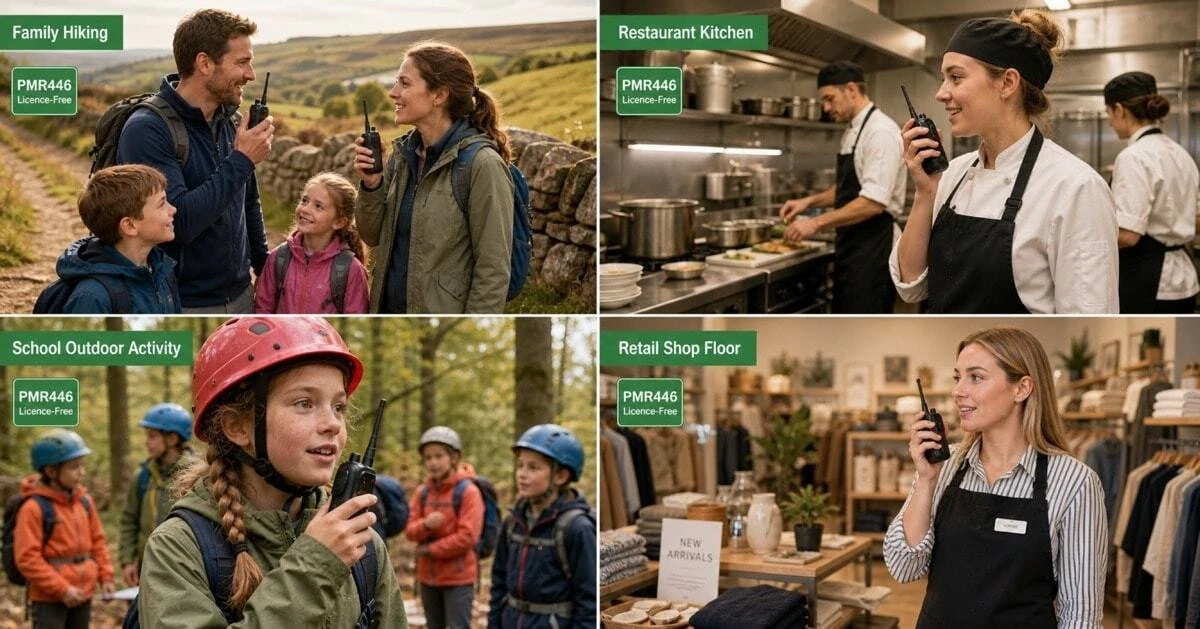 PMR446 licence-free radios are used every day across the UK — by families on hiking trips, hospitality teams in restaurants, schoolchildren on outdoor activities and retail workers coordinating on the shop floor. No Ofcom licence required when the equipment is compliant.
 Which walkie talkies are licence-free in the UK?
The most common licence-free option is PMR446 radio.
PMR446 radios are designed for short-range personal and business communication and operate within rules that allow licence exemption. Typical users include:
- Families
- Schools
- Hospitality teams
- Small retail teams
- Outdoor groups
- Event staff
Licence-free PMR446 radios are popular because they are simple:
| Feature | Licence-free PMR446 radios |
|---|---|
| Licence required | No |
| Setup difficulty | Simple |
| Typical use | Short-range communication |
| Best for | Families, small teams, events |
| Frequency programming | Limited |
🔵 Important: Licence-free does not mean unlimited range. Actual performance depends on buildings, hills, trees, weather, antenna design and surrounding interference. A radio advertised as "long range" may not achieve the same distance in real UK environments.
Do Baofeng walkie talkies need a licence in the UK?
This depends on the specific Baofeng radio model.
Baofeng produces different types of radios, including:
- PMR446 licence-free models
- Amateur radio handhelds
- Higher-power programmable radios
Many popular Baofeng radios, including UV-5R-style models, are designed for amateur radio users. These radios offer more features, but transmitting legally in the UK generally requires an appropriate amateur radio licence.
⚠️ A common problem: Many people purchase a powerful handheld radio expecting it to work like a normal walkie talkie, only to discover that they need to understand licensing rules first. This distinction is one of the biggest concerns among UK buyers. Read the full UK radio licence guide before purchasing a programmable handheld.
Licence-free radio vs licensed radio: which one do you need?
The right choice depends on what you are trying to achieve.
| User type | Recommended radio type | Licence situation |
|---|---|---|
| Family camping trips | PMR446 radio | Usually licence-free |
| Restaurant staff | PMR446 business radios | Usually licence-free for suitable models |
| School communication | PMR446 radios | Often suitable |
| Hiking groups | PMR446 or licensed options depending on needs | Depends on radio |
| Amateur radio hobbyists | Baofeng UV-5R style radios | Licence usually required |
| Advanced radio users | Programmable handheld radios | Licence may be required |
🎯 Expert note: The mistake many buyers make is choosing the most powerful radio instead of choosing the correct radio for their situation. A higher watt rating does not make a radio more suitable — it may simply make it less legal to operate without the right authorisation.
When should you consider a licensed radio?
A licensed radio may make sense when you need:
- More advanced features
- Access to amateur radio networks
- Greater technical control
- Specialist communication requirements
For example, amateur radio enthusiasts often choose Baofeng radios because they provide an affordable entry point into the hobby.
⚠️ Important distinction: These radios are not simply "stronger walkie talkies". They are communication devices designed for users who understand frequencies, programming and licensing. If you need a stronger walkie talkie for business use, an Ofcom Business Radio licence and a professionally programmed system is the correct route — not an amateur radio transceiver.
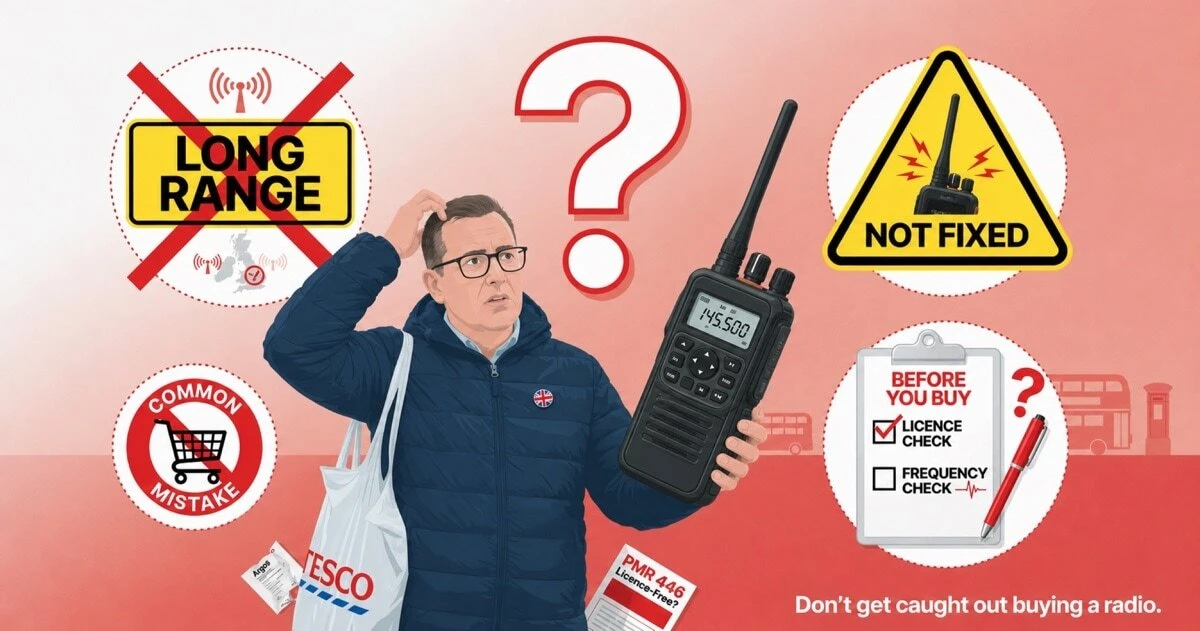 Three avoidable mistakes cost UK walkie-talkie buyers time and money every year — buying based on range claims alone, assuming every radio is licence-free and choosing an advanced radio without setup support.
 Common mistakes UK buyers make when buying walkie talkies
- ❌ Mistake 1: Buying based only on advertised range Many buyers search for "long range walkie talkie UK" but range depends heavily on location. A radio that performs well outdoors with clear visibility may perform very differently inside hotels, warehouses, forests or construction sites. The best radio is the one suited to your environment, not the one with the highest figure on the box.
- ❌ Mistake 2: Assuming every handheld radio is licence-free A common misconception is: "If it is sold as a walkie talkie, I can use it anywhere." That is not always true. Always check the radio type, operating frequencies, power output, antenna type and licence requirements before transmitting. A product available to buy online is not automatically legal to transmit with.
- ❌ Mistake 3: Choosing a complicated radio without support Advanced radios can involve programming software, cables, channels, tones and frequency settings. For beginners, setup guidance is often just as important as the radio itself. Baofengradio.co.uk highlights beginner support, accessories and educational content as part of helping users choose and operate radios correctly.
Choosing the right walkie talkie licence option for your situation
If you need communication while camping, hiking or travelling in groups, a licence-free PMR446 radio is often the simplest choice. Easy operation, no licence application and quick setup.
Small businesses such as restaurants, hotels and shops usually prioritise reliability, simple controls and staff-friendly operation. Licence-free radios suit many short-range environments.
If you want to explore amateur radio, a Baofeng UV-5R style radio can be an affordable starting point. The key difference: hobby radio requires learning the rules, not just buying the equipment.
🟢 For larger business operations: A business radio licence and professional radio system may be more appropriate than a licence-free PMR446 fleet. Review the current Ofcom Business Radio licence options before deploying a larger fleet.
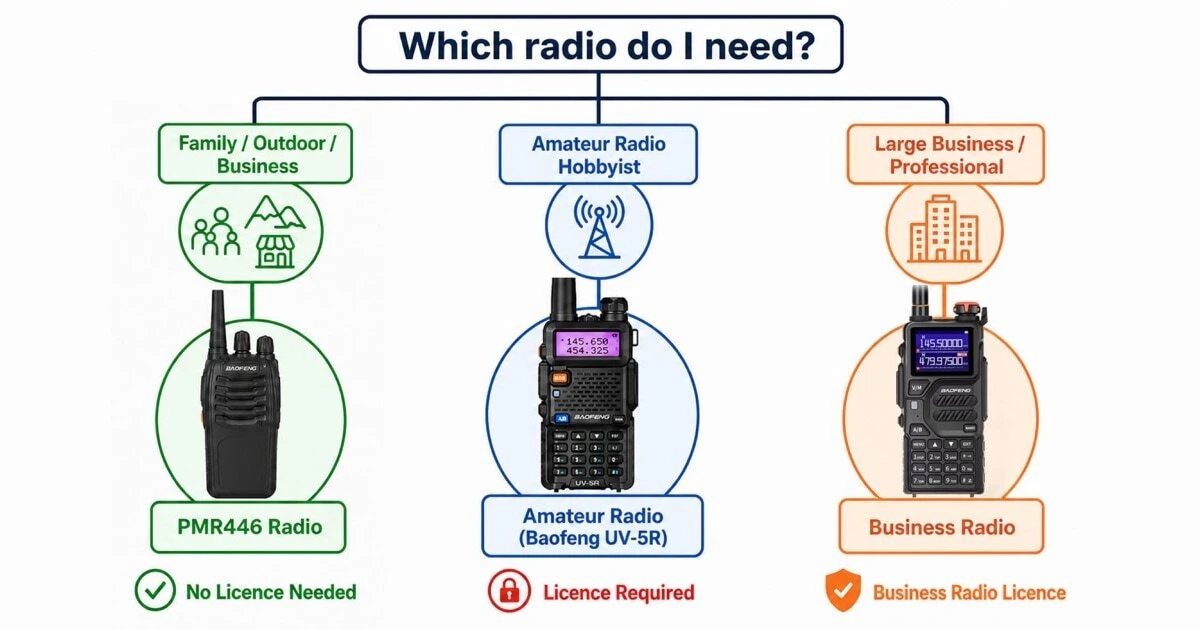 Three clear paths for UK radio buyers — PMR446 licence-free for families and small teams, an amateur radio licence for hobbyists, and a professional business radio system for larger operations requiring dedicated frequencies.
 Recommended radios by licence type
Whether you need a straightforward licence-free radio for everyday use or a feature-rich licensed model for advanced operation, the four radios below cover both categories clearly.
📻 Baofeng Radios — Matched to Your UK Licence Situation
Choose by licence type — no guesswork, no compliance risk.
✅ Licence-Free PMR446 — No Individual Ofcom Licence Required
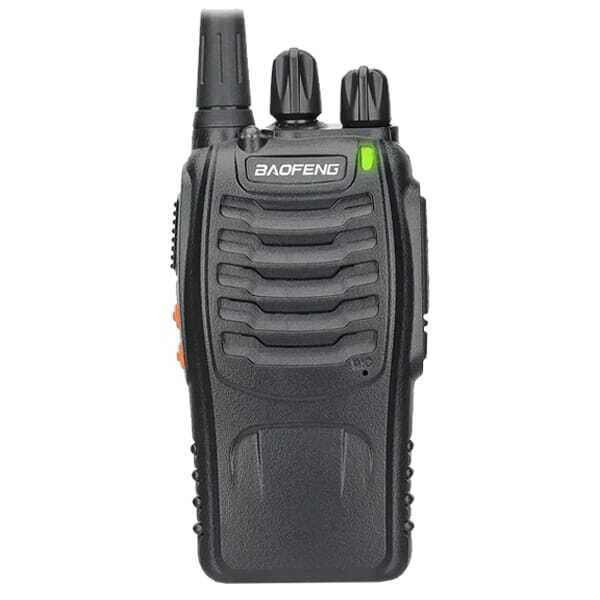
Baofeng BF-888S PMR446
0.5W · 16 PMR446 channels · Fixed antenna · No licence needed — the most popular licence-free choice for families, restaurants, schools and small event teams across the UK.
View BF-888S PMR446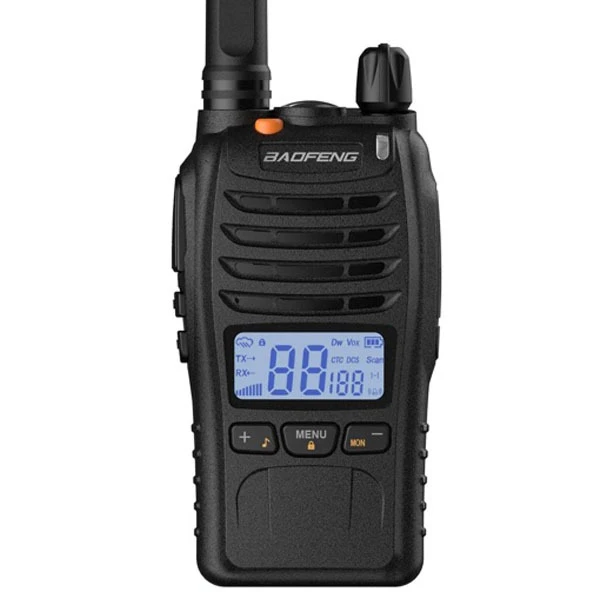
Baofeng BF-88ST Pro PMR446
PMR446 compliant · Upgraded Pro version · Fixed antenna · No licence needed — a step up from the BF-888S with enhanced features while remaining fully licence-free.
View BF-88ST Pro PMR446📡 Licensed Radios — For Amateur Operators & Advanced Users
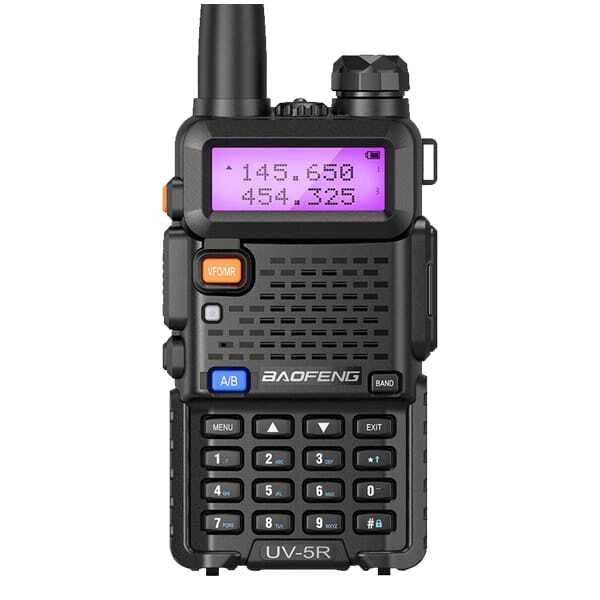
Baofeng UV-5R
Dual-band VHF/UHF · Programmable · Removable antenna — the iconic entry-level amateur radio. Requires an appropriate UK Amateur Radio Licence to transmit legally.
View UV-5R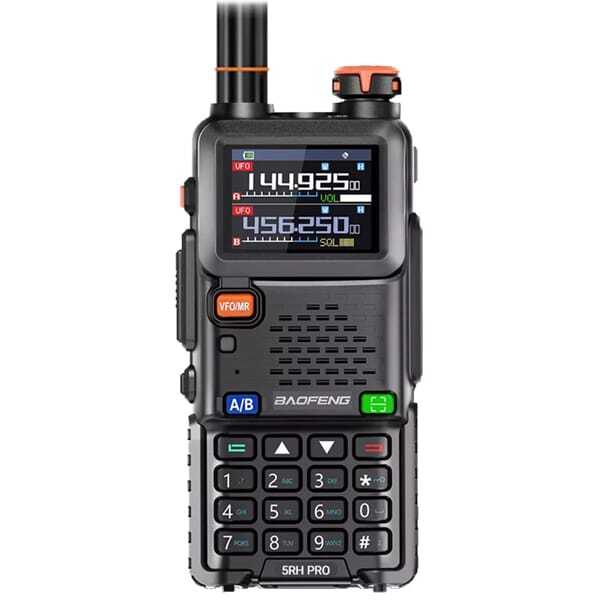
Baofeng UV-5RH Pro GPS
10W · GPS · USB-C · Colour screen · Airband receive — the advanced licensed operator's choice. Requires an appropriate UK licence to transmit on authorised frequencies.
View UV-5RH Pro GPS⚠️ Always confirm the product is the PMR446-labelled version for licence-free use. Licensed radios require an appropriate Ofcom authorisation before transmitting. Read the UK radio licence guide for full details.
UK walkie talkie licence checklist before buying
Before placing an order, work through this checklist:
Pre-purchase licence checklist
- Is this radio PMR446 licence-free?
- Does this model require an Ofcom licence?
- Do I need it for personal, business or amateur use?
- Do I need simple communication or advanced features?
- Does the range match my environment?
- Will beginners need setup support?
- Is the antenna fixed (PMR446) or removable (likely licensed)?
- Is the power output within PMR446 limits (0.5W ERP)?
Final thoughts on UK walkie talkie licence rules
📋 Key takeaways
- Not all walkie talkies require a licence in the UK
- PMR446 radios are the main licence-free option for families, small businesses and outdoor groups
- Many higher-power programmable radios require appropriate licensing — check before you buy
- Baofeng UV-5R style radios are popular but are not automatically licence-free
- Choosing the correct radio depends on your use case, not just range claims
- The best walkie talkie is not always the most powerful one — it is the one that fits your communication needs, environment and legal requirements
Frequently asked questions
Do I need a licence for a walkie talkie in the UK?
It depends on the type of radio. Compliant PMR446 handheld radios can be operated without an individual Ofcom licence, provided the equipment meets all PMR446 technical requirements — including a fixed integral antenna, operation between 446.0 and 446.2 MHz and a maximum of 0.5W ERP. Higher-power radios and programmable models such as Baofeng UV-5R-style handhelds generally require an Amateur Radio or Business Radio licence before transmitting.
Are PMR446 walkie talkies completely free to use in the UK?
PMR446 radios do not require an individual licence, but they are not free from all regulation. The equipment must meet Ofcom's technical requirements, including using a fixed integral antenna, operating only between 446.0 and 446.2 MHz, not exceeding 0.5W ERP and being used as a hand-portable device rather than a fixed base station. A programmable radio is not automatically PMR446-compliant just because it can be tuned to a PMR446 frequency.
Does a Baofeng UV-5R need a licence in the UK?
Most Baofeng UV-5R-style radios are designed for amateur radio use and are not PMR446-compliant licence-free devices. To transmit legally using a UV-5R in the UK, the operator generally needs an appropriate Amateur Radio Licence and must only transmit on frequencies and power levels permitted by that licence. Baofeng does produce separate PMR446-compliant models that are licence-free when used correctly.
Can I use a walkie talkie for my restaurant or small business without a licence?
Yes, if you choose a correctly identified PMR446-compliant model. A specifically labelled PMR446 radio — such as the Baofeng BF-888S PMR446 or BF-88ST Pro PMR446 — can be used in a restaurant, hotel, shop or small business without an individual Ofcom licence. Confirm that the product title explicitly states PMR446 and that the model uses a fixed antenna and 0.5W output.
What happens if I use a walkie talkie without the correct licence in the UK?
Transmitting on radio frequencies without the appropriate authorisation is a criminal offence under the Wireless Telegraphy Act. Ofcom has powers to investigate illegal use, issue notices and prosecute. Penalties can include fines. The safest approach is to confirm the licensing status of any radio before transmitting — not after. For straightforward communication needs, starting with a compliant PMR446 radio removes this risk entirely.
What is the difference between a PMR446 radio and a business radio?
A PMR446 radio is a specific type of compliant licence-free handheld device limited to 0.5W ERP on shared frequencies between 446.0 and 446.2 MHz. A business radio typically refers to a professionally programmed radio operating on dedicated or shared business frequencies under an Ofcom Business Radio licence, with potentially higher power, more reliable channel access and purpose-built infrastructure.
Find the Right Radio for Your UK Licence Situation
From compliant PMR446 licence-free handhelds for families and small businesses to advanced models for licensed amateur operators — Baofeng UK has the right radio for every legal requirement and use case.
Browse Licence-Free PMR446 Radios