
7th Jun 2026
Can Walkie Talkies Work Through Walls? What Blocks Your Signal & How to Fix It

- 1. Introduction: The Indoor Signal Struggle
- 2. The Science Behind It: How Radio Waves Navigate Obstacles
- 3. Not All Walls Are Created Equal: Material Matters
- 4. Top Picks: Best Indoor Walkie Talkies
- 5. UHF vs. VHF: Choosing the Right Frequency for Indoors
- 6. The Role of Power Output: PMR446 vs. Licensed Radios
- 7. 4 Expert Tips to Boost Your Indoor Walkie Talkie Range
- 8. Frequently Asked Questions (FAQs)
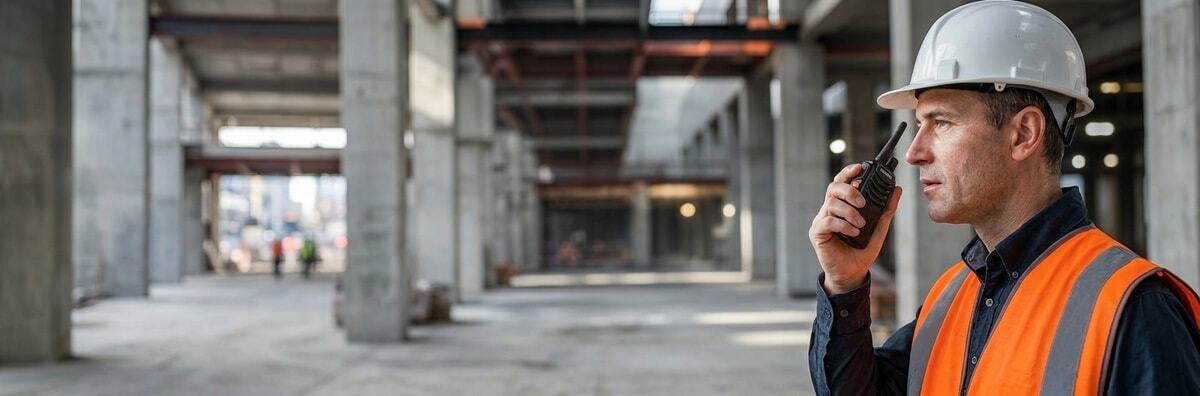
Whether you are coordinating a busy outdoor festival with indoor staging, managing security in a multi-story concrete building, or simply trying to stay in touch with your family across a sprawling hotel complex, one question inevitably arises: can walkie talkies work through walls? The short answer is yes—but the reality is a bit more complex. You have likely experienced the frustration of crystal-clear communication suddenly dropping to static just because you stepped behind a concrete pillar or walked into another room. This loss of signal can cause critical delays for professional teams and deep annoyance for casual users.
Walkie talkies rely on radio waves, and their ability to penetrate physical barriers depends on a combination of physics, the surrounding materials, and the specific technology inside your radio. In this comprehensive guide, we will explore exactly how different walls affect your radio signal, why choosing between UHF and VHF is critical for indoor use, and what steps you can take to ensure your communications never drop when it matters most.
The Science Behind It: How Radio Waves Navigate Obstacles
To understand why walls block your signal, you must first understand how two-way radios communicate. Walkie talkies operate using electromagnetic waves that travel invisibly through the air. Ideally, these waves perform best with a clear "line of sight"—meaning the transmitting radio and the receiving radio have no physical obstructions between them.
However, in the real world, a perfect line of sight is rarely possible. When a radio wave hits a wall, three distinct things can happen:
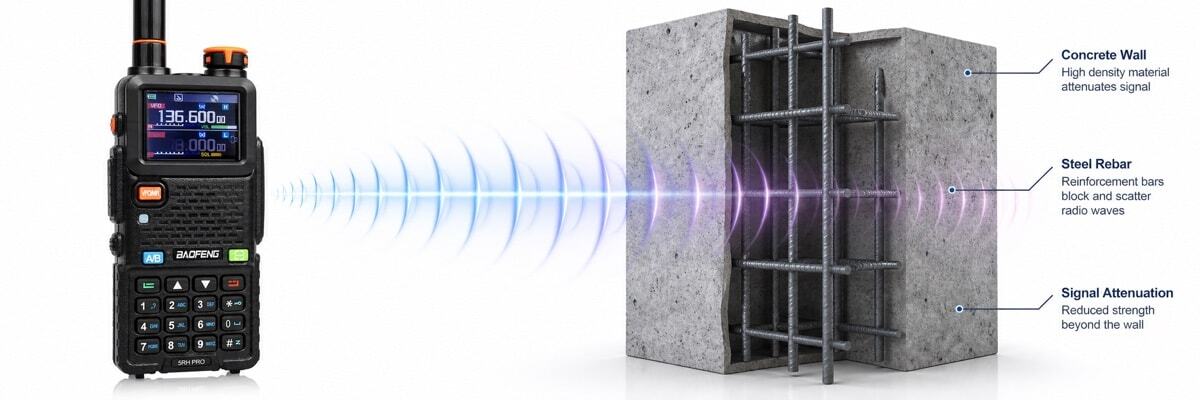
- Penetration: The wave passes through the material, though it usually loses a portion of its energy (a process known in radio technology as attenuation).
- Reflection: The wave bounces off the surface. While this can sometimes help a signal navigate down a long hallway or around a corner, it can also cause interference.
- Absorption: The material entirely absorbs the radio wave's energy, stopping the signal dead in its tracks.
The extent to which your radio's signal penetrates, reflects, or absorbs depends almost entirely on the density of the wall and the specific frequency band your walkie talkie is programmed to use.
Not All Walls Are Created Equal: Material Matters
If you are asking if a walkie talkie can work through a wall, you first need to evaluate your environment and ask: what kind of wall? Dense materials create significant roadblocks for radio frequencies.
Drywall, Wood, and Glass
If you are using a two-way radio in a standard residential home or a modern office space partitioned with drywall, you are in luck. Materials like plasterboard, wood framing, and standard glass offer very low resistance to radio waves. Even low-power radios will easily transmit through several of these walls with minimal signal degradation.
Brick and Stone
Older UK buildings and solid masonry present a tougher challenge. Brick and stone are considerably denser than drywall and will absorb more of the radio frequency. You can certainly still transmit through brick, but your maximum effective range will be noticeably reduced compared to standing in an open field.
Concrete and Steel
This is where standard consumer radios fail. Concrete—especially thick, steel-reinforced concrete (rebar)—is the ultimate enemy of radio signals. A thick concrete wall can slash your signal strength by up to 50% per floor. Furthermore, steel absorbs and reflects radio waves so aggressively that a metal-clad warehouse or an underground parking garage can essentially act as a Faraday cage, blocking signals from getting in or out. To penetrate steel and concrete, you need the right frequency and substantial power.
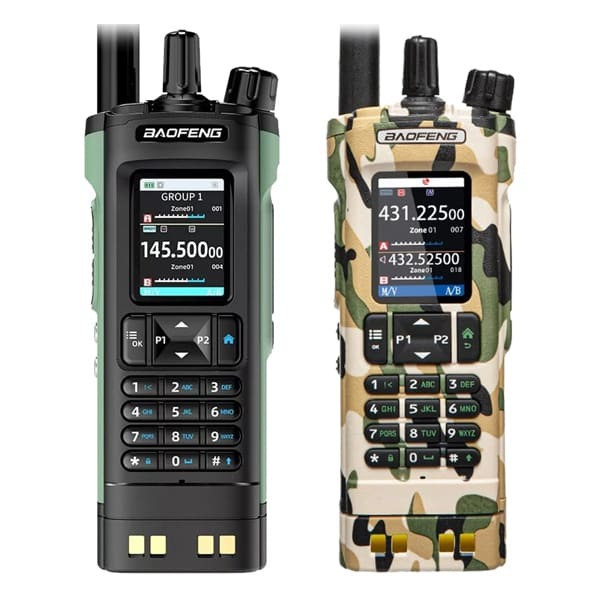
Top Picks: Best Walkie Talkies for Indoor & Concrete Environments
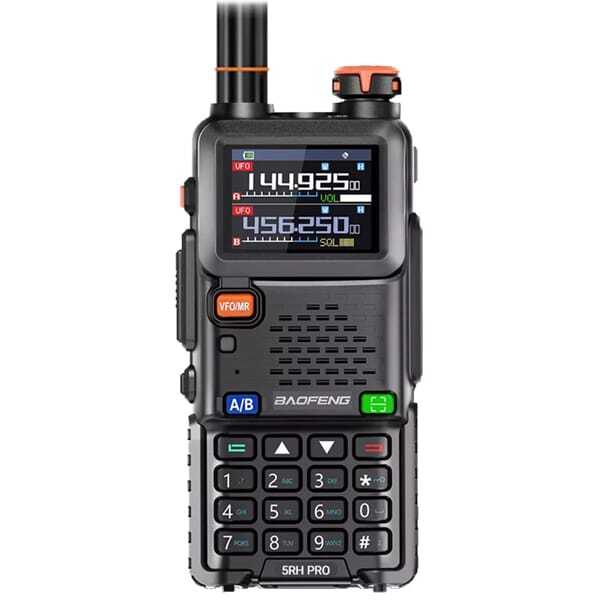
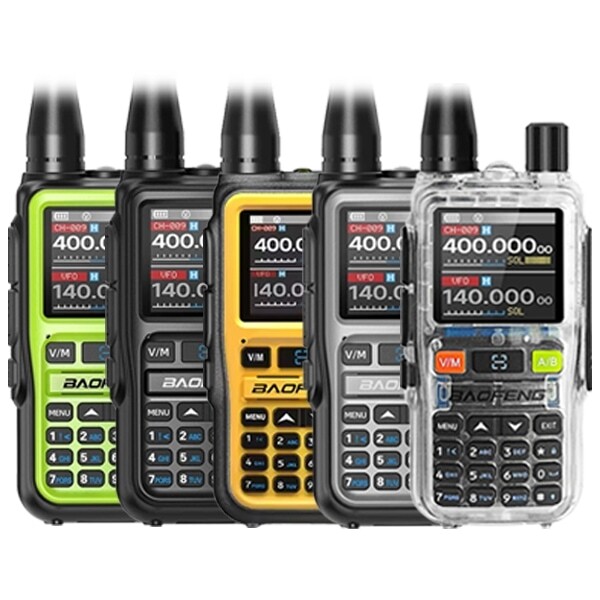
High-powered radios equipped with UHF frequencies and modern technology to punch through the toughest barriers.
UHF vs. VHF: Choosing the Right Frequency for Indoors
When selecting a radio for indoor use, the frequency band is the most important specification you must check. Two-way radios typically operate on either VHF (Very High Frequency) or UHF (Ultra High Frequency).
VHF (136-174 MHz): VHF waves have a longer wavelength. While they can travel incredible distances outdoors over flat terrain or open water, these long waves are terrible at penetrating walls and dense structures. If you attempt to use a VHF radio inside a heavily built-up urban area or an office block, your signal will struggle to push through the barriers.
UHF (400-470 MHz): UHF is the undisputed king of indoor communication. Because UHF waves are shorter (roughly 60 cm in length), they are much better at squeezing through small gaps, penetrating standard walls, and bouncing around corridors and steel beams. If you are operating inside a warehouse, hotel, or construction site, you absolutely must use a UHF radio to maintain contact.
The Role of Power Output: PMR446 vs. Licensed Radios
Even if you are utilizing a highly efficient UHF frequency, the power output (measured in Watts) dictates how much "push" the signal has to make it through a solid barrier.
In the UK, licence-free consumer radios operate on the PMR446 frequency band and are legally restricted by Ofcom to a maximum power output of 0.5 Watts. These radios are fantastic for casual outdoor use, small events, or areas with thin walls. However, 0.5W simply lacks the muscle to punch through heavy steel doors or multiple concrete floors.
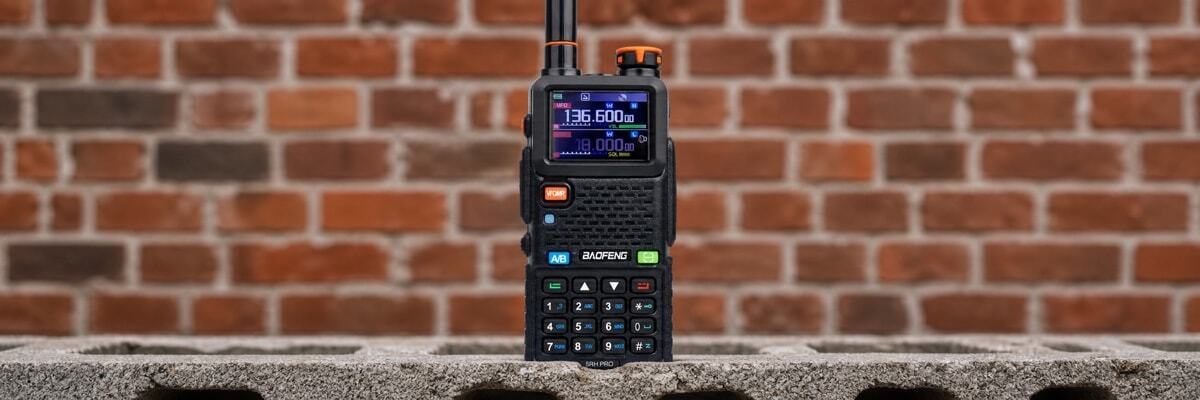
For commercial sites, dense buildings, or extensive multi-story facilities, you need a high-power licensed radio. By moving to a professional tier, such as the renowned Baofeng UV-5R series or dedicated long-range two-way radios, you gain access to outputs of 4 to 5 Watts (or higher, depending on the model). This massive increase in power allows the radio wave to overcome the severe attenuation caused by concrete and steel, keeping your team connected across difficult environments. Just remember to consult our UK Ham Radio Licence Guide, as transmitting on these higher power settings requires proper Ofcom licensing.
4 Expert Tips to Boost Your Indoor Walkie Talkie Range
If you find yourself in a tricky building and are struggling to get your signal through the walls, try these practical solutions:
- Upgrade Your Antenna: The standard, short "rubber duck" antenna on most handheld radios is designed for pocket portability, not maximum range. Swapping your standard attachment for a high-gain, longer whip antenna concentrates your radio's energy and vastly improves its ability to blast through structural walls.
- Leverage Gaps and Windows: Radio waves will naturally take the path of least resistance. If you are struggling to transmit from the center of a solid concrete room, step near a window, an open doorway, or even a ventilation duct. These gaps provide a clean escape route for the signal.
- Ensure Batteries are Fully Charged: A radio's power output naturally drops as the battery drains. A two-way radio sitting at 15% battery will struggle to penetrate a wall that it could easily push through at 100%. Keep spare batteries on hand for long shifts.
- Use Programming Software: Sometimes interference from other electronics in the building degrades your signal. Using dedicated programming software allows you to assign specific privacy codes (CTCSS/DCS) to your UHF channels, ensuring that your team's communication cuts through the noise clearly without interference from other local users.
Ultimately, walkie talkies can absolutely work through walls, provided you equip yourself with the right technology. By choosing UHF frequencies, investing in adequate power output, and understanding the physical materials around you, you can eliminate frustrating dead zones and ensure reliable, instant communication inside any building.
Frequently Asked Questions (FAQs)
1. Will a PMR446 licence-free radio work inside a large concrete building?
PMR446 radios operate at a maximum of 0.5 Watts. While they will work through standard drywall and wood doors over short distances, they will struggle significantly to transmit through thick concrete walls or across multiple floors. For heavy concrete, a licensed 4W or 5W radio is recommended.
2. Is UHF or VHF better for communicating through walls?
UHF (Ultra High Frequency) is far superior for indoor use and communicating through walls. Its shorter wavelengths allow the signal to bounce around obstacles, penetrate walls more effectively, and squeeze through structural gaps better than VHF.
3. Why does my walkie talkie work outdoors but stop working indoors?
Outdoors, your radio benefits from a clear line of sight with few obstructions. Indoors, the radio waves are immediately subjected to attenuation (weakening) as they attempt to pass through dense building materials like brick, concrete, and steel, which drastically reduces your maximum range.
4. Can I buy a stronger antenna to help my radio transmit through walls?
Yes. Upgrading from a standard factory antenna to a high-gain whip antenna is one of the most cost-effective ways to improve your radio's transmission and reception. A better antenna focuses the signal more efficiently, aiding in wall penetration.
5. Do Wi-Fi or cellular networks affect standard walkie talkie signals indoors?
Generally, no. Standard analog and digital two-way radios operate on entirely different frequency bands (such as 400-470 MHz for UHF) than Wi-Fi routers (2.4 GHz or 5 GHz) and cellular networks. However, large amounts of electrical machinery or thick metal server racks can cause physical signal blockages or electromagnetic interference.