
18th Jun 2026
Beginner Walkie Talkie Guide for UK Users: Channels, Range, Privacy and Licensing


- 1. Introduction
- 2. What Is a Walkie Talkie?
- 3. How Do Walkie Talkies Work?
- 4. What Do Walkie Talkie Channels Mean?
- 5. Are Walkie Talkies Private?
- 6. Understanding Walkie Talkie Range
- 7. Do You Need a Licence to Use a Walkie Talkie in the UK?
- 8. Best Walkie Talkies for Beginners
- 9. PMR446 vs Programmable Radios
- 10. Basic Walkie Talkie Features Beginners Should Know
- 11. Walkie Talkie Etiquette for Beginners
- 12. Battery Life and Charging Basics
- 13. Common Beginner Mistakes
- 14. Beginner Walkie Talkie Checklist
- 15. FAQ
If you are new to two-way radios, the world of channels, frequencies, range claims and licences can feel confusing at first. A walkie talkie looks simple: press a button, speak, and another person hears you. But behind that simple push-to-talk design are a few important basics every beginner should understand.
Quick answer: A walkie talkie is a handheld two-way radio that allows users to communicate directly without mobile signal, Wi-Fi or a phone network. For beginners in the UK, the most important things to understand are channels, range limits, privacy codes, battery life and whether the radio is licence-free or requires the correct authorisation before transmitting.
This beginner walkie talkie guide explains how walkie talkies work, what channels actually mean, why real-world range can vary so much, whether other people can hear your conversation, and what UK users should know before pressing the talk button. It is designed for first-time users, families, outdoor groups, event teams, small businesses and anyone who wants a clear introduction before using a two-way radio.
What Is a Walkie Talkie?
A walkie talkie is a handheld two-way radio. Unlike a mobile phone, which relies on cellular networks, a walkie talkie sends and receives radio signals directly between devices. This makes it useful in places where mobile signal is weak, internet access is unavailable, or quick group communication is more practical than calling one person at a time.
Most walkie talkies use a push-to-talk button, often called PTT. When you press the button, your radio transmits your voice. When you release the button, your radio goes back to listening mode. This is why walkie talkie conversations are usually short, direct and practical.
Walkie talkies are commonly used for camping, hiking, schools, retail teams, construction sites, security, events, hospitality, farms and emergency preparedness. The right use depends on the type of radio, the environment, the number of users and the legal rules that apply to transmission in the UK.
How Do Walkie Talkies Work?
Walkie talkies work by using radio waves. When you speak into the microphone, your voice is converted into a radio signal and transmitted through the antenna. Another radio set to the same channel receives the signal and converts it back into sound.
Most basic walkie talkies operate in simplex mode. This means only one person can transmit on a channel at a time. If two people press the talk button at the same moment, the signals can overlap and the message may become unclear. This is why good walkie talkie habits matter. Speak one at a time, keep messages short, and pause before replying.
Walkie talkies do not need a SIM card, mobile contract or Wi-Fi connection. However, they do need compatible channels and suitable radio settings. Two radios can usually communicate only when they are using the same frequency or channel, and when they are within practical range.
What Do Walkie Talkie Channels Mean?
A channel is a preset communication path. For beginners, it is easiest to think of channels like lanes on a road. If two radios are on the same channel, they are using the same lane and can hear each other. If they are on different channels, they usually cannot communicate.
Many licence-free walkie talkies in the UK use PMR446 channels. These are designed for short-range, everyday communication and are commonly used by families, leisure users and small teams. More advanced radios may offer programmable frequencies, but these are not always licence-free to transmit on.
It is important to understand that a channel is not private by itself. If another person nearby is using the same channel and compatible settings, they may be able to hear your transmission. This is normal for standard analogue two-way radio communication.
For beginners, the best approach is to agree on a channel before use, test the radios before leaving or starting work, and keep a backup channel in mind if the first one is busy.
Are Walkie Talkies Private?
Walkie talkies are not fully private in the way that encrypted messaging apps or phone calls can be. Standard analogue walkie talkies transmit over shared radio frequencies. Anyone nearby with a compatible radio tuned to the same channel may be able to listen.
Some radios include privacy codes, often called CTCSS or DCS codes. These codes do not encrypt your conversation. Instead, they reduce unwanted noise by making your radio ignore signals that do not use the same code. This can make a channel feel quieter, but it does not stop another radio user from listening if they know how to monitor the channel.
For beginner users, the safest rule is simple: do not share personal, sensitive or confidential information over a standard walkie talkie channel. Use radios for practical coordination, not private data.
Understanding Walkie Talkie Range
Range is one of the most misunderstood parts of two-way radios. Many walkie talkies advertise a maximum range, but that number is usually based on ideal conditions, such as open ground, clear line of sight, minimal interference and no major obstacles between users.
In real life, walkie talkie range is affected by many factors, including:
- Buildings, walls and metal structures
- Hills, valleys and woodland
- Weather conditions
- Antenna position
- Battery level
- Radio power
- Background interference
- Whether users are indoors or outdoors
For example, a radio may reach a much longer distance across open countryside than inside a shopping centre, warehouse or built-up area. In towns and cities, walls, vehicles, steel frames and electrical equipment can reduce signal strength. In woodland, trees and uneven ground can also limit performance.
This is why actual range is often lower than the maximum range printed in marketing materials. Beginners should treat range claims as best-case figures, not guaranteed everyday distances. A practical beginner walkie talkie guide should always focus on real-world conditions rather than headline numbers alone.
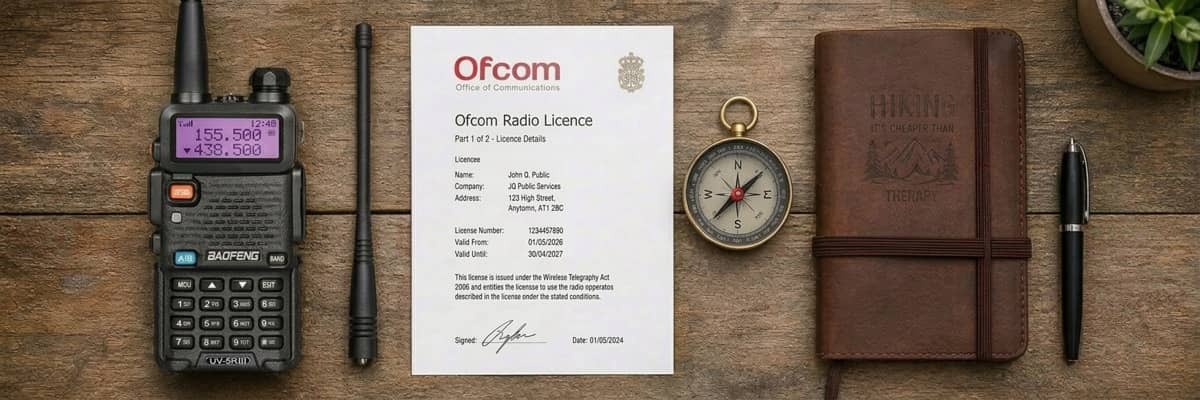
Do You Need a Licence to Use a Walkie Talkie in the UK?
This is one of the most important questions in any beginner walkie talkie guide. In the UK, whether you need a licence depends on the type of radio, its power, frequency and how it is used.
PMR446-compliant radios are intended for licence-free short-range use in the UK. They operate under specific technical limits, including low power and approved channel use. These can normally be used without applying for an individual radio licence.
However, not every handheld radio is licence-free. Some programmable, higher-power, amateur, business or multi-band radios may require the correct licence before you transmit. Listening may be treated differently from transmitting, but pressing the talk button on the wrong frequency or with the wrong equipment can create legal issues and interfere with other users. If you are interested in advanced communication, you might want to learn How Do I Get a Ham Radio Licence.
For businesses, events, security teams and advanced users, an Ofcom business radio licence or another appropriate licence may be required depending on the setup. If you are unsure, check the radio type, frequency range and intended use before transmitting.
Best Walkie Talkies for Beginners
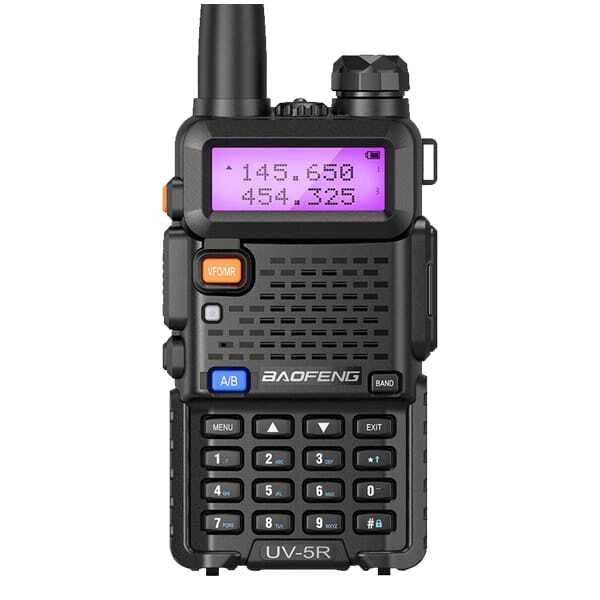
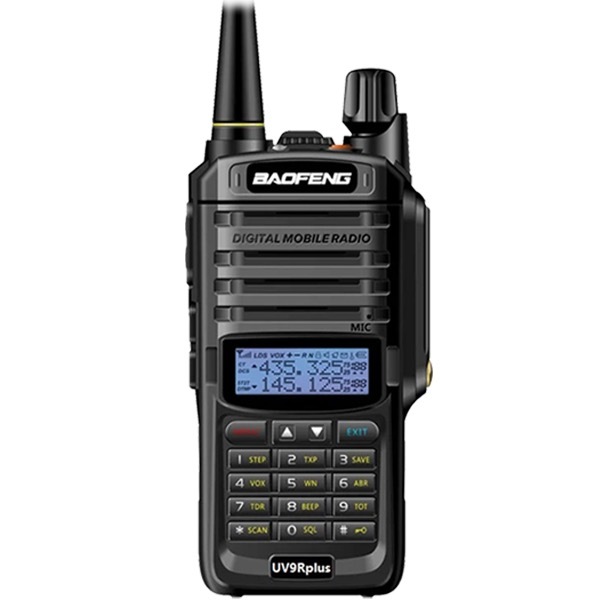
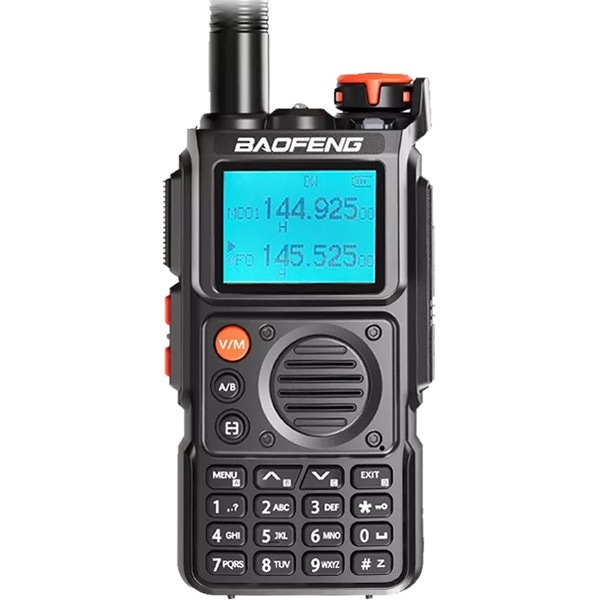
Start your radio journey with these highly recommended, easy-to-use Baofeng models.
PMR446 vs Programmable Radios
For beginners, the difference between PMR446 radios and programmable radios is important.
PMR446-compliant radios are intended for simple licence-free use. They are usually easy to operate, have approved channels and are suitable for short-range communication. They are often used by families, small shops, restaurants, schools, campsites and casual outdoor users.
Programmable radios can offer more flexibility, but that flexibility also brings responsibility. They may allow access to frequencies that are not licence-free. This does not mean they are illegal to own, but transmitting on certain frequencies may require a licence or proper authorisation.
A beginner should not assume that every walkie talkie can be used licence-free in the UK. Always check whether the model is PMR446-compliant or whether it is intended for licensed use. Programmable radios should be configured and used only within the frequencies and conditions allowed for the user.
Basic Walkie Talkie Features Beginners Should Know
Most walkie talkies include a few standard features. Understanding these makes them much easier to use.
- Channel selector: Lets you choose the channel your group will use. Everyone in the group must be on the same channel to communicate.
- Push-to-talk button: Press to transmit and release to listen. Only one person should speak at a time.
- Volume control: Adjusts how loud received audio is.
- Squelch: Helps reduce background hiss when no signal is being received. Some radios manage this automatically.
- Scan function: Searches through channels to find active transmissions.
- VOX: Voice-activated transmission. This allows hands-free speaking, but it can be triggered by background noise, so it is not always ideal.
- Key lock: Prevents accidental button presses.
- Battery indicator: Shows remaining battery level. Low battery can reduce performance and audio quality.
- Belt clip or lanyard point: Useful for keeping the radio accessible during work or outdoor activity.
For new users, it is usually best to learn the basic controls first before adjusting advanced settings. A simple test with another radio nearby can help beginners understand how channels, volume and push-to-talk timing work.
Walkie Talkie Etiquette for Beginners
Good radio habits make communication clearer and more professional. Even simple family or leisure use benefits from basic etiquette.
Before speaking, listen briefly to make sure the channel is clear. Press the PTT button, wait half a second, then speak clearly. If you start talking at the exact moment you press the button, the first word may be cut off.
Keep messages short. Walkie talkies are best for quick updates, not long conversations. Say who you are calling, give your message, and wait for a reply.
Avoid shouting into the microphone. Speak in a normal, clear voice and hold the radio a short distance from your mouth. In windy or noisy environments, turning your body away from the wind can improve clarity.
Use agreed call signs or names if you are in a group. For example, “Base to Gate Team” is clearer than simply saying “Hello?” At the end of a message, some users say “over” to show they have finished speaking and are waiting for a response.
Battery Life and Charging Basics
Battery life matters, especially for outdoor trips, events and long shifts. A radio that works well in the morning but runs out of power in the afternoon is not reliable communication.
Battery performance depends on the battery capacity, transmit time, volume level, temperature and power setting. Transmitting uses more power than listening. If a group talks constantly, batteries drain faster. Cold weather can also reduce battery performance.
Beginners should fully charge radios before use, carry spare batteries or charging options when needed, and avoid leaving radios unused for long periods with completely flat batteries. For regular work use, it is helpful to create a charging routine so every radio starts the day ready.
Common Beginner Mistakes
Many first-time users make the same mistakes. The good news is that they are easy to avoid.
One common mistake is expecting the maximum advertised range in every environment. Real-world range is always affected by obstacles and terrain.
Another mistake is assuming privacy codes make conversations secure. They reduce unwanted interruptions, but they do not encrypt your voice.
A third mistake is using a programmable or high-power radio without understanding UK licensing rules. If you are not sure whether you can transmit, check before using the radio.
Beginners also sometimes forget that all radios in a group need matching settings. If one person is on the wrong channel or privacy code, they may not hear the others.
Finally, many users speak too close to the microphone or release the PTT button too early. Speak clearly, pause briefly, and finish your message before releasing the button.
Beginner Walkie Talkie Checklist
Before using walkie talkies for the first time, check the basics:
- Are all radios fully charged?
- Are all users on the same channel?
- Are privacy codes matched, if used?
- Has the group tested communication before starting?
- Is the radio suitable for the intended UK use?
- Do you need a licence before transmitting?
- Is the expected range realistic for the environment?
- Does everyone understand push-to-talk etiquette?
This simple checklist can prevent many common communication problems and make first-time use much easier.
FAQ
Do beginners need a licence to use walkie talkies in the UK?
It depends on the type of radio. PMR446-compliant walkie talkies are designed for licence-free short-range use in the UK. However, programmable, higher-power, amateur or business radios may require the correct licence before transmission.
What channel should I use on a walkie talkie?
Your group should agree on a channel before use. Everyone who wants to communicate must use the same channel and, if applicable, the same privacy code. If the channel is busy, switch to another suitable channel.
Can other people hear my walkie talkie?
Yes, they may be able to. Standard analogue walkie talkies are not fully private. If another nearby user has a compatible radio set to the same channel, they may hear your transmission.
Do privacy codes make walkie talkies private?
No. CTCSS and DCS privacy codes do not encrypt your conversation. They help reduce unwanted interruptions by filtering out transmissions that do not use the same code, but they do not make the channel secure.
Why is my walkie talkie range shorter than advertised?
Advertised range is usually based on ideal conditions. In real life, buildings, walls, hills, trees, weather, battery level and interference can all reduce range. Always test radios in the actual environment where you plan to use them.
Final Thoughts
Walkie talkies are simple to use, but understanding the basics helps beginners avoid confusion. Channels let radios communicate with each other, but they are not private. Range depends heavily on real-world conditions. PMR446-compliant radios can be licence-free in the UK when they meet the correct requirements, while programmable or higher-power radios may need a suitable licence before transmission.
This beginner walkie talkie guide gives you the foundation: know your channels, understand your range, respect radio etiquette, check the legal requirements and avoid sharing sensitive information over open radio channels.
Once you understand these basics, walkie talkies become one of the most practical communication tools available. Whether used for work, leisure, travel, events or outdoor activities, they offer fast, direct and dependable communication when used correctly.