
10th Jul 2026
Are Walkie Talkies Private? What Other People Can Hear
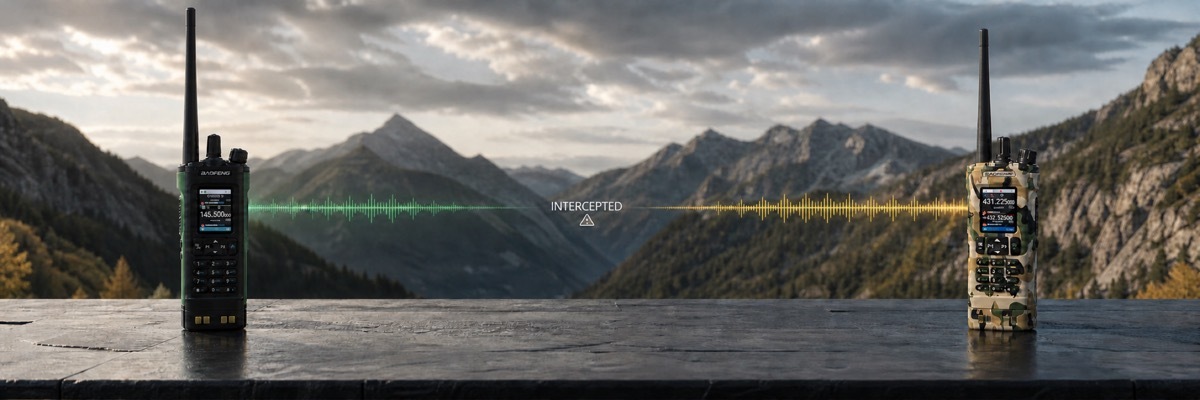
Are Walkie Talkies Private? Here Is Everything You Need to Know About Radio Privacy in the UK
Walkie talkies are simple, fast, and reliable. You choose a channel, press the push-to-talk button, and speak to your group instantly. But one question comes up again and again: are walkie talkies private?
The short answer is: not completely. Most standard walkie talkies are not private in the same way as a mobile phone call or an encrypted messaging app. If another person is nearby, using a compatible radio, and listening on the same channel or frequency, they may be able to hear what you say.
This does not mean walkie talkies are unsafe or unsuitable for everyday use. They are still one of the most practical tools for group communication, especially when you need quick contact without relying on mobile signal or WiFi. However, it is important to understand what privacy really means in radio communication, what "privacy codes" can and cannot do, and what information should never be shared over a normal walkie talkie channel.
⚡ Quick Summary: Walkie Talkie Privacy at a Glance
- 📡 Not Fully Private: Anyone nearby with a compatible radio on the same channel can hear your transmission.
- 🔒 Privacy Codes ≠ Encryption: CTCSS / DCS codes filter what you hear — they do not stop others from hearing you.
- 🇬🇧 PMR446 Channels Are Shared: UK licence-free channels are open to all compatible users in range.
- ✅ Best Practice: Keep messages short, avoid personal data, use call signs, and choose quieter channels.
📋 Table of Contents
- Are Walkie Talkies Private? The Simple Answer
- Why Other People Can Hear Your Walkie Talkie
- What Can Other People Actually Hear?
- Channels Are Shared, Not Private
- Do Privacy Codes Make Walkie Talkies Private?
- Are PMR446 Walkie Talkies Private in the UK?
- Are Digital Walkie Talkies More Private?
- Can Someone Scan and Find Your Walkie Talkie Channel?
- How to Make Walkie Talkie Use More Private
- What Should You Never Say on a Walkie Talkie?
- Are Walkie Talkies Safe for Business Use?
- FAQ: Walkie Talkie Privacy
- Final Thoughts
Are Walkie Talkies Private? The Simple Answer
Walkie talkies are designed for shared communication. When you transmit, your voice is sent over a radio frequency. Any compatible radio within range and set to the same frequency may be able to receive that transmission.
That means a standard walkie talkie channel should not be treated as a confidential line. It is better to think of it as a shared communication space. Your group may be the only people using it at that moment, but the channel itself is not exclusively yours.
This shared design is also what makes walkie talkies so useful. One message can reach several people at once. There is no need to make separate phone calls, wait for someone to answer, or depend on a mobile network. For teams, families, outdoor groups, shops, schools, farms, events, and security staff, this instant group communication is the main advantage.
The trade-off is that normal walkie talkie communication is not fully private.
Why Other People Can Hear Your Walkie Talkie
A walkie talkie works by transmitting radio signals through the air. These signals can be received by radios that are tuned to the same frequency or channel. The distance your signal travels depends on several factors, including power level, antenna type, terrain, buildings, trees, weather, and whether you are indoors or outdoors.
In open areas, a radio signal may travel farther than expected. On high ground, across fields, or in clear outdoor spaces, other users may be able to receive your transmission from a greater distance. In cities, warehouses, schools, or shopping centres, walls and metal structures may reduce range, but nearby users on the same channel may still hear you clearly.
Other people do not need to be part of your group to hear a standard radio transmission. They simply need a compatible radio, the correct channel, and enough signal strength.
This is different from a phone call. A mobile phone call is routed through a network and designed for individual communication. A basic walkie talkie is designed for open, instant radio communication. That is why users should understand the difference before sharing information over the air.
What Can Other People Actually Hear?
If another person is listening on the same channel, they may hear anything you transmit. This can include your voice message, names, locations, instructions, background noise, or repeated routines.
For example, someone nearby may hear:
- A meeting point
- A team member's name
- A delivery update
- A security instruction
- A customer service request
- A staff movement update
- Background conversation near your radio
They cannot hear everything around you all the time. A walkie talkie normally only transmits when the push-to-talk button is held down. However, accidental transmission can happen. A radio may be pressed inside a pocket, a headset button may be triggered, or VOX hands-free mode may activate because of wind, traffic, machinery, music, or background conversation.
For this reason, users should be careful about what they say near a radio, especially in public or work environments.
Channels Are Shared, Not Private
Most walkie talkies display simple channel numbers, such as Channel 1, Channel 2, or Channel 8. These numbers make radios easier to use, but behind each channel is a radio frequency.
A channel is not the same as a private room. It is more like a shared lane. If another user is on the same lane, they may hear you, and you may hear them.
This is especially common in busy places such as campsites, festivals, schools, warehouses, shopping areas, construction sites, farms, and outdoor activity centres. If you hear unrelated voices on your radio, it does not always mean someone is deliberately listening. They may simply be using the same channel nearby.
Changing to a less busy channel can help reduce interruptions, but it does not create true privacy. It only reduces the chance of sharing the same channel with other users at that time.
Do Privacy Codes Make Walkie Talkies Private?
This is one of the biggest misunderstandings in two-way radio communication.
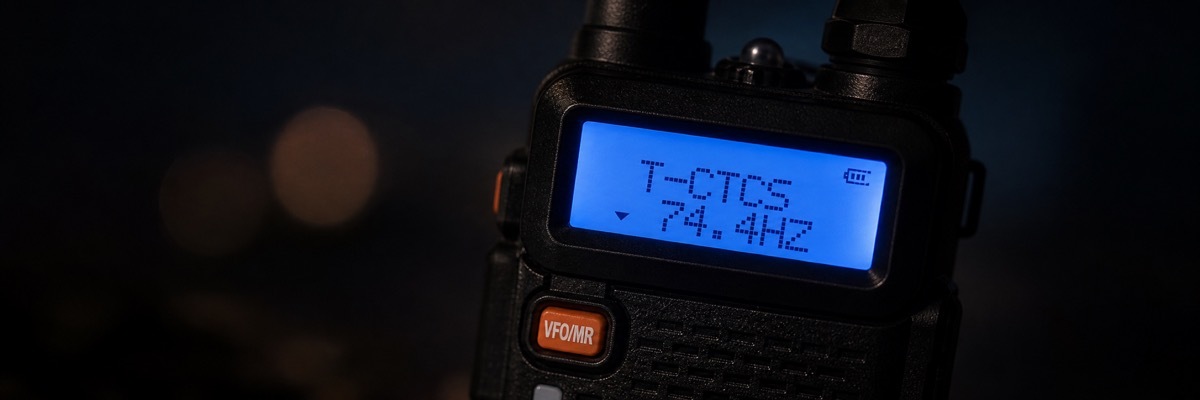
Many walkie talkies include "privacy codes." These may also be called CTCSS codes, DCS codes, tone codes, interference eliminator codes, or sub-channels. The name sounds reassuring, but privacy codes do not make your conversation truly private.
Privacy codes work as filters. They help your radio ignore transmissions from other users who are on the same main channel but using a different code. This makes the channel sound quieter and helps your group avoid unwanted chatter.
However, privacy codes do not encrypt your voice. They do not stop your signal from being transmitted. They do not prevent someone else from listening if their radio is set up to receive the main channel.
⚠️ Key Point: Privacy codes control what you hear. They do not control who can hear you. If another person is on the same channel with privacy codes switched off, they may still hear your transmission.
This is why privacy codes are useful for organisation, but they should not be relied on for confidential communication.
Are PMR446 Walkie Talkies Private in the UK?
In the UK, compliant PMR446 walkie talkies are commonly used for licence-free short-range communication. They are popular with families, schools, shops, hospitality teams, outdoor groups, and small businesses because they are simple and convenient.
However, PMR446 channels are shared-use channels. They are not private channels assigned only to one person, one family, or one business. Other nearby PMR446 users may be using the same channels, especially in busy locations.
This means licence-free radios are useful for everyday coordination, but they should not be treated as secure communication tools.
They are suitable for messages such as:
- "Can someone come to the front desk?"
- "Meet at the main entrance."
- "Team two, move to the next checkpoint."
- "The delivery has arrived."
- "Please bring spare batteries."
They are not suitable for sharing:
- Full names and addresses
- Payment details
- Passwords or access codes
- Medical information
- Private customer details
- Sensitive security information
- Confidential business discussions
A good rule is simple: if the information would cause a problem if overheard, do not say it over a standard walkie talkie channel.
🇬🇧 Looking for a Reliable Licence-Free Radio for the UK?
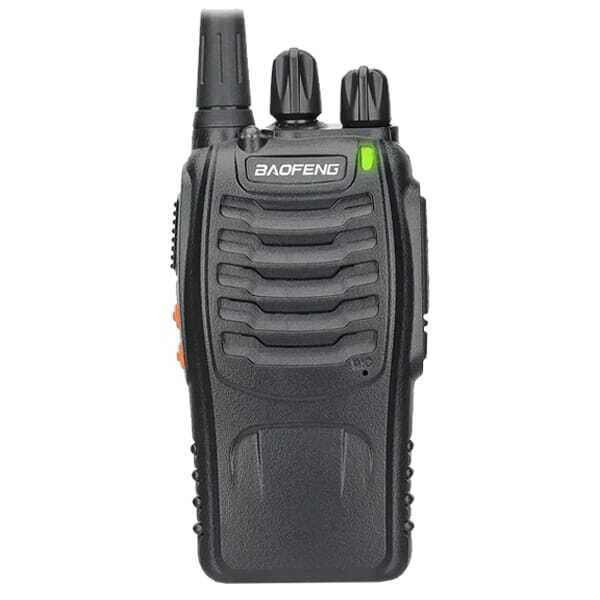
Baofeng BF-888S PMR446 License-Free
Simple, reliable, and licence-free for UK use. Ideal for families, events, shops, and outdoor groups.
Shop BF-888S PMR446Are Digital Walkie Talkies More Private?
Digital walkie talkies can offer more advanced features than basic analogue radios. Depending on the system and setup, they may support group IDs, private calls, improved audio quality, text features, or more controlled communication options.
However, digital does not automatically mean private. A digital radio system still needs to be configured correctly. Some privacy features may only work between compatible radios. Some systems may also require a suitable licence or professional setup, especially for business use.
For most users, the key point is simple: do not assume a walkie talkie is private just because it is digital, expensive, or described as professional. Always understand the system, the channel, and the legal requirements before using it for sensitive communication.
📻 Explore Our Digital Two-Way Radios
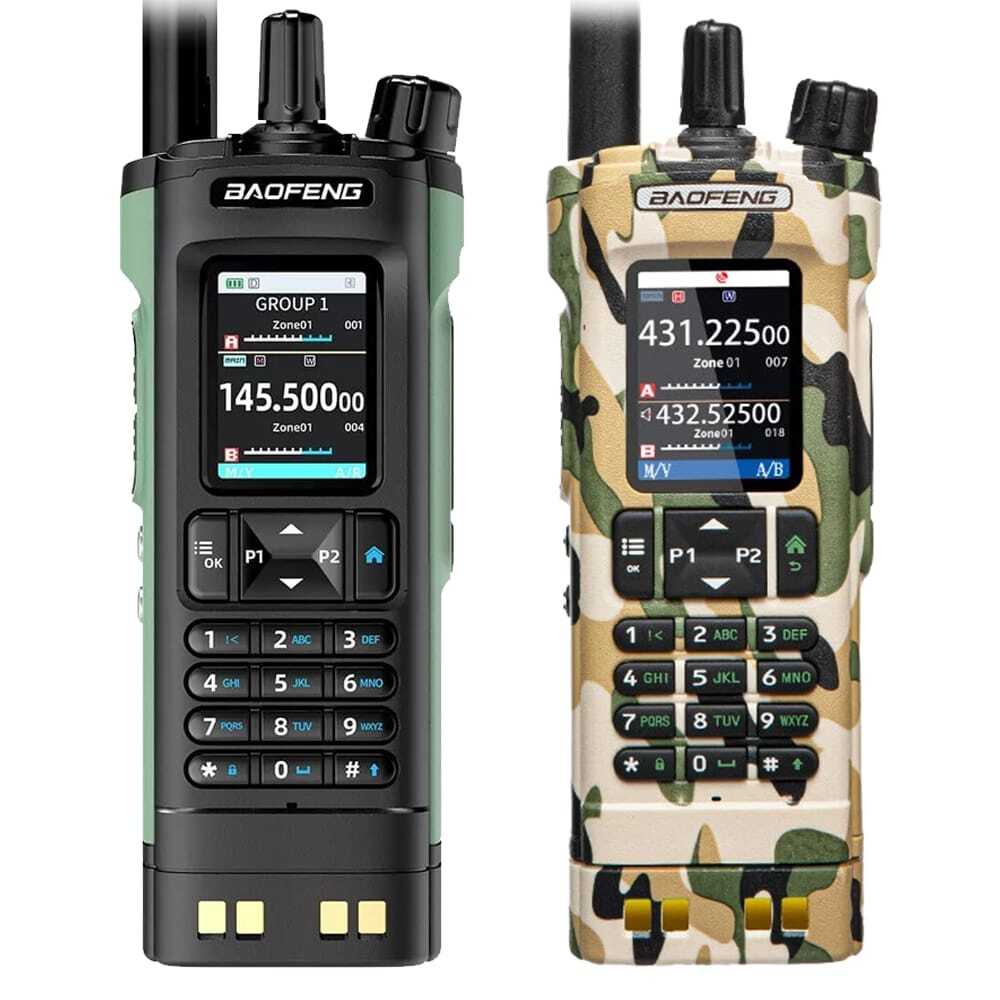
Baofeng DM-32 Digital Walkie Talkie
GPS, 10W power, Bluetooth programming, and DMR digital mode — advanced communication for professionals and outdoor users.
Shop DM-32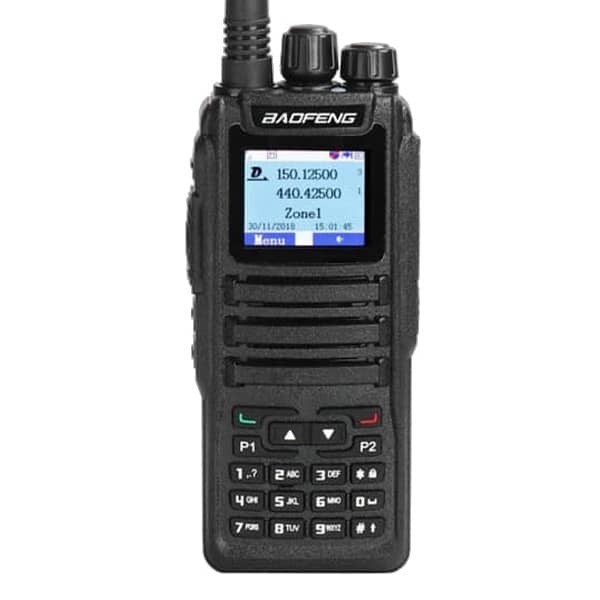
Baofeng DM-1701 DMR Digital Walkie Talkie
Dual-slot DMR digital radio with analogue compatibility — perfect for teams that need structured, more controlled communication.
Shop DM-1701Can Someone Scan and Find Your Walkie Talkie Channel?
Yes, it is possible. Many radios and scanners can scan through channels or frequencies to find active transmissions. If your group transmits often, another person with suitable equipment may be able to identify the channel you are using.
This does not mean everyone nearby is listening. Most radio users are focused on their own group. But from a privacy point of view, you should assume that a normal radio transmission could be overheard.
The chance is higher when:
- You are in a crowded area
- You use common licence-free channels
- You transmit frequently
- You are in open ground with fewer obstructions
- You use long messages
- You repeat names, locations, or routines
- You use radios for work or event coordination in a busy environment
Short, clear, low-risk messages are always better.
How to Make Walkie Talkie Use More Private
You may not be able to make a standard walkie talkie fully private, but you can reduce unnecessary exposure and improve communication discipline.
1. Use privacy codes correctly
CTCSS and DCS codes can help your group avoid unrelated chatter. They are useful for keeping communication organised, especially in busy areas. Just remember that they are filters, not encryption.
2. Choose a quieter channel
Before using radios at an event, workplace, campsite, or outdoor location, test several channels. Choose one with less activity. This reduces interruptions and lowers the chance of other users hearing your messages by accident.
3. Keep messages short
Long transmissions reveal more information. A good radio message should be clear, brief, and practical. Say what is needed, then release the button.
4. Avoid personal information
Do not share phone numbers, addresses, payment details, medical issues, passwords, customer information, or private staff details over a normal radio channel.
5. Use call signs instead of full names
For teams, use simple call signs such as "Base," "Reception," "Gate One," "Team Two," or "Supervisor." This keeps communication clear while reducing personal information.
6. Be careful with VOX mode
VOX allows hands-free transmission, but it can be triggered by wind, traffic, machinery, music, or background conversation. In noisy environments, push-to-talk is usually safer and more controlled.
7. Use earpieces in public areas
An earpiece does not stop others from receiving your transmission, but it does stop nearby people from hearing incoming messages through the radio speaker. This is useful for retail, hospitality, events, and security teams.
8. Train your team
Many privacy problems happen because users do not know what should or should not be said over the radio. A simple communication policy can prevent mistakes and make radio use more professional.
What Should You Never Say on a Walkie Talkie?
Walkie talkies are best for coordination, not confidential discussion. Avoid saying anything that could create a privacy, safety, or business risk if overheard.
Do not share:
- Customer names with sensitive details
- Home addresses
- Payment or card details
- Alarm codes
- Door codes
- Passwords
- Medical conditions
- Personal complaints
- Staff disciplinary issues
- Detailed security weaknesses
Instead, use general language. For example, say "Please call the office" instead of discussing a private matter over the radio. Say "Supervisor to reception" instead of explaining a sensitive customer issue on an open channel.
Are Walkie Talkies Safe for Business Use?
Yes, walkie talkies can be very effective for business use when they are used properly. They are especially useful for fast team coordination in places such as shops, warehouses, hotels, restaurants, schools, construction sites, farms, and events.
The important thing is to match the radio system to the job. For simple short-range coordination, compliant licence-free radios may be enough. For larger teams, sensitive environments, or more controlled communication, a licensed or professionally planned radio system may be more suitable.
Businesses should also train staff to use radios responsibly. Radios should be used for practical updates, not private conversations.
💼 Recommended Radios for Business & Professional Use
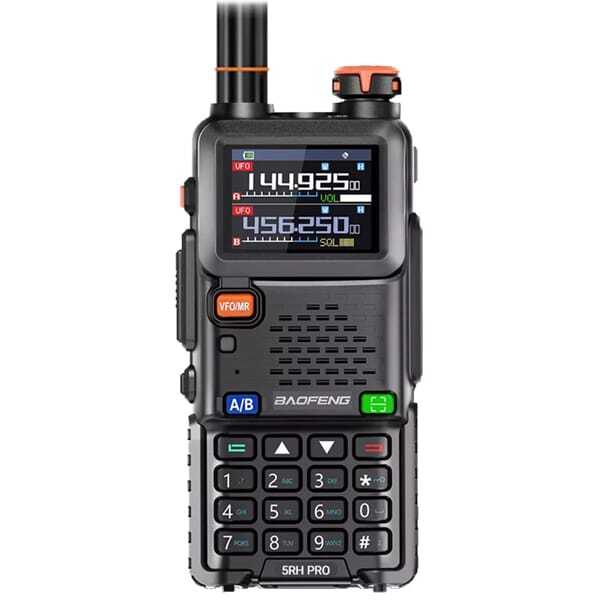
Baofeng UV-5RH PRO GPS 10W Multi-Band
10W power, built-in GPS, USB-C charging, and 2500mAh battery for long-range, reliable professional communication.
Shop UV-5RH PRO GPS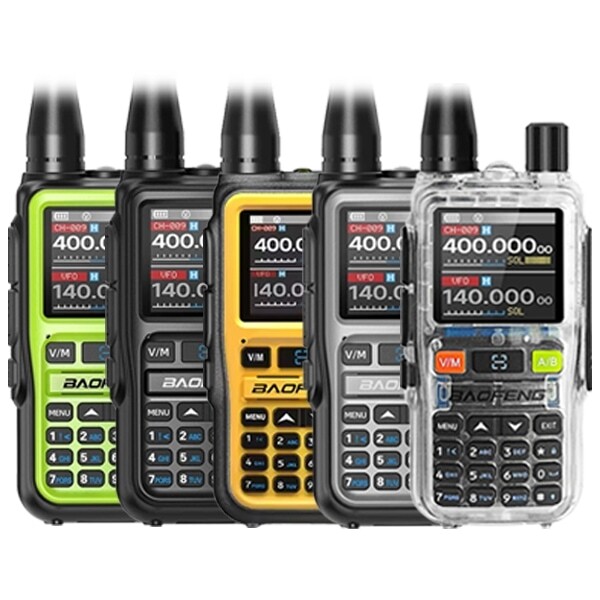
Baofeng UV-5R MINI
Ultra-compact, Bluetooth app programming, AM Airband reception, and USB-C charging — ideal for on-the-go business teams.
Shop UV-5R MINIFAQ: Walkie Talkie Privacy
Are walkie talkies private?
Not completely. Most standard walkie talkies transmit over shared radio channels. If someone nearby is using a compatible radio on the same channel, they may be able to hear your transmission.
Can other people hear my walkie talkie?
Yes. Other people may hear your walkie talkie if they are within range and tuned to the same frequency or channel. The chance depends on your location, signal strength, radio type, and settings.
Do privacy codes stop people listening?
No. Privacy codes only filter what your radio receives. They help you avoid hearing unrelated users, but they do not stop others from hearing your transmission. Learn more in our full guide to CTCSS and DCS codes.
Are PMR446 walkie talkies private?
No, not fully. PMR446 walkie talkies use shared licence-free channels in the UK. They are convenient for short-range communication, but they should not be used for confidential conversations.
Can walkie talkies be intercepted?
A standard walkie talkie transmission can be received by compatible radio equipment if the listener is within range and tuned to the right channel or frequency. For this reason, users should avoid sharing sensitive information over normal radio channels.
Can walkie talkies be encrypted?
Some digital radio systems may support more controlled communication features, but this depends on the system, setup, compatibility, and legal requirements. Standard consumer walkie talkies should not be assumed to be encrypted.
Do I need a licence to use a walkie talkie in the UK?
It depends on the radio. PMR446 radios are licence-free for everyday use in the UK. However, more powerful multi-band radios require a valid Ofcom Amateur Radio Licence to transmit legally. Read our full guide: How to Get Your UK Ham Radio Licence.
Final Thoughts
So, are walkie talkies private? The realistic answer is: they are useful for fast group communication, but they should not be treated as confidential communication tools.
A normal walkie talkie channel can be heard by others if they are nearby and using compatible equipment. Privacy codes can make your radio quieter, but they do not make your conversation secure. Licence-free channels, including PMR446 channels in the UK, are shared and should be used with care.
The best way to use walkie talkies safely is to keep messages short, avoid personal information, use call signs, choose quieter channels, and train users properly.
When used with the right expectations, walkie talkies remain one of the most practical communication tools for teams, families, outdoor activities, and workplaces. Just remember: they are built for quick coordination, not private conversation.
Browse Our Full Range of Two-Way Radios
Whether you need a licence-free PMR446 radio for everyday use or a high-power multi-band radio for serious outdoor communication, Baofeng UK has the right radio for your needs.
Shop All Walkie Talkies