
26th Mar 2026
Walkie Talkies vs. Smartphones: Which is Better for Retail & Hospitality?
Tested and Reviewed by The Baofeng UK Radio Experts | Retail & Commercial Communication Guide | Read time: 6 mins
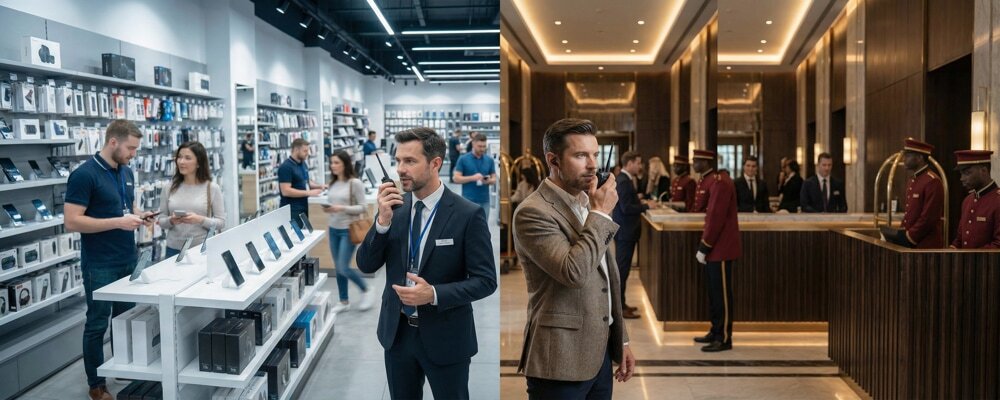
If you manage a bustling high-street retail store, a large supermarket, or a fast-paced hotel, you know that instant communication is the absolute backbone of great customer service. When a customer asks for a shoe size from the stockroom, or a spill needs urgent cleaning in aisle four, every second counts. You might be weighing up a very modern management debate: should you equip your staff with professional walkie talkies for retail, or just rely on business smartphones and WhatsApp groups?
The short answer is that while smartphones offer excellent data capabilities for management, walkie-talkies remain the undisputed champions for instant, distraction-free, and rugged voice communication on the shop floor. Let’s break down exactly why.
The Real-World Demands of Retail and Hospitality Communication
Working in retail or hospitality is not a desk job. Your team is constantly on the move, dealing with the public, carrying inventory, and navigating complex building layouts. A floor manager in a multi-story department store has vastly different communication needs than an office worker. They need a system that is instantaneous, requires no looking at a screen, and can survive being dropped on a hard floor.
Smartphones in the Workplace: The Pros and Cons
The Allure of Familiarity
It’s easy to see why businesses are tempted by smartphones. Everyone knows how to use them, and group chat apps make it simple to send photos of visual merchandising or long-form schedule updates. For store managers communicating with regional directors, a smartphone is an essential administrative tool.

The Downside: Distractions and Durability
However, for floor staff, smartphones introduce massive operational flaws. First is the "latency of connection." To ask a simple question, a staff member must unlock their phone, open an app, find the right chat, type the message, and wait for a reply—all while the customer is standing right in front of them.
Furthermore, smartphones are fragile and expensive to replace. A single drop onto a concrete stockroom floor usually results in a shattered screen. Finally, there is the undeniable issue of distraction. Handing a smartphone to an employee opens the door to social media notifications and personal messages, pulling their focus entirely away from the customer experience.
Why Walkie Talkies for Retail Still Reign Supreme
When you look at the operational realities of a busy shift, two-way radios solve almost every problem smartphones create.
1. Instant Push-to-Talk (PTT) Speed
In retail, speed is everything. Walkie-talkies operate on a Push-to-Talk (PTT) basis. You press a button and instantly broadcast to your entire team or a specific department. Whether a cashier needs manager approval at the till or security needs to intercept a shoplifter, the message is delivered in less than a second.
2. Built for Drops, Spills, and Concrete
Professional radios are built for heavy commercial use. They are designed with rugged casings that can withstand drops, bumps, and the general wear and tear of a frantic Black Friday shift. Many models also boast IP54 to IP68 water and dust resistance, making them perfect for hospitality settings like hotel kitchens or poolside bars where a smartphone wouldn't last a day.
3. Eliminating the "Dead Zone" Problem
Large retail stores, supermarkets, and hotel basements are notorious for cellular dead zones. Smartphones rely on nearby cell towers or stable Wi-Fi networks—both of which can fail or become congested during busy periods. Walkie-talkies communicate directly with each other. For indoor environments, utilizing Baofeng UHF walkie talkies is highly recommended. UHF (Ultra High Frequency) waves are incredibly effective at penetrating concrete walls, steel shelving, and multiple floors, ensuring your stockroom staff can always hear the front desk.
4. Zero Distractions
A two-way radio does one thing: it communicates voice instantly. There are no Instagram notifications, no text messages, and no web browsers. Equipping your staff with walkie-talkies ensures their eyes stay up and focused on providing exceptional customer service and maintaining store security.
UK Licensing: Keeping Your Store Compliant
If you are operating in the UK, it is important to understand Ofcom regulations before equipping your store.
- Licence-Free (PMR446): For smaller independent retailers or cafes, PMR446 walkie-talkies are an excellent choice. These operate at 0.5W, are completely licence-free, and work right out of the box.
- Licensed Radios: For larger department stores, shopping centres, or expansive hotel resorts, you may want to invest in licensed business radios. These grant access to higher transmission power (up to 4W or 5W) and private frequencies. You must adhere to UK radio licensing requirements, which involves securing an affordable and straightforward Ofcom business licence.
Our Top Two-Way Radio Recommendations for Retail Teams
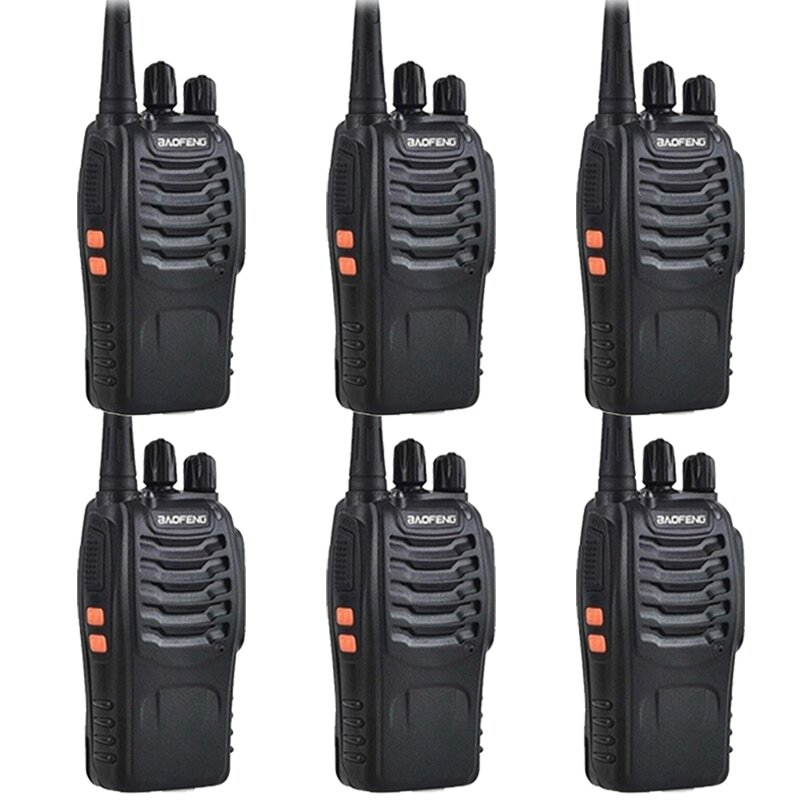
At Baofeng UK, we understand the specific needs of commercial teams. If you are looking for a plug-and-play solution, the Baofeng BF-888S PMR446 is the perfect choice. It is the upgraded, UK-legal, licence-free version of our classic 888S—meaning your staff can use it straight out of the box with zero Ofcom paperwork.
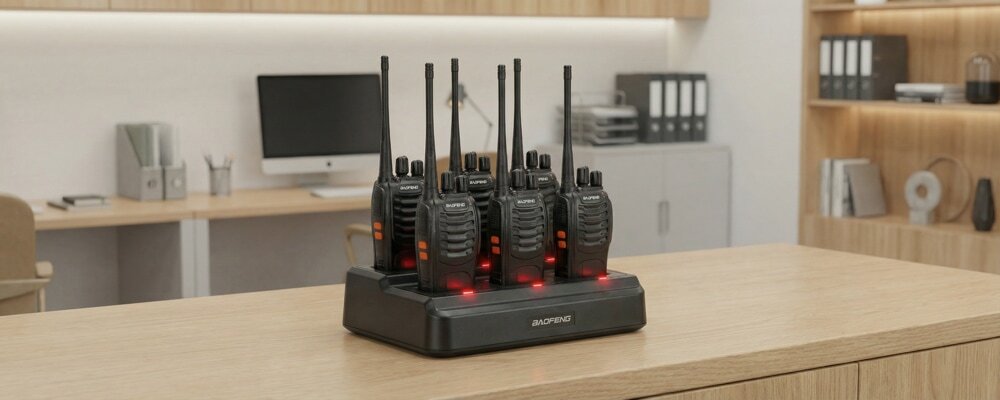
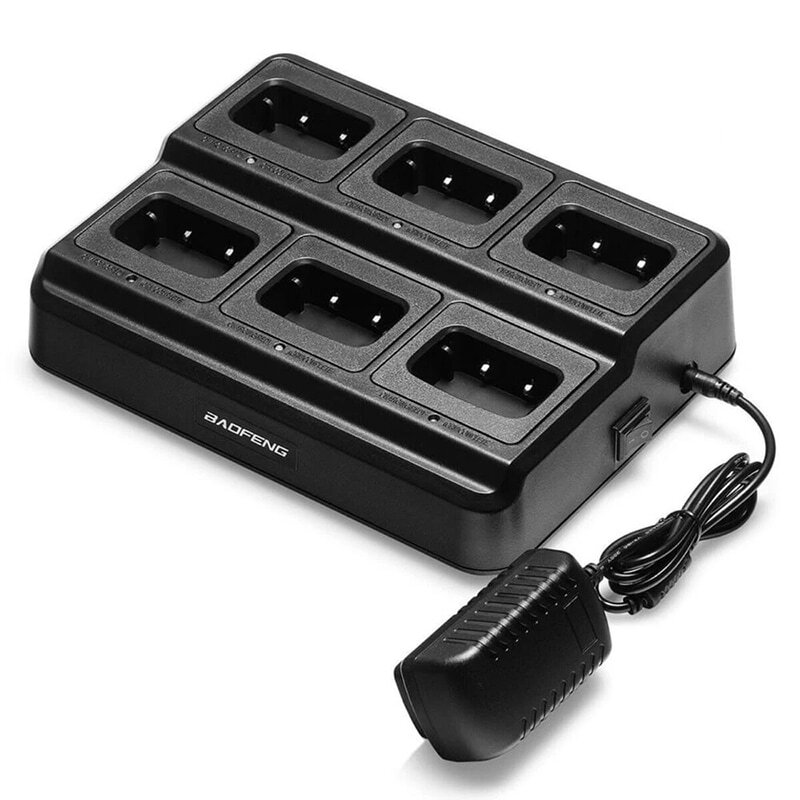
If you are outfitting an entire store or managing a growing team, investing in our 6-pack radio bundles for larger teams ensures everyone from security to checkout staff is on the same page, offering the absolute best cost-per-unit for business operations.
The Verdict: Which Should You Choose?
While smartphones are indispensable tools for high-level management and visual tasks, they fall short on the retail floor where speed, durability, and focus are paramount. By equipping your customer-facing and operational teams with professional two-way radios, you completely eliminate communication dead zones, remove digital distractions, and empower your staff to deliver a faster, more secure, and highly coordinated customer experience.
Frequently Asked Questions (FAQs)
1. Are walkie-talkies better than smartphones for large stores?
Yes. In large stores, smartphones often suffer from Wi-Fi dead zones and cellular drops, especially in concrete stockrooms. Walkie-talkies (specifically UHF models) penetrate obstacles easily and provide instant, direct communication without relying on external networks.
2. Do I need an Ofcom licence to use walkie-talkies in my UK retail store?
It depends on the radio. If you use PMR446 radios (which operate at 0.5 watts), they are completely licence-free. If you need more power and privacy for a massive department store, you will need a basic Ofcom business radio licence, which is affordable and easy to obtain.
3. Can my staff use earpieces with walkie-talkies?
Absolutely. Earpieces are highly recommended for retail and hospitality. They allow staff to receive messages discreetly without disrupting the shopping experience or alerting customers to security issues.
4. How long does a walkie-talkie battery last compared to a smartphone?
Professional walkie-talkies are designed to outlast long shifts. While a smartphone screen will drain its battery in a few hours of heavy use, a dedicated two-way radio typically offers 8 to 16+ hours of continuous battery life, easily covering a full workday.
5. Which frequency is better for indoor retail: VHF or UHF?
For indoor environments, UHF (Ultra High Frequency) is significantly better. UHF waves are shorter, which allows them to navigate around and penetrate solid indoor obstacles like concrete walls, steel doors, and heavy inventory racks much more effectively than VHF.