
12th Feb 2026
When Were Walkie Talkies Invented? A History of Two-Way Radios
If you’ve ever used a walkie talkie on a construction site, hiking trip, or security shift, you may have wondered: when were walkie talkies invented? The answer takes us back to the early days of wireless communication, military innovation, and the rapid technological developments surrounding World War II.
In this article, we explore the history of walkie talkie technology, how early devices evolved into modern smart radios, and how today’s walkie talkies compare to their early counterparts.
The Origins of Walkie Talkies
The concept behind walkie talkies invented traces back to the development of portable radio systems in the 1930s. At that time, radio engineers were working on improving radio communication beyond fixed wall mounted base stations and ground receivers.
One key figure often associated with early development was radio engineer Alfred J. Gross, who experimented with mobile voice broadcasting radio systems. Around the same period, engineers working with the Canadian federal government and the National Research Council were exploring portable radio signaling system designs for military use.
When World War broke out, the demand for reliable communication on the battlefield accelerated development dramatically.
World War II and the First Walkie Talkie
The first walkie talkie widely deployed was developed during the Second World War. Military forces required a device that allowed soldiers to communicate instantly across short distances without relying on wired systems.
These early walkie talkies:
- Operated on a single radio channel
- Used push to talk functionality
- Relied on half duplex walkie talkies design (you speak or listen, not both at the same time)
- Were bulky and heavy
In fact, some earliest devices weighed approximately 2 to 5 kilograms. Compared to today’s handheld two way radios, they were massive.
The Royal Signal Corps and other military units used these portable radio units to coordinate tank units, ground receivers, and infantry. In noisy environments filled with battle noises and engine noise, clear communication was critical.
Early Civilian and Police Use
After World War II, walkie talkie technology expanded into civilian applications. Police departments began installing radios in patrol vehicles. Historical records mention systems in California police cars and deployments involving nine patrol cars connected through early interdepartmental radio communication networks.
These systems allowed enabling officers to communicate with dispatch without returning to the station. However, these early systems were often one only radio or one way communication setups before evolving into two way radios.
How Walkie Talkies Work
Most walkie talkies work by transmitting radio waves over a specific frequency band. When you press push to talk, your device switches from listening mode to transmit mode.
Traditional systems use:
- Half duplex walkie talkies operation
- Same frequency band for send and receive
- Basic radio receivers
- Limited power supplies and battery technology
Unlike full duplex walkie talkies (which allow simultaneous speaking and listening like cell phones), most walkie talkie units still rely on push to talk for efficient spectrum use.

From 5kg backpacks to pocket-sized power.
Evolution Into Modern Walkie Talkies
Over time, improvements in battery technology, antenna design, and digital squelch made communication clearer and more stable.
Today’s walkie talkies include:
- Digital filters to remove electromagnetic interference
- Even a filter to reduce engine noise and background interference
- External microphones for hands free operation
- Improved power supplies and rechargeable batteries
- Expanded radio frequencies coverage
Modern walkie talkies and smart radios now offer features that rival cellular networks in specific environments.
Then vs. Now: The Technology Shift
| Feature | 1940s (WWII Era) | Modern Day (2020s) |
|---|---|---|
| Weight | Heavy (5kg Backpacks) | Lightweight (200g Handhelds) |
| Range | Short / Line-of-Sight | Extended (High Power / Repeaters) |
| Battery | Heavy Lead-Acid | Lithium-Ion (USB-C Charging) |
| Audio | Static / Analog Noise | Digital Clarity / Noise Cancellation |
Comparing Walkie Talkies to Other Communication Methods
Compared to mobile communication systems like cell phones, walkie talkies offer:
Advantages:
- No reliance on mobile phone coverage
- Faster push to talk interaction
- Reliable communication in controlled frequency band
- Operate independently of internet
Limitations:
- Typically half duplex
- Limited range depending on terrain
- Share same frequency band among users
While cellular networks dominate everyday communication, two way radios remain essential in professional and emergency environments.
When Exactly Were Walkie Talkies Invented?
So, when were walkie talkies invented?
The first operational models appeared in the late 1930s, with widespread military deployment during World War II. The technology matured rapidly during the Second World War, becoming a standard portable radio system for military units.
Since then, walkie talkie technology has evolved into compact, lightweight, highly reliable handheld two way radios used around the world.
Experience Modern Radio Technology
See how far the technology has come. From waterproof durability to digital encryption, these are the top modern choices.
The Modern Standard: UV-98 PRO
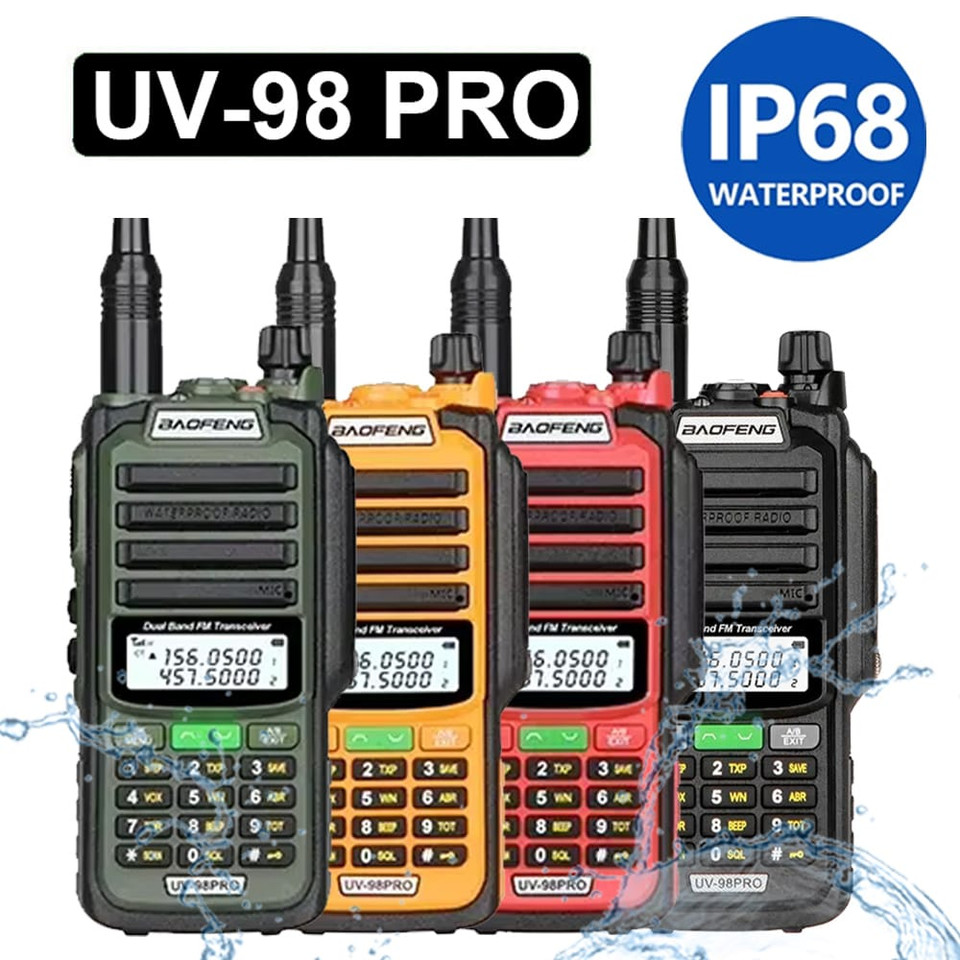
IP68 Waterproof
Unlike the heavy metal boxes of the past, this radio is fully waterproof, dustproof, and fits in your palm. Ideal for outdoor and industrial use.
Key Feature: Waterproof & Rugged
The Digital Age: DM-32
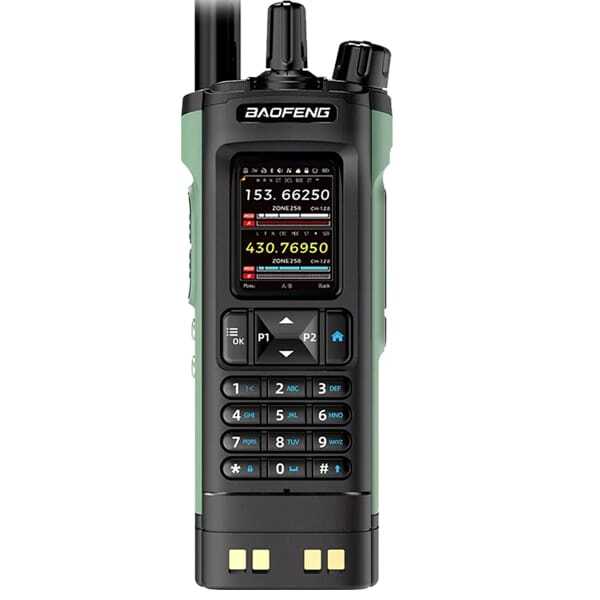
Crystal Clear Audio
Represents the shift from "static" analogue signals to pure digital audio (DMR). Secure, private, and efficient.
Key Feature: Digital Noise Cancellation
Final Thoughts
The humble walkie talkie has come a long way from bulky battlefield equipment to compact smart radios used for everyday communication. From early mobile radios to today’s advanced digital systems, the evolution reflects decades of innovation in wireless communication.
Whether for emergency services, commercial operations, or recreational use, modern walkie talkies continue to deliver reliable communication where other communication methods may fail.
If you're looking to acquire walkie talkies or explore the latest two way radios, understanding their history helps appreciate how far radio technology has advanced — and why it remains essential in today’s connected world.
Frequently Asked Questions
Who invented the first walkie talkie?
Credit is often shared between Alfred J. Gross, Donald Hings, and engineering teams at Galvin Manufacturing (now Motorola) who developed the SCR-300 and SCR-536 units during WWII.
Why are they called walkie talkies?
The name originated from soldiers in World War II describing the device's unique ability: you could "walk" and "talk" at the same time, unlike previous field telephones that required setting up wires.
Are old walkie talkies compatible with new ones?
Generally, no. WWII-era radios used different frequencies (HF/Low VHF) and modulation (AM) compared to modern FM or Digital (DMR) UHF/VHF radios used today.