
1st Jan 2026
How to Increase Walkie Talkie Range in the UK: 9 Practical Ways
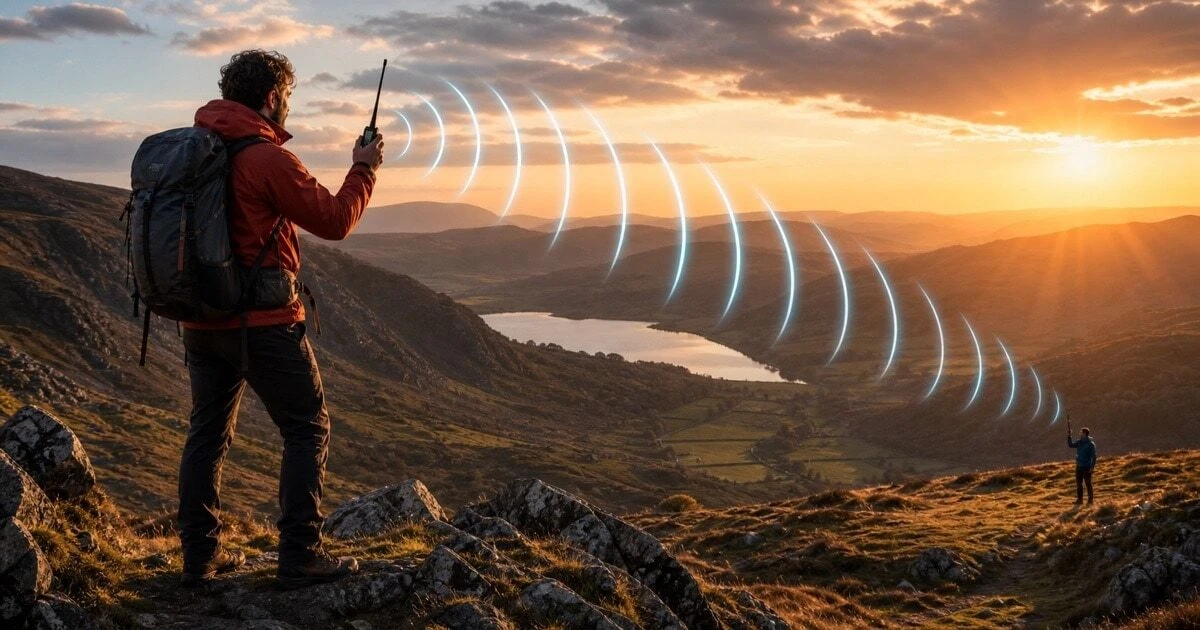
This guide was written and reviewed by the Baofeng UK technical team — UK-based radio communications specialists with over 10 years of hands-on experience helping users optimise two-way radio performance. All licensing references reflect current Ofcom guidance. We have not assigned specific real-world distance improvements to any tip, because radio environments vary too much for an honest universal figure.
Your walkie talkie says it can cover several miles, yet the signal starts breaking up across a building, campsite or patch of countryside.
That does not necessarily mean the radio is faulty. Real-world walkie talkie range depends on far more than the wattage or maximum-distance figure printed on the box. Hills, reinforced concrete, antenna position, interference, frequency and even where you stand can make the difference between clear communication and silence.
The most effective way to increase walkie talkie range is usually to improve line of sight, antenna height and radio position. Moving to higher or more open ground can sometimes improve communication more than simply increasing transmitter power.
Important: For UK users, any power, antenna or frequency changes must remain within the conditions of the radio service and licence you are using. Licence-free PMR446 equipment has particularly strict technical requirements.
⚡ 9 ways to increase walkie talkie range — at a glance
- 1. Improve line of sight — move away from obstacles before touching any settings
- 2. Get higher — elevation often beats extra power
- 3. Keep antenna upright — a simple free fix that many users overlook
- 4. Use a matched antenna — on compatible radios, the right antenna helps both TX and RX
- 5. Choose the right frequency band — VHF for open outdoor, UHF for buildings
- 6. Use the correct power setting — more watts ≠ double the range
- 7. Find a clearer channel — interference is often the hidden culprit
- 8. Adjust squelch — lets you hear weaker signals, does not change TX range
- 9. Check the battery and hardware — a flat battery can masquerade as a range problem
📋 Table of Contents
- What actually determines walkie talkie range?
- 1. Improve line of sight before increasing power
- 2. Get higher — antenna height often beats extra power
- 3. Keep the antenna upright and clear
- 4. Use a properly matched antenna where appropriate
- 5. Choose the right frequency band for the environment
- 6. Use the correct power setting
- 7. Find a clearer channel and reduce interference
- 8. Adjust squelch — but know what it actually changes
- 9. Check the battery, connections and radio condition
- Which range improvements make the biggest difference?
- How to increase walkie talkie range indoors
- How to increase walkie talkie range outdoors
- Why range can drop inside a vehicle
- Radios matched to range requirements
- What should you try first when range is poor?
- The bottom line
- Frequently asked questions
What actually determines walkie talkie range?
A handheld radio does not have one fixed communication distance. Manufacturers may quote several miles or kilometres under favourable conditions, but those figures are often based on relatively open environments with few obstacles. Put the same two radios inside a city, warehouse, forest or valley and the usable distance can fall substantially.
The main factors affecting two-way radio range include:
- Line of sight between the radios
- Height above surrounding terrain
- Hills, buildings and vegetation
- Antenna efficiency and orientation
- Operating frequency
- Transmitter power
- Local radio interference
- Receiver sensitivity
- Squelch settings
- Battery and equipment condition
🎯 Key insight: This explains why replacing a 5W radio with a more powerful handheld does not automatically fix a range problem. Sometimes the obstacle between the two users matters far more than the transmitter. Always troubleshoot the environment before upgrading equipment.
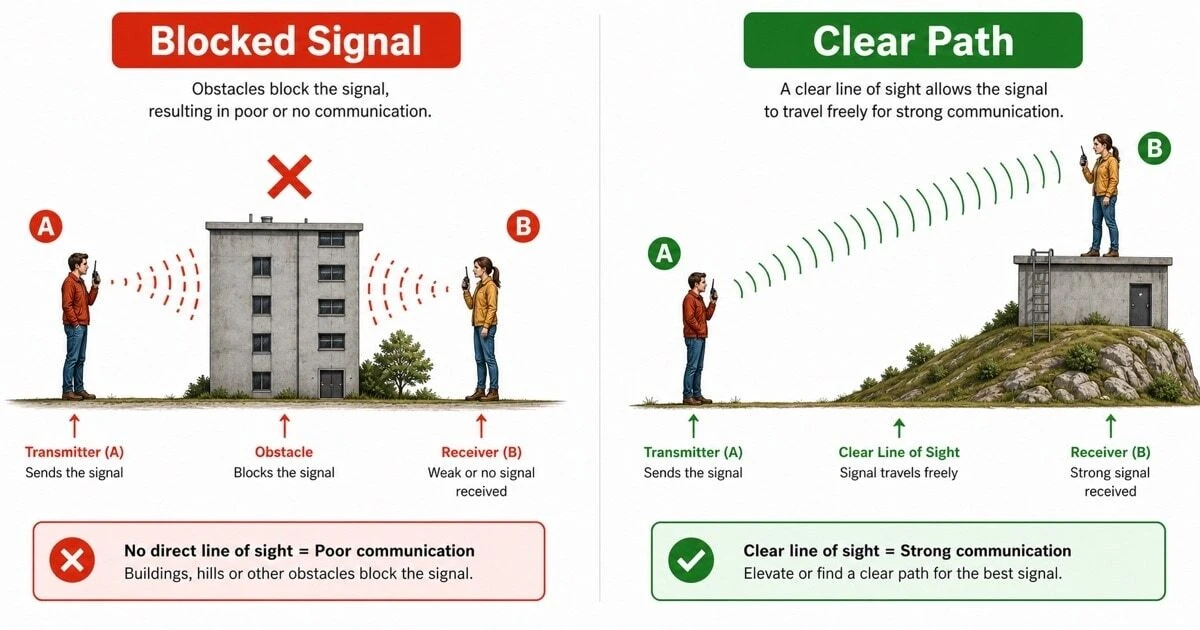 The same two radios can perform completely differently depending on what sits between them. Moving to a position with a clearer signal path often produces a bigger improvement than increasing transmitter power.
 Improve Line of Sight Before Increasing Power
Free to do · Immediate effect · Should always be tried first
When communication is weak, resist the temptation to reach immediately for the highest power setting. Check the signal path first. VHF and UHF handheld radio signals can be heavily affected by physical obstacles.
If your signal is breaking up, try:
- Moving away from the side of a large building
- Moving closer to a window when indoors
- Leaving a basement or deep depression
- Walking into a more open area
- Moving around a large obstruction
- Avoiding large metal structures immediately beside the antenna
Get Higher — Antenna Height Often Beats Extra Power
Free to do · Often the single biggest improvement · No equipment needed
Height is one of the biggest advantages you can give a handheld radio. Imagine two people trying to communicate from opposite sides of a hill. More transmitter power may make the signal stronger, but the hill is still blocking the direct path. If one person climbs to a more elevated position, the communication path can improve dramatically.
That is why the same handheld may perform very differently at street level between buildings, from an upper floor, on open farmland, from a hilltop or across an unobstructed valley.
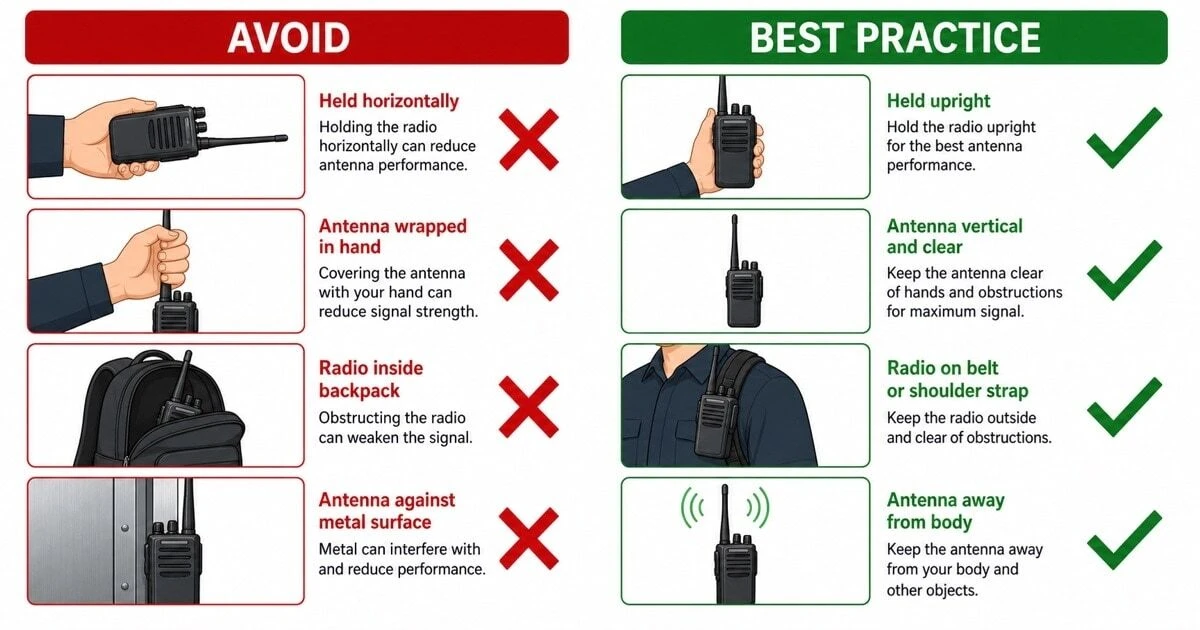 How you hold the radio matters more than most users realise. Keeping the antenna vertical and clear of your body and surrounding objects is a free improvement that should be checked before changing any equipment.
 Keep the Antenna Upright and Clear
Free · Immediate · Often overlooked
A simple change in the way you hold the radio can help. For normal handheld communication, keeping both antennas roughly vertical usually gives more consistent results than holding one handset sideways.
Try not to:
- Hold the radio horizontally while transmitting
- Wrap your hand around most of the antenna
- Fold the antenna against your body
- Leave the radio buried inside a backpack
- Press the antenna tightly against metal equipment
Use a Properly Matched Antenna Where Appropriate
For compatible radios only · Check frequency match · UK PMR446 warning below
On radios designed to use removable antennas, antenna performance can make a meaningful difference to both transmitting and receiving. But do not assume that longer automatically means better. Antenna performance depends on operating frequency, antenna tuning, design, connector compatibility and orientation.
For compatible Baofeng amateur-radio models, you can review the Baofeng NA-771 antenna and check the stated connector and frequency compatibility before purchasing.
⚠️ UK PMR446 Warning: Do not take a licence-free PMR446 handset and assume you can improve its range simply by fitting a removable or higher-gain antenna. UK licence-exempt PMR446 operation requires a maximum permitted ERP of 0.5W and equipment must remain compliant with all applicable PMR446 requirements. For more background, see our guide to what radio frequencies civilians can use in the UK.
Choose the Right Frequency Band for the Environment
VHF for open outdoor · UHF for buildings · Always check licence conditions
Frequency influences how radio signals behave around terrain and obstacles, but there is no single band that always produces the longest range. As a general practical distinction:
- VHF is widely used in relatively open outdoor environments where there is a clearer path between users
- UHF is common in built-up environments, workplaces and indoor radio systems
Real performance also depends on terrain, building materials, antenna height, foliage, frequency assignment, interference and antenna design. The better question is: which band is appropriate for my environment, equipment and permitted radio service?
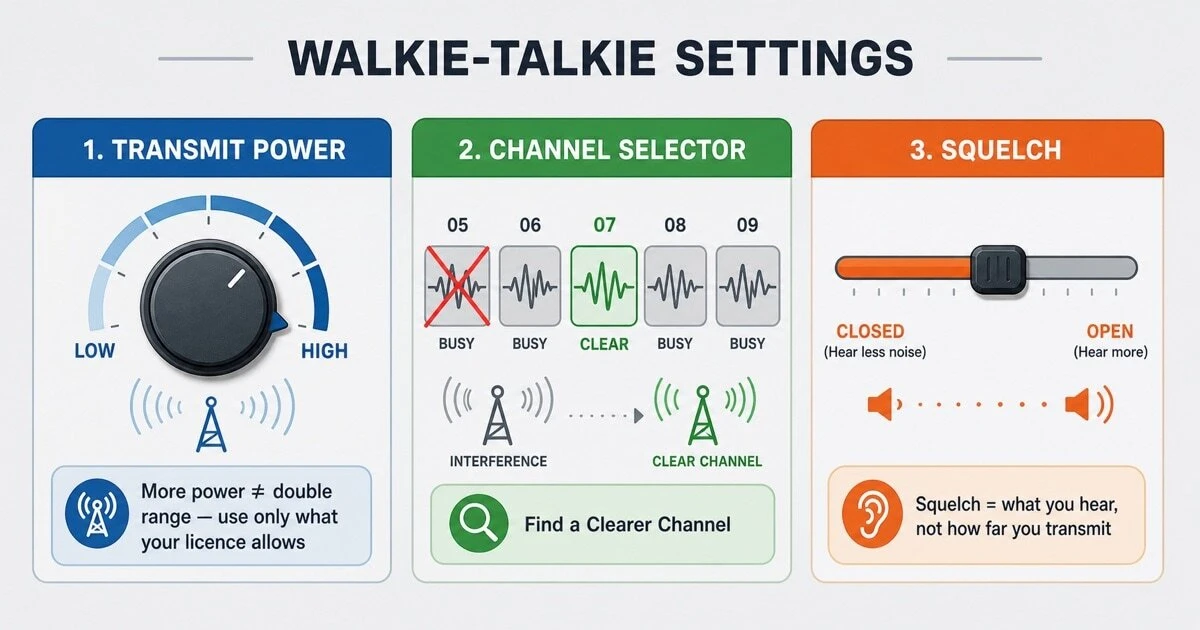 Three settings that UK radio users often misunderstand — power affects transmission strength but not proportionally, channels can be changed to avoid interference, and squelch controls what you hear rather than how far you transmit.
 Use the Correct Power Setting — But Don't Expect Double the Range
Use only with appropriate licence · Doubling watts ≠ doubling distance
Many programmable handheld radios offer Low, Medium and High transmit-power settings. Higher power can help if the receiving radio is simply getting too little signal. What it cannot do is magically remove a hill, concrete wall or steel-framed building from the signal path.
⚠️ The maths: Under simplified free-space conditions, doubling transmitter power corresponds to roughly a 1.4× theoretical increase in distance at the same received-signal threshold. Real-world improvements may be substantially smaller because buildings, terrain, antenna height, interference and receiver performance often become the limiting factors. Moving from 5W to 10W does not automatically turn a two-mile connection into a four-mile connection.
Higher power makes the most sense when your equipment supports it, your frequency authorisation permits it, your licence allows the power being used, the signal path is reasonably clear and lower power does not provide reliable communication. For background on UK licences, see the UK Ham Radio Licence Guide.
Find a Clearer Channel and Reduce Interference
Poor comms ≠ always a range problem · CTCSS/DCS do not increase range
Poor communication is not always a range problem. Sometimes another signal is competing with yours. Common signs of interference include broken or distorted audio, unexpected voices or signals, good performance at one time of day but poor performance at another, and communication becoming unreliable in a busy area.
Where your radio service and licence allow channel or frequency selection, moving to an appropriate clearer channel can improve communication without increasing power at all.
🔵 Common misunderstanding: CTCSS and DCS are sometimes marketed as "privacy codes", but they do not create private frequencies and they do not increase range. They mainly determine which received signals open your speaker. If another transmitter is using the same frequency, adding a different tone does not remove that RF interference.
Adjust Squelch — But Know What It Actually Changes
Affects reception only · Does not change transmit range
Squelch is another setting users often confuse with transmitter range. Lowering squelch does not make your signal travel farther. Instead, squelch controls how strong an incoming signal must be before your radio opens its speaker. A high squelch threshold can sometimes hide a weak but still understandable transmission.
| Setting | What you may notice |
|---|---|
| Higher squelch | Quieter speaker, but weak signals at the edge of coverage may remain muted |
| Lower squelch | More background noise audible, but weaker signals may become understandable |
Check the Battery, Connections and Radio Condition
Basic maintenance · Often the overlooked cause · Check before buying anything new
Not every apparent range problem is caused by propagation. Sometimes the equipment simply needs attention. Before buying a new antenna or more powerful radio, check that:
- The battery is adequately charged
- The antenna is securely connected where removable
- The antenna connector is not damaged
- The radio is configured for the intended band
- Both radios are on the correct frequency or channel
- Bandwidth settings are compatible
- Tone settings are compatible
- The microphone and speaker work normally
- The radio has not been accidentally switched to an unexpected power level
Which range improvements usually make the biggest difference?
There is no guaranteed number of extra metres or miles. Radio environments vary too much for an honest universal figure. However, the relative impact of common improvements can be considered like this:
| Change | Likely impact | What it changes |
|---|---|---|
| Move to higher ground | Very high | Improves the radio path and line of sight |
| Remove major obstacles | Very high | Reduces signal blockage |
| Improve antenna position | High | Improves transmitting and receiving conditions |
| Use a suitable matched antenna | Medium–high | May improve antenna efficiency on compatible radios |
| Find a clearer channel | Medium–high | Reduces competing interference |
| Increase transmit power | Low–medium | Raises transmitted signal strength |
| Lower squelch | Reception only | Lets weaker signals open the speaker — does not affect TX range |
| Fully charge the battery | Maintenance | Helps the radio operate normally throughout the day |
🎯 Remember: Do not judge walkie talkie range by wattage alone. For many users, changing position or gaining height produces a bigger real-world improvement than replacing a 5W handheld with a 10W model.
How to increase walkie talkie range indoors
Indoor radio communication creates a different set of problems. Concrete walls, reinforced floors, lift shafts, metal shelving, machinery and multiple storeys can create both signal loss and unpredictable dead spots.
If your radios struggle inside a building:
- Move away from underground or heavily shielded areas where practical
- Test communication near a doorway or window
- Keep the handset and antenna upright
- Try several positions rather than assuming the centre of the room is best
- Where authorised, test a less congested channel
- Check whether one particular floor, stairwell or steel structure is creating the dead spot
🔵 For larger premises: A small café, multi-storey hotel, warehouse, school and construction site can all require very different radio setups. For professional premises, consider whether the issue requires better radio-system design rather than more handheld power. Range claims based only on kilometres are rarely useful for business buyers.
How to increase walkie talkie range outdoors
Outdoors, terrain usually becomes the biggest factor. For hiking, camping, farming, cycling or other group activities:
- Look for elevated communication positions
- Avoid transmitting from the bottom of deep valleys where possible
- Move into a clearing when dense surroundings are affecting reception
- Keep antennas upright
- Avoid shielding the radio with your body or pack
- Agree on communication points before entering difficult terrain
- Carry enough battery capacity for the expected duration of the trip
🟢 Choosing new outdoor equipment: If outdoor distance is the main reason you are choosing new equipment, read our guide to how to choose long-range walkie talkies.
Why walkie talkie range can drop inside a vehicle
A handheld that works well outside may perform noticeably worse once you sit inside a car or van. The vehicle body can affect the radio signal and partially shield the handheld antenna.
A simple test: make a transmission from inside the vehicle, then repeat the test from outside in approximately the same location. If performance improves substantially outside, the vehicle structure and antenna position are contributing to the problem.
⚠️ External antennas: Licensed users with compatible equipment may consider an appropriately installed external vehicle antenna where the radio, frequency and licence conditions permit it. Do not connect external antennas to equipment whose licence-exempt compliance depends on its original antenna configuration.
Radios matched to range requirements
Whether you need a simple licence-free radio for everyday short-range communication or a higher-capability licensed model for outdoor and extended use, the four radios below cover the most common UK scenarios discussed in this guide.
📻 Baofeng Two-Way Radios — Matched to Range Needs
From licence-free short-range to licensed long-range — choose by environment and authorisation, not just wattage.
📡 Long Range Licensed Radios — For Outdoor Operators & Advanced Users
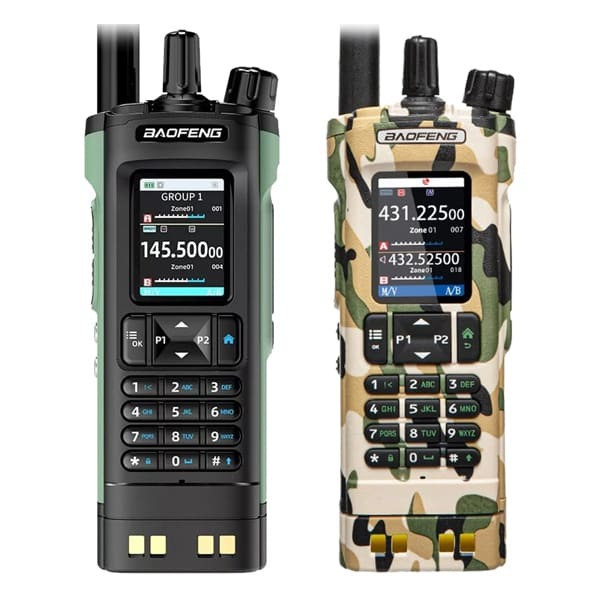
Baofeng UV-32 GPS
10W · GPS · Bluetooth · Multi-band — for licensed operators who need maximum output, GPS positioning and Bluetooth programming for outdoor and field communication.
View UV-32 GPS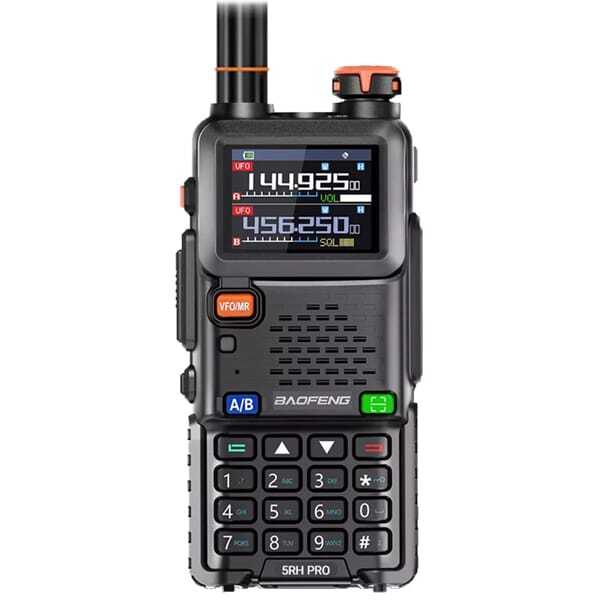
Baofeng UV-5RH PRO GPS
10W · GPS · 640 channels · USB-C · Multi-band — high-output programmable radio for experienced licensed operators who need maximum capability and longer battery endurance.
View UV-5RH PRO GPS✅ Licence-Free & Waterproof — For Everyday Teams & Outdoor Compliant Use
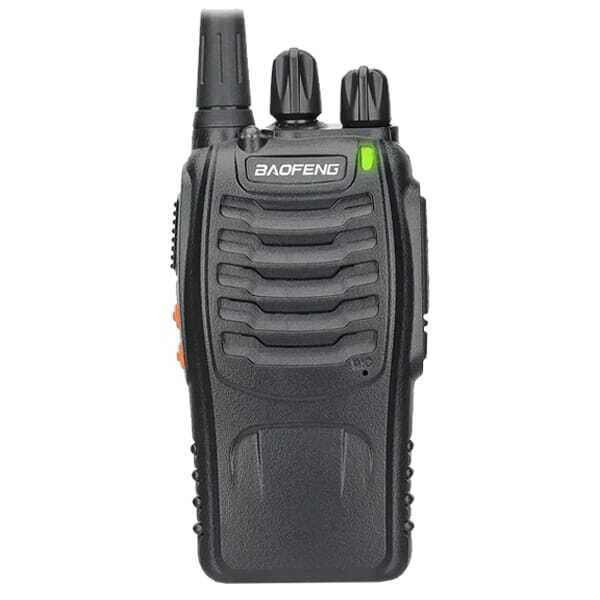
Baofeng BF-888S PMR446
0.5W · PMR446 · Earpieces included · No licence needed — when tips 1–3 are applied (height, position, clear path), PMR446 can be entirely adequate for short-range team communication without complex programming.
View BF-888S PMR446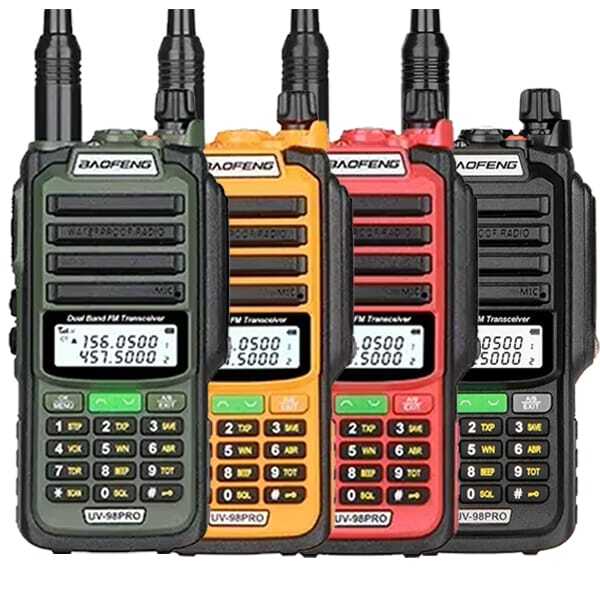
Baofeng UV-98 PRO IP68
IP68 waterproof · 8W · Dual-band · High power — rugged outdoor radio for licensed operators working in rain, mud and demanding field conditions where weather protection and output matter.
View UV-98 PRO⚠️ BF-888S PMR446 is licence-free when fully compliant. UV-32, UV-5RH PRO and UV-98 PRO require an appropriate Ofcom licence to transmit legally in the UK.
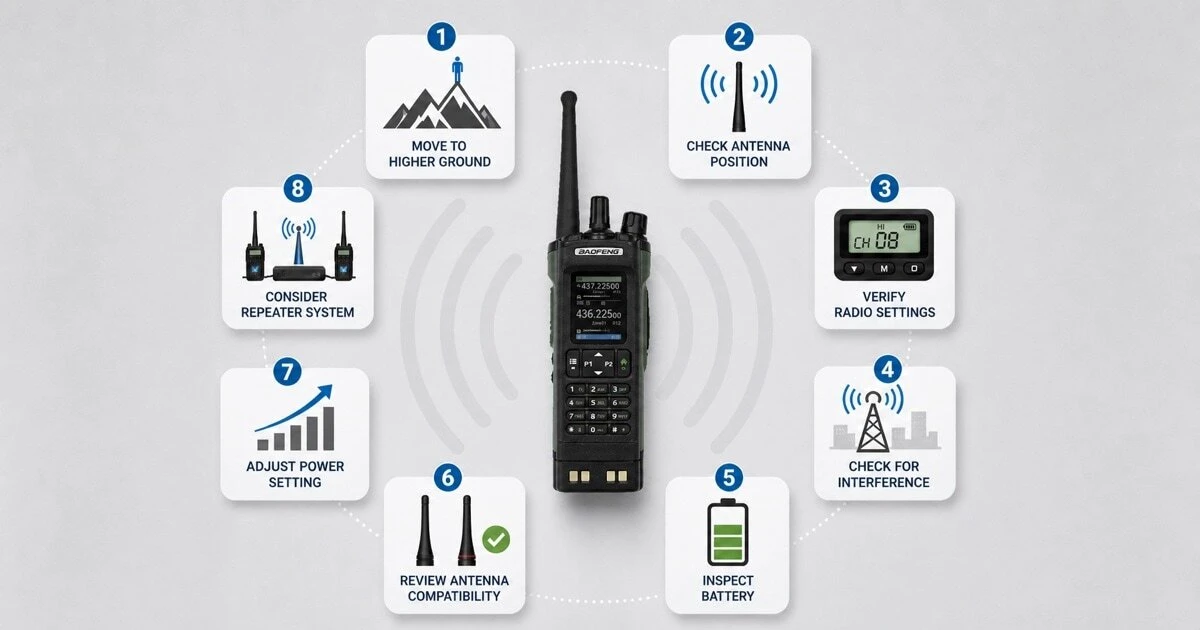 Work through this checklist in order before buying new equipment — most range problems can be solved or significantly improved without spending anything.
 What should you try first when range is poor?
If your walkie talkies are not reaching as far as expected, work through the problem in this order:
- Change position — Move into the open or gain elevation. Do this before buying anything.
- Correct the antenna position — Keep the antenna upright, uncovered and reasonably clear of your body.
- Check both radios — Confirm the frequency, channel, bandwidth, tone and power settings.
- Listen for interference — If your authorisation permits alternative channels, check whether another suitable channel is clearer.
- Check the battery and hardware — Make sure batteries are charged and antenna connections are undamaged.
- Review the antenna — On equipment designed for removable antennas, check whether the installed antenna is correctly matched and suitable for the operating frequency.
- Increase power only when necessary — Use a higher setting only when it is supported by the radio and permitted under your licence or authorisation.
- Reconsider the communication system — If terrain, buildings or site size remain the limiting factor, a repeater or professionally planned system may be more appropriate than a more powerful handheld.
The bottom line
If you want to increase walkie talkie range, start with position, height and line of sight — not wattage.
A powerful handheld cannot make a mountain disappear. It cannot guarantee a clean path through several reinforced-concrete floors. And a longer antenna will not automatically improve performance unless it is suitable for the radio and frequency being used.
📋 Key takeaways
- Height and line of sight are the most effective free improvements — try these before changing any equipment
- Antenna orientation matters — keep it vertical and clear of your body and surrounding objects
- Doubling wattage does not double range — terrain, buildings and antenna position often matter more
- Squelch and CTCSS/DCS affect reception and audio, not transmitted RF range
- UK users must remain within PMR446 or their appropriate Ofcom licence conditions — power and antenna changes must comply
- If terrain, buildings or site size are the consistent limiting factor, a repeater or professional radio system may be the appropriate solution
If you are choosing which radio type suits your environment, start with our UK Walkie Talkie Buying Guide. Licensed users who need more flexibility can also compare models in our Long Range Two-Way Radios collection.
Frequently asked questions
How can I increase the range of my walkie talkie?
The most effective free improvements are moving to higher ground, improving line of sight by removing obstacles from your signal path, and keeping the antenna vertical and clear of your body. These changes can make a bigger difference than buying a more powerful radio. On compatible licensed radios, a correctly matched antenna may also help. Always check the battery and radio settings before assuming the equipment needs replacing.
Does a higher-wattage walkie talkie always reach farther?
Not necessarily. Under simplified free-space conditions, doubling transmitter power corresponds to approximately a 1.4× theoretical range increase — not double. In real environments, terrain, buildings, vegetation and antenna position often have more impact than wattage. A 5W radio with excellent line of sight can outperform a 10W radio blocked by a hill or building. More power helps when the signal path is already reasonably clear and the receiving radio is getting insufficient signal.
Can I fit a longer antenna to my PMR446 walkie talkie to improve range?
No. UK licence-exempt PMR446 operation depends on the equipment meeting specific technical requirements, including using an integral antenna and not exceeding 0.5W ERP. Fitting a removable or longer antenna to a licence-free PMR446 handset is likely to take the equipment outside these requirements. If you need more range, consider a licensed radio system rather than modifying a PMR446 handset.
What does squelch do and does it improve range?
Squelch controls how strong an incoming signal must be before your radio opens its speaker. Reducing squelch may allow you to hear weaker signals at the edge of your coverage area. However, squelch has no effect on how far your transmitted signal travels. It only affects reception — not transmission range.
Why does my walkie talkie work better outdoors than inside a building?
Reinforced concrete, steel structures, lift shafts, metal shelving and multiple building storeys can all absorb and block radio signals. Buildings create both signal loss and unpredictable dead spots that do not follow a simple pattern. Moving near a doorway or window, keeping the antenna vertical and testing multiple positions can all help. For larger professional premises, the issue may require proper radio-system design rather than a more powerful handheld.
When should I consider a repeater instead of a more powerful handheld?
A repeater becomes worth considering when handheld-to-handheld communication consistently fails across a large site, across significant terrain or between multiple substantial buildings — and increasing handheld power or changing position no longer addresses the core problem. A repeater receives a transmission and retransmits it from a more useful elevated location, extending coverage far more effectively than simply adding wattage to a handheld. Repeater use depends on the relevant radio service, frequency allocation and licence conditions.
Find the Right Radio for Your Range Requirements
From licence-free PMR446 handhelds for short-range team use to GPS-equipped long-range radios for licensed outdoor operators — Baofeng UK has the right two-way radio for every environment and communication need.
Browse Long Range Two-Way Radios