
24th Jan 2026
How to Choose Long Range Walkie Talkies | UK Buying Guide
Last Updated: March 2026 | Reviewed by Baofeng UK Technical Team
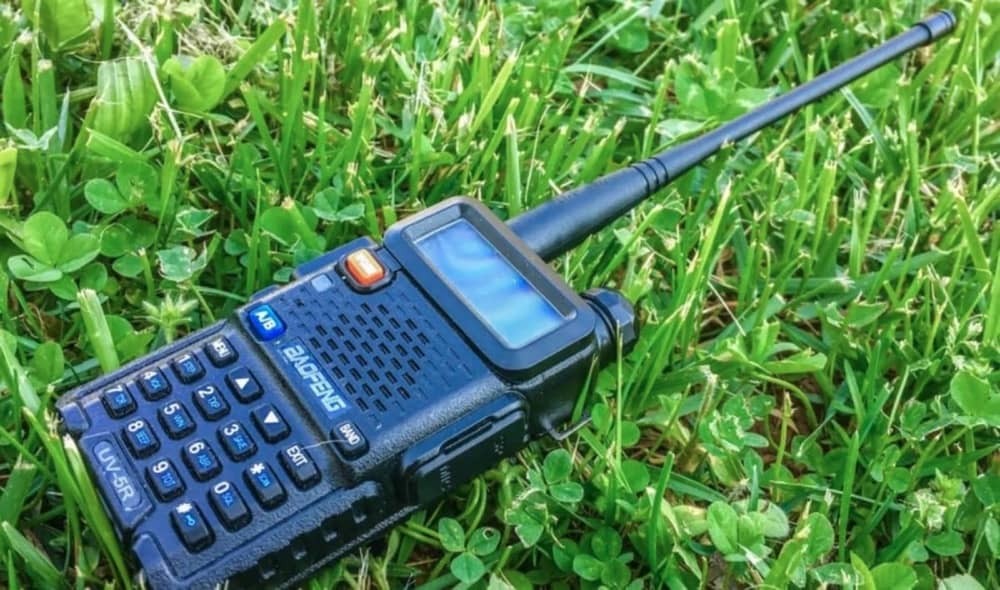
What exactly are long-range walkie talkies? Unlike the cheap toys you might find in a supermarket, these are professional-grade communication devices. They are engineered to keep teams or individuals connected over several miles, even in UK "dead zones" where mobile phone signal is weak or non-existent.
Whether you are coordinating a construction site in London, hiking the Scottish Highlands, or managing a farm in the Peak District, standard mobile networks often fail. Long-range radios, equipped with high-gain antennas and powerful transmitters, bridge that gap.
⚡ Quick Summary: Top 3 Picks for UK
- 🏆 Best Overall: UV-5RH Pro — 10W + GPS + Type-C charging
- 📡 Best Multi-Band: UV-5RM Plus — 10W + Airband + USB-C
- ⛰️ Best for Outdoors: UV-32 — 10W + GPS + Bluetooth + Rugged
- 📜 UK Licence: Required for 5W+ radios. £75 from Ofcom (5 years).
📋 Table of Contents
- 1. What Is a Long Range Walkie Talkie?
- 2. Why UK Users Are Switching to Two-Way Radios
- 3. Best Uses for Long Range Radios
- 4. What Affects Walkie Talkie Range?
- 5. How Do They Work? (UHF vs VHF)
- 6. Quick Comparison: Do You Need a License?
- 7. How to Choose the Right Radio
- 8. Top 3 Best-Selling Long Range Radios
- 9. 5 Factors to Consider Before Buying
- 10. Common Buying Mistakes to Avoid
- 11. Frequently Asked Questions (UK Guide)
What Is a Long Range Walkie Talkie?
A long-range walkie talkie is a professional-grade, two-way radio designed to transmit and receive clear voice signals over vast distances. Unlike standard consumer radios (PMR446) capped at 0.5 Watts with fixed antennas, long-range models typically boast a power output of 4W, 5W, or even up to 10W.
These upgraded specifications, combined with detachable high-gain antennas and robust internal circuitry, allow the signal to punch through dense interference in urban cities like Manchester, or carry across the sweeping, open valleys of the Brecon Beacons. In short: they are built for survival, reliability, and distance.
Why UK Users Are Switching to Two-Way Radios
There are three main reasons why British outdoor enthusiasts and businesses are moving away from mobile phones and towards long-range two-way radios:
- Unmatched Reliability: They do not depend on cellular networks (O2, EE, Vodafone), which often become congested during events or fail completely in remote rural valleys.
- Simple Setup: No SIM cards, no contracts, and no "Can you hear me now?" delays. Simply turn the device on, select your frequency, and communicate.
- Cost-Effective: While mobile phone plans involve monthly fees, most long-range radios use license-free frequencies or affordable Ofcom licenses, meaning zero ongoing costs after purchase.
Best Uses for Long Range Radios
Long-range two-way radios are not just for emergency services. They are an essential tool for various UK sectors and hobbies:
- Outdoor Adventures: Hiking, mountaineering, and green-laning in remote areas where cellular coverage drops to zero.
- Event Management: Coordinating staff at large gatherings like Glastonbury, local county shows, or marathons, where thousands of mobile phones overload the local network masts.
- Agriculture & Farming: Managing sprawling estates in Yorkshire or Wales, allowing farmers to communicate instantly across hundreds of acres.
- Construction & Warehousing: Crane operators and ground staff rely on instant, delay-free communication for safety and logistics.
What Affects Walkie Talkie Range?
A common question we get is why a radio claiming "30 miles" on the box only achieves 2 miles in reality. In the UK, radio wave transmission is heavily influenced by the laws of physics. Here is what actually impacts your range:
- Topography & Line of Sight: Radio waves travel best in a straight line. Hills, mountains, and deep valleys will physically block the signal. If you are standing on a peak in the Scottish Highlands, your range will be massively extended compared to standing at the bottom of a gorge.
- Urban Obstacles: Concrete, steel structures, and thick brick walls absorb and reflect radio waves. This drastically reduces range in built-up areas.
- Antenna Quality: The stock antenna is often a compromise for portability. Upgrading to a longer, high-gain antenna can instantly boost your effective range by 30% to 50%.
- Weather Conditions: Heavy, unpredictable British rain or dense fog can slightly scatter UHF signals, reducing clarity over extreme distances.
How Do They Work? (UHF vs VHF)
Long-range walkie talkies convert your voice into radio waves. However, to get the best range in the UK, you must choose the right frequency band.
VHF (Very High Frequency) is typically best for open spaces and outdoor use (farming/maritime), while UHF (Ultra High Frequency) is generally better for urban environments and penetrating obstacles like trees.
Not sure which frequency you need?
Read our detailed guide: VHF Vs UHF: Which Is Better for Your Situation?
Quick Comparison: Do You Need a License?
Before buying, check this comparison to see which type suits your needs. This data reflects the latest 2026 Ofcom regulations.
| Feature | PMR446 (Licence‑Exempt) | Professional (Licensed – e.g., Ofcom) |
|---|---|---|
| Power Output | Max 0.5W ERP | Often up to 5W ERP for Simple UK Light; other licences allow more |
| Typical UK Range | Varies heavily by terrain; typically "short range" | Varies heavily; can be improved with better antennas and repeaters |
| Best Use Case | Family trips, small teams, light retail | Security, construction, events, larger outdoor teams |
| Cost | No licence fee (if compliant equipment) | £75 / 5 years for Business Radio Light licences. |
How to Choose the Right Radio
Selecting the best long-range walkie talkie depends entirely on your specific environment. Follow this quick checklist to make the right choice:
- Determine Your Environment (VHF vs UHF): Choose VHF for open outdoor areas. Choose UHF for urban areas and dense forests where the signal needs to penetrate physical objects.
- Check the IP Rating (Durability): The British weather is unforgiving. If you are working outside or hiking, insist on an IP54 rating (splash-proof) or ideally IP67 (fully waterproof and dustproof).
- Battery Capacity (mAh): Look for a battery capacity of at least 1800mAh to 2800mAh. This ensures the radio survives a full 8-10 hour shift or a long weekend hike without dying.
- Keypad vs. No Keypad: If you need to manually program frequencies on the go, buy a radio with a full keypad (like the UV-5R). For business users who just need to "push and talk", a screenless, rugged radio is safer.
Top 3 Best-Selling Long Range Radios
Looking for the most reliable long-range options trusted by UK customers? Here are our top three best-selling models right now:
| Product Image | Model Name | Key Features | Action |
|---|---|---|---|
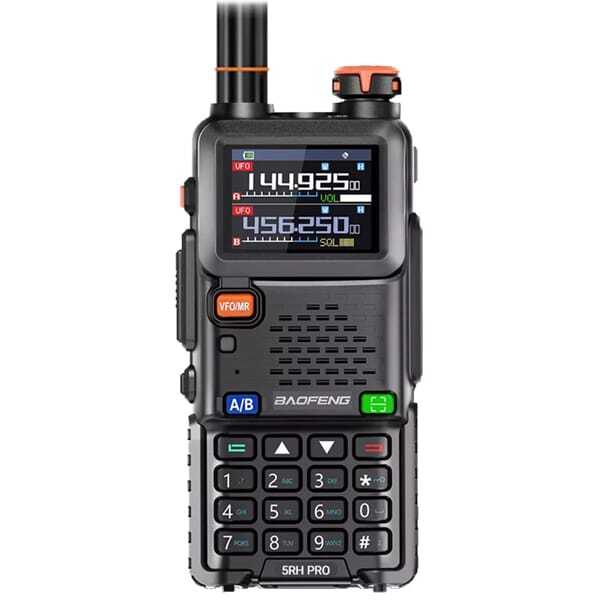 | Baofeng UV-5RH Pro |
| View Product |
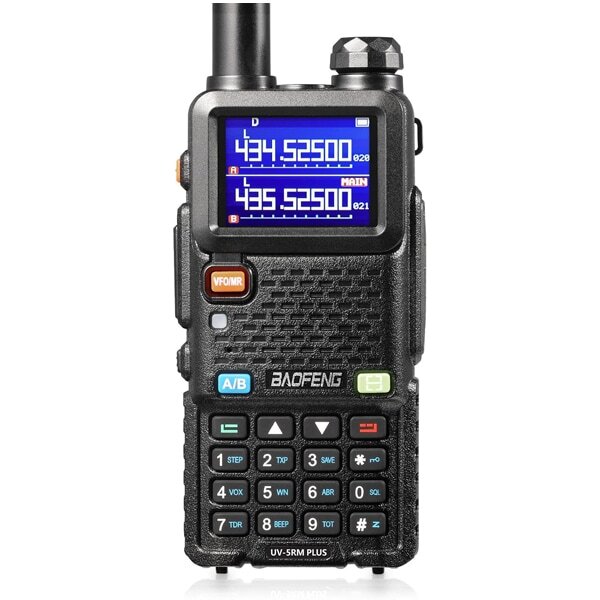 | Baofeng UV-5RM Plus |
| View Product |
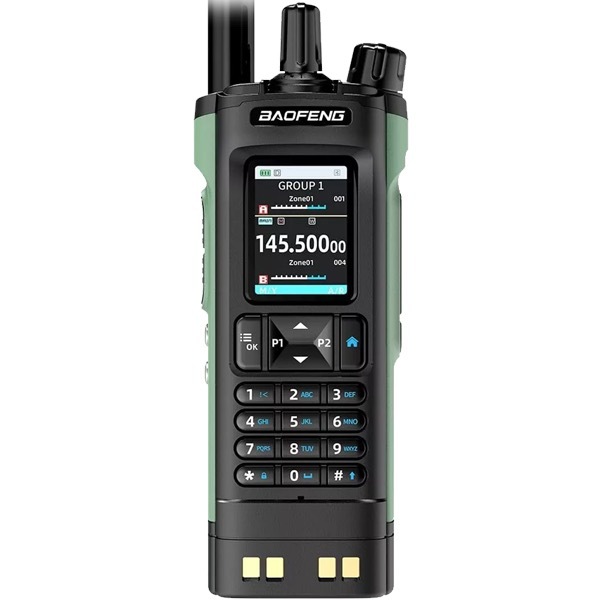 | Baofeng UV-32 |
| View Product |
5 Factors to Consider Before Buying
1. Realistic Range vs. Box Range
Manufacturers often list "maximum range" based on ideal conditions. In a built-up UK town, expect 1-2 miles; in open country, expect 3-5 miles. Always choose a higher wattage (5W or 8W) if you have obstacles.
2. UK Licensing (Crucial Step)
If you are looking at high-power radios like the Baofeng UV series, you will likely need a licence. You can apply directly via the Ofcom Licensing Portal.
New to the hobby? Check out our beginner's guide: How Do I Get a Ham Radio Licence in the UK?
3. Durability (IP Rating)
If you are sailing or hiking near rivers, prioritize an IP67 rating. This means the device can survive being submerged in 1 meter of water for 30 minutes.
4. Privacy Tones (CTCSS/DCS)
Ensure your radio supports "Privacy Tones." This filters out other users on the same frequency so you don't hear a taxi firm while you're trying to hike.
5. Size and Weight
If you are carrying gear for long periods, look for compact models that provide power without adding excessive bulk to your kit.
Common Buying Mistakes to Avoid
To save you time and money, avoid these common pitfalls that first-time buyers often make:
- Believing the "Maximum Range" on the Box: Never assume you will get 30 miles of range in a city. Always buy a radio based on its wattage and antenna capability.
- Ignoring UK Licensing Laws: Transmitting on license-free PMR446 channels with a 5W radio is illegal and can result in hefty fines from Ofcom. Always ensure you have the correct Business Light or Amateur Radio license.
- Buying Cheap Imitations: The market is flooded with counterfeit radios. Always purchase from a reputable, authorized UK dealer to ensure your equipment meets CE/UKCA safety standards.
- Forgetting Spare Accessories: Purchasing a powerful radio but forgetting a spare battery or a speaker microphone is a classic mistake. In cold UK weather, always carry a backup power source.
Frequently Asked Questions (UK Guide)
Are powerful walkie talkies legal in the UK?
Yes, but they require a license. Low-power radios (0.5W) are "license-free" (PMR446). High-power long-range radios (5W to 10W) require an Ofcom Business Radio Light License, which costs £75 for 5 years and covers the whole UK.
What is the actual range of a 10km radio?
Range depends on terrain. A "10km" radio might only achieve 1-2km in a dense city like London due to concrete buildings blocking the signal. However, in open terrain like the Lake District, you may achieve near the full range if you have a clear line of sight.
How does cold British weather affect battery life?
Lithium batteries drain faster in the cold. If you are hiking in Snowdonia or working outdoors in winter, we recommend keeping the radio close to your body heat when not in use, or carrying a spare battery.
Can I use Baofeng radios without a license?
Technically, no. Most Baofeng UV-5R or UV-82 models transmit at power levels higher than the PMR446 limit. To use them legally in the UK, you should obtain a ham radio license or a business light license from Ofcom.
Which is the best long range walkie talkie for UK hiking?
For UK hiking, we recommend the Baofeng UV-32 due to its 10W power, built-in GPS for location tracking, and rugged design suitable for the Scottish Highlands and Lake District terrain. The GPS function is especially useful in remote areas where mobile signal fails.
How long do long range walkie talkie batteries last?
Most professional 10W long-range walkie talkies provide 18-24 hours of standby time on a full charge. With moderate use (5/5/90 ratio of transmit/receive/standby), expect 8-12 hours of operation. Cold UK weather can reduce battery life by 20-30%.
For more answers, visit our full Long Range Walkie Talkie FAQ.
Conclusion
Long-range walkie talkies are an essential companion for anyone needing reliable, cost-effective, and instant communication. By choosing a device with the right frequency, understanding UK licensing, and picking a rugged build, you ensure safety and coordination in any environment.
🛡️ E-E-A-T Editorial Note: This guide was comprehensively reviewed by the Baofeng UK Technical Team to ensure strict compliance with Ofcom regulations and UKCA safety standards. We specialize in keeping UK businesses and outdoor adventurers connected safely and legally.
Ready to stay connected?
Browse our top-rated collection of long-range radios designed specifically for the UK market.
Shop All Long Range Walkie Talkies